Support

National Jeonju Museum

About

The Jeonju National Museum, located in the city of Jeonju, is one of the most important cultural centers in South Korea. Founded in 1978, this museum plays a key role in preserving and showcasing the rich historical and cultural heritage of the region. It attracts many visitors, both locals and tourists, who wish to learn more about Korean history.
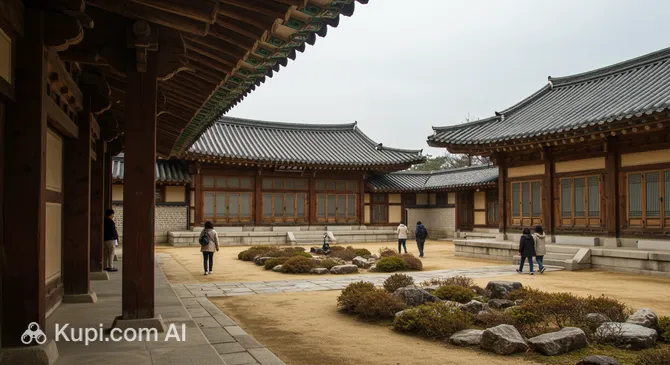
National Jeonju Museum. Illustration.
Source: Kupi.com AI

Traveler photos:

The museum is a modern complex comprising several buildings and extensive exhibition spaces. Its collection includes over 100,000 items, making it one of the largest repositories of artifacts in the country. Among the exhibits, you can see valuable archaeological finds, works of art, religious relics, and historical documents, each telling its own part of Korea's centuries-old history.

Visitors to the Jeonju National Museum have a unique opportunity to trace the development of Korean culture and art through various eras. The museum's exhibits cover a wide time period, allowing guests to gain a complete picture of the traditions, daily life, and beliefs of the Korean people. This place does not just preserve the past; it makes it accessible and understandable for modern people, inspiring them to study Korea's unique heritage.

Contacts

To find the current contact details for the Jeonju National Museum, we recommend visiting its official website. There you can find, for example, a phone number or email address. Detailed information can also be obtained at tourist information centers in Jeonju.

How to contactContact
Address249 Ssukgogae-ro, Wansan-gu, Jeonju, Jeonbuk State, South Korea
Phone number+82 63-223-5651
Websitejeonju.museum.go.kr

What to Do

The Jeonju National Museum invites visitors on a fascinating journey through Korean history, presented through a rich collection of artifacts. The museum's main exhibition is organized chronologically, making it possible to trace the development of Korean civilization over millennia, starting from ancient times.

You will be able to see exhibits from various eras: from the Paleolithic, Neolithic, and Bronze Ages to the period of the Three Kingdoms, Unified Silla, Goryeo, and the Joseon Dynasty. Each section showcases authentic items found in the Jeonju region and its surroundings, providing a deeper understanding of the historical heritage of this part of South Korea.

For those who prefer a more active way of learning, the museum provides interactive zones. Here, you can try your hand as a medieval printer by working on a wooden printing press, handle replicas of ancient writing tools, or even make pottery with your own hands. Younger visitors can enjoy a special children's exhibition where Korean history is presented in an accessible and engaging way, making the visit educational for the whole family.

A unique artifact deserving special attention is the "Golden Mask." Discovered in an ancient burial mound near Jeonju, this find is one of the museum's most valuable and ancient exhibits, drawing the attention of researchers and tourists with its historical significance and craftsmanship. This piece is a true gem of the collection and a must-see.

Getting There

The Jeonju National Museum is conveniently located within the city of Jeonju, making it easily accessible for visitors. You can reach the museum by public transport, which is well-developed in the city. The most popular options are city buses with routes passing near the museum, or a taxi, which can be taken from anywhere in Jeonju.

If you are arriving in Jeonju from other cities in South Korea by train or intercity bus, it is also easy to get to the National Museum from the railway station or bus terminal. You can use local taxi services for a faster and more comfortable trip, or choose one of the city buses heading toward the museum. It is recommended to check the required route number on-site or use navigation apps.

For international tourists, an information desk is available at the entrance of the Jeonju National Museum. Here you can get detailed advice on how to reach different parts of the museum, as well as other useful information in English and Korean. This will help you find your way around and plan your visit in the best possible way.

Nearest city: Jeonju

History & Facts

The Jeonju National Museum, located in Jeonju, South Korea, is an important cultural center dedicated to preserving and promoting the rich heritage of the Jeollabuk-do region and Korea as a whole. The museum was founded in 1978 with the primary mission of presenting artifacts discovered during archaeological excavations in the area to the general public. This allows visitors to experience authentic evidence of the Korean Peninsula's ancient history and gain a deeper understanding of the region's cultural development.

The museum's collection covers an impressive timeline, starting from prehistoric times and moving through key stages of Korean history. Visitors can trace the development of culture and art through the Three Kingdoms period—Goguryeo, Baekje, and Silla—the Unified Silla period, the Goryeo Dynasty (918–1392), and up to the Joseon Dynasty (1392–1910). This broad chronological scope makes the museum a true treasure trove of historical knowledge.

Among the numerous exhibits at the Jeonju National Museum, religious artifacts, ancient ceramics, exquisite metalwork, and various everyday objects and works of art attract particular attention. Each piece tells its own unique story, reflecting the beliefs, traditions, and daily lives of the Korean people over many centuries. The collection is constantly growing, making each visit to the museum unique and interesting in its own way.

A visit to the Jeonju National Museum is not just about viewing exhibits, but a real immersion into the past, allowing for a better understanding of the roots of modern Korean culture. It is a place where history comes alive, offering food for thought and inspiring further exploration of this fascinating region of South Korea.

Time Needed

When planning a visit to the Jeonju National Museum, it is worth setting aside enough time for a leisurely exploration of its rich collection. To get a full impression of the exhibits and perhaps take part in interactive programs, if offered, it is recommended to allow approximately 2-3 hours for your visit.

This amount of time is generally sufficient for most visitors to see the main halls, get to know the artifacts representing the region's history and culture, and not feel rushed. If you are deeply interested in the history of South Korea and specifically the heritage of Jeonju, you may want to stay longer to study the details of the exhibits and information boards.

Working Hours

Unfortunately, precise information regarding the opening hours of the Jeonju National Museum is currently unavailable. To plan your visit in the best way possible, we strongly recommend checking the museum's official website or contacting local tourist information centers in Jeonju directly before your trip. There you can find the current schedule, as well as find out if advance ticket booking is required and whether the museum is open year-round or only during certain seasons.

Checking in advance will help you avoid possible inconvenience and make your experience with the Jeonju National Museum's exhibits as comfortable and informative as possible.

10:00 – 18:00

Nearby

Visiting the Jeonju National Museum is undoubtedly a highlight of your trip to Jeonju. However, to make your experience even richer and more complete, it's worth paying attention to other interesting places nearby. Exploring the surrounding area will allow you to dive deeper into the city's atmosphere, discover new facets of its culture and history, and simply enjoy a variety of experiences.

By extending your itinerary beyond a single museum, you can gain a more comprehensive understanding of South Korea and Jeonju in particular. Often, it is these spontaneous or planned visits to neighboring locations that provide the most memorable moments. Below is a list of some attractions and interesting spots near the Jeonju National Museum that may interest you.

NameDistance
Ondam4.8 km
Jeolla Provincial Government Office5.3 km
Nambu Market5.3 km
Pungnammun Gate5.4 km
Jeonju Gaeksa (Pungpaejigwan)5.4 km
Jeondong Cathedral5.5 km
Gyeonggijeon Shrine5.6 km

Have you reached the end of the page?

So the route has been studied inside and out