Support

Geumsansa Temple

About

Geumsansa Temple is one of the largest and most famous Buddhist temples in South Korea, majestically situated on the scenic slopes of Moaksan Mountain near the city of Jeonju. This impressive temple complex is renowned for its scale, architectural diversity, and deep spiritual history, attracting many pilgrims and tourists from around the world every year.
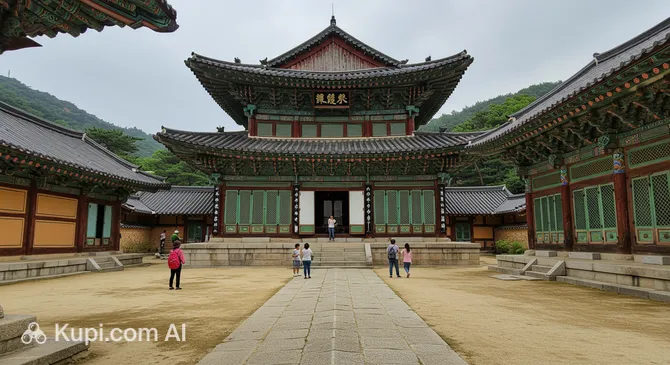
Geumsansa Temple. Illustration.
Source: Kupi.com AI

Traveler photos:

Geumsansa is not just a religious center but also a significant cultural landmark. Here, visitors can get a deeper understanding of the ancient traditions of Korean Buddhism, enjoy the beauty of the surrounding nature, and immerse themselves in a unique atmosphere of calm and tranquility. The temple complex covers a vast territory and includes dozens of various buildings, ancient monuments, and expressive statues that are harmoniously integrated into the magnificent mountain landscape.

Visiting Geumsansa Temple is an opportunity to touch centuries of history, feel the spirit of Korean culture, and find inspiration in its serene beauty. This is a place where every corner tells its own story, and the grandeur of the architecture combines with the soothing power of nature, making it a must-see for anyone interested in history and spirituality.

Contacts

For the most up-to-date information on visiting Geumsansa Temple, including opening hours, ticket prices, and tour conditions, it is recommended to contact its representatives. Detailed information is also often available on the attraction's official website, which, according to available data, provides information in Korean and partially in English.

How to contactContact
Address39 Geumsan-ri, Geumsan-myeon, Gimje, Jeonbuk State, South Korea
Phone number+82 63-548-4441
Websitewww.geumsansa.org

What to Do

A visit to Geumsansa Temple in Jeonju is an opportunity to connect with the ancient history and spirituality of South Korea. While walking through the extensive grounds of the complex, you can admire magnificent ancient halls, elegant pagodas, and impressive statues. Particular attention should be paid to iconic sites such as the Three-story Stone Pagoda, the majestic statue of Mireuk Buddha (the Buddha of the Future), and the unique Maitreya Hall—one of the few remaining wooden temples of this scale in Korea. Every corner of the temple breathes history and peace, offering visitors unique views and moments for reflection.

At Geumsansa Temple, you can do more than just view architectural masterpieces; you can also actively immerse yourself in monastic life. For those wishing to understand Buddhist traditions more deeply, participation in authentic Buddhist ceremonies and meditation classes is offered. A unique experience is the "Temple Stay" program, which allows you to stay at the temple overnight and feel like part of the monastic community, following its routine and participating in daily practices. This is a wonderful opportunity for spiritual enrichment and unforgettable impressions.

In addition to spiritual practices, Geumsansa Temple often serves as a venue for various cultural events and festivals that introduce visitors to the rich heritage of the region. Here, you can attend fascinating workshops, such as traditional Korean calligraphy or the art of the tea ceremony. These activities allow you not only to learn something new but also to create memorable souvenirs with your own hands, taking a piece of Korean culture home with you.

Getting There

Geumsansa Temple is located approximately 30 kilometers south of the city of Jeonju, making it accessible for a day trip. One of the most convenient ways to reach the temple is by public transport. Intercity buses depart regularly from Jeonju to the "Geumsansa" (금산사) stop. The bus ride takes about 40 minutes, allowing you to enjoy the views of the countryside along the way.

From the "Geumsansa" bus stop, it is a short 10–15 minute walk to the entrance of the temple complex. This part of the route is also an opportunity to experience the picturesque landscape surrounding the temple. The path is well-marked, so it is difficult to get lost.

For those who prefer more comfort or are traveling in a group, a taxi from Jeonju is a good alternative. This is particularly convenient if you have luggage or want to save travel time. A taxi ride will be faster but more expensive than the bus.

Independent travelers looking for more freedom of movement might consider renting a car. Having a car will allow you not only to reach Geumsansa Temple easily but also to explore other interesting sites in the Moaksan Mountain region at your own pace, without being dependent on public transport schedules.

Nearest city: Jeonju

History & Facts

Geumsansa Temple, located near the city of Jeonju in South Korea, has a rich and ancient history dating back to the distant past. Its founding dates back to 599 AD, when the monk Jinpyo laid the first stones of this sacred site during the Baekje Kingdom. From its inception, the temple was intended as an important spiritual center, and over the centuries, it has played a significant role in the religious life of the region.

In subsequent eras, particularly during the Goryeo Dynasty, Geumsansa was repeatedly rebuilt and expanded, becoming one of the country's leading Buddhist monasteries. Its influence extended far beyond the purely religious sphere: the temple also served as an important educational and cultural center, attracting scholars, thinkers, and artists. Chronicles were kept here, sacred texts were transcribed, and various forms of art flourished.

Today, numerous priceless artifacts recognized as national treasures of South Korea can be seen on the grounds of Geumsansa Temple. Among them stands the majestic wooden Maitreya Hall (Mireukjeon), which is National Treasure No. 62. Also noteworthy are the elegant Three-story Stone Pagoda (National Treasure No. 21) and ancient bronze bells, whose sounds once echoed through the surrounding mountains, calling the faithful to prayer.

Despite numerous historical challenges and subsequent restorations, Geumsansa Temple has managed to preserve its grandeur and spiritual significance. To this day, it remains one of the most important monuments of Korean Buddhist tradition, architecture, and history, attracting pilgrims and tourists from all over the world who wish to touch its centuries-old heritage and experience an atmosphere of peace and spirituality.

Time Needed

When planning a visit to Geumsansa Temple, located in the picturesque outskirts of Jeonju, you should set aside several hours to fully explore this iconic South Korean site. Generally, most visitors will need at least 2–3 hours for a leisurely tour of the main buildings, a walk through the temple grounds, and to soak in its peaceful atmosphere.

During this time, you can appreciate the architecture of the ancient pagodas and halls, admire the surrounding natural landscapes, and take commemorative photos. However, if you are interested in a deeper immersion into Buddhist culture and temple life, you might consider a longer stay.

For instance, Geumsansa Temple offers Temple Stay programs that allow guests to live in the monastery, participate in meditations, tea ceremonies, and other activities. In such cases, it is recommended to dedicate a full day or even stay overnight for a complete experience. This provides a unique opportunity not just to see the temple, but to feel its spirit from within.

Working Hours

Geumsansa Temple in Jeonju is happy to welcome visitors daily. The doors of the temple complex are open to everyone from 06:00 AM to 06:00 PM. This allows guests to choose a convenient time for their visit throughout the day.

While special ticket booking or pre-registration is generally not required for a standard visit, it is recommended to arrive in the morning hours or early afternoon. This time usually sees fewer visitors, allowing you to enjoy the temple's atmosphere in a more peaceful setting and explore all its corners more closely. The temple is open for visits year-round.

Nearby

Visiting Geumsansa Temple in Jeonju is undoubtedly a highlight, but you shouldn't stop there. Exploring the surrounding area will allow you to immerse yourself deeper in the atmosphere of the region, discover new facets of South Korean culture and history, and add variety to your travel experiences.

There are many interesting places near the temple, each unique in its own way. By setting aside time to visit them, you can gain a more complete picture of Jeonju and its environs, turning your trip into a true adventure.

NameDistance
Amazon Aquapark Wanju5 km
Korea Sool Museum7.5 km
National Jeonju Museum9.3 km
Ondam12.9 km
Nambu Market13 km
Pungnammun Gate13.2 km
Jeondong Cathedral13.2 km

Have you reached the end of the page?

So the route has been studied inside and out