Support

February 28th Central Memorial Park

About

The 28 February Memorial Park, also known as Chunan (or Jungang) Park, is a cozy green oasis in the heart of Daegu, South Korea. This park was officially opened in 2003 on the site of the former Chunan Elementary School. Its creation is dedicated to an important historical event — the student Democratic Movement of February 28, 1960, which left a significant mark on the country's history.
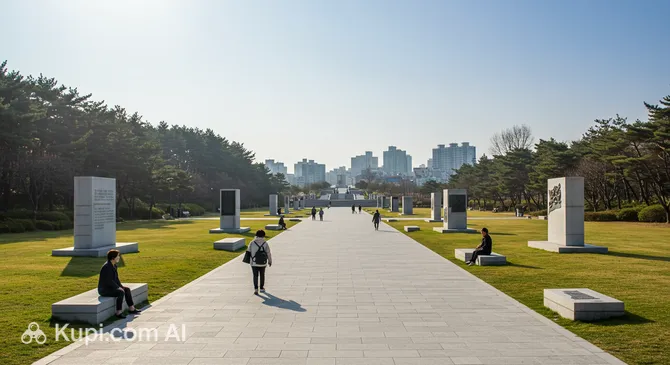
February 28th Central Memorial Park. Illustration.
Source: Kupi.com AI

Traveler photos:

Today, the 28 February Memorial Park serves not only as a living reminder of this landmark event but also as a popular leisure spot for residents and visitors alike. Its well-maintained paths, greenery, and peaceful atmosphere make it an ideal corner for walking, reflection, or simply enjoying some time away from the city's hustle and bustle.

As one of the city's landmark attractions, the park blends harmoniously into the urban landscape of Daegu, which is the fourth-largest city in South Korea. Visiting the park allows you to not only touch history but also feel the modern rhythm of this dynamic metropolis while enjoying the peace and greenery in the center of a busy city.

Contacts

28 February Memorial Park is a public space and, as such, may not have a dedicated contact line for general inquiries. To find the exact location of the park in Daegu, its opening hours (if any), or information about upcoming events, it is recommended to consult the official tourist resources of Daegu, local information centers, or use online maps. Typically, such parks are open for free access throughout the day.

How to contactContact
Address80 Dongseong-ro 2-gil, Jung-gu, Daegu, South Korea
Phone number+82 53-254-9405
Websitenamu.wiki

What to Do

Visitors to the 28 February Memorial Park will find many ways to spend their time pleasantly. The park regularly hosts various cultural events, including concerts and performances, making it one of the centers of cultural life in Daegu. In addition, the park's extensive green area is perfect for leisurely strolls, relaxing in the fresh air, or simply enjoying the quiet away from the city noise.

For those interested in the history of South Korea, the park offers a unique opportunity to connect with an important period in the country's past. It is dedicated to the student democratic movement, and its grounds feature memorial sites that tell the story of this event. Viewing these monuments allows for a deeper understanding of modern Korean history and the significance of this movement for the nation, making a visit to the park not only enjoyable but also educational.

Getting There

Getting to Daegu, where the 28 February Memorial Park is located, is quite simple thanks to South Korea's well-developed transportation system. You can take the KTX high-speed trains, which connect Daegu with Seoul and other major cities, providing a fast and comfortable journey. Additionally, express buses run regularly to Daegu from various regions of Korea. For those who prefer air travel, the city is served by Daegu International Airport, which handles both domestic and some international flights.

The 28 February Memorial Park itself is situated in the central part of Daegu, making it easily accessible from anywhere in the city. After arriving in Daegu, you can reach the park via public transport, such as city buses with routes passing through the center. Many bus stops are within walking distance of the park. You can also always use a taxi, which will quickly take you to the park entrance from your hotel, the railway station, or the bus terminal. Thanks to its convenient location, the trip to the park won't take much time, allowing you to quickly immerse yourself in its peaceful atmosphere.

Nearest city: Daegu

History & Facts

The 28 February Memorial Park preserves the memory of a key moment in the history of the struggle for democracy in South Korea. It is dedicated to the student Democratic Movement that broke out in Daegu on February 28, 1960. This demonstration by high school students was one of the first mass peaceful protests against authoritarian rule and election fraud, demonstrating the power of civil disobedience. The events in Daegu served as an important catalyst for subsequent democratic changes in the country.

The choice of location for the park is deeply symbolic. It was established on the site where Chunan Elementary School (Jungang) used to be. This school and its surroundings were closely linked to the historical events of February 28, 1960. The park opened in 2003 and was named in honor of this significant date. Unofficially, the park is sometimes called "Chunan" or "Jungang," preserving the memory of the school that once stood here and became an involuntary witness to the birth of an important stage in South Korea's democratic history.

Today, the 28 February Memorial Park is not just a place for relaxation but also an important national symbol. It serves as a reminder of the courage and determination of the students who stood up for justice and the price paid for democratic freedoms. The park has become a site for preserving historical memory, hosting commemorative events and educational programs that teach new generations about the significance of these events for modern South Korea. For the residents of Daegu and all Koreans, it is a landmark space embodying the spirit of freedom and the pursuit of democracy.

Time Needed

To explore the 28 February Memorial Park, see its main memorial sites, and walk through its well-kept alleys, most visitors will need about 1-2 hours. This is usually enough time to get a general overview of the park, its history, and its significance, as well as to enjoy its peaceful atmosphere in the center of Daegu.

If you plan to dive deeper into the history of the events the park is dedicated to, or simply want to spend more time relaxing on its green lawns and enjoying the quiet, your visit could take up to half a day. It is also worth considering that various cultural events or exhibitions are periodically held on the park grounds, which could extend your stay if you choose to attend them.

Overall, the 28 February Memorial Park offers flexibility in planning your visit. It is an excellent place for both a short educational walk and a longer, relaxing break. We recommend allocating as much time as suits your interests and your desire to explore this important historical and cultural site in South Korea.

Working Hours

As a public space, the 28 February Memorial Park in Daegu is generally open to visitors daily and year-round. Typically, such parks are accessible during daylight hours, but exact operating hours may not be specified or could vary, especially if there are any pavilions on site or special events being held. To get the most up-to-date information on access hours, it is recommended to check the official tourism websites of Daegu or the information boards directly at the park entrance.

Advance ticket booking to visit the park itself is usually not required, as entry is generally free. However, if you plan to attend a specific event or exhibition that may be taking place in the park, you should check the conditions for attendance in advance, including the possible need for tickets or registration.

Open 24 hours

Nearby

Exploring the surroundings of the 28 February Memorial Park can significantly enrich your experience of visiting Daegu. A stroll through the nearby streets will allow you to dive deeper into the city's atmosphere, discover its hidden gems, and better understand the local culture beyond just one significant site.

Daegu is a city with a rich history and a dynamic modern life, and the areas adjacent to the park offer many interesting places. From cozy cafes and traditional markets to other cultural attractions, there is something for everyone who wants to fully experience the flavor of South Korea.

NameDistance
Spark Land0.2 km
Navilera Dongseongro0.3 km
Hello Foreign Pocha0.5 km
Hyangchon Cultural Center0.5 km
Doma 290.5 km
Daegu Yangnyeongsi Museum of Oriental Medicine0.7 km
Cheongna Hill1.2 km

Have you reached the end of the page?

So the route has been studied inside and out