Cheomseongdae Observatory is not just an ancient structure; it is one of the oldest scientific monuments on Earth. Located in Gyeongju, the cultural treasure chest of South Korea, this tower is one of the oldest surviving astronomical observatories in East Asia. Its name, "Cheomseongdae," poetically translates to "star-gazing tower," which perfectly reflects its historical purpose. The structure was built in the 7th century during the reign of Queen Seondeok.
Visually, the observatory is an elegant cylindrical tower standing about 9.4 meters tall. The construction consists of 362 granite stones laid in 27 levels. These numbers are deeply symbolic: 362 stones represent the number of days in a lunar year, while the 27 levels are believed to be related to the fact that Queen Seondeok was the 27th ruler of the Silla Kingdom. This unique structure has an interesting architectural feature: its round base smoothly transitions into a rectangular shape at the top.
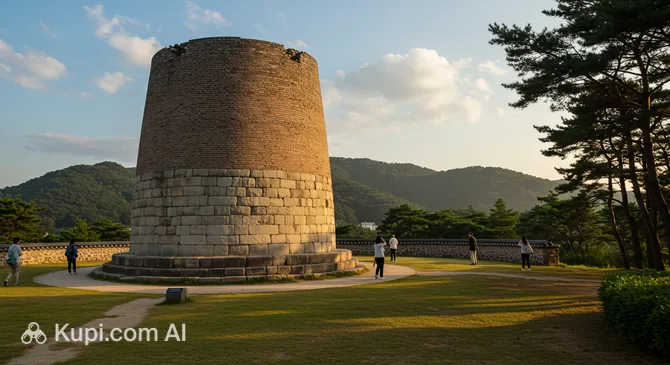
Traveler photos:
A visit to Cheomseongdae is a chance to touch the ancient history of science and imagine how, centuries ago, astronomers observed the movement of celestial bodies from this very tower to predict weather and important events. In 1962, the observatory was listed as a National Treasure of Korea, highlighting its immense cultural and historical significance.