Support

Seokguram Grotto

About

Seokguram (Kor. 석굴암) is a truly unique rock temple and Buddhist grotto majestically situated on the slopes of Mount Tohamsan, near the ancient city of Gyeongju in South Korea. As an integral part of the famous Bulguksa monastery complex, Seokguram is recognized as one of the greatest masterpieces of Buddhist art and architecture, not only in Korea but in the entire world.
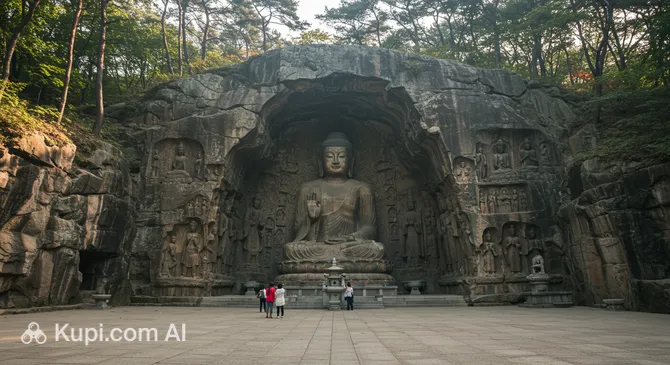
Seokguram Grotto. Illustration.
Source: Kupi.com AI

Traveler photos:

This amazing temple was not simply found in the rock, but skillfully created by human hands, carved into solid granite, which is a remarkable achievement for the Korean Peninsula, where this difficult-to-process stone prevails. The grotto is located at an altitude of about 750 meters above sea level, offering views of the East Sea (Sea of Japan), which adds a special atmosphere of peace and spirituality to the site.

The significance of Seokguram is hard to overstate: it is rightfully considered National Treasure of Korea (No. 24). In 1995, together with Bulguksa Temple, this magnificent grotto was included in the prestigious UNESCO World Heritage list, highlighting its exceptional cultural and historical value for all humanity. A visit to Seokguram is an opportunity to touch the ancient history and spiritual traditions of Korea.

Contacts

To plan your visit to Seokguram, including current opening hours and information on how to get there, it is recommended to consult official tourist sources for the city of Gyeongju or information provided by the Bulguksa temple complex, of which the grotto is a part. Visitors usually reach Seokguram from Bulguksa Temple or via special transport from Gyeongju, as the grotto is located on a mountain slope.

How to contactContact
Address238 Seokgul-ro, Gyeongju, Gyeongsangbuk-do, South Korea
Phone number+82 54-746-9933
Websiteseokguram.org

What to Do

A visit to Seokguram is, first and foremost, an opportunity to experience its interior. In the center of the grotto, you will be met by the majestic statue of the Bonsa Buddha, surrounded by expertly crafted sculptures of bodhisattvas and his faithful disciples. Every detail here—from the architectural solutions to the finest carvings—testifies to the remarkable synthesis of deep religious symbolism and the outstanding engineering skill of ancient Korean architects. Note how harmoniously the artificial grotto is integrated into the surrounding natural landscape, creating a sense of unity with nature.

Many travelers combine a visit to Seokguram with a scenic walk along the mountain trail leading here from the famous Bulguksa Monastery. This hiking route is an experience in itself, allowing you to enjoy the beauty of Mount Tohamsan. Once at the grotto, you will feel an extraordinary atmosphere of peace and spirituality that prevails in this holy place. Additionally, breathtaking views of the coast and forested slopes open up from here, making a visit to Seokguram truly unforgettable and inspiring.

Getting There

The most convenient way to reach Seokguram is from the city of Gyeongju, which serves as the starting point for many travelers wishing to explore the historical treasures of this region of South Korea. The grotto is situated on the slopes of Mount Tohamsan, and the journey itself can become part of an exciting adventure.

Many tourists prefer to combine a visit to Seokguram with a tour of the famous Bulguksa Temple, located about 4 kilometers from the grotto at the foot of the same mountain. A scenic mountain road leads from Bulguksa Temple to Seokguram. This section can be covered on foot while enjoying the nature, which takes about 1.5–2 hours one way. Alternatively, you can take a local bus or a taxi, which is significantly faster and more comfortable, especially if your time is limited.

City buses run regularly from the center of Gyeongju to Bulguksa Temple. There are also tour routes covering both of these outstanding attractions. If you value independence and flexibility in your movements or plan to visit several interesting spots in one day, renting a car or taking a taxi directly from Gyeongju to Seokguram or first to Bulguksa is a convenient option.

Nearest city: Gyeongju

History & Facts

Seokguram is not just an ancient temple, but a true testament to the golden age of Korean culture. Its history dates back to the 8th century, during the Silla Dynasty. The construction of this unique artificial grotto began in 742 and was completed by 774. The project was initiated by Prime Minister Kim Dae-seong, whose name is also inextricably linked to another famous temple — Bulguksa.

There is a beautiful legend associated with the creation of Seokguram. According to lore, Kim Dae-seong built Bulguksa Temple in memory of his parents in this life, and the magnificent Seokguram grotto for his parents from a past life. Originally, the shrine was named Seokbulsa, which translates to "Temple of the Stone Buddha." The tradition of creating stone Buddha images came to Korea from India via China, but it was here, on Korean soil, that it acquired its unique features.

The uniqueness of Seokguram lies in the fact that it is an artificial grotto carved into granite, rather than a natural cave, which was necessitated by the characteristics of the local stone. This makes it an outstanding example of the engineering and artistic craftsmanship of that time. Due to its exceptional cultural and historical value, Seokguram was designated a National Treasure of South Korea in 1962, and in 1995, along with Bulguksa Temple, it was included in the UNESCO World Heritage list, confirming its global significance.

Time Needed

When planning a visit to Seokguram, expect that you will need 1.5 to 2 hours for a full viewing and a leisurely walk through the surrounding territory. This time is usually sufficient to immerse yourself in the atmosphere of this amazing rock temple and appreciate its grandeur without rushing, as recommended by many guidebooks.

Within this timeframe, you can not only carefully examine the grotto itself, including the famous Buddha statue and the skillfully executed bas-reliefs of deities, but also enjoy the surrounding nature of Mount Tohamsan. A short walk through the well-maintained grounds of the complex leading to the grotto is also included in this time estimate, allowing you to better feel the serenity of this place and take several memorable photos.

Of course, if you are deeply interested in Buddhist art or history, your visit may last longer. However, the stated 1.5–2 hours is a good starting point for most visitors to gain vivid impressions from exploring Seokguram, one of the primary shrines of Gyeongju and all of South Korea.

Working Hours

Seokguram is usually open to visitors daily, allowing you to experience its ancient beauty throughout the year. Working hours may vary depending on the season, but as a rule, the grotto is accessible from early morning until evening. Since the exact schedule can change, it is strongly recommended to check the current opening hours on the official tourist websites of Gyeongju or the UNESCO website before your trip, which may also provide information on the need for advance booking or ticket purchases.

When planning your visit, be sure to check the latest information so that your acquaintance with this unique World Heritage site is as comfortable as possible and leaves only pleasant impressions. This will help avoid surprises and allow you to plan your time in the best possible way.

9:00 – 17:00

Nearby

A visit to Seokguram is undoubtedly one of the key highlights of a trip to Gyeongju. However, to make your acquaintance with this amazing region of South Korea even more complete and rewarding, it is worth paying attention to other nearby attractions. Exploring the surroundings will allow you to dive deeper into the rich history and culture of the ancient Silla capital, see other architectural masterpieces, and enjoy the variety of local landscapes.

Near Seokguram, there are several interesting places that will complement your impressions and allow you to form a more complete picture of Gyeongju's heritage. Each of these locations possesses its own unique atmosphere and history, deserving of your attention.

NameDistance
Bulguksa Temple1.6 km
Brahma Gate, Bulguksa Temple2 km
Golgulsa Temple5.2 km
Blue One Private Condo6.3 km
Kangdong Resort6.5 km
Gyeongju Tower6.7 km
Jurung Jurung Gyeongju6.9 km

Have you reached the end of the page?

So the route has been studied inside and out