Support

Hwaseong Fortress

About

Hwaseong Fortress is an outstanding monument of 18th-century military architecture located in Suwon, approximately 30 kilometers south of Seoul, South Korea. It was built by order of King Jeongjo between 1794 and 1796. Initially, the fortress was intended not only as a powerful defensive structure but also as a memorial complex where the remains of the king's father, the tragically deceased Prince Sado, were moved.
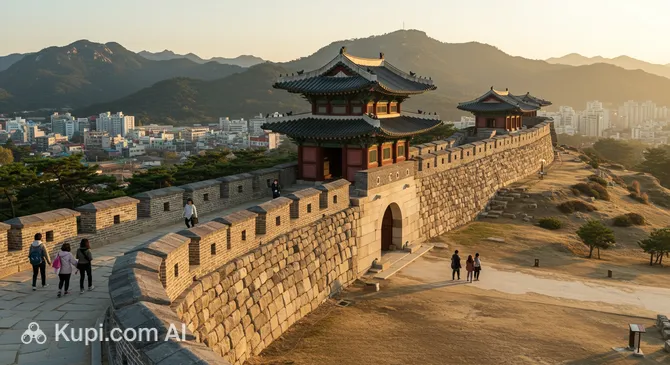
Hwaseong Fortress. Illustration.
Source: Kupi.com AI

Traveler photos:

The uniqueness of Hwaseong Fortress lies in its harmonious synthesis of traditional Korean fortification methods and elements of Western military architecture of that time. This combination of techniques, innovative for its period, made it one of the most advanced and well-preserved fortresses in Korea. Due to its exceptional historical and cultural value, as well as its impressive aesthetics, Hwaseong was rightfully included in the UNESCO World Heritage list.

Today, Hwaseong Fortress is one of the region's main tourist attractions, drawing many visitors from all over the world. Guests can walk along its massive walls and explore numerous towers, gates, and pavilions, each with its own history and purpose. This site offers not only an immersion into history but also magnificent views of the surrounding landscape, making a visit truly unforgettable.

Contacts

For up-to-date information on visiting Hwaseong Fortress, including opening hours, ticket prices, and contact details, it is recommended to visit the official website of the attraction or local tourist information centers in the city of Suwon. You can also find useful information on South Korea's tourism portals.

To reach Hwaseong Fortress in Suwon from Seoul, you can use public transport, such as a train or bus, and then take local transport within Suwon to reach the fortress walls directly.

How to contactContact
AddressSouth Korea, Gyeonggi-do, Suwon, Jangan-gu, 영화동 320-2
Phone number+82 31-290-3600
Websitewww.swcf.or.kr

What to Do

A visit to Hwaseong Fortress offers many engaging activities. One of the main highlights is walking the perimeter of the fortress walls, which stretch for an impressive 5.74 kilometers, with heights ranging from 4 to 6 meters. This allows you to not only appreciate the scale of the structure but also enjoy the views. For those who prefer a less tiring way to explore, special tourist trains and bike taxis operate on the grounds. They follow three different routes, covering the main gates, watchtowers, elegant pavilions, and powerful bastions.

The fortress is partially situated on a hill, from the top of which truly picturesque panoramas of Suwon unfold. These views are especially impressive in the evening when the architectural lighting is turned on, creating a magical atmosphere. Information pavilions also operate within the fortress. Here, visitors can dive deeper into Hwaseong's history, examine artifacts found on-site, and watch documentary or animated films telling the story of the construction and significance of this unique fortification.

In addition to walking the walls and admiring the views, guests can explore numerous pavilions and towers, many of which have been meticulously restored and are now open for tours. Each of these structures has its own unique history and architectural features, making their exploration educational and interesting. It is a wonderful opportunity to touch the history of South Korea and imagine what life was like during the Joseon Dynasty.

Getting There

Hwaseong Fortress is conveniently located in Suwon, just 30 kilometers south of bustling Seoul, making it easily accessible for a day trip. The most popular way to get there from the capital of South Korea is by metro. You need to take Line 1 at Seoul Station and travel to Suwon Station. This is a comfortable and relatively fast route that avoids city traffic jams.

Upon arrival at Suwon Station, you can reach Hwaseong Fortress itself by local bus or taxi. Buses are a budget-friendly option and run regularly, with stops usually located near the metro exit. If you prefer more comfort or are traveling with children, a taxi will take you directly to the fortress entrance. Additionally, intercity buses run from Seoul to Suwon, and there are organized sightseeing tours that include a visit to this historical site.

For those traveling by their own or a rented car, the trip to Hwaseong Fortress is also straightforward. Suwon has a well-developed road network, and convenient parking is provided at the entrances to the fortress grounds. Navigation is made easier by numerous signs in Korean and English, which is particularly helpful for international tourists. Thanks to Suwon's developed tourism infrastructure, reaching this famous landmark is hassle-free.

Nearest city: Seoul

History & Facts

Hwaseong Fortress is not just a military fortification, but an embodiment of filial piety and the ambitious plans of King Jeongjo of the Joseon Dynasty. Built in the late 18th century, it became the place where the monarch moved the remains of his father, Prince Sado, to honor his memory. But King Jeongjo's plans extended further: he dreamed of making Suwon, where the fortress is located, the new capital of Korea. To stimulate the city's development and attract residents, he even exempted the local population from taxes for ten years—a very progressive step for that time.

The design of Hwaseong Fortress was entrusted to the prominent minds of that era—Jeong Yak-yong, also known by the pseudonym Dasan, and Yu Hyeong-won. These architects applied the most advanced construction technologies of the time to create a unique structure. A special feature of the fortress was its innovative combination of traditional Korean fortification principles with elements of Western military architecture, making Hwaseong a model of engineering for its time and ensuring its exceptional strength and functionality.

Originally, the Hwaseong Fortress complex was truly grand, with 48 different structures situated along its powerful walls. Among them were not only majestic gates but also numerous observation towers, artillery bastions, and special platforms for archers, providing comprehensive defense. Unfortunately, the passage of time and historical events did not spare some of these buildings. However, thanks to extensive restoration work carried out in the 20th century, many of the lost elements have been meticulously restored, allowing us today to admire this masterpiece of fortification art almost in its original form.

Time Needed

To fully experience Hwaseong Fortress, it is recommended to set aside 2 to 4 hours. This amount of time is generally enough to leisurely walk along a significant portion of the fortress walls, look into the main pavilions and guard towers, and visit the information centers where you can learn more about the history of this unique structure.

By planning for this timeframe, you will be able to not only see the key architectural elements of the fortress but also enjoy the panoramic views from the walls and hills. If you wish to study every corner in more detail, including temporary exhibitions or participating in any events held on the grounds, you might need a bit more time. However, for a general impression and to see the main highlights, 2-4 hours is the optimal choice.

Working Hours

Hwaseong Fortress is happy to welcome guests every day, starting from 9:00 AM. However, it is worth noting that closing times may vary depending on the season. The fortress is open for visits year-round, allowing you to plan your visit for any convenient season.

To ensure your visit is as comfortable as possible, we strongly recommend checking the current opening hours, especially the closing time, on the official Hwaseong Fortress website or at local tourist information centers before your trip. Generally, advance ticket booking is not required for standard sightseeing, but if you plan to attend special events or book a guided tour, it is better to check the terms in advance.

Open 24 hours

Nearby

A visit to the majestic Hwaseong Fortress in Suwon is a profound experience in itself. To make your introduction to this outstanding historical site in South Korea even more complete and rewarding, it is worth paying attention to the attractions in the immediate vicinity. Exploring the surroundings of the fortress will allow you to dive deeper into the atmosphere of this part of Suwon and discover new interesting corners.

Not far from Hwaseong Fortress are other notable places capable of enriching your travel itinerary. Getting to know them will allow you to form a more complete picture of Suwon's historical and cultural heritage.

NameDistance
Hwaseong Haenggung Palace0.6 km
Paldalmun Gate1.1 km
Seoul Grand Park15.6 km
Caribbean Bay16.7 km
Gwacheon National Science Museum16.8 km
Coex Aquarium25.4 km
World Aquarium26.4 km

Have you reached the end of the page?

So the route has been studied inside and out