Support

National Museum of Korea

About

The National Museum of Korea is not only the largest history and art museum in South Korea, but also its most important cultural center. Located in Seoul, it is one of the most visited museums in the world and is managed by the Ministry of Culture, Sports and Tourism. Its massive collection includes hundreds of thousands of artifacts spanning from the Paleolithic era to the early 20th century, representing the country's rich history and art.
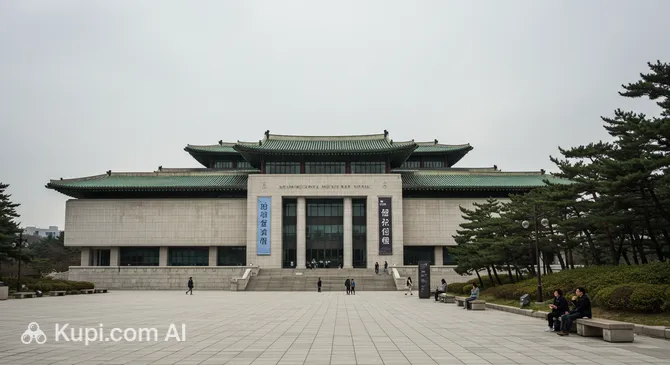
National Museum of Korea. Illustration.
Source: Kupi.com AI

Traveler photos:

The modern museum building, opened in 2005 in the Yongsan district, is an attraction in its own right. Its architecture is inspired by a traditional Korean fortress but built using advanced technology. The building is designed to withstand earthquakes and is equipped with natural lighting systems, creating ideal conditions for viewing the exhibits. In addition to permanent and temporary exhibitions, it hosts numerous educational programs and cultural events.

A visit to the museum is a unique opportunity to immerse yourself in Korea's past. Among the collection's gems are the famous "Pensive Maitreya," a gold crown from the Silla Kingdom, and exquisite Goryeo-era celadon. Additionally, the museum has a special children's section where young visitors can study history in an interactive way. This makes the National Museum of Korea an interesting destination for travelers of all ages.

Contacts

To plan your visit, check the schedule of temporary exhibitions, or get other reference information, it is recommended to contact the museum administration directly. Up-to-date contact details are available on the official website and by phone.

How to contactContact
Address137 Seobinggo-ro, Yongsan District, Seoul, South Korea
Phone number+82 2-2077-9000
Websitewww.museum.go.kr

What to Do

A visit to the National Museum of Korea is a true journey through millennia of history and art. The main activity here is exploring the extensive exhibition halls, which house one of the largest collections in Asia, with about 420,000 exhibits. You'll be able to see everything from ancient prehistoric artifacts to exquisite works of art and everyday items reflecting the country's cultural heritage. The exhibits cover not only Korean history but also introduce the culture of other Asian countries, offering visitors both permanent and temporary exhibitions.

Beyond the main collections, the museum offers many interactive activities. For young visitors, there is a separate Children's Museum, where history comes to life through engaging and educational installations that can be touched and explored. Adults can take part in educational programs, lectures, and workshops. Don't limit yourself to the indoor halls: be sure to walk through the open-air garden, which features stone pagodas and other impressive historical relics.

The National Museum of Korea is designed to make your visit as comfortable as possible. There are cozy cafes, restaurants, and special rest areas on-site where you can have a snack or simply catch your breath after a long walk through the galleries. This makes the museum an excellent place for leisurely exploration, where the whole family can spend an entire day.

Getting There

Getting to the National Museum of Korea is quite simple, as it is located in Seoul's Yongsan-gu district, close to the city's major transport arteries. The most convenient and fastest way is the subway. You will need Ichon Station, which is located at the intersection of Line 4 and the Gyeongui-Jungang Line. Follow the signs to exit #2, and after just a few minutes of leisurely walking towards Yongsan Family Park, you will find yourself at the entrance to the museum complex.

In addition to the subway, you can comfortably reach the museum by numerous city buses that run along the capital's main routes. If you plan to visit by private or rental car, there is spacious parking on the museum grounds, eliminating the need to search for a parking spot. Thanks to such transport accessibility, the journey to one of South Korea's main cultural attractions will be hassle-free.

Nearest city: Seoul

History & Facts

The history of the National Museum of Korea is no less fascinating than its exhibits. Its origins date back to 1909, when the last emperor of the Korean Empire, Sunjong, founded the country's first museum. It was his collection, kept in Changgyeonggung Palace, that formed the basis of the future main museum of the country. It was officially opened in 1945 in Seoul.

However, the path to the present was not always simple. During the mid-20th century, the priceless collections were moved to the city of Busan for safekeeping. In 1954, the exhibits were finally able to return to the capital. Over time, the museum's holdings grew significantly, partly due to mergers with other museum institutions, turning it into the largest repository of national heritage.

A major milestone in the museum's recent history was 2005. That was when it moved to a new, specially designed building in Seoul's Yongsan district. This move not only allowed for a significant expansion of exhibition space but also ensured the highest level of preservation for unique artifacts representing the thousand-year history and culture of South Korea.

Time Needed

When planning a visit to the National Museum of Korea, you should allow several hours to get acquainted with its vast collection. For a full tour of the main exhibits located on three floors, it is recommended to set aside at least 3–4 hours. During this time, you can get a general overview of the key artifacts covering Korean history from ancient times to the early 20th century and see the museum's main masterpieces.

However, if you are a history and art enthusiast or traveling with children, be prepared to dedicate much more time to the museum. For a deeper dive into the exhibits, visiting temporary exhibitions, and participating in interactive programs, you might need a whole day. In particular, the separate Children's Museum offers engaging activities that will keep young explorers busy for a long time. Thus, to fully enjoy everything this cultural complex in Seoul has to offer, it's best not to plan other activities for that day.

Working Hours

The National Museum of Korea is open to visitors from Tuesday to Sunday, though opening hours vary by day of the week. Standard visiting hours on Tuesday, Thursday, and Friday are from 10:00 to 18:00. For those who want to enjoy the exhibits in the evening, the museum stays open until 21:00 on Wednesdays and Saturdays. On Sundays and public holidays, hours are extended until 19:00. It's important to note that the museum is closed on January 1st, as well as on Seollal (Lunar New Year) and Chuseok (Korean Thanksgiving Day).

Admission to the permanent exhibition is free, but special exhibitions may require a separate ticket. As schedules can change, especially during national holidays, it is highly recommended to check for up-to-date information on the museum's official website before your visit to Seoul. Also, keep in mind that permanent exhibits may be closed on the first Monday of April and November for technical maintenance.

DayOpening hours
Monday10:00 – 18:00
Tuesday10:00 – 18:00
Wednesday10:00 – 21:00
Thursday10:00 – 18:00
Friday10:00 – 18:00
Saturday10:00 – 21:00
Sunday10:00 – 18:00

Nearby

Visiting the National Museum of Korea is just one part of a fascinating journey through Seoul. To fully experience the many facets of this city, it's worth exploring its surroundings as well. The Yongsan district, where the museum is located, and the adjacent areas offer many interesting places that can enrich your travel experience.

In the immediate vicinity of the museum, you'll find both historical monuments and modern entertainment centers, allowing you to create a diverse itinerary to suit any taste. A walk through these places will help you better understand the contrast between the ancient culture of South Korea and its dynamic present.

NameDistance
War Memorial of Korea1.4 km
Itaewon Nightclub District1.7 km
Grand Hyatt Seoul2.2 km
Myeongdong Korean BBQ4.2 km
Bound Bar4.3 km
Deoksugung Palace4.7 km
Myeongdong Korean BBQ4.7 km

Have you reached the end of the page?

So the route has been studied inside and out