Support

Changgyeonggung Palace

About

Changgyeonggung Palace (昌慶宮) is one of the five grand royal palaces of the Joseon Dynasty, located in the heart of Seoul, the capital of South Korea. This historical complex is not just an architectural masterpiece but also an important witness to centuries of Korean history and culture, attracting travelers with its refined beauty and atmosphere of the past.
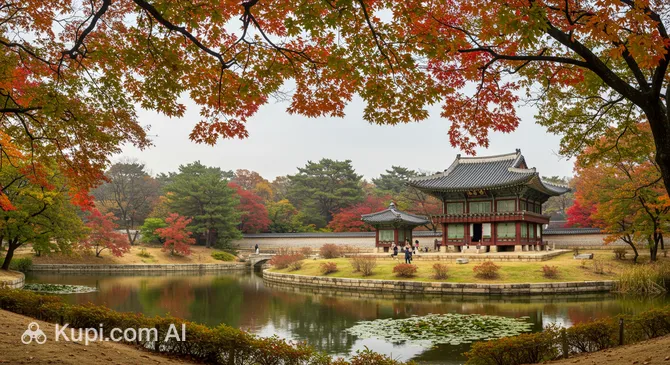
Changgyeonggung Palace. Illustration.
Source: Kupi.com AI

Traveler photos:

Originally built in the mid-15th century as "Suganggung," the palace received its current form and name, Changgyeonggung, in 1483 following a major reconstruction and expansion commissioned by King Seongjong. These changes were aimed at creating more comfortable living conditions for the royal family, particularly for the Queen Dowagers.

Strolling through the vast palace grounds, you will discover many elegant pavilions and halls. Among them is Tongmyeongjeon—the largest building on the grounds, originally intended for the Queen. Every corner of Changgyeonggung breathes history, offering visitors a unique opportunity to touch Korea's heritage and enjoy the tranquility of its gardens, which are especially beautiful in spring during the cherry blossom season and in autumn when the leaves turn vibrant colors.

Contacts

For the most up-to-date information on Changgyeonggung Palace opening hours, admission fees, and available tours, it is recommended to visit the official palace website or contact tourist information centers directly in Seoul. As this is a popular historical site, it is easily accessible by public transport, such as the subway – the nearest stations will help you reach its gates quickly.

How to contactContact
Address185 Changgyeonggung-ro, Jongno District, Seoul, South Korea
Phone number+82 2-762-4868
Websiteroyal.khs.go.kr

What to Do

A visit to Changgyeonggung Palace offers an immersion into Korean history and culture through the exploration of its many buildings and elements of traditional Korean architecture. A highlight is the Tongmyeongjeon Pavilion, the largest structure within the palace complex. Passing through it and climbing the stone stairs, you can see Jagyeongjeon—another significant building with its own stories to tell.

A walk through the palace grounds will lead you to the large Chundangji Pond. Interestingly, part of this picturesque body of water was once a rice field, which legend says was tended by the King himself. This spot is not only pleasing to the eye but also serves as a reminder of past agricultural traditions. To the southeast of Jagyeongjeon, you can find a curious historical artifact: the "pungidae." This is a long pole with a piece of cloth at the end, used in ancient times to measure wind speed and direction, demonstrating the ingenuity of Korean ancestors.

For nature lovers and those who enjoy quiet walks, the botanical garden located behind Chundangji Pond is of particular interest. It still exists today, offering visitors the chance to enjoy a variety of plants and escape the city bustle surrounded by greenery. It is a wonderful place for quiet contemplation and photography, complementing the experience of discovering the architectural heritage of Changgyeonggung Palace.

Getting There

Getting to Changgyeonggung Palace in Seoul is quite easy, as it is conveniently located and well-connected to the city's transport system. This is a popular tourist destination, so there are several ways to reach it depending on your preferences and starting point.

The most common and convenient way for tourists is the subway. The Seoul subway is extensive and efficient. You will need to find the station closest to the palace. Usually, this is Anguk Station on Line 3 (Orange) or Hyehwa Station on Line 4 (Light Blue). From these stations, you can reach the palace on foot in about 10–15 minutes by following the signs for "Changgyeonggung Palace." The walk also allows you to explore the local area a bit.

In addition to the subway, you can reach Changgyeonggung Palace by city bus. Seoul has an extensive network of bus routes, and many pass near major attractions. It is best to check for specific route numbers stopping near the palace at tourist information centers or via online maps and navigation apps, using "Changgyeonggung Palace" as your destination.

If you prefer a more comfortable and direct mode of transport, you can always take a taxi. Taxis in Seoul are available and relatively inexpensive, especially if you are traveling in a small group. Simply tell the driver "Changgyeonggung" or show the name in Korean (창경궁), and you will be taken right to the entrance. A trip from the city center or major hotels won't take long, provided there is no heavy traffic.

Nearest city: Seoul

History & Facts

During the period of Japanese colonial rule, Changgyeonggung Palace underwent dramatic changes that deeply affected its historical essence. The administration at the time established Japanese-style buildings, a zoo, a botanical garden, and a museum on its grounds. These actions altered the site's original purpose, and the palace was renamed "Changgyeongwon"—a name that symbolized an attempt to change its cultural identity.

Even after Korea's liberation, Changgyeonggung Palace did not immediately regain its former glory. For several decades, it continued to be used as a zoo and botanical garden, which was a somber legacy of the past. This situation continued until 1981, when the government of South Korea made the historic decision to fully and meticulously reconstruct the palace complex.

From that moment, large-scale and painstaking work began to restore Changgyeonggung to its original form, aiming to return not only its architectural authenticity but also its status as a valuable historical and cultural monument. Today, thanks to these efforts, Changgyeonggung Palace once again stands in all its splendor. It is one of the key heritage sites of the Joseon Dynasty in Seoul, carefully preserving the country's centuries-old history and cultural traditions, and serving as a powerful reminder of the resilience of the Korean people and their commitment to preserving their heritage.

Time Needed

To get a general overview of Changgyeonggung Palace, tour its main pavilions, and walk along the primary paths, most visitors will need approximately 1.5–2 hours. This is usually enough time to see the key buildings, such as Tongmyeongjeon and Jagyeongjeon, and feel the atmosphere of this historical site.

If you plan a more detailed exploration, want to examine the architectural details closely, visit the botanical garden located behind Chundangji Pond, or simply enjoy the tranquility of the palace gardens at a leisurely pace—especially during cherry blossom season or autumn foliage—it's worth allocating up to 3–4 hours or even half a day. Photography enthusiasts may also spend more time here, finding interesting angles and capturing the beauty of the palace complex.

Overall, the duration of your visit to Changgyeonggung Palace will depend on your pace and the depth of your interest in Korean history and architecture. It is recommended not to rush, so you can fully appreciate the peaceful atmosphere and beauty of this place in Seoul.

Working Hours

Changgyeonggung Palace is generally open to visitors year-round; however, opening hours may vary depending on the season. Typically, palaces in Seoul are open from morning until evening, with the last entry allowed one hour before closing. There is often a weekly closing day, such as Monday. To find the exact schedule for your visit, including potential changes during holidays, it is highly recommended to check the official Changgyeonggung Palace website or contact tourist information centers in Seoul.

Usually, no advance booking is required for a standard visit to Changgyeonggung Palace; tickets can be purchased on-site at the ticket office. However, if you plan to visit the palace as part of a special tour, a night opening (if available), or during major national holidays when high visitor numbers are expected, it is best to check official resources in advance for any booking requirements.

DayOpening hours
MondayClosed
Tuesday9:00 – 18:30
Wednesday9:00 – 18:30
Thursday9:00 – 18:30
Friday9:00 – 18:30
Saturday9:00 – 18:30
Sunday9:00 – 18:30

Nearby

Visiting Changgyeonggung Palace is undoubtedly a highlight, but exploring its surroundings can significantly enrich your experience of Seoul. The area around the palace is saturated with historical and cultural sites, each adding its own touch to the multifaceted portrait of South Korea's capital. By taking the time to explore nearby attractions, you can dive deeper into the city's atmosphere and gain a more complete understanding of its rich heritage.

Many interesting places are within walking distance or easily reachable by public transport from Changgyeonggung Palace, allowing you to plan your day efficiently and see more without spending too much time traveling. Below is a list of some notable sites located nearby, along with approximate distances.

NameDistance
Changdeokgung Secret Garden0.4 km
Gwanghwamun Gate1.6 km
National Palace Museum of Korea1.8 km
Myeongdong Korean BBQ1.8 km
Charles H1.9 km
Four Seasons Hotel Seoul1.9 km
Bound Bar2 km

Have you reached the end of the page?

So the route has been studied inside and out