Support

Donggung Palace and Wolji Pond

About

Donggung Palace and Wolji Pond, also known by its former name Anapji, is a magnificent historical complex located in Gyeongju, the ancient capital of South Korea. The site features a picturesque artificial pond with three small islands and reconstructed pavilions of a palace that was once part of a vast Silla Kingdom palace complex. Its official name is "Gyeongju Donggung Palace and Wolji Pond," emphasizing its historical value.

Originally, this complex served as a secondary palace used as the residence of the Crown Prince. It was also the site of lavish banquets for important national holidays and receptions for honored foreign guests, testifying to its high status during the prosperity of the Silla Kingdom. Excavations in the area have uncovered thousands of artifacts, providing insight into the lifestyle and art of the time.

Today, Donggung Palace and Wolji Pond is one of the most mesmerizing spots in Gyeongju, especially after sunset. As darkness falls, skillful lighting is turned on, and the elegant pavilions reflecting in the calm surface of the pond create a truly magical and unforgettable scene. The name "Wolji" translates as "the pond reflecting the moon," and the night landscape fully justifies this poetic name.
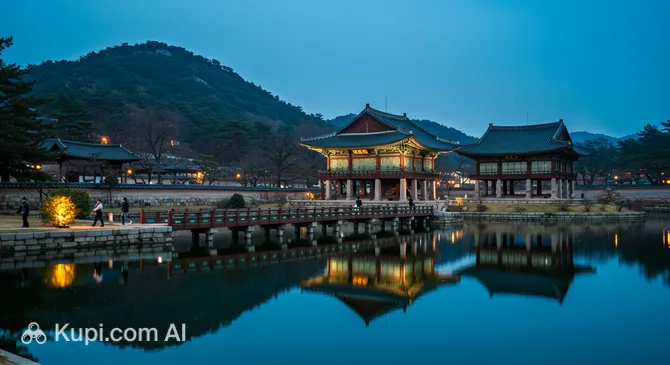
Donggung Palace and Wolji Pond. Illustration.
Source: Kupi.com AI

Traveler photos:

The complex is conveniently located within walking distance of other key city attractions, such as the Wolseong Palace ruins, the ancient Cheomseongdae Observatory, and the Gyeongju National Museum. This makes it a perfect point on any travel itinerary through the historic center of Gyeongju.

Contacts

To plan your visit to Donggung Palace and Wolji Pond, it is recommended to check the current opening hours and ticket prices in advance. You can find all the necessary information on the city's official tourism portal or by calling for details.

How to contactContact
Address102 Wonhwa-ro, Gyeongju, Gyeongsangbuk-do, South Korea
Phone number+82 54-750-8655
Websitegjfmc.or.kr

What to Do

Visitors to Donggung Palace and Wolji Pond can look forward to an unforgettable walk through a picturesque historical area. The main activity here is a leisurely exploration of the ruins of ancient buildings and admiring the still waters of the artificial pond. The place takes on a special magic at dusk when the evening illumination comes on. It is at this time that the pond fully lives up to its name "Wolji," meaning "a pond where the moon is reflected," creating a truly fairy-tale and peaceful atmosphere.

During your visit, you can dive deeper into the history of ancient South Korea. Guests can examine the architectural features of the palace complex, characteristic of the Silla era, and learn more about the archaeological finds made on its grounds. This is a wonderful opportunity to feel the atmosphere of the ancient Korean capital and imagine the lavish receptions and ceremonies that took place here centuries ago.

The complex is part of the massive "open-air museum" for which Gyeongju is famous. Thanks to its convenient location, a visit to Donggung Palace and Wolji Pond is easy to combine with other iconic attractions nearby, such as the Cheomseongdae Observatory and the Gyeongju National Museum. This makes it a must-see on the itinerary of any traveler wishing to experience the city's rich heritage.

Getting There

Getting to Donggung Palace and Wolji Pond is quite easy, as it is conveniently located in the historical center of Gyeongju. The city itself has excellent transport links with South Korea's major metropolises. Travelers can reach Gyeongju by high-speed train or intercity bus from Seoul or Busan. The train journey from Seoul takes just over two hours, while from Busan it takes about 35 minutes.

Upon arrival at Gyeongju's train or bus station, the palace complex can be easily reached by local public transport. Numerous city buses run along routes that stop near the attraction. Alternatively, you can take a taxi for a quick and comfortable ride. For those traveling by private car, parking is available on the premises.

The palace and pond are located in the Inwang-dong district, across the street from the Wolseong Palace ruins. A nice bonus is that other iconic Gyeongju sites—the ancient Cheomseongdae Observatory and the Gyeongju National Museum—are just a 10-minute walk away. This close proximity makes it easy to include the palace in a walking tour of the city's main historical monuments.

Nearest city: Gyeongju

History & Facts

The history of this picturesque site in Gyeongju dates back to 674 AD, during the reign of Munmu the Great, the 30th king of the Silla Kingdom. According to the famous historical chronicle "Samguk Sagi," the ruler ordered the creation of an artificial pond on the palace grounds, with hills built from the excavated earth for a beautiful garden. This complex was designed not just as a place of rest, but as an embodiment of a utopian world, where rare plants and exotic birds were brought.

After the fall of the prosperous Silla Kingdom in the 10th century, the palace complex was abandoned and fell into neglect for centuries. During the Goryeo and Joseon dynasties, the site became known as "Anapji", which can be translated as "pond of geese and ducks." This name reflected the state of desolation, where wild birds became the only inhabitants of the once-magnificent royal garden.

The original and more poetic name of the pond was only rediscovered in the 20th century. During archaeological excavations in the 1980s, a fragment of pottery was found with the characters "Wolji", meaning "a pond where the moon is reflected." This find proved that the original name was associated with beautiful night landscapes rather than neglect. Following this discovery, the historical complex in South Korea was officially renamed and is today known as Donggung Palace and Wolji Pond, reclaiming its former glory and romantic name.

Time Needed

To fully explore Donggung Palace and Wolji Pond, it is recommended to set aside about 1–2 hours. This is plenty of time to take a leisurely stroll through the complex, see the reconstructed pavilions, and enjoy the peaceful views of the pond. This visit duration will allow you to see the main exhibition without rushing and take beautiful souvenir photos.

However, if you plan to visit in the evening to catch the famous illumination, it's worth allowing a bit more time. The nighttime views of the palace reflecting in Wolji Pond are a hallmark of Gyeongju, and many tourists come here specifically for this sight. To fully enjoy the magical atmosphere and take stunning photos, it’s best to allocate extra time, as an evening walk encourages a more meditative and contemplative experience.

Working Hours

Donggung Palace and Wolji Pond is one of those attractions open to visitors year-round, making it accessible in any season. The complex is open daily from 09:00 to 22:00. It is important to note that ticket sales and entry to the grounds stop half an hour before closing, at 21:30. Since the evening hours when the lights are turned on are particularly popular, it is recommended to arrive early to avoid queues.

Usually, no advance booking is required for individual visits; tickets can be purchased on-site. However, for tour groups or if you wish to use a guide, it is worth checking the conditions in advance, for example, through travel services. Otherwise, the visit is very easy to organize, allowing visitors to Gyeongju to easily include this magical corner of South Korea in their itinerary.

9:00 – 22:00

Nearby

A visit to Donggung Palace and Wolji Pond is just the beginning of your exploration of Gyeongju's rich heritage. The city is often called an "open-air museum," and that is no exaggeration. Many of the key historical monuments from the Silla era are within walking distance of each other, making it easy to plan a rich walking itinerary. Exploring the area around the palace will not only save you time but also help you dive deeper into the atmosphere of the ancient capital of South Korea.

A walk to nearby attractions will enrich your experience, allowing you to see the full picture of the grandeur and cultural diversity of the Silla Kingdom. Just a few minutes' walk away are ancient temples, ruins of majestic structures, and the oldest surviving observatory in Asia. Below is a list of interesting sites located very close to the palace complex.

NameDistance
Hwangnyongsa Temple Site0.6 km
Gyeongju National Museum0.6 km
Hwangnyongsa History and Culture Hall0.6 km
Cheomseongdae Observatory0.7 km
Woljeong Bridge1 km
Hwangnam House1.1 km
Ryoko1.2 km

Have you reached the end of the page?

So the route has been studied inside and out