Support

Cheonmachong Tomb

About

The Cheonmachong Tomb, also known as the Heavenly Horse Tomb, is an impressive ancient burial monument located in the historical city of Gyeongju, the heart of South Korea's ancient heritage. Externally, it is a majestic burial mound in the shape of a semi-circular hill, reaching about 50 meters in diameter and 12.7 meters in height, covered with lush green grass. This tomb is one of the most famous and significant royal burial sites of the ancient Silla Kingdom, which ruled from 57 BC to 935 AD.
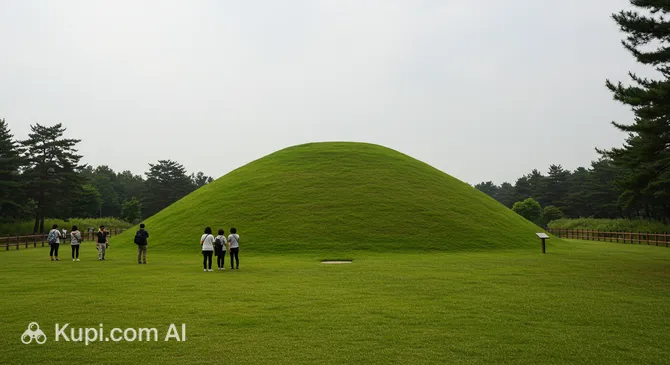
Cheonmachong Tomb. Illustration.
Source: Kupi.com AI

Traveler photos:

Inside this earthen mound lies a medium-sized burial chamber, meticulously finished with wood. Its internal dimensions are 2.1 meters in height, 6.5 meters in length, and 4.2 meters in width. The Cheonmachong Tomb is not an isolated structure; it is an important part of a larger burial complex located in the picturesque grounds of Gyeongju's Daereungwon Ancient Tombs Park. In total, there are 23 mounds in this park, which serve as the final resting place for kings, queens, and nobility of the powerful Silla state.

The Cheonmachong Tomb serves as a striking example of the monumental style of burial architecture characteristic of the ancient Silla capital, Gyeongju. This historical site is of immense cultural value to South Korea, clearly demonstrating the high level of architectural and artistic development of the ancient Korean state. Visiting the tomb allows you to touch the rich history of the region and feel the greatness of a bygone era, making it an essential stop on the itinerary of any traveler interested in ancient history and culture.

Contacts

Since the Cheonmachong Tomb is a historical site and part of the larger Daereungwon Ancient Tombs complex, individual contact details for the tomb itself may not be available. To obtain the most accurate and up-to-date information regarding opening hours, admission fees, and directions, we recommend consulting official Gyeongju tourism resources or contacting the Daereungwon Park administration directly.

How to contactContact
Address14 Gyerim-ro, Hwangnam-dong, Gyeongju, Gyeongsangbuk-do, South Korea

What to Do

Visitors to the Cheonmachong Tomb are given a unique opportunity not only to view the majestic mound from the outside but also to look inside, where a museum space is now located. The main value of this place is the chance to see authentic archaeological finds discovered during the excavations. Particular attention is drawn to the white horse painting, known as "Cheonmado"—one of the best-preserved images from the ancient Silla era. This artifact literally allows you to touch art from a millennium ago.

During the tour of the tomb, you can get a deeper understanding of the burial traditions of the Silla Kingdom. The exhibition features numerous artifacts found here, including exquisite gold jewelry and other valuable items. These finds testify to the high level of development of crafts and arts at that time. Just imagine, during the excavations, more than 11,500 artifacts and remains of Silla rulers and aristocrats were discovered, along with their jewels, providing an insight into the wealth and power of this ancient civilization.

A visit to the Cheonmachong Tomb is not just an inspection of an ancient burial site, but a true immersion into history. You will be able to see with your own eyes objects used by people many centuries ago and better understand the culture and daily life of the Silla state. This is an unforgettable experience for anyone interested in ancient civilizations and archaeology.

To make your journey into history even more complete, a visit to the Cheonmachong Tomb can be successfully combined with exploring other significant historical attractions in Gyeongju. Iconic sites like the Cheomseongdae Royal Observatory and the former royal garden of Poseokjeong are located nearby. Such a comprehensive tour will allow you to form a more holistic view of the rich culture and impressive architecture of the ancient Silla Kingdom.

Getting There

The Cheonmachong Tomb is conveniently located in the famous city of Gyeongju, often referred to as a "museum without walls." You will find it within the expansive and well-maintained Daereungwon Ancient Tombs complex, where many ancient burial mounds are concentrated. Reaching this historical heart of South Korea is quite straightforward.

To reach Gyeongju itself, you have several convenient options. Comfortable trains (including high-speed KTX) and intercity buses depart regularly from major South Korean cities like Seoul, Busan, or Daegu. Your choice of transport depends on your travel time preferences and budget, but both options ensure a pleasant journey to the ancient Silla capital.

Upon arrival at the Gyeongju railway station or bus terminal, there are several ways to reach the Cheonmachong Tomb. The most direct way is by taxi, which will take you to Daereungwon Park in a short time. Alternatively, you can use local city buses—many routes pass near the park. Feel free to check the required bus number at a tourist information center or with locals.

For those who want to see as many attractions as possible, special City Tour Buses operate in Gyeongju. They stop at all key historical sites, including Daereungwon Park and, accordingly, the Cheonmachong Tomb. This is an excellent way to get to know the city if you have limited time. Also, if you are staying in central Gyeongju, a walk to the tomb can be a pleasant addition to your itinerary.

Nearest city: Gyeongju

History & Facts

The Cheonmachong Tomb is not just an ancient burial site, but a window into the world of the powerful Silla Kingdom, which existed from 57 BC to 935 AD. One of the notable features of Silla burial traditions reflected in this tomb is that not only the remains of a single ruler but also several members of the royal family or high aristocracy could be laid to rest here. This indicates complex social ties and a special reverence for ancestors in Silla culture.

The famous white horse painting, known as "Cheonmado," holds exceptional historical and cultural value. It is this discovery that gave the tomb its poetic name—"Heavenly Horse Tomb." This image is one of the few excellently preserved examples of Silla-era fine art to have reached the present day, making it truly priceless. In addition to the "Cheonmado," many other artifacts were discovered in the tomb, including exquisite gold jewelry and everyday items that speak volumes about the high level of craftsmanship, wealth, and sophisticated culture of the ancient Korean state.

The architectural design of the Cheonmachong Tomb also deserves close attention. It vividly reflects the characteristic features of burial architecture inherent to the Three Kingdoms of Korea period. Researchers note that the wooden structures inside the burial chamber, as well as the unique technique of painting them, demonstrate an amazingly early use of methods that later became characteristic of Korean architecture. Thus, the tomb serves as a vital source of information for studying ancient Korean architecture and construction technologies, allowing for a better understanding of the engineering and artistic achievements of that time.

Time Needed

To fully explore the Cheonmachong Tomb and carefully examine the artifacts presented inside, most visitors will need approximately 1-2 hours. This time is usually sufficient to leisurely study the exhibition, including the famous Heavenly Horse painting, and soak in the atmosphere of this ancient burial site.

However, it is worth considering that the Cheonmachong Tomb is just one of the gems in Gyeongju's string of historical monuments. It is located within a larger historical complex—Daereungwon Park, which houses other Silla-period mounds. If you plan to explore not only the tomb itself but also walk through the park and perhaps visit other nearby attractions of the ancient capital, it is better to set aside significantly more time.

Thus, if your interest is focused solely on the Cheonmachong Tomb, 1-2 hours will be quite enough. But for a deeper immersion into the history of Gyeongju and a tour of the entire historical area where the tomb is located, it is recommended to plan at least half a day, or even a full day. This will allow you to enjoy all the treasures of this amazing museum-city without rushing.

Working Hours

The Cheonmachong Tomb is generally open to visitors year-round; however, exact opening hours may vary depending on the season. Usually, access to Daereungwon Park, where the tomb is located, is provided during daylight hours. To find out the current schedule and any possible changes, it is strongly recommended to check the official Gyeongju tourism website or the information boards directly before your visit.

Regarding the need for advance ticket booking, it is generally not required for individual visitors. However, if you are planning a visit as part of a large group or during the peak tourist season, checking this in advance may be useful. In any case, for the latest information on opening hours, ticket prices, and potential restrictions, it is always best to contact official sources or tourist information centers in Gyeongju.

9:00 – 22:00

Nearby

A visit to the Cheonmachong Tomb is undoubtedly an immersion into the deep history of Gyeongju. However, to make your journey even more fulfilling and memorable, it is worth paying attention to the nearby attractions. Exploring the surroundings will allow you to get a more complete picture of the rich cultural heritage of this amazing city in South Korea and see how the past harmoniously blends with the present.

Near the Cheonmachong Tomb, there are several interesting places that will complement your experience and help you get to know Gyeongju better. Below is a list of some of them, along with approximate distances.

NameDistance
Hwangnidan-gil0.1 km
Daereungwon Tomb Complex0.1 km
Bar Boon0.3 km
Ryoko0.4 km
Ryomi0.4 km
Hwangnam House0.6 km
Jungang Market0.7 km

Have you reached the end of the page?

So the route has been studied inside and out