Support

Woljeong Bridge

About

Woljeonggyo Bridge (월정교) is a famous historical wooden bridge and one of the primary architectural and cultural landmarks of Gyeongju, South Korea. This bridge is more than just a functional river crossing; it is a true work of art that draws tourists with its beauty and a rich history dating back to the Silla era.
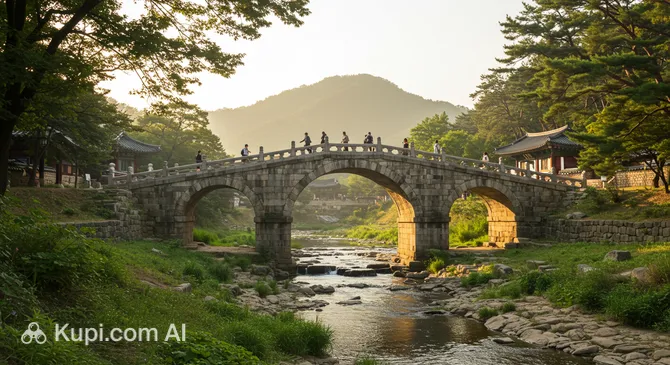
Woljeong Bridge. Illustration.
Source: Kupi.com AI

Traveler photos:

The significance of Woljeonggyo Bridge to Gyeongju is immense: it links vital historical areas of the city, including the ancient Wolseong royal residence and the sacred Mount Namsan. Following a thorough reconstruction based on historical records and archaeological findings, Woljeonggyo was recognized as the largest wooden bridge in the country. This highlights not only its impressive scale but also the commitment to preserving cultural heritage.

The architecture of Woljeonggyo Bridge is truly impressive. Its majestic two-story construction with elegant gate towers on either side creates a unique and easily recognizable silhouette against the picturesque Korean landscape. A walk across the bridge allows you to experience the atmosphere of antiquity and admire the surrounding views, making it a must-visit for anyone interested in the history and culture of South Korea.

Contacts

Planning a visit to Woljeonggyo Bridge? To clarify details such as opening hours or information about events, you can use the following contact details. Additional helpful information for travelers can be found on the official tourism website of the city of Gyeongju.

How to contactContact
Address48 Gyo-dong, Gyeongju, Gyeongsangbuk-do, South Korea
Phone number+82 54-779-6138
Websiteguide.gyeongju.go.kr

What to Do

Visiting Woljeonggyo Bridge is more than just a walk across a picturesque wooden structure. By heading to the second floor of the towers, known as "mullu," you can visit digital exhibition halls. These halls feature fascinating displays about the history of the bridge's construction, its painstaking restoration, and the cultural relics discovered during the work. It is a wonderful opportunity to gain a deeper understanding of this historical site's importance to Gyeongju.

Woljeonggyo Bridge is a magnet for photographers and architecture enthusiasts. Its harmonious blend of traditional Korean architecture and modern restoration techniques leaves a lasting impression. The bridge is especially enchanting in the evening, when beautiful lighting is turned on, creating a magical atmosphere for leisurely walks and striking photo sessions. This is a sight that is definitely worth seeing.

Furthermore, the bridge's convenient location makes it easy to combine a visit with other iconic spots in Gyeongju. Nearby, you will find historical villages and ancient temples, making a trip to Woljeonggyo Bridge part of a broader and more enriching tour of this amazing city in South Korea.

Getting There

Reaching the city of Gyeongju, where Woljeonggyo Bridge is located, is quite straightforward from major cities in South Korea. The most popular options are trains or intercity buses, which run regularly from places like Seoul or Busan. Such a trip can be a pleasant part of your journey, offering views of picturesque Korean landscapes.

Upon arriving in Gyeongju, the quickest way to reach Woljeonggyo Bridge from the railway station is likely by taxi. Alternatively, you can take a city bus; look for the Gyochon area or simply ask locals for directions to "Woljeonggyo" (월정교)—they will be happy to help. The bridge itself is located at 31, Gyochonan-gil.

Woljeonggyo Bridge is conveniently situated near other significant tourist sites in Gyeongju, so it is often included in walking or cycling tours of the city. The infrastructure around the bridge is well-developed: you will easily find signs and information boards, including some in multiple languages, which greatly simplifies navigation for international tourists.

Nearest city: Gyeongju

History & Facts

Woljeonggyo Bridge has a rich and ancient history rooted in the Unified Silla period. According to the "Samguk Sagi" (History of the Three Kingdoms), this magnificent bridge was originally built in 760, during the 19th year of King Gyeongdeok's reign. Its strategic importance was immense, as it connected two key areas of the ancient capital of Gyeongju: the Wolseong Royal Palace and the sacred Mount Namsan, playing a vital role in the life of the city.

Unfortunately, during the Joseon Dynasty, the original Woljeonggyo Bridge was destroyed. For many centuries, this important link between historical parts of the city was missing, remaining only as a memory in chronicles and legends. The loss of such a significant architectural landmark was deeply felt in the cultural landscape of Gyeongju.

The idea of restoring Woljeonggyo Bridge began to take shape thanks to meticulous historical research conducted from 1984 to 1986. It was then confirmed that the original bridge was entirely wooden, providing the foundation for future reconstruction. Large-scale restoration work began in 2008 and was completed in 2018, recreating not only the bridge spans but also the majestic towers on both sides. Today, the restored Woljeonggyo Bridge stands as one of the most striking examples of historical architectural recreation in South Korea, impressing visitors with its beauty and authenticity.

Time Needed

For exploring Woljeonggyo Bridge and its surroundings, a typical visitor is recommended to set aside approximately 30 minutes to 1 hour. This will be enough time to take a leisurely stroll across the bridge, enjoy the views of the river and the surrounding landscape, and take some memorable photos.

This timeframe also allows for a visit to the small exhibition halls located in the towers on both sides of the bridge. The exhibits detail the history of the construction and reconstruction of this unique structure. If you plan to study the materials more closely or simply want to soak in the atmosphere longer—especially in the evening when the lights come on—you might want to allow a bit more time.

Overall, Woljeonggyo Bridge is an attraction that can be seen relatively quickly but leaves a lasting impression. Visiting it is easy to fit into a broader itinerary of Gyeongju and its numerous historical monuments.

Working Hours

Woljeonggyo Bridge is generally open to visitors year-round and at any time of day, allowing you to enjoy its beauty both in daylight and in the evening when the illumination is on. You are free to walk across the bridge and admire its architecture and the surrounding scenery.

However, please note that the exhibition halls located within the bridge towers may have their own operating hours. As the exact opening times for these halls can vary, it is highly recommended to check the latest information on the official Gyeongju tourism website or on-site before your visit. Typically, no advance booking or ticket purchase is required for a simple walk across the bridge.

9:00 – 22:00

Nearby

The area surrounding Woljeonggyo Bridge is full of interesting discoveries that can greatly enrich your travel experience. This magnificent bridge is just one of the gems in the historical necklace of Gyeongju, a city that literally breathes antiquity and culture.

Exploring nearby attractions will allow you to delve deeper into the rich history of South Korea. Many of these unique sites are within walking distance, making them a convenient addition to your walk across Woljeonggyo Bridge and its surroundings. Below is a list of some of them, including their distance from the bridge:

NameDistance
Gyochon Traditional Village0.3 km
Cheomseongdae Observatory0.6 km
Hwangnam House0.7 km
Ryoko0.8 km
Gyeongju National Museum0.9 km
Donggung Palace and Wolji Pond1 km
Bar Boon1 km

Have you reached the end of the page?

So the route has been studied inside and out