Support

Manjanggul Lava Tube

About

The Manjanggul Lava Tube, also known as Manjanggul, is a true natural wonder located on Jeju Island in South Korea, near Jeju City. This impressive cave is one of the longest lava tubes in the world and is rightfully included in the UNESCO World Heritage list as part of the Jeju Volcanic Island and Lava Tubes. Visitors can expect a fascinating journey into the depths of the Earth, where time seems to have stood still.
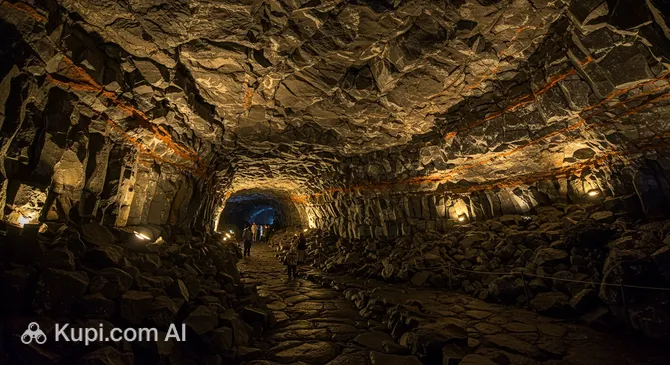
Manjanggul Lava Tube. Illustration.
Source: Kupi.com AI

Traveler photos:

Manjanggul is a grand underground tunnel formed thousands of years ago by volcanic activity. As molten lava flowed across the surface, its outer layer began to cool and harden, while the inner, more liquid mass continued its movement, leaving behind this striking hollow structure. The scale of the cave is breathtaking: the ceiling height in some sections reaches 30 meters, and the width is up to 23 meters, creating the feeling of being inside a giant natural cathedral.

A one-kilometer section of this multi-kilometer system (the cave's total length is about 13.4 km) is open to tourists, which is plenty to appreciate its grandeur. Inside the Manjanggul Lava Tube, you can see amazing geological formations: whimsical stalactites and stalagmites, massive columns, and unique "lava icicles" formed from solidified lava. A walk through this underground world will provide unforgettable impressions and allow you to touch the ancient history of our planet.

Contacts

For the most up-to-date information regarding opening hours, ticket prices, and other visiting details for the Manjanggul Lava Tube, you can use the following contact information. It is always recommended to check official resources or contact the Jeju Island Tourist Information Center, as details may change.

How to contactContact
Address182 Manjanggul-gil, Gujwa-eup, Cheju, Jeju-do, South Korea
Phone number+82 64-710-7903
Websitewww.jeju.go.kr

What to Do

Visiting the Manjanggul Lava Tube is a unique opportunity to immerse yourself in an amazing underground world created by the forces of nature. The main activity here is exploring the roughly one-kilometer section of the cave open to the public. During this walk, visitors can witness striking geological formations firsthand. One of the most impressive sites is the "Stone Pillar Supporting the Sky"—a giant column of solidified lava reaching a height of 7.6 meters. It is one of the largest such formations in the world and leaves a lasting impression.

In addition to the stone pillar, visitors can admire other unique features of the cave. For example, the "Golden Wall", where mineral deposits on the walls create a stunning shimmer when illuminated, adding mystery and beauty to this underground kingdom. Inside the cave, you can also see various lava stalactites, stalagmites, and other whimsical shapes formed by flows of molten rock. For the comfort and safety of visitors, a concrete path with handrails and lighting has been installed, making the tour convenient and accessible.

Inside the Manjanggul Lava Tube, a constant temperature ranging from approximately 11-21°C is maintained year-round. This makes it a pleasant place to visit, especially during the hot summer months when you can escape the heat here. Additionally, the cave is home to some rare species of bats and insects that have adapted to life in unique conditions of darkness and constant humidity. Spotting these creatures, if you're lucky, can be another interesting aspect of your visit.

Before heading into the underground journey or after finishing it, visitors can stop by the small information center located at the cave entrance. It features an exhibit that tells the detailed story of how lava tubes are formed, the geological history of Jeju Island, and the unique characteristics of the Manjanggul Lava Tube itself. This helps to better understand what you've seen and appreciate the scale of this natural phenomenon.

Getting There

The Manjanggul Lava Tube is located in the northeastern part of the picturesque Jeju Island, approximately 30 kilometers from Jeju City. There are several ways to reach this unique natural site, allowing you to choose the most convenient option for your trip.

One of the most affordable methods is public transport. Buses run regularly from Jeju City to the cave. Routes #710 or #710-1 will take you to the "Manjanggul Cave" stop. The bus ride takes roughly 50-60 minutes. From the bus stop, it's a short 15-minute walk to the entrance of the lava tube, following the signs. This is a great choice for budget travelers looking to soak up the local atmosphere.

For a more comfortable and faster journey, consider taking a taxi or renting a car. The drive from Jeju City to the Manjanggul Lava Tube takes about 40 minutes. This option is especially convenient if you are traveling in a group or plan to visit several of the island's attractions in one day. Free parking is available on-site for those who drive. Navigation apps easily find the cave by searching for "Manjanggul Cave" or its Korean name "만장굴".

Additionally, many tour companies on Jeju Island offer organized excursions that often include the Manjanggul Lava Tube alongside other iconic natural and cultural sites. This is a convenient option for those who prefer ready-made solutions and want to skip the hassle of independent planning and logistics.

Nearest city: Jeju City

History & Facts

The Manjanggul Lava Tube boasts a rich geological history dating back hundreds of thousands of years. Its formation is linked to the volcanic activity of Mount Geumsan, part of the extensive Hallasan volcanic system—the highest point in South Korea. Roughly 200,000 to 300,000 years ago, powerful flows of molten lava erupted from the volcano's crater, surging toward the sea. As the outer layers of these lava rivers cooled and solidified, the hotter, liquid mass inside continued to flow, eventually creating the impressive hollow structure we know today as Manjanggul.

Despite its ancient age, the Manjanggul Lava Tube was discovered relatively recently, in 1946. It was found by a local resident who stumbled upon one of the cave entrances while exploring. Scientific study of this unique natural site only began in the 1970s, and it opened its doors to the general public in 1976. A significant milestone in Manjanggul's history was its inclusion on the UNESCO World Heritage list in 2007, alongside other volcanic sites on Jeju Island. This recognition greatly enhanced its status and appeal to travelers from around the world.

In Korean folklore, the Manjanggul Lava Tube is surrounded by many fascinating legends. One explains the origin of the name "Manjanggul": the word "manjang" supposedly means "ten thousand tables." Legend has it that in ancient times, ten thousand people could feast simultaneously in the cave's spacious halls, highlighting its grand scale. Another tale suggests the cave served as a reliable sanctuary for locals during turbulent historical periods or as a secret passage to the sea. These stories add a mystical aura and cultural significance to this amazing natural creation.

Time Needed

For a full experience at the Manjanggul Lava Tube, a typical visitor is recommended to set aside about 1-1.5 hours. This is enough time to walk leisurely through the entire section of the cave open to tourists, which is about one kilometer one way. During this time, you can carefully examine impressive geological formations, such as the famous lava column, take photos, and return to the exit.

If you also plan to visit the small information center located at the cave entrance to learn more about its formation and unique features, you should add another 20-30 minutes to your total time. Thus, exploring the attraction itself and the exhibits will take up to two hours.

It is also important to consider travel time to the Manjanggul Lava Tube from Jeju Island's main tourist hubs. Including the transfer, it's best to allow half a day for the entire excursion to this wonderful natural landmark so that your journey is unhurried and leaves only pleasant impressions.

Working Hours

The Manjanggul Lava Tube is open to visitors most of the year, though operating hours vary by season. From March to October, the cave can be visited daily from 9:00 AM to 6:00 PM. Between November and February, the hours are shorter, and it is open from 9:00 AM to 5:00 PM. It's important to remember that the last entry is allowed one hour before the official closing time. Additionally, the Manjanggul Lava Tube is closed for maintenance and scientific research on the first Monday of every month.

Special advance booking is generally not required, but it's always useful to check information during peak seasons or for large groups. It's also worth noting that on days with heavy rain, the cave may be temporarily closed for safety reasons, as water can accumulate inside. Therefore, before your visit, it is recommended to check for current information on opening hours and possible restrictions on the attraction's official website or at local tourist information centers in Jeju City.

Nearby

Visiting the Manjanggul Lava Tube will undoubtedly be a highlight of your trip to Jeju Island. However, to make your experience even more complete and diverse, it's worth exploring other interesting spots nearby. The surroundings of this unique natural landmark are rich with both natural wonders and man-made attractions that offer new discoveries.

Exploring nearby attractions will allow you to dive deeper into the atmosphere of Jeju City and South Korea, see more, and gain a more comprehensive understanding of this amazing part of the world. Below is a list of several interesting places located relatively close to the Manjanggul Lava Tube, along with their approximate distances.

NameDistance
Gimnyeong Maze Park1 km
Gimnyeong Beach3.5 km
Woljeongri Beach3.9 km
Maze Land5.2 km
Snoopy Garden9.4 km
Hamdeok Beach9.5 km
Ecoland13.2 km

Have you reached the end of the page?

So the route has been studied inside and out