Support

Hallasan National Park

About

Hallasan National Park is a true gem located in the heart of Jeju Island in South Korea. This unique nature reserve is situated within the Jeju City area and attracts travelers with its pristine beauty and rich ecosystem. At the center of the park stands the majestic extinct volcano Hallasan, which proudly holds the title of the country's highest mountain, reaching an elevation of approximately 1,950 meters above sea level.
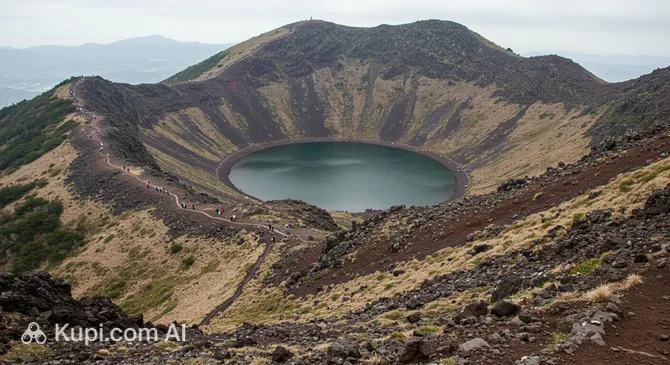
Hallasan National Park. Illustration.
Source: Kupi.com AI

Traveler photos:

The park covers an impressive area of approximately 153 square kilometers. The landscape of Hallasan National Park is incredibly picturesque: more than 360 smaller volcanic peaks, known as "oreums," are scattered around the main volcanic summit. These unique geological formations create a one-of-a-kind panorama and make walking along the park's numerous trails particularly exciting.

Hallasan National Park is not only home to impressive volcanic landscapes but also a true oasis of biodiversity. Over 1,800 plant species and more than 4,000 animal species have been recorded here, including a vast number of insects, many of which are endemic—meaning they are found only in this area. Due to its exceptional natural value, the park is included in the UNESCO Biosphere Reserve network and recognized as a World Heritage site, emphasizing its global importance for preserving unique ecosystems and making it a must-visit for nature lovers.

Contacts

To get the latest information on Hallasan National Park's operating hours, trail conditions, and other important planning details, you can use the official contact channels. It is recommended to check the current information on the website or call before your trip, especially if you plan on hiking or taking long walks in the park.

How to contactContact
AddressSouth Korea, Jeju-do, Cheju, 특별자치도, 1100로 2070-61
Phone number+82 64-747-9950
Websitewww.jeju.go.kr

What to Do

The main magnet for visitors to Hallasan National Park is undoubtedly hiking and trekking. For outdoor enthusiasts, several well-equipped trails are available, varying in difficulty and length. You can choose a path leading to the famous Baeknokdam crater at the very top of the mountain, which offers breathtaking panoramic views, or head off to explore the picturesque surrounding oreums—smaller volcanic cones scattered across the slopes.

A special feature of the park is its unique vertical climate zoning, which results in a striking variety of flora and fauna on its slopes. As you travel along the trails, you literally move from one natural zone to another—from subtropical forests at the base to alpine meadows near the summit. Each season gives the park its own unique charm: in spring, the slopes are covered with bright carpets of blooming rhododendrons; in summer, lush greenery prevails; autumn paints the foliage in gold and crimson tones; and in winter, a blanket of white snow turns Hallasan into a fairytale landscape.

In addition to hiking, Hallasan National Park offers other ways to enjoy its beauty. It is an excellent place for birdwatching, as it is home to many bird species. Photography enthusiasts will find countless subjects for their shots—from grand panoramas to the smallest details of unique plants. Here, you can spend hours studying rare species of flora, many of which are endemic, or simply enjoy the crystal-clear mountain air and the peaceful unity with nature.

Getting There

Hallasan National Park is conveniently located in the central part of Jeju Island, near the city of Jeju City. Getting to the park from Jeju City or Seogwipo, the island's other major city, is quite simple. A trip by car or local bus usually takes about 30–40 minutes. The main entrances to the park, where popular hiking trails begin, are located at the Seongpanak and Gwaneumsa trail information centers.

To reach Jeju Island itself, from where you can head to Hallasan National Park, there are several convenient options. Air travel is the most popular choice: there are regular flights from mainland South Korea, with planes arriving at Jeju International Airport from many cities. For those who prefer sea travel, ferry services connect the island with several ports on the mainland.

Jeju Island has a well-developed public transport network. Numerous bus routes allow tourists to easily travel between settlements and reach various attractions, including the starting points of the trekking routes in Hallasan National Park. This makes visiting the park convenient even for those who choose not to rent a car. Taxis are also available, but a trip from the center of Jeju City or Seogwipo to the park entrances will cost more than taking the bus.

Nearest city: Jeju City

History & Facts

The history of Hallasan National Park is closely linked to the recognition of its unique natural value. Initially, in 1966, this territory was declared a nature reserve. Just four years later, in 1970, it was granted the higher status of a national park and natural monument. This was an important step towards preserving the unique ecosystems and landscapes of Mount Hallasan for future generations.

International recognition followed shortly after. In 2002, the park's territory joined the prestigious UNESCO Biosphere Reserve network, highlighting its global importance for biodiversity conservation. The peak of this recognition came in 2007, when Hallasan was added to the UNESCO World Heritage List. This decision was based on its outstanding natural and geological features, including its volcanic origin and unique flora and fauna.

The name of the mountain itself—Hallasan—carries deep meaning and reflects its majesty in the culture of Jeju Island. In translation, it means "a mountain high enough to reach the galaxy." This poetic name emphasizes not only the physical height of the volcano but also its spiritual significance for local residents. For many centuries, the mountain has been considered a sacred place, an object of worship, and a source of inspiration.

Indeed, the majestic landscapes of Hallasan, its seasonally changing scenery, and its special atmosphere have always attracted creative people. Artists sought to capture its beauty on canvas, and poets praised it in their works. Thus, Hallasan National Park is not just a natural site, but an important part of the cultural and historical heritage of South Korea and, specifically, Jeju Island.

Time Needed

When planning a visit to Hallasan National Park, you should consider how much time you are willing to dedicate to its exploration. For a complete experience, especially if you aim to reach the summit, it is recommended to set aside at least one full day. The ascent of Mount Hallasan and the descent back down one of the main trails usually takes between 5 and 9 hours. This time may vary depending on the trail you choose, its difficulty, and your physical fitness.

If your plans include more than just the climb, such as a more detailed exploration of the scenic surroundings, leisurely observation of the park's unique flora and fauna, or perhaps a picnic in one of the designated areas, it is better to plan for one or two days at Hallasan National Park. This will allow you to enjoy all the park's beauties without rushing and get the most out of your encounter with Jeju Island's nature.

Working Hours

Hallasan National Park is pleased to welcome visitors year-round; however, specific operating hours and the times by which entry to the trails is permitted can vary significantly. This depends on the current season, weather conditions, and even the chosen trail. Generally, access to the main hiking routes opens early in the morning and closes around noon to ensure tourists have enough time to safely complete their hike before dark.

Since the exact schedule can change, it is highly recommended to check for current information on the official Hallasan National Park website before traveling to Jeju City and visiting the park. There, you can also find information regarding the need for advance reservations or registration for certain trails or during peak seasons, if such requirements exist. This will help you plan your visit in the best possible way and avoid any unpleasant surprises.

5:00 – 18:00

Nearby

Visiting a major attraction like Hallasan National Park is an unforgettable experience in its own right. However, to make your trip to Jeju City even more rewarding and complete, it is worth taking the time to explore its surroundings. Often, it is the smaller but interesting nearby locations that help you gain a deeper understanding of the region's culture and atmosphere, opening up new facets of your adventure.

The area around Hallasan National Park offers a range of fascinating sites that can complement your itinerary. From other natural wonders to cultural and gastronomic spots, getting to know them will allow you to form a more complete picture of Jeju Island and its unique features. Below is a list of some nearby attractions, along with their approximate distances from the park.

NameDistance
Hallasan Summit0.2 km
Seogwipo Healing Forest7 km
Jeju Citrus Museum11.9 km
Nine Bridges12.3 km
Halla Arboretum12.8 km
Podo Museum14.6 km
Jungjong Jeju Black Pork BBQ14.7 km

Have you reached the end of the page?

So the route has been studied inside and out