Support

Sumiyoshi Shrine

About

Sumiyoshi Shrine in Fukuoka is one of the oldest and most revered Shinto shrines in Japan. Founded, according to legend, as far back as the 3rd century AD, it is the main shrine among more than two thousand Sumiyoshi shrines scattered across the country. This place is steeped in history and spirituality, attracting pilgrims and tourists who wish to touch ancient traditions.
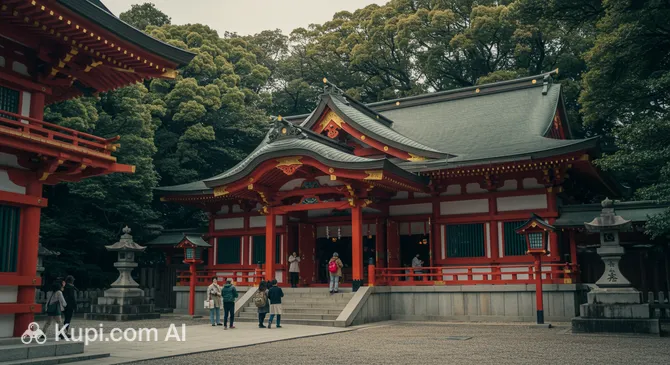
Sumiyoshi Shrine. Illustration.
Source: Kupi.com AI

Traveler photos:

The shrine is dedicated to the sea gods of the Shinto pantheon, who have been considered the patrons of sailors and fishermen since ancient times, as well as to the spirit of the legendary Empress Jingu. According to legend, it was she who founded the shrine after her safe return from a campaign. Visiting this place offers a unique opportunity to learn more about the beliefs and mythology of ancient Japan.

The architecture of the temple complex is an outstanding example of the unique "sumiyoshi-zukuri" style. This style is characterized by simple straight thatched roofs, white walls, and wooden fences surrounding each building, which is one of the three classical styles of ancient Shinto architecture. Unlike similar shrines such as Ise and Izumo Taisha, the Sumiyoshi complex in Fukuoka is painted a bright vermillion red, creating a striking contrast with the lush greenery around it and giving it a special expressiveness.

Contacts

To find the latest information on opening hours, potential events, or other details about Sumiyoshi Shrine, it is recommended to visit the shrine's official website, if available, or contact tourist information centers in Fukuoka. Detailed information can often be found on city maps and in guidebooks.

How to contactContact
Address3-chōme-1-51 Sumiyoshi, Hakata Ward, Fukuoka, 812-0018, Japan
Phone number+81 92-291-2670
Websitewww.nihondaiichisumiyoshigu.jp

What to Do

A visit to Sumiyoshi Shrine provides a unique opportunity to experience living Japanese traditions. Here, you can witness various rituals and ceremonies, which are especially colorful on holidays. The shrine is very popular with Japanese people for celebrating significant life events: wedding ceremonies, rituals for presenting newborns to the deities, and Hatsumode—the first shrine visit of the New Year—are held here. This is a wonderful chance to immerse yourself in an authentic atmosphere and observe how local residents honor ancient customs.

One of the main visual highlights and notable features of the complex is the famous Sorihashi arched bridge, also known as Taikohashi, which greets visitors at the entrance. This elegant, steeply curved bridge is about 400 years old. It originally reached into the sea, but now it picturesquely crosses the pond, decorating the approach to the shrine. The high arch of the bridge is no accident—it symbolizes a rainbow connecting the earthly world with the heavenly. According to historical records, the bridge was presented as a gift to the shrine by Yodogimi, the consort of the famous leader Toyotomi Hideyoshi.

Getting There

You can reach Sumiyoshi Shrine in Fukuoka by public transport. This iconic site is well-integrated into the city's transport system, making it accessible to anyone wishing to experience the history and culture of Japan.

According to many visitors, one recommended way to get there is by public transport, which may include a ride on a charming, old-fashioned train from one of the subway stations. Please note that the exact route, line numbers, and travel time will depend on your starting point in Fukuoka. It is recommended to plan your route in advance using local transport apps or maps.

Upon arriving near the shrine, your path into the temple complex itself will take you across the famous Sorihashi arched bridge, also known as Taikohashi. This bridge is not only a functional structure but also an important architectural landmark, serving as a symbolic entrance to the sacred grounds.

For those who prefer to travel in more comfort, especially if you are traveling with children or have luggage, taxi services are always available. A taxi ride from the center of Fukuoka or the nearest major station to Sumiyoshi Shrine will be quick and convenient, although more expensive compared to public transport.

Nearest city: Fukuoka

History & Facts

The origins of Sumiyoshi Shrine reach deep into history, with its founding dating back to the 3rd century AD. A particularly notable detail points to the year 211 AD, when, according to some sources, the first shrine buildings were erected to commemorate Empress Jingu's triumphant return from her campaign. The shrine is dedicated not only to the spirit of this revered empress but also to three important sea gods. The four main halls of the temple, built in their honor, are designated as a National Treasure of Japan.

Throughout its long existence, Sumiyoshi Shrine has been rebuilt many times. One of the most extensive restorations took place in 1810, during which all the structures in the complex were meticulously renovated. Despite these numerous reconstructions, a remarkable achievement was the preservation of its unique architectural style, known as "sumiyoshi-zukuri." This style is considered one of the oldest and purest forms of Japanese shrine architecture, and its preservation over the centuries is a testament to its immense cultural significance.

Among the shrine's most iconic features is the elegant Sorihashi Bridge, which gracefully arches over the pond at the entrance. This bridge has its own rich history: it was built about 400 years ago. An interesting fact is that the bridge was originally designed to face the sea, but changes in the landscape over time led to its current position over the calm waters of the pond. This beautiful structure was a generous gift to the shrine from Yodogimi, known as the consort of the influential Japanese leader Toyotomi Hideyoshi.

Time Needed

For most visitors, touring Sumiyoshi Shrine, including a walk through its grounds, seeing the famous Sorihashi bridge, and the main prayer halls, usually takes 1 to 2 hours. This is enough time to get a general impression of this iconic place in Fukuoka, appreciate its unique "sumiyoshi-zukuri" style architecture, and take some memorable photos.

If you want to dive deeper into the atmosphere of the shrine, look more closely at the architectural details, perhaps catch a traditional ceremony, or simply enjoy the tranquility of the place, it's worth setting aside about 2–3 hours. The shrine grounds are quite extensive, and a leisurely walk will allow you to better feel its historical and spiritual significance. Also, if you are interested in the Shinto traditions of Japan, you may need extra time to observe any rituals that might be taking place during your visit.

When planning your visit, keep in mind that during major festivals or holiday events, the time spent at Sumiyoshi Shrine can increase significantly due to the large number of visitors and the busy schedule. On such days, you will be able to witness particularly vibrant and memorable events, but touring the main attractions may also take longer.

Working Hours

The exact information regarding the opening hours of Sumiyoshi Shrine in Fukuoka may vary, especially depending on the season or special events. Generally, major Shinto shrines in Japan are open to visitors daily, from early morning until late evening. However, to get the most up-to-date information on access hours to the grounds and individual pavilions, it is highly recommended to check the shrine's official website (if available) or contact local tourist information centers upon arrival in Fukuoka.

Usually, no advance ticket booking is required to visit the main shrine grounds, and entry is free. However, if you plan to participate in special ceremonies, rituals, or guided tours, advance registration or ticket purchase may be required. The shrine is typically open year-round, but hours may be shortened in winter or, conversely, extended during major festivals. It is always best to verify details immediately before your visit.

9:00 – 17:00

Nearby

A visit to Sumiyoshi Shrine will undoubtedly be a highlight of your trip to Fukuoka. However, to make your experience even richer and more complete, it's worth taking the time to explore the surroundings of this significant site. After all, Fukuoka is a city where ancient traditions coexist harmoniously with modernity, and getting to know the nearby attractions will allow you to better understand its multifaceted character.

Exploring the area around Sumiyoshi Shrine can reveal new and interesting places—from bustling shopping centers and cozy restaurants to other cultural sites. This is a wonderful opportunity to complement the spiritual experience gained at the shrine with new discoveries and diversify your itinerary in Fukuoka.

NameDistance
THEATER 0100.4 km
Canal City Resort Hotel0.5 km
Precious Ono Hakata0.6 km
With The Style Fukuoka0.8 km
Yoshizuka Unagi0.9 km
Kihinkan Guest House1.1 km
Fukuoka Anpanman Children's Museum1.3 km

Have you reached the end of the page?

So the route has been studied inside and out