Support

Church of Sts. Peter and Paul

About

The Church of St. Peter and St. Paul (Šv. Apaštalų Petro ir Povilo Bažnyčia) in Vilnius is not just a place of worship, but a true gem of 17th-century Baroque architecture, recognized as one of the most beautiful Catholic churches in the world. Located in the Antakalnis district, slightly away from Vilnius Old Town, this church is a must-visit for anyone interested in the art and history of Lithuania.
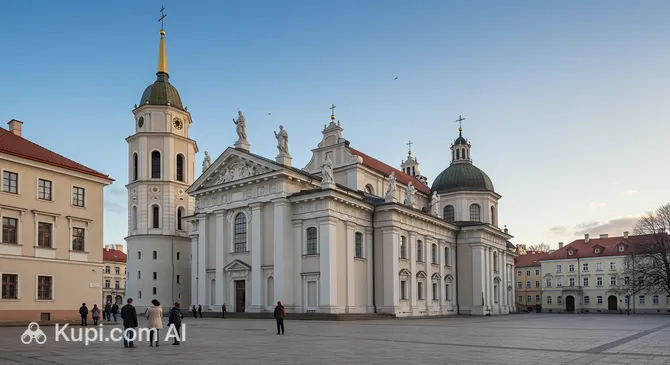
Church of Sts. Peter and Paul. Illustration.
Source: Kupi.com AI

Traveler photos:

From the outside, the church may seem quite restrained, but its true splendor is revealed inside. The interior is breathtaking with its incredible wealth of stucco decoration: the walls and vaults are adorned with about two thousand sculptures—biblical, mythological, and historical characters, allegorical figures, and floral ornaments. This unique decor creates the feeling of stepping into a fairytale white forest, where every detail tells its own story.

Construction of the church began in 1668 at the initiative of Michał Kazimierz Pac, Grand Hetman of the Grand Duchy of Lithuania, as a sign of gratitude for his survival during wartime. Italian masters Giovanni Pietro Perti and Giovanni Maria Galli worked on the interior. Thanks to their talent, the church became one of the most outstanding examples of Mature Baroque not only in Lithuania but in all of Europe.

A visit to the Church of St. Peter and St. Paul is an opportunity to experience high art, feel the spirit of history, and admire the craftsmanship of the creators of this architectural miracle. It is rightfully considered one of the symbols of Vilnius and an important part of the country's cultural heritage.

Contacts

For up-to-date information on the opening hours of the Church of St. Peter and St. Paul, service schedules, or tour opportunities, we recommend checking the parish's official resources or Vilnius tourist information centers. You can often find such details on the church's official website, if available, or on travel portals dedicated to Lithuania's landmarks.

How to contactContact
AddressAntakalnio g. 1, 10312 Vilnius, Lithuania
Phone number+370 5 234 0229
Websitewww.vilniauspetropovilo.lt

What to Do

The main reason to visit the Church of St. Peter and St. Paul is its incredible interior. Immerse yourself in the study of the inner decor, where you will find about two thousand sculptures of various sizes. Every detail, from angels to biblical scenes, is executed with striking mastery. Pay special attention to the intricate Baroque elements created by talented Italian masters—it is a true feast for the eyes of art lovers.

Visitors can spend hours examining these white stucco compositions, discovering more and more figures and stories. Try to spot images of saints, mythological characters, allegorical figures, and floral patterns. This is not just decoration, but an entire world frozen in stone, telling biblical and historical tales.

Don't limit yourself to just the interior. Upon exiting the church, take a look at its external architectural ensemble. The church forms a single complex with the adjacent monastery of the Canons Regular of the Lateran (Augustinians), which adds historical depth to your visit. Take a walk around to appreciate the harmony of forms and the grandeur of the creators' vision.

For those interested in history and symbolism, it is fascinating to know that the Church of St. Peter and St. Paul was built on the site where, according to legend, a pagan sanctuary of the Lithuanian goddess of love, Milda, once stood. This gives the visit additional meaning, allowing you to reflect on the intertwining of cultures and beliefs in this land. Try to imagine how this place has changed over the centuries as you stand on this historically significant hill.

Getting There

The Church of St. Peter and St. Paul is located at 1 Antakalnio Street in Vilnius. It is important to note that this magnificent church is not situated in the heart of the Old Town, but slightly further away in the Antakalnis district. Therefore, to enjoy its beauty, it is worth planning your route in advance and allowing extra time for travel, as it lies away from the main pedestrian tourist routes of central Vilnius.

The most convenient way to reach the Church of St. Peter and St. Paul is by public transport. Vilnius has a well-developed network of buses and trolleybuses, many of which pass along Antakalnio Street or stop nearby. This is the recommended option, as it allows you to reach your destination easily even if it is your first time in the city. Information on the appropriate routes can be found at stops, in mobile apps, or on the city transport website.

Alternatively, you can use a taxi service. A taxi ride from the center of Vilnius or from major transport hubs like the railway or bus stations will be quick and comfortable. Just give the driver the address: 1 Antakalnio Street (Antakalnio gatvė 1). This is a great choice if you value your time or are traveling in a small group.

Nearest city: Vilnius

History & Facts

The history of the Church of St. Peter and St. Paul is rooted in antiquity. Tradition holds that a pagan sanctuary dedicated to Milda, the goddess of love, once stood on the site where this magnificent church rises today. Later, during the reign of Jogaila, the first wooden church was built here. Unfortunately, it did not stand the test of time and burned down in 1594. In the early 17th century, between 1609 and 1616, a new attempt was made to build a temple—a new wooden building appeared, but it too was destroyed during the war of 1655–1661.

The founder of the current stone masterpiece was the influential magnate and Grand Hetman of Lithuania, Michał Kazimierz Pac (Mykolas Kazimieras Pacas). For him, building the church was not just an act of piety, but the fulfillment of a vow. This vow was connected to his survival during a military mutiny and also marked the liberation of Vilna (the old name for Vilnius). Thus, the church became a symbol of gratitude and an important historical milestone.

Construction of the modern stone church began in 1668. Initially, the work was supervised by the Krakow architect Jan Zaor. However, starting in 1671, the Italian architect Giambattista Frediani took over this responsible mission. Under his leadership, the main construction work was completed by 1676: the walls were erected by 1674, and the majestic dome crowned the building in 1675. Almost immediately after, in 1677, construction began on the adjacent monastery of the Canons Regular of the Lateran (Augustinians), which became an integral part of the entire architectural ensemble.

The final stage in creating this architectural wonder was its interior decoration. This complex work was entrusted to outstanding Italian masters—Giovanni Pietro Perti (Peretti) from Milan and Giovanni Maria Galli from Rome. It is to their unsurpassed talent and craftsmanship that we owe the incredible wealth of sculptural decor that continues to amaze every visitor to this day, turning the Church of St. Peter and St. Paul into a true treasure trove of Baroque art in Lithuania.

Time Needed

To fully explore the Church of St. Peter and St. Paul in Vilnius and truly appreciate its unique interior, we recommend setting aside 1 to 2 hours. Most of this time will be spent examining the numerous stucco sculptural compositions in detail—there are famously about two thousand of them here. Each one deserves attention, and rushing will not allow you to fully enjoy this masterpiece of Baroque art in Lithuania.

If your time is limited, even 30–45 minutes will allow you to get a general impression of the interior's splendor, though it will be a rather brief tour. On the other hand, art and history lovers, or those who wish to immerse themselves deeper in the atmosphere of the church and examine every detail, can easily spend more than two hours here. Much depends on your personal interest and desire to delve into the complex symbolism and the craftsmanship of the decor that makes this church in Vilnius so famous.

Working Hours

The Church of St. Peter and St. Paul in Vilnius is generally open to visitors year-round, though opening hours may vary depending on the day of the week and the season, as well as the schedule of liturgical services. Entry for sightseeing is usually free, but access for tourists may be restricted or discouraged during Mass to avoid disturbing worshippers. No special ticket booking is typically required for individual visits.

Since exact information regarding tourist opening hours can change, it is strongly recommended to check the current schedule on the church's official website, if available, or at Vilnius tourist information centers before your visit. You can also look for information boards at the entrance to the church. This will help you plan your visit effectively and avoid potential disappointment if the church is closed to visitors at your chosen time.

DayOpening hours
Monday7:00 – 18:30
Tuesday7:00 – 18:30
Wednesday7:00 – 18:30
Thursday7:00 – 18:30
Friday7:00 – 18:30
Saturday8:00 – 18:30
Sunday7:00 – 18:30

Nearby

A visit to the majestic Church of St. Peter and St. Paul is undoubtedly a highlight of any trip to Vilnius. However, to make your journey even richer and more complete, it is worth paying attention to other interesting sites located nearby. Exploring the surrounding area will allow you to dive deeper into the atmosphere of this amazing city and discover new facets of its history and culture.

The Antakalnis district, where the church is located, and its adjacent territories hold many treasures. A stroll nearby might lead you to other iconic landmarks, cozy corners, or simply offer pleasant impressions of Vilnius. Below is a list of some interesting sites located in relative proximity to the Church of St. Peter and St. Paul.

NameDistance
Three Crosses Monument1 km
Gediminas Tower1.3 km
Bernardine Courtyard1.4 km
Palace of the Grand Dukes of Lithuania1.4 km
Money Museum of the Bank of Lithuania1.7 km
Momo Grill Vilnius1.8 km
Grill London2.1 km

Have you reached the end of the page?

So the route has been studied inside and out