Support

Palace of the Grand Dukes of Lithuania

About

The Palace of the Grand Dukes of Lithuania is not just a museum, but a true gem of Vilnius and all of Lithuania. Located in the heart of the capital on Cathedral Square, it is a reconstructed residence of the rulers of the Grand Duchy of Lithuania. Today, it is a national museum and an iconic historical site attracting thousands of tourists wishing to touch the rich history of this region.
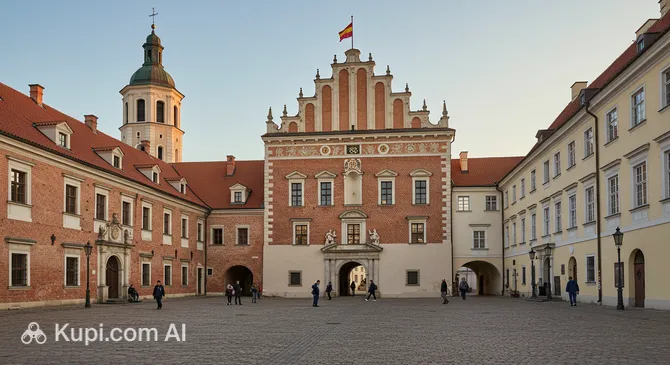
Palace of the Grand Dukes of Lithuania. Illustration.
Source: Kupi.com AI

Traveler photos:

The history of the palace is full of drama: the original magnificent building was completely destroyed in the early 19th century. However, thanks to the painstaking work of historians and restorers based on ancient images and documents, the residence was restored to its former glory between 2002 and 2016. This not only returned an important architectural ensemble to the city but also opened a new chapter in the study and promotion of the country's history.

Inside the palace, visitors will find rich and fascinating exhibitions detailing the history of the Grand Duchy of Lithuania, its rulers, and its culture. Of particular interest are the numerous archaeological finds discovered during large-scale excavations at the palace complex. Archaeological research, which began in 1987, has collected more than 300,000 unique artifacts, shedding light on the past of this land and the lives of its inhabitants. A visit to the palace is an exciting journey through time and an opportunity to experience the rich heritage of Lithuania.

Contacts

For the most up-to-date information regarding opening hours, ticket prices, and contact details for the administration of the Palace of the Grand Dukes of Lithuania, we recommend visiting the museum's official website. You can also find helpful information and assistance in planning your visit at the tourist information centers in Vilnius.

How to contactContact
AddressKatedros a. 4, 01143 Vilnius, Lithuania
Phone number+370 5 262 0007
Websitewww.valdovurumai.lt

What to Do

A visit to the Palace of the Grand Dukes of Lithuania is a true immersion into history. The tour often begins with the impressive basements, where the earliest layers of the site's history are revealed. From there, you can explore numerous exhibitions that detail the past of Lithuania and the palace itself. You will find skillfully reconstructed historical interiors that allow you to imagine the life and daily routines of the rulers of the Grand Duchy of Lithuania, as well as rich collections of authentic archaeological finds, works of art, and historical artifacts.

The palace courtyard often boasts a lively atmosphere—concerts, theatrical performances, and other cultural events are periodically held here, adding a special charm to your visit. The exhibitions pay special attention to the rich history of the palace itself, which in the 16th and 17th centuries served not only as a residence for rulers but also as a vital political and cultural center for the Grand Duchy of Lithuania. You can learn more about the contributions of prominent Lithuanian dukes, such as Gediminas, Jogaila, Vytautas, and Sigismund I, to the construction, development, and decoration of this majestic residence.

Getting There

Reaching the Palace of the Grand Dukes of Lithuania is easy, as it is conveniently located in the very heart of Vilnius at Cathedral Square (Katedros aikštė, 4). This central location makes it easily accessible from any part of the city and other key landmarks in the capital of Lithuania.

If you plan to use public transport, numerous bus and trolleybus routes serve Cathedral Square and the surrounding streets. Since it is the central part of the city, finding suitable transport to stops in the immediate vicinity of the palace is straightforward. We recommend checking current routes and schedules on the official Vilnius public transport websites or using online maps and navigation apps.

For those staying in the center of Vilnius or simply enjoying a stroll through the Old Town, the walking route to the Palace of the Grand Dukes of Lithuania is pleasant and informative. Many famous attractions are within walking distance. Additionally, you can always use taxi services, which will quickly and comfortably bring you to the main entrance of the palace from anywhere in the city.

Nearest city: Vilnius

History & Facts

The history of the Palace of the Grand Dukes of Lithuania dates back to antiquity. As early as the 4th century, the first wooden fortifications stood on this strategically important site at the confluence of the Vilnia and Neris rivers. Over time, they were replaced by a more powerful stone castle, which was repeatedly rebuilt and expanded. However, it was from the late 15th to the early 16th century that this site became the official grand ducal residence in the Lower Castle of Vilnius, laying the foundation for its future splendor.

The true heyday for the Vilnius residence was the 16th and first half of the 17th centuries. During this time, the Palace of the Grand Dukes of Lithuania was not just a home for rulers, but a vital political, diplomatic, and cultural center of the Grand Duchy of Lithuania. Ambassadors from various states were received here, including those from the Grand Duchy of Moscow, the Holy Roman Empire, Hungary, Turkey, Persia, France, Venice, and Tuscany. Privileges were granted, meetings of the Council of Lords and the Lithuanian Seimas were held, the famous Statute of Lithuania was edited, and the Lithuanian Metrica (state archives) and treasury were kept here—even coins were minted. Under Grand Duke Sigismund Augustus, the palace was famous for its extensive library of about 4,000 volumes, as well as its rich collections of tapestries, weapons, paintings, and hunting trophies, signifying its European importance.

Unfortunately, the palace's brilliant era ended in the mid-17th century. During the Russo-Polish War (1654–1667), the residence was severely damaged by fire and began to fall into neglect. For almost a century and a half, the once-magnificent palace stood in a semi-ruined state, a reminder of its former greatness. After the final partition of the Polish-Lithuanian Commonwealth in 1795, the fate of the remaining walls was sealed: between 1799 and 1801, they were completely dismantled. A square was laid out where the political and cultural life of Lithuania once thrived, and it seemed the palace's history had ended forever. However, as we know today, this was only a temporary state of oblivion.

Time Needed

When planning a visit to the Palace of the Grand Dukes of Lithuania, you should set aside at least 2–3 hours. This time will be enough for a general introduction to the main exhibitions and to get an idea of the scale and significance of this historical site in Vilnius. However, as with any large museum, the duration of your visit depends heavily on your pace and the depth of your interest in the artifacts and historical periods presented.

If you wish to study all the exhibition routes in detail—including the archaeological finds in the basements, the reconstructed historical interiors, the collections of weapons and tapestries, and any temporary exhibitions—feel free to allocate 3–4 hours or even half a day. The Palace of the Grand Dukes of Lithuania offers several tour routes, each dedicated to different aspects of the history and culture of Lithuania. A leisurely exploration of all the halls, reading the information boards, and perhaps attending events in the courtyard if any are held on the day of your visit, will require extra time.

To fully enjoy the atmosphere of the Palace of the Grand Dukes of Lithuania and immerse yourself in its rich history at your own pace, it's best not to plan your visit in a hurry. Allow yourself enough time to explore this iconic Vilnius landmark without rushing, as every detail here tells its own fascinating story.

Working Hours

For the most accurate and up-to-date information on the opening hours of the Palace of the Grand Dukes of Lithuania in Vilnius, we strongly recommend visiting the museum's official website or contacting local tourist information centers. Opening hours may vary depending on the season, day of the week, and special events. Generally, major museums of this caliber are open to visitors year-round, but schedule changes may occur on public holidays.

It is also worth checking the official website or calling to see if advance ticket booking or tour registration is required, especially if you plan to visit the palace during the peak tourist season or as part of a group. Planning ahead will help you avoid queues and guarantee a visit at a time convenient for you.

DayOpening hours
MondayClosed
Tuesday10:00 – 18:00
Wednesday10:00 – 18:00
Thursday10:00 – 20:00
Friday10:00 – 18:00
Saturday10:00 – 18:00
Sunday10:00 – 16:00

Nearby

Visiting the Palace of the Grand Dukes of Lithuania is undoubtedly a highlight, but Vilnius offers so much more! Exploring the palace's surroundings will allow you to dive deeper into the atmosphere of the Old Town, see other iconic sites, and get a more complete impression of the capital of Lithuania. Many interesting landmarks are just a few steps away, and visiting them will harmoniously complement your cultural program.

After seeing the palace's main exhibition, don't rush off. Other architectural and historical gems await in the immediate vicinity, each worthy of attention. Below is a list of some attractions located near the Palace of the Grand Dukes of Lithuania, along with their distances.

NameDistance
Gediminas Tower0.1 km
Momo Grill Vilnius0.4 km
Money Museum of the Bank of Lithuania0.4 km
Bernardine Courtyard0.5 km
Three Crosses Monument0.6 km
Grill London0.7 km
Museum of Illusions0.9 km

Have you reached the end of the page?

So the route has been studied inside and out