Support

Long Lellang

Airports in the city

About the Airport

Long Lellang. Source: Kupi.com Binoculars

Long Lellang Airport (LGL) is not merely a dot on the map, but a true gateway to the lost world of the Borneo jungle. This tiny air haven, hidden amidst the dense tropical forests of Sarawak, serves as a vital artery for locals and a starting point for the boldest adventurers. There are no familiar terminals or Duty Free shops here; instead, you will be greeted by a modest runway surrounded by emerald greenery and an indescribable atmosphere of wild nature immediately upon arrival.

IATA Code LGL
ICAO Code WBGF
City Long Lellang
Distance to centre 0.5 km (within the settlement)
Status Domestic (STOLport)
Passengers per year About 2,500 (light aviation)
Schedule Online board

Features and advantages of the airport:

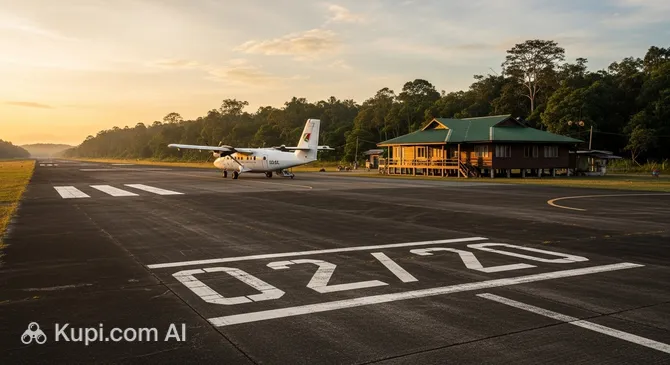
Long Lellang Airport is categorised as a STOLport (Short Take-Off and Landing), making every arrival and departure here a small spectacular event. Due to the short runway, only light turboprop aircraft, such as the De Havilland Twin Otter, capable of manoeuvring in complex terrain, fly here.

Its main feature is its location. The airfield is located in the immediate vicinity of the settlement, so the transfer to homestays often takes no more than five minutes on foot. This is the ideal place to start trekking to Penan settlements or exploring the Kelabit Highlands.

Travellers should note that the airport's operation depends heavily on the whims of tropical weather. Fogs and downpours can make adjustments to the schedule, so a flight to Long Lellang teaches patience and the ability to enjoy the moment surrounded by pristine nature.

Contact Information

  • Official airport website: The airport is managed by Malaysia Airports; flight information is available on the carrier's website MASwings.
  • Inquiry desk phone: +603 7843 3000 (MASwings international contact centre) or 1 300 88 3000 (within Malaysia).
  • Airport address: Long Lellang Airport, Long Lellang, Sarawak, Malaysia (located directly at the Long Lellang settlement).
  • Email: customercare.maswings@malaysiaairlines.com (airline customer support).
  • Social media: Official pages of MASwings and Malaysia Airports on Facebook, Instagram (@maswingsmates), and Twitter.
  • Lost luggage information: It is recommended to contact ground staff directly upon arrival or call the MASwings support centre (+603 7843 3000).
  • Customer support contacts: The unified Malaysia Aviation Group support line operates daily from 08:00 to 17:00 (GMT+8).

How to Get to the Airport

Getting to Long Lellang Airport is a task that differs significantly from a trip to any major international hub. Since the airport is located in the heart of the Sarawak jungle and serves a tiny community, standard urban schemes do not work here. Logistics in this region are dictated by nature and the absence of paved roads.

Public Transport

In Long Lellang and its surroundings, familiar forms of public transport are completely absent: there are no buses, trains, or metro. The only regular connection with the outside world is the flight from the city of Miri. Essentially, the 19-seat Twin Otter aircraft performs the function of an "aerial bus" here, transporting people and cargo.

Taxi, Transfer, and Walking Routes

The concept of a "taxi" does not exist in Long Lellang. Since the runway is literally in the centre of the settlement, the main way to get to the plane is a walk.

  • Travel time: From most homestays to the boarding point, you can walk in 2–10 minutes.
  • Help with luggage: If you have heavy bags, locals often show hospitality and may help transport your belongings on a motorcycle or in the back of a pickup truck. This is a non-commercial service, but a small token of appreciation is welcomed.

Car and Rental

It is impossible to rent a car directly in Long Lellang. Only difficult logging roads lead here, passable exclusively by prepared off-road vehicles (4WD) and only in dry weather.

A journey by jeep from the coastal city of Miri takes from 10 to 14 hours and is an extreme adventure requiring an experienced driver-guide. Leaving a car at the airport is free — the parking is simply an open grassy area near the runway, but there is no security.

Recommendations for Travellers

The main advice is to allow extra time. Due to changeable weather in the mountains, flights may be delayed or rescheduled. While in the settlement, simply ask the host of your guesthouse when it is best to head to the plane — locals often learn of the aircraft's arrival by the sound of the engine long before it lands.

Nearest Transport Hubs

Since Long Lellang is a dead-end point for many routes, it is important to know which airports connect here or where to go next. The main hub for transfers is Miri Airport, from where most flights into the interior of the island depart.

Also within the flight range of light aviation are other interesting points in Borneo:

  • Bario Airport (approx. 50 km) — the gateway to the Kelabit Highlands, a popular trekking destination.
  • Mulu Airport (approx. 80 km) — access to the famous national park with caves.
  • Brunei International Airport (approx. 170 km) — the nearest major international hub in the neighbouring state.
  • Labuan Airport (approx. 208 km) — serves the island of the same name and financial centre.

Terminals and Map

The structure of Long Lellang Airport (LGL) differs radically from what passengers on international flights are accustomed to. There are no confusing corridors, gates, or multi-level car parks here. This is a place where aviation meets the simplicity of village life, and all infrastructure is subordinate to one goal — to ensure the connection of a remote region with civilisation.

Number of Terminals and Their Purpose

The airport has only one small terminal. In fact, it is a single-storey structure resembling a simple wooden or brick house located at the edge of the runway. This sole "terminal" serves:

  • All departing flights (check-in and waiting).
  • All arriving flights (baggage claim and exit to the village).
  • Administrative functions of the airline staff.

Airport Map and Navigation

It is impossible to get lost in Long Lellang Airport even if you try. The terminal building usually consists of one main room or a covered veranda that serves as a waiting hall. There are practically no navigation signs here, as everything is within direct line of sight. Entry to the terminal is from the dirt road leading to the settlement, and the exit for boarding is directly onto the airfield through a single door or gate.

Departure and Arrival Zones

The separation of passenger flows here is quite nominal. Due to the low intensity of flights (usually one flight at a time), departure and arrival zones replace each other functionally:

  • Departure Zone: Represents a check-in counter (often just a desk) and several rows of chairs for waiting. There are no shops, cafes, or business lounges here. Amenities are minimal, but the atmosphere is usually very friendly and relaxed.
  • Arrival Zone: There is no special baggage claim area with conveyor belts. After landing, the aircraft taxis close to the building. Staff unload luggage manually from the nose or tail compartment of the aircraft and hand it to passengers directly on the airfield or bring it into the terminal building.

Terminal Features and Procedures

The main feature of the Long Lellang terminal is its technical simplicity and proximity to nature. There is no air conditioning (fans or natural ventilation are often used), and windows may look directly out onto the jungle.

Check-in and Security

Procedures at LGL have their own specifics, dictated by the use of small aircraft (usually DHC-6 Twin Otter):

  • Weighing: This is the most important stage. Since balance is critical for small aircraft, not only luggage is weighed, but often the passengers themselves along with hand luggage. This should be treated with understanding — it is a safety requirement.
  • Check-in Time: It is recommended to arrive at the airport 30–45 minutes before departure. There are no queues here, but passenger lists must be closed and handed to pilots in advance for load calculation.
  • Security Check: The security screening procedure here is simplified compared to large hubs, but basic rules for carrying prohibited items apply. Checks are often conducted visually or using hand-held metal detectors.

Navigation Recommendations and Tips

Since there are no transitions between terminals, your main task is simply to find the airport building. If you hear the hum of a plane but have not yet checked in — hurry, Twin Otter pilots try to minimise ground time.

While waiting for your flight, stay near the terminal building or inside it. There may be no PA system with announcements, and the boarding call is often made by voice by a staff member. Just watch the staff's actions: when they head towards the plane, it is time for you to get ready too.

Airport History

The history of Long Lellang Airport (LGL) is inextricably linked with the development of the Rural Air Services (RAS) programme in East Malaysia. Unlike major international hubs built for commerce and tourism, this airfield arose from an acute vital necessity — to ensure rapid connection with the outside world for isolated communities living deep in the Borneo jungle.

Origins and First Flights

The origins of aviation in this region go back to the mid-20th century. Initially, the runway in Long Lellang was simply a levelled piece of land, cleared manually by locals with the support of Christian missions. In those days, landing here was a true feat: pilots had to land light aircraft on grass, often washed out by tropical downpours.

The official establishment of the airport as part of Sarawak's transport infrastructure occurred later, when the Malaysian government realised the need for regular supply to remote villages. Before the advent of regular flights, the journey to the nearest major city could take up to two weeks on foot through the jungle and by river.

Stages of Development and Operator Changes

The history of the airport is closely intertwined with the history of airlines serving the region. For a long time, flights here were operated by the national company Malaysia Airlines, using the legendary Twin Otter aircraft, which were ideally suited for short and difficult runways.

October 1, 2007 became an important milestone in the modern history of the airport. On this day, the operation of rural air service (RAS) routes in Sabah and Sarawak officially transferred to a new subsidiary — MASwings. This event marked the beginning of a new era: the schedule became more stable, and safety standards were brought to stricter norms.

Reconstruction and Modernisation

Despite the status of a "small" airport, Long Lellang has undergone several important updates aimed at improving safety:

  • Runway Strengthening: One of the main problems of the first decades was mud. Phased modernisation of the surface allowed aircraft to be accepted even after rain, which significantly reduced the number of cancelled flights.
  • Terminal Update: The modest wooden structure serving as the air terminal was periodically repaired to provide basic comfort to passengers and a workspace for staff, including the installation of scales for strict load control.

Interesting Facts from History

Long Lellang Airport is known not for loud passenger traffic records, but for its unique role in the life of the region:

  • "Flying Doctor": For decades, the airfield served and continues to serve as a critically important point for the Flying Doctor Service. Historically, it was through this airport that emergency evacuation of patients was carried out, which saved hundreds of lives.
  • Centre of Cultural Meeting: In the 20th century, it was the construction of the airfield that contributed to the nomadic Penan people contacting the settled population and the outside world more often, using the area around the airport as a point for exchanging news and goods.
  • Pilot Skill: The airport's history holds many stories about the skill of pilots landing planes in conditions of sudden fog. Landing in Long Lellang has always been and remains one of the tests of professionalism for light aviation pilots in Malaysia.

Services and Facilities

Passengers travelling to Long Lellang need to understand one key thing: this airport (LGL) is a basic landing strip in the jungle, not a modern transport hub. The level of service here is minimal and limited to the absolute essentials for supporting light aviation flights. Do not expect familiar urban amenities here, however, the lack of comfort is compensated by the sincere hospitality of the staff and the unique atmosphere.

Restaurants, Cafes, and Shops

There are no cafes, restaurants, or Duty Free shops on the airport territory. Even vending machines are absent.

  • Dining: It is strongly recommended to eat a substantial meal before departing from Miri or bring a snack (sandwiches, biscuits) and water with you. It is impossible to buy food in the airport building itself.
  • Shopping: There are no souvenir shops or newsstands here. The nearest (and very modest) opportunities to buy basic necessities are in the Long Lellang settlement itself, in small village shops where opening hours are unpredictable.

Connectivity, Wi-Fi, and Electronics

Long Lellang is an ideal place for a digital detox, often forced.

  • Wi-Fi: Public Wi-Fi is absent at the airport.
  • Mobile Connection: Cellular network coverage in this region is extremely unstable or non-existent. Satellite communication may only be available to airport administration for official purposes.
  • Charging Stations: There are no specialised stands for charging gadgets. A couple of ordinary sockets might be found in the terminal building, but one should not rely on them. Travellers are strongly advised to carry fully charged power banks.

Financial Services

There are absolutely no ATMs or currency exchange points in the airport or the entire settlement. Credit cards are not accepted anywhere.

Important Advice: You must bring a sufficient supply of cash (Malaysian Ringgit) from the city of Miri. Money will be needed to pay for accommodation in homestays, purchase groceries, and pay for the services of local guides.

Waiting Lounges and VIP Services

The concept of a "VIP lounge" or "business lounge" is not applicable to Long Lellang Airport. The waiting area is a common room with simple furniture (benches or plastic chairs) and natural ventilation. There are also no conference rooms or business centres here; if you need to hold negotiations, the best place for this will be the veranda of your homestay overlooking the jungle.

Medical Services and Safety

There is no full-fledged medical centre or pharmacy at the airport. Staff have first aid skills and a basic first aid kit.

  • Serious Cases: There is a rural clinic (Klinik Desa) in the settlement where a medical assistant works. In emergency situations, the airport itself is used for medical evacuation by helicopter or plane to the hospital in Miri city.
  • Personal Kit: Tourists must carry their own medicines, especially antihistamines, repellents, and medication for stomach upsets.

Services for Passengers with Children and Reduced Mobility

There is no specialised infrastructure (mother and child rooms, lifts, ramps) at the airport, but the human factor solves any problems here.

  • Passengers with Children: Staff are very tolerant of families, but you will have to entertain children yourself — there are no play areas.
  • Passengers with Reduced Mobility: Since boarding the Twin Otter aircraft is done via built-in steps, and the building is at ground level, there are no serious barriers. However, given the dirt paths around, movement in a wheelchair may be difficult. Airline employees and locals are always ready to physically assist with boarding and disembarking.

Accommodation: Hotels near the Airport

Chain hotels do not exist in Long Lellang. The only accommodation option is homestays organised by local families. Since the airport is in the centre of the settlement, any accommodation can be considered an "airport hotel".

  • Accommodation is usually very simple: a mattress on the floor, a shared bathroom, home-cooked food.
  • It is best to arrange an overnight stay in advance through tour operators in Miri or upon arrival by asking airport workers which locals are hosting guests.

Dining

When it comes to dining at Long Lellang Airport (LGL), travellers should immediately discard expectations associated with standard international terminals. You will not find familiar food courts, coffee shop chains, or gourmet boutiques here. Dining options for passengers in this point of Borneo are dictated by the region's complete isolation and lack of commercial infrastructure.

Restaurants, Cafes, and Bars

There are no catering establishments on the territory of the single tiny terminal (which is in fact a waiting room). There are no:

  • Cafes and restaurants (neither in the "airside" nor "landside" zones).
  • Bars or beverage counters.
  • Vending machines with snacks or coffee.

The airport functions exclusively as a transit point. Staff do not sell food or water, so you cannot count on buying breakfast or lunch immediately before departure.

Alternatives: Dining in the Settlement

Since the airport is within walking distance of residential houses (literally a 2–5 minute walk), the only "restaurant" option is the kitchen of your homestay or a small village shop.

Local Cuisine Dishes

If you have just arrived, you will most likely be fed at the homestay. Cuisine in Long Lellang is simple but delicious food of the Kelabit or Penan people, prepared from the freshest jungle produce. What is worth trying (if you are lucky with the hosts' menu):

  • Bario Rice: Famous highland rice grown in this region. It has a unique sweetish texture and aroma.
  • Midin and Paku: Wild ferns fried with garlic, anchovies, or shrimp paste (belacan). This is the main delicacy of Sarawak.
  • Game and River Fish: The basis of the protein diet of local residents. Dishes are often cooked over an open fire or in bamboo (Manok Pansoh — chicken or fish in bamboo).
  • Pineapples: The region is famous for incredibly sweet pineapples, which are often served for dessert.

Dietary Features and Restrictions

Given the specifics of a remote village, a specialised menu cannot be found here. Travellers with strict dietary requirements need to be prepared:

  • Vegetarians and Vegans: The basis of the diet is rice and vegetables/ferns. However, you must warn hosts in advance so that shrimp paste or animal fat is not used when frying vegetables.
  • Halal: The population of Long Lellang is predominantly Christian, and hunting for wild game is popular here. Muslims and those observing strict Halal rules are recommended to bring food with them (canned food, instant noodles), as it is difficult to guarantee the "purity" of cookware in the shared kitchens of homestays.
  • Gluten-free food: Rice is a naturally gluten-free product, but there is no bread or special pastries here.

Price Range

There is nowhere to spend money in the airport itself. In the settlement, the concept of "price per dish" is often blurred:

  • Meals are usually included in the cost of staying at a homestay (full board).
  • If you buy products in a small village shop (kedai runcit), prices will be higher than in the city due to the difficulty of air delivery of cargo (for example, a can of soda or a packet of biscuits may cost 1.5–2 times more than in Miri).

Recommendations for Passengers

For a quick snack:

The only strategy is to bring food with you. If you are flying from Miri Airport, be sure to buy sandwiches, pastries, chocolate, and a bottle of water before boarding the plane. It is impossible to buy ready-made takeaway food in Long Lellang.

For a full lunch:

Plan your meal before departure in the city of origin or arrange with the hosts of your accommodation in Long Lellang to be fed before leaving for the flight. Remember that the Twin Otter aircraft has no in-flight catering (only occasionally a small cup of juice or water is provided, but on such short flights this is rare).

Important note on water: There are no drinking fountains at the airport. Always have a supply of drinking water with you, especially in hot weather, as it will not be possible to buy it in the terminal building.
Travel Tips

A trip to Long Lellang is not a standard flight, but a real expedition into the heart of Borneo. To ensure your experience goes smoothly and leaves only positive emotions, use these practical tips compiled taking into account the specifics of light aviation operations in the jungle.

Optimal Arrival Time

Despite the fact that there are no security queues here like in big metropolises, you cannot arrive at the aircraft steps at the last minute.

  • Recommended time: Be at the "terminal" (or on the runway) 45–60 minutes before the departure time indicated on the ticket.
  • Why this is important: Pilots and ground staff must compile the manifest (passenger list) and calculate the exact take-off weight in advance. If you are late, your seat may be given to another passenger or cargo, as the Twin Otter aircraft has strict mass limitations.

Check-in and Security Specifics

Forget about self-service kiosks and online check-in. In Long Lellang, everything is done manually.

  • Weighing is mandatory: Be mentally prepared that you will be asked to stand on the scales together with your hand luggage. This is not a whim of the staff, but a critical safety requirement for balancing a light aircraft. Do not be shy or argue.
  • Documents: Keep your passport or identity card (MyKad) handy. Although the procedure looks informal, identity verification is mandatory.
  • Security Check: Conducted manually or using a portable metal detector. The process is quick, but liquids and sharp objects should be packed according to standard aviation rules.

Choosing a Seat on the Plane (DHC-6 Twin Otter)

MASwings tickets for rural air service flights often do not indicate specific seats; the principle of "free seating" applies.

  • For best views: Since the flight takes place at a low altitude, the views are stunning from any side. However, experienced travellers advise sitting on the left side to better see the jungle during the landing approach.
  • For aviation enthusiasts: The best seats are in the first row (row 1). In the Twin Otter, there is no door to the cockpit, so you can watch the pilots work, see the instrument panel and the runway through the windshield.
  • Comfort: If you suffer from motion sickness, choose seats closer to the wing (centre of the cabin), where turbulence is felt less.

Hand Luggage: What is Allowed and Prohibited

Space in the cabin of a 19-seat aircraft is extremely limited. The overhead bins (if any) are very narrow.

  • Type of bag: Do not take hard trolley bags into the cabin. They simply will not fit under the seat or on the shelf. The ideal hand luggage option is a soft backpack or a small sports bag.
  • Weight: The hand luggage limit is usually 5 kg, and it is strictly controlled. Anything heavier will have to be checked in as luggage (in the nose or tail compartment of the aircraft).
  • Prohibitions: Rules for carrying lithium batteries (power banks) are the same as everywhere else — only in hand luggage, they cannot be checked in.

Tips for Transit Passengers

Long Lellang is a "dead-end" point, from where you will most likely fly to Miri.

  • Time buffer: Never plan a connection "back-to-back". Weather in the mountains is unpredictable. A flight from Long Lellang may be delayed by 2–3 hours or postponed to the next day due to fog.
  • Connection with international flights: If you have a flight home from Kuala Lumpur or an international airport, allow at least 24 hours between the flight from the jungle and the major flight. Staying overnight in Miri city will save your nerves.

Customs and Bio-control

Although flights are domestic, Sarawak has its own laws on nature conservation.

  • Export of flora and fauna: It is strictly forbidden to take rare plants, seeds, insects, or animals out of the jungle without special permits. At transfer airports (for example, in Miri), your luggage may be screened specifically for contraband bio-resources.
  • Customs regulations: There are no specific restrictions on bringing goods for personal consumption (within reasonable limits), but remember that purchasing them locally will be difficult or expensive.

How to Save Time and Money

  • Cash: Bring enough cash (MYR) in small denominations. There may be no change for large banknotes in the village, and cards are not accepted.
  • Food: Buy snacks and water at a supermarket in Miri before flying to Long Lellang. Prices for groceries in the jungle (if they are in stock at all) include a high markup for air delivery.
  • Transfer: Arrange a meeting with the accommodation host in advance. Although it is not far to walk, locals can meet you on a motorcycle for free or for a nominal fee, which will save energy if you have heavy luggage.

What to Do in Case of Flight Delay

Delays here are commonplace. Treat this philosophically.

  • Do not go far: If the flight is delayed, stay within sight of the staff. As soon as the weather window opens, boarding will begin instantly.
  • Communication: It is impossible to check flight status online. The only source of information is pilots or a ground employee with a radio.
  • Plan "B": Always have a book, downloaded films, or music with you, as there will be no internet to pass the waiting time.

Reached the end of the page?

That means the route is fully explored