Support

Long Banga Airfield

Airports in the city

About the Airport

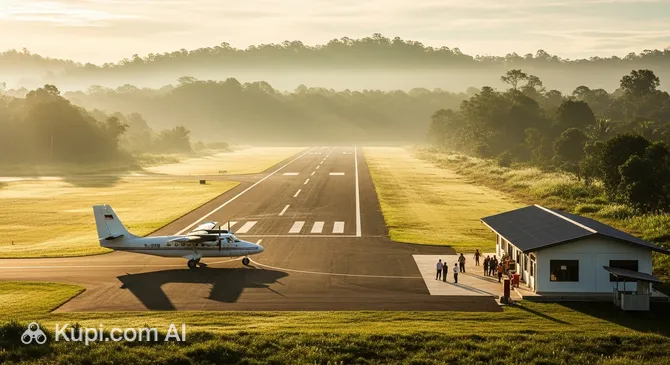
Long Banga Airfield. Source: Kupi.com Binoculars

Welcome to the "green heart" of Borneo! Long Banga Airfield is not just a point on a map, but a true gateway to the lost world of Sarawak's tropical rainforests. Instead of the usual terminals made of glass and concrete, you will be greeted by a modest runway surrounded by dense jungles and mountains, turning every landing here into a breathtaking adventure. This small airport serves as a vital artery for the local community, offering travellers a rare opportunity to experience authentic life far from civilisation immediately upon stepping off the plane.

IATA Code LBP
ICAO Code WBGL
City Long Banga
Distance to Centre ~1 km (within walking distance)
Status Domestic (STOLport)
Annual Passengers Around 3,000 people
Schedule According to seasonal timetable

Airport Features and Highlights

Long Banga Airfield falls under the STOLport category (Short Take-Off and Landing airport), making it a unique piece of transport infrastructure. There are no long queues or complex security checks here: all procedures are quick and pleasantly simple. The main advantage of this location is the incredible views during the approach, when the aircraft seems to glide over the treetops, revealing a panorama of untouched nature.

The airport is a critical link connecting local residents with major cities such as Miri and Marudi. Flights are operated by small aircraft like the DHC-6 Twin Otter, capable of landing on short runways. For the tourist, this means the expedition begins while still in the air: flying at a low altitude allows you to observe the rivers and hills of Borneo in great detail, creating the atmosphere of a true exploration of uncharted lands.

Contact Information

  • Official Airport Website: www.malaysiaairports.com.my (Page of the airport operator, Malaysia Airports Holdings Berhad)
  • Airport Address: Long Banga Airport, 98050 Marudi, Sarawak, Malaysia
  • Information Desk Phone: +60 3-8777 7000 (General hotline of Malaysia Airports, as the local airfield does not have a direct dedicated line)
  • Email: CARE@malaysiaairports.com.my (Customer Care Service)
  • Social Media: Official pages of Malaysia Airports on Facebook, Instagram, and X (Twitter)
  • Lost and Found Information: It is recommended to contact MASwings airline representatives directly on-site or at the departure airport (Miri), as there is no separate Lost & Found office in Long Banga.
  • Passenger Support Contact (Airline): 1-300-88-3000 (MASwings / Malaysia Airlines Call Centre for flight and ticket enquiries)

How to Get to the Airport

The transport situation in Long Banga is unique and differs radically from typical urban conditions. Since the airfield is located directly within the boundaries of a small settlement, the concept of "getting to the airport" has its own peculiarities here. The airfield is the centre of local life, and for most guests, it is literally a stone's throw from their accommodation.

Walking and Transfer from Hosts

The most common way to get to the runway is a walk. The distance from most homestays to the terminal is less than 1 kilometre, which takes 5–15 minutes on foot. The paths are level, and a walk through the picturesque surroundings before departure is quite enjoyable. If you have heavy luggage, accommodation owners usually drive guests directly to the aircraft on their 4WD vehicles or motorcycles for free or for a nominal fee.

Public Transport and Taxis

There is a complete absence of public transport in the traditional sense in the region: there are no buses, trains, or fixed-route taxis here. Taxi-hailing apps (like Grab) also do not exist. The only form of land connection with the outside world (for example, with the city of Miri) is private four-wheel-drive jeeps (4WD) plying the logging roads. The journey by land from Miri to Long Banga takes between 8 to 10 hours depending on weather conditions and road status, and the cost of such a trip can reach 150–200 US dollars (equivalent) for renting a vehicle with a driver.

Car Rental and Parking

It is impossible to rent a car directly in Long Banga — there are no car rental offices here. Travellers wishing to drive here must rent a serious off-road vehicle in the major coastal cities. Regarding parking, the airfield does not have an official paid car park. You can leave your vehicle in a free space near the shelter that serves as the terminal. This is completely free of charge, but there is no security guard, as the crime rate in the community is practically zero.

Nearest Transport Hubs

When planning a complex route around Borneo, it is worth considering the location of other air harbours. The main hub connecting this remote corner with civilisation is Miri Airport, from where most flights to the interior depart. For trekking enthusiasts and ethnographic tourism, neighbouring small airfields may be of interest, for example, Bario Airport, located just 60 km away in a straight line (though the journey by land will take much longer). Also in the region are Mulu Airport, famous for its caves, and the island-based Labuan Airport. If you are travelling between countries, the nearest major international hub in the neighbouring state is Brunei International Airport.

Terminals and Map

Terminal Structure: Minimalism and Simplicity

Unlike major international hubs, Long Banga Airfield (LBP) is designed with extreme simplicity and rationality. There are no multiple terminals, confusing walkways, or multi-level car parks here. The entire airport complex consists of a single small single-storey structure acting as the passenger terminal. This building serves both arriving and departing flights, creating a cosy and intimate atmosphere typical of remote Sarawak settlements.

Departure and Arrival Zones

The internal space of the terminal is organised intuitively, as all functional zones are within one room or open veranda:

  • Check-in Zone: Located immediately at the entrance. Here you will find the airline counter (usually MASwings), where staff manually check documents and weigh luggage on classic mechanical scales.
  • Waiting Area: A small area with seats for passengers awaiting boarding. There are no Duty Free shops or business lounges here, but there is often a magnificent view of the runway and surrounding jungles.
  • Arrival Zone: There is no separate baggage claim area with conveyor belts. After landing, passengers walk from the aircraft to the terminal building, where ground staff hand over luggage personally or unload it onto a designated area.

Navigation and Walkways

It is impossible to get lost at Long Banga Airport. The airport map is elementary: the entrance from the road leads to the check-in counter, and the exit on the opposite side leads directly to the apron and the aircraft. Walkways between terminals are absent as they are unnecessary. The absence of aerobridges implies that boarding and disembarking are carried out exclusively from the ground, using the built-in stairs of the Twin Otter aircraft.

Procedure Times

Thanks to the small size of the airport and the low number of passengers (usually no more than 19 people per flight), all formalities take minimal time:

  • Check-in: It is recommended to arrive at the airport 45–60 minutes before departure. Although there are practically no queues, early arrival is necessary for the correct calculation of the aircraft's take-off weight.
  • Security Check: The screening procedure is simplified but mandatory. It is quick and stress-free.
  • Boarding: Announced verbally by airport staff approximately 10–15 minutes before departure.

Recommendations for Passengers

The airfield is not equipped with air conditioning systems (fans or natural ventilation are used), so dress according to the weather. Please note that there are no ATMs, currency exchange points, or cafes here, so it is better to stock up on water and snacks in advance. The main feature of navigation here is to follow the instructions of the ground staff, who personally escort the group to the aircraft.

Airport History

The history of Long Banga Airfield is a chronicle of overcoming difficulties and vital necessity. Unlike capital city airports created for tourist comfort, this airstrip emerged as a strategic facility amidst the harsh reality of the Borneo jungles.

Military Origins and the 1960s

The foundation of the airfield's history was laid in 1965. At that time, the region was at the centre of geopolitical tension known as the Indonesia–Malaysia confrontation. Initially, the runway was built by the British Army Royal Engineers. The military required a fast way to transport troops and supplies to the border, which was impossible to reach by river or land. After the conflict ended, the facility transitioned to civilian use, becoming a "lifeline" for the isolated Saban community.

The Era of "Mud and Grass"

For decades, Long Banga remained a classic grass airfield. This imposed serious limitations: during the rainy season, the earthen strip often became waterlogged, turning into a muddy mess. Flights were regularly cancelled, and pilots had to display miraculous skill to land the plane on a slippery and uneven surface. During this period, the airfield was deservedly considered one of the most difficult for landing in Sarawak.

Turning Point: The 2010 Visit

A new chapter in the airport's history opened on 22 July 2010, when Malaysian Prime Minister Najib Razak visited Long Banga. He became the first head of state to reach this remote settlement. Encountering the transport accessibility issues personally and seeing the state of the infrastructure, he ordered funds to be allocated immediately for modernisation.

Large-scale works began immediately. Thanks to this impetus, by 2011, the earthen surface was replaced with proper asphalt, making the airfield all-weather. Local residents celebrated this event as a true holiday, as the connection with the "mainland" no longer depended on the whims of nature.

Interesting Historical Facts

  • Record Times: The transformation from a dangerous dirt strip to a modern asphalted STOLport took a record short time — the main works were completed within a few months after the historic visit of the government delegation.
  • Saving Lives: Before the arrival of a reliable runway, evacuating patients to Miri Hospital could take several days via treacherous logging roads. After modernisation, the time was reduced to a 40–50 minute flight, saving hundreds of lives.
  • Symbol of Peace: Built by military engineers for conflict, today the airfield serves exclusively peaceful purposes, uniting families and opening access for eco-tourists to the unique culture of Sarawak.

Services and Facilities

Dining and Shops: Complete Autonomy

Passengers departing from Long Banga Airfield should take into account the complete isolation of this location. There are no cafes, restaurants, food vending machines, or shops (including Duty Free) in the terminal building. The nearest small shops with basic groceries are located in the settlement itself, but their opening hours can be unpredictable. Travellers are strongly advised to bring a supply of drinking water and snacks in advance, especially if flying with children, as there will be nowhere to buy them immediately before departure.

Connectivity and Electricity: Digital Detox

The airport does not provide public Wi-Fi services. Mobile coverage in this area may be unstable or completely absent depending on your operator and weather conditions. Charging stations for gadgets are not provided in the waiting area. If you critically need to charge your phone, you can politely ask the staff at the check-in counter — they rarely refuse to help, but one should not count on this as a guaranteed service.

Financial Services

There are no ATMs or currency exchange points at the airport or within a radius of tens of kilometres. Payment by bank cards is also impossible at the airport or in the village. Tourists must withdraw a sufficient amount of cash (Malaysian Ringgit) in major cities (Miri or Kuching) in advance before flying to Long Banga. Cash will be needed to pay for transfers, accommodation, and purchases from locals.

Comfort and Waiting

The concept of a "VIP hall" or "business lounge" is absent here. The waiting area consists of a simple room or covered veranda with basic seating. However, the lack of luxury is compensated by the atmosphere: waiting for the flight takes place in the fresh air with a view of the mountains, which for many tourists is a better alternative to air-conditioned enclosed halls. There are no conference rooms or business centres at the airfield.

Passengers with Children and Limited Mobility

There are no specialised mother-and-child rooms or play areas in the terminal. However, thanks to the intimate setting and the friendliness of the staff, families with children feel comfortable here. For passengers with reduced mobility, services are provided in "manual mode". Since there are no aerobridges or lifts, boarding is carried out via the aircraft stairs. Ground staff are always ready to personally assist elderly people or passengers with disabilities in boarding.

Medical Assistance

There is no medical centre or pharmacy in the airport building. In emergencies, first aid can be provided by staff who have basic first aid kits. Full medical assistance is available only at the rural clinic (Klinik Kesihatan Long Banga), located in the settlement near the airstrip.

Hotels and Accommodation

Transit hotels do not exist on the airfield territory. Accommodation is possible exclusively in homestays managed by local families in Long Banga village. This allows for immersion in the lifestyle of the Saban people and Kelabit people. It is better to arrange overnight stays in advance, as the number of places is limited, although locals are famous for their hospitality and rarely leave travellers without a roof over their heads.

Where to Eat

Restaurants and Cafes: Expectation vs Reality

Travellers planning to depart from Long Banga Airfield (LBP) must be aware of the main feature of this place: there is a complete absence of catering infrastructure. In the single airport terminal, there are no restaurants, cafes, bars, or even vending machines with chocolate or drinks. The airport is a basic facility for air travel where no commercial zone is provided.

Where Can You Eat Before Departure?

Since the airfield is integrated directly into village life, the role of a "food court" is fulfilled by local households and small village shops:

  • Homestays: This is the primary and best option for a full meal. 99% of tourists in Long Banga stay with families on a full board basis. It is recommended to have a substantial breakfast or lunch with your hosts before heading to the runway. Locals are accustomed to the flight schedule and prepare food by the required time.
  • Village Shops (Kedai Runcit): Within walking distance of the airfield, there are several small shops. There you can buy packaged snacks (biscuits, crisps), instant noodles, and bottled drinks. The assortment is limited to what has been transported by land.

Local Cuisine: What to Try in the Village

Although dishes are not served at the airport itself, before departure you will have a chance to enjoy the culinary traditions of the Saban and Kelabit peoples. If you are dining at a homestay before your flight, look out for:

  • Bario Rice: The famous highland rice grown in this region. It has a sweetish taste and unique texture.
  • Midin: Crunchy jungle fern, usually stir-fried with shrimp paste (belacan) or garlic.
  • River Fish: Fresh catch from local rivers, often cooked in bamboo (Manok Pansoh style).

Dietary Requirements (Halal, Vegetarian)

Since there are no official food outlets, dietary care falls on the shoulders of the tourist and their host:

  • Halal: The population of Long Banga is predominantly Christian, and pork is a popular ingredient. Muslim travellers should inform their hosts of their dietary restrictions in advance. Locals are very respectful and will prepare pork-free meals using Halal chicken or fish, although kitchens here do not hold official Halal certification.
  • Vegetarianism and Veganism: Vegetables and rice are the basis of the diet, so organising a vegetarian lunch before departure is very easy. Simply inform your hosts beforehand.
  • Gluten-Free: Rice is the main side dish, which simplifies life for people with gluten intolerance, but soy-based sauces should be avoided.

Recommendations and Prices

The average bill at the airport is zero. The cost of food in the village is nominal or already included in the accommodation. Food in shops is cheap, but slightly more expensive than in the city due to complex logistics.

Tips for Passengers:

  1. Water: Be sure to bring a supply of drinking water. There are no water dispensers in the waiting area.
  2. In-flight Snacks: The flight to Miri is short (about 40-50 minutes), and meals are usually not provided on board the Twin Otter (at most — a packet of nuts and water, but this depends on current airline rules). It is better to have a light snack bought in the village with you.
  3. Planning: Do not count on having lunch at the airport if your flight is delayed. Always keep an "emergency supply" of food, especially if travelling with children.

Travel Tips

A journey to Long Banga is not a standard flight, but a true expedition. Since the airfield services specific light aircraft (DHC-6 Twin Otter) in tropical jungle conditions, rules and procedures here differ from familiar international standards. Here are some useful tips to help make your trip comfortable and safe.

Arrival Time and Check-in

Despite the tiny size of the airport, do not arrive right at departure time. The optimal arrival time is 45–60 minutes before take-off. This is due to the peculiarities of the check-in procedure: here it is often conducted manually. The most unusual moment for newcomers is the weighing of passengers. You will be asked to stand on the scales along with your luggage (sometimes holding your hand luggage). Do not be embarrassed — this is a standard safety procedure for small aircraft, necessary for calculating the correct balance of the plane.

Luggage and Hand Carry: The Main Rule is Compactness

Twin Otter aircraft have very limited luggage compartments. Here is what you need to know:

  • Type of Bag: It is better to use soft backpacks or sports bags rather than rigid suitcases on wheels (especially large ones). A rigid suitcase may simply not fit into the cargo hatch of the aircraft.
  • Weight: Luggage allowance on MASwings rural flights is strict (usually up to 10–15 kg, check your ticket). Excess weight is charged, but if the plane is overloaded, excess luggage may simply not be taken on board and sent on the next flight (which could be days later).
  • Hand Carry: Overhead bins in the cabin are very narrow or non-existent. You are allowed to take only the most necessary small items into the cabin (handbag, camera, laptop). Large hand luggage will have to be checked in.

Seat Selection and Flight

Flights to Long Banga often operate on a free seating basis, although sometimes seats are assigned at check-in for weight balance.

  • Best Views: If there is a choice, sit by the window (on either side). The flight takes place at a low altitude, and views of winding rivers and the green ocean of jungles will be stunning.
  • Watching the Pilots: In the Twin Otter aircraft, there is no solid door to the cockpit (usually just an archway). If you take seats in the first row (1A or 1C), you can observe the crew's work and instruments during the flight, which adds to the experience.
  • Comfort: It can be noisy in the cabin, so if you are sensitive to sounds, bring earplugs. Air conditioning sometimes works peculiarly (blowing cold mist), so a light jacket will not go amiss.

Connections and Route Planning

Weather in the mountains of Borneo is unpredictable. Fog and downpours can lead to flight delays or cancellations at any moment. Important Advice: Never plan a "tight connection" at Miri Airport, especially if you have a subsequent international flight. Leave a time buffer of at least 4–6 hours or, even more reliably, plan your departure from Miri for the day after returning from the jungle.

Immigration and Documents

Long Banga is located in the state of Sarawak, which has special immigration autonomy within Malaysia. Even if you are flying on a domestic flight, always keep your passport with you. Upon arrival, there is no customs control (this is a domestic zone), but identity verification is mandatory.

Tips for Economy and Comfort

  • Cash: This is the most important tip. There are no ATMs in Long Banga, and cards are not accepted. Bring enough cash in Ringgit (preferably in small denominations) for the entire duration of your stay.
  • Entertainment: In case of a flight delay (which happens often), you will have to wait in a simple hall without Wi-Fi. Download books, music, or films to your phone in advance and bring a fully charged power bank, as there may be no power outlets in the waiting area.
  • Food Supply: As mentioned earlier, there is nowhere to buy food at the airport. Always have a bottle of water and snacks with you in case of waiting.

Reached the end of the page?

That means the route is fully explored