Support

Hospicio Cabañas

About

In the heart of Guadalajara, one of the cultural hubs of Mexico, lies Hospicio Cabañas—a unique complex that was included in the UNESCO World Heritage list in 1997. It is not just a museum, but a true symbol of the city, combining rich history, majestic architecture, and outstanding art.
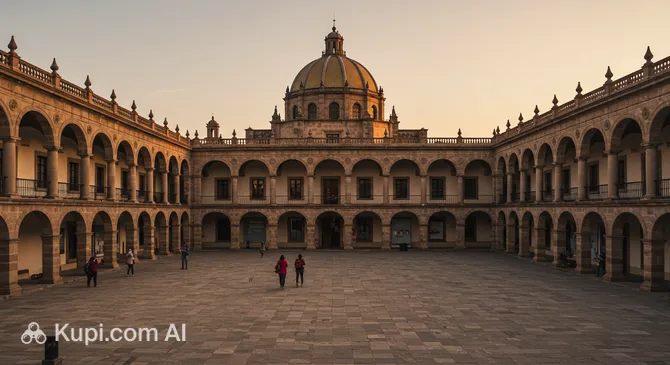
Hospicio Cabañas. Illustration.
Source: Kupi.com AI

Traveler photos:

Originally built in the early 19th century as an orphanage and a home for the elderly and destitute, this complex is one of the oldest and largest of its kind in Latin America. Its design, developed by architect Manuel Tolsá, was inspired by European models such as Les Invalides in Paris and the Spanish El Escorial. Today, its austere yet harmonious buildings house the Cabañas Cultural Institute, which hosts exhibitions and cultural events.

However, Hospicio Cabañas gained worldwide fame for the stunning frescoes by the prominent Mexican muralist José Clemente Orozco. In the 1930s, he painted the complex's main chapel, creating 57 monumental frescoes. The central piece, the famous fresco “The Man of Fire”, is striking in its expression and depth, having become a true gem of Mexican art.

Contacts

To plan your visit to Hospicio Cabañas, check opening hours, ticket prices, or information about current exhibitions, it is recommended to contact the cultural center directly. Below are the main contact details.

How to contactContact
AddressC. Cabañas 8, Las Fresas, 44360 Guadalajara, Jal., Mexico
Phone number+52 33 3668 1642
Websitemuseocabanas.jalisco.gob.mx

What to Do

Today, Hospicio Cabañas is not just a historical building, but a full-fledged cultural center where history and modernity harmoniously complement each other. The main goal for many visitors is to see the monumental frescoes by José Clemente Orozco, which are recognized as masterpieces of Mexican art. You can enter the main chapel to see the famous “The Man of Fire” fresco on the dome and explore the other paintings covering the walls and vaults. Additionally, the tour includes a visit to numerous halls where you can dive deeper into the history of the complex itself.

Beyond the permanent exhibition dedicated to Orozco's work, the cultural center regularly hosts temporary exhibitions of contemporary art, concerts, lectures, and workshops. This makes every visit unique and interesting. Don't miss the opportunity to take a leisurely stroll through the complex's many courtyards and arcades. Here, in the quiet and cool shade, it's easy to imagine what life was like in the old hospice and enjoy the unique architecture and spirit of old Guadalajara.

Getting There

Getting to Hospicio Cabañas is quite easy, as it is conveniently located in the heart of the historical center of Guadalajara, making it easily accessible for travelers. If you enjoy walking and are already downtown, the walk from the main square to the museum will take no more than 10–15 minutes. This is a great opportunity to soak in the atmosphere of the ancient streets.

For those who prefer public transport, there are several bus stops and metro stations near the complex. You can use metro lines TL-2 or TL-3, as well as numerous bus routes that pass through the city center. If you are traveling by car, there are several public parking lots near Hospicio Cabañas where you can leave your vehicle during your visit.

Visitors arriving in Mexico via Guadalajara International Airport will also find it convenient to reach the attraction. You can first get to the city center by taxi or a shuttle bus, and then transfer to local transport that will take you straight to the cultural center, or simply walk while enjoying the city views.

Nearest city: Guadalajara

History & Facts

The history of Hospicio Cabañas dates back to the end of the 18th century when the idea of creating a large-scale institution to help those in need first arose. The project was initiated in 1791 by the Bishop of Guadalajara, Fray Antonio Alcalde, who envisioned combining a workhouse, hospital, orphanage, and almshouse under one roof. The complex received its current name in honor of his successor, Juan Ruiz de Cabañas. It was he who, in 1796, commissioned the design to the outstanding architect Manuel Tolsá, who drew inspiration from famous European ensembles—Les Invalides in Paris and the El Escorial monastery in Spain.

The construction of this grandly conceived complex was fraught with difficulties. Historical events, particularly the Mexican War of Independence, significantly slowed down the work. Ultimately, construction was only fully completed in 1829, after Bishop Cabañas had passed away. Throughout the 19th and 20th centuries, the buildings changed their purpose several times, occasionally even being used as military barracks, but they consistently maintained their key social and medical role in the life of the city.

A new cultural chapter in the hospital's history began in the 1930s. It was then that its main chapel was transformed into a canvas for one of the country's greatest muralists—José Clemente Orozco. The 57 frescoes he created, including the famous “The Man of Fire”, became a world masterpiece and brought global fame to the complex. The hospital finally changed its status at the end of the 20th century when it was transformed into a cultural institute and museum, preserving this unique heritage for future generations and tourists from around the world.

Time Needed

To fully enjoy your visit to Hospicio Cabañas, you should plan for 1.5 to 3 hours. This time is generally enough to explore the main treasures of this unique site in Guadalajara without rushing, see the main exhibitions, admire the famous frescoes, and walk around the grounds. Even a 90-minute visit will leave a vivid impression of this UNESCO World Heritage site.

Most visitors spend the majority of their time viewing José Clemente Orozco's monumental frescoes in the main chapel. To carefully examine all the details and feel the power of his work, especially the famous “The Man of Fire,” you will need at least an hour. The remaining time can be spent on a leisurely stroll through the numerous courtyards, studying the complex's majestic architecture, and visiting temporary exhibitions often held in the halls of the Cabañas Cultural Institute.

If you have a deep interest in art or the history of Mexico, the duration of your visit can easily be extended to 3 hours or more. This will allow you not only to study all the frescoes and exhibitions in detail but also to simply relax in the peaceful atmosphere of this iconic location, fully feeling its historical spirit.

Working Hours

Hospicio Cabañas is generally open to visitors year-round. The museum's standard working hours are Tuesday to Sunday, from 10:00 AM to 5:00 PM or 6:00 PM. Monday is the official day off, which should be taken into account when planning a visit to Guadalajara. It is important to note that entry to the museum is often free on Tuesdays. It is always recommended to check the official website of the cultural center for up-to-date information before your trip, as opening hours may change due to holidays or special events.

To avoid queues, especially during peak tourist season or on weekends, tickets can be purchased online in advance. Tickets are also available at the ticket offices at the entrance. If you want to dive deeper into the history and art of the complex, you can use the services of a guide—tours are conducted throughout the day in both Spanish and English. Discounts are often available for students, seniors, and children upon presentation of a valid ID.

DayOpening hours
MondayClosed
Tuesday10:00 – 17:00
Wednesday10:00 – 17:00
Thursday10:00 – 17:00
Friday10:00 – 17:00
Saturday10:00 – 17:00
Sunday10:00 – 17:00

Nearby

A visit to Hospicio Cabañas is just the beginning of exploring the rich cultural heritage of Guadalajara. Thanks to its location in the historical center, you will find yourself at the heart of the action, where new discoveries await at every turn. A stroll through the surroundings will not only allow you to see other iconic sites but also to feel more deeply the unique atmosphere of this Mexican city.

Many key attractions are within walking distance of the museum, making it an ideal starting point for an exciting tour. From bustling markets and majestic cathedrals to unusual museums—everything is located nearby and waiting to be explored.

NameDistance
Wax Museum Guadalajara0.7 km
Liberation Square0.8 km
Army and Air Force Museum0.8 km
Arena Coliseo of Guadalajara0.8 km
Belén Cemetery Museum1.4 km
Taco Fish La Paz1.5 km
Génesis Disco1.9 km

Have you reached the end of the page?

So the route has been studied inside and out