Support

Fox Glacier

About

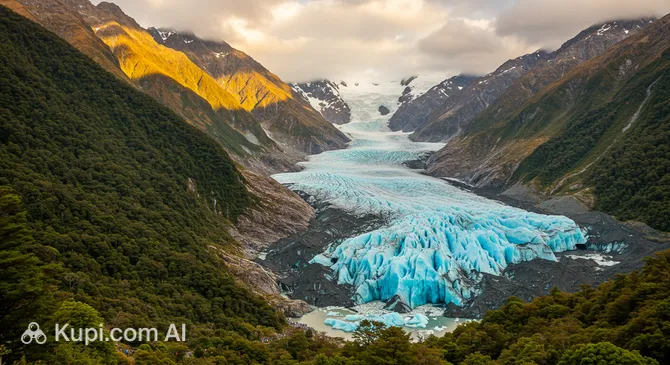
Fox Glacier is a tiny but incredibly atmospheric town, nestled at the foot of the majestic Southern Alps. Tucked away on the wild West Coast of the South Island, it serves as a gateway to a wondrous world where New Zealand demonstrates its primal power: ancient forests meet icy streams, and fresh ocean air mixes with mountain coolness.

Fox Glacier. Illustration.
Source: Kupi.com AI

Although the town's population numbers only a few hundred people, it boasts a developed infrastructure and a special charm. There is an atmosphere of peace and friendliness here, and the history of Fox Glacier is inextricably linked with glacier exploration and an adventurous spirit that has turned this remote corner into a magnet for tourists from all over the world. For travelers, it's a chance to experience the unique ecosystem of the West Coast region without the hustle and bustle of big cities.

The main reason to visit this corner is the legendary Fox Glacier, located just a few minutes' drive away. Guests are offered not only walks to viewpoints but also thrilling helicopter tours with a landing directly on the snow, as well as hikes through thick rainforest to the ice walls. It is worth staying here to feel the unhurried rhythm of life and witness an unforgettable sunrise against the backdrop of sparkling peaks.

Weather Overview

The climate in this corner of New Zealand is shaped by the influence of the Tasman Sea and the majestic Southern Alps, creating temperate but very humid conditions. The weather here is changeable: clear skies can quickly be covered with clouds. Traditionally, the warmest month is January, when the average temperature stays around 14.3°C, and daytime air warms up to 17.2°C.

The winter period brings coolness, but severe frosts are rare. In July, the coldest month, average figures are about 4.6°C, and night temperatures can drop to 1.9°C. Rain is a frequent guest in the region: the number of wet days varies from 13 in June to 21 in December, so an umbrella or raincoat will come in handy at any time of year.

When planning your trip, it is important to consider that the weather in Fox Glacier can change several times a day. For a comfortable holiday, it is recommended to dress in layers and always have a waterproof windbreaker at hand. Checking the current forecast before heading out on a route will help you choose the perfect moment to experience the glacier and its surroundings.

Average monthly temperature

Average monthly precipitation

Interesting Facts

In addition to its world-famous landscapes, Fox Glacier holds many surprising features that make it unique even by the standards of nature-rich New Zealand. Here are a few facts to help you see this icy land from a new perspective.

  • Where Ice Meets the Tropics. Fox Glacier is a rare natural phenomenon where a glacier descends from the high mountains almost to sea level (about 300 meters), directly into a temperate rainforest zone. This creates a surreal contrast: massive blocks of ice can be seen in immediate proximity to lush green ferns.

  • Intelligent Mountain Dwellers. In the local forests, you can encounter the kea — the world's only alpine parrot. These birds possess remarkable intelligence and are famous for their curiosity and mischievous nature: they often "inspect" tourists' backpacks and may even try to dismantle the rubber seals on cars.

  • Named After a Prime Minister. The glacier and the town were named in honor of Sir William Fox, who served as the country's Prime Minister in the 19th century. Interestingly, the politician himself visited these picturesque places only after they had been officially named after him.

  • The Secret of the Perfect Reflection. The famous Lake Matheson is called "Mirror Lake" for a reason. Its waters have a dark brown tint due to organic matter washed from the forest floor. It is this dark color that turns the lake's surface into a perfect reflecting plane, where the majestic peaks of the Southern Alps are duplicated in windless weather.

  • Accessibility of the Peaks. Fox Glacier is one of the few places where helicopter tours are not just entertainment but often the only way to safely step onto the ice. Pilots land directly on the snow caps at the head of the glacier, giving tourists of all ages the opportunity to find themselves in the heart of a winter wonderland in minutes.

How to Get There

When planning a trip to the glaciers, it is important to think through the logistics in advance, as the region is located far from major metropolitan areas. You can find all the details and specifics about routes on the how to get to Fox Glacier page, and below we will look at the main transport hubs through which tourists reach this region.

There is no airport in the town of Fox Glacier itself, so travelers have to fly to neighboring cities and then transfer to ground transport. The nearest regional hub is Hokitika Airport (HKK), located in the town of Hokitika. The distance to the glacier is about 115 km, and the trip by car or bus will take approximately 3 hours 15 minutes. This is a convenient option for domestic flights.

For international travelers, the main gateway to the South Island is often Christchurch International Airport (CHC). It is located in Christchurch, about 204 km from Fox Glacier (as the crow flies, but the mountain road is significantly longer). The estimated travel time, considering the challenging terrain, is about 5.5 hours. Also popular is Queenstown Airport (ZQN) in Queenstown (about 200 km). The road from there takes approximately 5 hours 20 minutes and passes through picturesque mountain passes.

For convenience, here is a summary of the main airports:

AirportPassenger trafficDistance
Hokitika Airport40 000115 km
Queenstown Airport2.6 mln200 km
Christchurch International Airport6.4 mln204 km
Dunedin International Airport903 396274 km

There is no direct rail connection to Fox Glacier. The railway on the West Coast ends further north and does not reach the glacier zone. Therefore, the main mode of transport remains road vehicles. Tourists often rent cars or use InterCity bus services, which run along the scenic State Highway 6, connecting the glaciers with other towns on the island.

Main Attractions

Fox Glacier — the undisputed dominant feature of the region and the main reason why travelers flock to this remote corner. This unique 13-kilometer-long ice giant descends from the high peaks of the Southern Alps directly into the temperate rainforest zone, stopping just 300 meters above sea level. Due to active melting in recent years, access to the ice itself from the valley is limited, so the best way to see its majesty is via helicopter excursions with a snow landing (heli-hike) or walks to viewpoints that offer panoramic views of the ice river.

Lake Matheson — one of the most photographed places in all of New Zealand. Located just 5 kilometers from the village, it is famous for its mirror-like surface. The dark waters of the lake, rich in organic matter, create a perfect reflection of the country's highest peaks — Mount Cook (Aoraki) and Mount Tasman. There is a convenient walking track around the lake that takes about an hour and a half. The best time to visit is at dawn or sunset, when the water is at its calmest and the light paints the mountains in golden tones.

Minnehaha Walk — this is a short and easy trail starting practically in the center of town that offers true magic. By day, it is a pleasant walk through thick rainforest with giant ferns and mossy trees, but after dark, the place is transformed. Tourists come here with flashlights (it's better to use red light) to see thousands of glow worms shining in the tree roots and along the stream, like a starry sky beneath your feet.

Gillespies Beach is located about a 20-minute drive from the town and offers completely different landscapes. This is a wild beach with black sand and a vast amount of driftwood, offering stunning views of the snow-capped Alps from the Tasman Sea side. Here you can learn about the history of gold mining by seeing the rusted remains of an old gold dredge, as well as walk to a New Zealand fur seal colony, which often rests on the rocks during the winter season.

Local Cuisine

The gastronomic scene in Fox Glacier is a wonderful blend of New Zealand culinary traditions and the exceptional freshness of local products. Despite its distance from major cities, the cuisine here does not yield to the capital's in terms of quality. The main emphasis is on ingredients sourced directly from surrounding farms and the waters of the Pacific Ocean, creating simple yet rich flavors perfect for recharging after an active day in the mountains.

Among the main dishes that are definitely worth trying, salmon raised in the crystal-clear glacial waters of the South Island takes a leading position. It is served in various forms: from delicate sashimi to hot-smoked fillets. No less popular are the famous New Zealand green-lipped mussels, known for their large size and sweetish taste. For meat lovers, local chefs offer juicy beef steaks or rack of lamb, which is considered a signature of the country's farming industry.

For a quick snack or lunch on the go, traditional meat pies filled with minced meat and gravy are ideal. Those with a sweet tooth should definitely try the main national desserts: the light Pavlova cake decorated with fresh berries and kiwi, or lamingtons — sponge cakes in chocolate icing generously coated with desiccated coconut.

As for drinks, a culture of high-quality alcohol and coffee prevails. It is customary to order a glass of local wine with dinner — Sauvignon Blanc and Pinot Noir varieties are particularly good. Beer enthusiasts will appreciate the craft beers brewed at small breweries along the West Coast. And any local's morning begins with a cup of flat white — an espresso-based coffee drink that was invented in this part of the world.

The food culture in Fox Glacier is characterized by being casual and cozy. There are no pretentious restaurants with strict dress codes; instead, guests find atmospheric pubs and cafes where everyone feels at home. For example, at Betsey Jane Eatery & Bar, you can enjoy a modern take on classic dishes in a stylish interior, while the Cook Saddle Cafe & Saloon offers a hearty country dinner in an alpine hut setting. During harvest season, local establishments sometimes host themed evenings and tastings, allowing tourists to dive deeper into the region's gastronomic features.

Travel Tips

Preparing for a trip to Fox Glacier requires special attention to detail, as the harsh but beautiful nature of the West Coast dictates its own rules. To make your acquaintance with glaciers and rainforests as comfortable as possible, we have compiled a list of the most important recommendations for tourists.

  1. Clothing and Gear. The main principle here is layering. The weather can change from bright sunshine to torrential rain in minutes. Be sure to bring a quality waterproof windbreaker and trekking boots with good tread for walking on forest trails. Don't forget sunglasses: even in cloudy weather, UV radiation in New Zealand is very high, and ice and snow amplify its effect.
  2. Transport Accessibility. The village itself is very compact, and it is best to get around on foot — all shops and cafes are on one street. However, to reach the trailheads or Lake Matheson, you will need a car or a local shuttle. There are no ride-sharing apps (like Uber) here, so rely on a rental car or pre-booked transfers.
  3. Finances and Payment. The local currency is the New Zealand Dollar (NZD). Bank cards (Visa, Mastercard) are accepted almost everywhere, but it is recommended to have some cash for small expenses or tips (which are not mandatory here but are appreciated for excellent service). Note that there are few ATMs in the village, and they may be located inside shops with limited opening hours.
  4. Health and Protection. The main enemy of the tourist on the West Coast is not the cold, but sandflies — tiny local midges whose bites are very itchy. Be sure to buy a strong repellent at a local pharmacy or supermarket and try not to stand still for long, especially near water. Pharmacies in the village are small and close early, so it's better to bring a supply of personal medications.
  5. Communication and Internet. Be prepared for the fact that mobile service and mobile internet may disappear as soon as you leave the central street of the village. Wi-Fi is available in most hotels and cafes, but the speed may be low. We strongly recommend downloading offline maps of the area and routes to your smartphone in advance.
  6. Local Etiquette. New Zealanders are very friendly and value politeness. Greet locals with the phrase "Kia Ora" (Kee-ah Or-ah) — it is a universal greeting and wish of health. Strictly follow the "leave no trace" rule: all trash must be taken with you, as bins on nature trails are often absent to protect wild animals.
  7. What to Avoid. It is categorically forbidden to ignore fences and warning signs at the foot of the glacier. The ice is unstable, and rockfalls or collapses occur suddenly. Also, under no circumstances feed the kea parrots, even if they persistently beg for food: "human" food is deadly to them, and birds that have been fed begin to damage tourists' cars and belongings.
  8. Tip for Road Trippers. Filling stations are rare on the West Coast, and fuel in remote locations like Fox Glacier is more expensive. Try to fill up a full tank in larger towns (e.g., Hokitika or Wanaka) before entering the glacier region.

By following these simple tips, you can avoid minor troubles and focus entirely on contemplating the majestic landscapes. May your trip to Fox Glacier be one of the brightest and safest adventures of your life!

Entertainment & Nightlife

The nightlife in Fox Glacier perfectly reflects its spirit: it is a cozy, quiet, and intimate experience. Do not expect noisy nightclubs, laser shows, or red-light districts here. Evening leisure in this alpine village consists of warm gatherings by the fireplace, lively conversation with travelers from around the world, and enjoying a glass of local wine or craft beer after a long day in the mountains.

The main gathering points in the evening are the hotel bars and restaurants located along the main road — State Highway 6. One of the most characteristic spots is the Cook Saddle Cafe & Saloon. The interior is designed in the style of an alpine hut with cowboy saloon elements: massive wooden tables, a crackling fireplace, and historical photographs on the walls create a unique atmosphere. People come here for a hearty dinner, a relaxed vibe, and the chance to discuss trekking routes with other tourists.

For those who prefer a more modern setting, Betsey Jane Eatery & Bar is an excellent choice. This stylish venue offers a great selection of New Zealand wines and cocktails, along with a menu that combines local ingredients and modern culinary trends. The crowd here is diverse: from backpackers in fleece jackets to couples having a romantic dinner. The dress code in Fox Glacier establishments is extremely relaxed — comfortable casual clothing or even hiking gear will be perfectly appropriate.

A unique feature of Fox Glacier's "nightlife" is nature itself. The main free entertainment after sunset is a walk along the Minnehaha Walk. Armed with a flashlight (preferably with a red light to avoid startling the inhabitants), tourists head into the forest to see thousands of glow worms shining in the dark. This magical sight replaces any light shows or neon signs here.

Practical Tips:

  • Opening Hours: Life in the village winds down early. Restaurant kitchens often close by 20:30–21:00, and bars may stay open until 22:00–23:00, depending on the number of patrons. Head out for dinner early.
  • Safety: Fox Glacier is a very safe place. You can walk peacefully at night, although the streets are poorly lit. Be sure to carry a flashlight or a charged phone to avoid tripping on the roadside.
  • Transport: Taxis are difficult to find at night, but they aren't necessary — the entire village can be walked in 15–20 minutes.
  • Prices: The average check for dinner with a drink will be around 30–50 NZD per person.

As for classic daytime entertainment like theaters, cinemas, or amusement parks, there are none in Fox Glacier. The entire cultural and entertainment program is focused on natural wonders and outdoor activities. During the day, tourists visit souvenir shops, the DOC (Department of Conservation) visitor center to learn more about the region, or head to the helipad to see the glacier from a bird's-eye view.

Parks & Museums

The cultural and natural heritage of Fox Glacier is inextricably linked to its unique location. You won't find massive museum complexes or classic urban parks with fountains here. Instead, nature itself acts as a grand open-air exhibition hall, and historical monuments are harmoniously integrated into the landscape of wild forests and coastlines.

The region's main natural treasure is Westland Tai Poutini National Park. This is a vast protected area stretching from the high peaks of the Southern Alps to the turbulent Tasman Sea. The park is included in the UNESCO World Heritage List and represents a living encyclopedia of nature: here you can see the change of climatic zones from eternal snows to dense rainforests with tree ferns. For tourists, it is the ideal place to get acquainted with the pristine ecosystem of New Zealand.

Another important green zone is the Lake Matheson Scenic Reserve. Although this place is often mentioned as a separate attraction, it deserves attention specifically as a nature park with excellently maintained trails. A walk here passes through ancient forest where trees are covered in mosses and lichens, creating the atmosphere of a fairy-tale thicket. This spot is perfect for quiet contemplation and observing local birds in their natural habitat.

The role of the main museum and educational center is played by the Department of Conservation (DOC) Visitor Centre. This is not just a tourist office, but a full-fledged exhibition space. It features interactive displays telling the story of glacier geology, the history of their exploration, and the unique fauna of the region, including the famous kea parrots. Visitors can learn about how the landscape formed over millennia and the efforts being made to preserve it today.

History buffs will be interested in the Gillespies Beach Historical Area. This is a true open-air museum dedicated to the gold rush era. Walking along the coastal trails, you will discover the rusting remains of an old dredge and abandoned mining tunnels that nature is gradually reclaiming. Information boards describe the harsh daily life of 19th-century gold miners, allowing you to vividly imagine scenes from the past against the backdrop of the rugged seascape.

For those seeking authentic experiences, we suggest visiting the small Te Kopikopiko o te Waka viewpoint. This is not just a place with a beautiful view, but a cultural site designed in Maori traditions. The landscaping and sculptural elements here tell the legends of the indigenous people regarding the creation of the Southern Alps, offering a look at the surrounding mountains through the prism of ancient mythology.

Getting Around

The public transport system in Fox Glacier has its own unique features due to the size of this small settlement. Since the town itself is very compact, there are no types of transport common in major cities, such as subways, trams, or city route buses. All infrastructure is concentrated along the main road, and most hotels, cafes, and shops are within walking distance of each other.

The main way to get around the village is on foot. You can walk from one end of the main street to the other in literally 15–20 minutes. However, to visit remote attractions such as Lake Matheson or the glacier viewpoint, tourists often use private shuttle buses. These minibuses run on a schedule or by request, connecting the town center with the trailheads.

Fare payment for local shuttles is usually made on the spot to the driver or when booking through tourist information centers and hotel receptions. Both cash (New Zealand dollars) and bank cards are accepted, but it's always better to have a bit of cash on hand in case a terminal is unavailable. The fare is fixed and depends on the destination (usually from 10 to 25 NZD one way).

For intercity travel, the InterCity bus network is used, which connects Fox Glacier with other regions of New Zealand. It is strongly recommended to purchase tickets for these online in advance, as seats sell out quickly during the high season. The intercity bus stop is located in the center of the village, near the main hotels.

As an alternative to public transport, car rentals are extremely popular. This is the most convenient way to explore the region at your own pace. Also, in good weather, you can rent a bicycle for trips to Lake Matheson. There are no classic urban taxi services or ride-sharing apps (like Uber) in Fox Glacier, so in the absence of a personal vehicle, one should rely on shuttles or organized transfers from tour operators.

Accommodation

The choice of accommodation in Fox Glacier, despite its modest size, is quite diverse and capable of satisfying the needs of most travelers. An atmosphere of alpine coziness prevails here: instead of huge hotel chains, you will find comfortable motels, cozy lodges, Bed & Breakfasts, as well as budget backpacker hostels and well-equipped campervan parks. Most accommodation options are oriented toward allowing guests to fully enjoy the views of the mountains and rainforests.

In terms of geography, the village is very compact, and the choice of area depends on your preference for mobility. The most convenient option is staying in the village center, along the main road (State Highway 6). Staying here puts you within walking distance of all cafes, shops, and helicopter company offices, which is especially convenient for those traveling without a car. Another popular option is accommodation along Cook Flat Road, the road leading to Lake Matheson. This area is slightly away from the hustle and bustle (2–3 km from the center) but offers perhaps the most breathtaking panoramic views of the Southern Alps and Mount Cook right from your window.

An important booking tip: plan your trip in advance. Fox Glacier is a "bottleneck" on the West Coast tourist route. The housing stock here is limited, and demand during the high season (December to February) is enormous. It is not uncommon for tourists arriving without a reservation to be unable to find a vacancy within a 100-kilometer radius. It is recommended to book accommodation at least 2–3 months before your trip, especially if you are looking for a specific budget.

The price range varies from budget (campsites and hostel beds) to high-end (boutique hotels and exclusive lodges). The bulk of offerings fall into the mid-range segment — these are quality motels, often equipped with kitchenettes, which is very convenient given the early closing of local restaurants. Booking is available through popular international online platforms, but many family-run hotels also welcome direct bookings through their websites, sometimes offering small bonuses or discounts for doing so.

Nearby Cities

For those looking to explore the surrounding areas, Fox Glacier serves as an excellent starting point for day trips to several interesting nearby locations. Although some are at a significant distance, traveling along New Zealand's scenic roads is an adventure in itself.

One of the most popular destinations is Queenstown, known as the adventure capital of the world. Here you can go bungee jumping, ride jet boats, or simply enjoy the stunning views of Lake Wakatipu and the surrounding mountains. For a more relaxed break, the coastal town of Timaru is a great fit, attracting visitors with its Victorian architecture, beautiful Caroline Bay beach, and the chance to see a colony of little blue penguins.

CityPopulationDistance
Franz Josef Glacier14 km
Mount Cook18 km
Hokitika2 892114 km
Timaru27 501143 km
Ashburton20 400148 km

Shopping & Souvenirs

General Overview

Shopping in New Zealand, specifically in the miniature village of Fox Glacier, has its own specifics. Do not expect multi-story malls or high-fashion boutiques here. The trade sector is entirely focused on the needs of travelers and outdoor enthusiasts. The town is famous for shops offering high-quality hiking gear, warm clothing made from natural materials, and unique souvenirs reflecting the wild spirit of the West Coast.

Main Shopping Areas/Streets

All the commercial life of the village is concentrated along the main transport artery — State Highway 6 (within the town limits, it is often called Main Road or Cook Flat Road). It is here, within walking distance of each other, that souvenir shops, a grocery store, and tour operator offices are located, which often have small shops with themed goods. It is impossible to get lost here: the entire "shopping district" can be walked in a few minutes.

Shopping Centers

There are no large shopping centers in Fox Glacier. The center of attraction for locals and tourists is the Fox Glacier General Store. This is a classic general store where you can find almost everything: from fresh food and snacks for the road to essentials, raincoats, and basic souvenirs. It serves as a supermarket, pharmacy kiosk, and hardware store all in one.

Markets

There are no permanent markets in the village. Occasionally, during the summer season, small local pop-up markets may be organized near community centers where local artisans offer their crafts, but this is an irregular occurrence. For the atmosphere of traditional farmers' markets, it is better to head to larger towns in the region, such as Hokitika.

Souvenirs

Items worth bringing back from Fox Glacier are those that will keep you warm and remind you of New Zealand. The top seller is clothing made from a blend of merino wool and possum fur. Sweaters, hats, gloves, and socks made from this material are incredibly light and warm. Also popular are jewelry made from New Zealand greenstone (pounamu), cosmetics based on Manuka honey and lanolin, as well as books with photos of the glaciers and soft toys in the shape of the kiwi bird.

Hours and Payment

Shops usually open at 8:30 or 9:00 AM and work until 5:30 or 6:00 PM. During the peak tourist season (summer), some souvenir shops and the supermarket may stay open longer, until 7:00–8:00 PM. Cash (New Zealand dollars) and bank cards from major international systems (Visa, Mastercard) are accepted everywhere. Cashless payments are available even for small souvenir purchases.

Tax Free

In New Zealand, Goods and Services Tax (GST) is 15% and is always included in the price shown on the tag. There is no classic Tax Free refund system in the town for tourists. However, some specialized souvenir shops may offer a service to ship expensive purchases (such as sheepskin rugs or jewelry) by mail directly to your home address abroad — in this case, the tax (GST) is deducted from the price at the time of purchase.
Reached the end of the page?

That means the route is fully explored