Support

Mount Cook

About

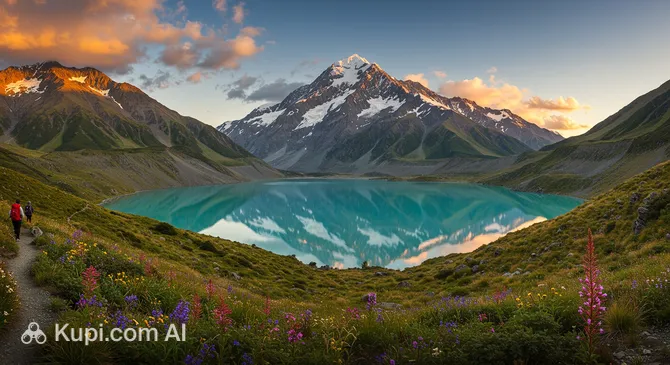
Mount Cook is a unique destination that is difficult to describe as an ordinary town in the traditional sense. Rather, it is a picturesque mountain village serving as the main gateway to the national park of the same name in the heart of the South Island. The settlement is nestled at the foot of the majestic Aoraki (3,724 meters)—the highest peak that New Zealand is rightfully proud of. An incredible atmosphere of tranquility and harmony with pristine nature reigns here, where glaciers sit alongside emerald alpine meadows.

Mount Cook. Illustration.
Source: Kupi.com AI

Despite its miniature size and very small permanent population, the village is full of life year-round. Tourists from all over the world come here not only for mountaineering but also to see with their own eyes the landscapes that served as the living backdrop for the famous Lord of the Rings film trilogy. The surroundings are breathtaking in their scale: crystal-clear lakes and rugged cliffs create the feeling of being on the set of a fantasy movie.

In addition to its natural beauty, the region has a rich past. The fascinating history of Mount Cook is closely intertwined with Maori legends and the feats of pioneering explorers who conquered the local peaks. Today, this place attracts not only climbers but also romantics: the village is part of a dark sky reserve, offering perhaps the best conditions for stargazing in the Southern Hemisphere. Visiting Mount Cook is a chance to plunge into a world of adventure and enjoy the silence of the mountains.

Weather Overview

Because the village is located in a high-altitude climate zone, the weather in Mount Cook is characterized by variability and freshness even at the height of the season. Summer (December–February) is moderately warm: the average temperature in January is about 12.7°C, and maximum values rarely exceed 16.5°C. This is the most comfortable time for trekking, but tourists should not forget raincoats, as up to 22 days of precipitation are recorded in December.

With the arrival of autumn, the air gradually cools, and by May the average temperature drops to 5.1°C. Winter, lasting from June to August, brings true alpine chill. In July, the coldest month, thermometers show an average of 1.1°C, and nighttime frosts down to -1.9°C are possible. The number of days with precipitation remains high year-round, varying from 13 to 22 days per month.

Expect a cool summer with occasional rain and cold winters with frequent precipitation and high humidity. Regardless of your travel dates, layered and waterproof clothing will be your main companion on your journey to the foot of Mount Aoraki.

Average monthly temperature

Average monthly precipitation

Interesting Facts

Beyond the breathtaking landscapes, Mount Cook holds many fascinating secrets and legends that make this place truly special. Here are a few facts that will allow you to look at this majestic peak from a new perspective:

  • Sacred Status. For the indigenous Maori people, this mountain is not just a geological object, but a sacred ancestor named Aoraki. According to ancient legend, Aoraki was the son of the Sky Father Rangi, and his transformation into stone became a central element of local mythology.

  • Change in Height. The mountain literally "shrank" before the eyes of contemporaries. In 1991, a massive landslide occurred, resulting in the peak losing part of its height. Today it stands at 3,724 meters, down from its previous 3,764 meters, but this event only fueled geological interest in the region.

  • Cinematic Fame. The rugged profile of Mount Cook has appeared on the big screen multiple times. The mountain served as the prototype for the ominous peak of Caradhras from the Misty Mountains in the cult trilogy "The Lord of the Rings," and also "played a role" in the adventure film "Vertical Limit."

  • Concentration of Giants. The national park surrounding the mountain is part of the Te Wahipounamu UNESCO World Heritage site. This place is unique for its density of high peaks: 19 summits over 3,000 meters are concentrated here, along with the famous Tasman Glacier—one of the largest in the country.

How to Get There

The journey to the foot of the Southern Alps is a thrilling adventure that begins long before you arrive in the mountain village itself. Because the region is located in a remote area, there is no direct commercial air service. Tourists usually fly into major cities on the South Island and then continue their journey along scenic highways. You can find more about how to get to Mount Cook to plan your route as comfortably as possible.

Most often, travelers choose Christchurch International Airport (CHC) as their starting point. This is the island's main aviation hub, receiving many international flights. It is located in the city of Christchurch, about 194 km from Mount Cook as the crow flies, but the journey along winding roads takes about 5 hours. The drive from Christchurch passes through the famous Canterbury Plains and the turquoise Lake Tekapo, making the trip incredibly beautiful.

Another popular option is Queenstown Airport (ZQN), located in the city of Queenstown. The distance to Mount Cook is about 194 km, and the travel time by car or bus also takes approximately 5 hours. This route is chosen by those who want to combine a visit to the "adventure capital" with a trip to the country's highest peak. There is no airport in Mount Cook village itself, so ground transfer from these cities is an essential part of the journey.

For clarity, here is summary information on the main airports in the region:

AirportPassenger trafficDistance
Hokitika Airport40 000120 km
Christchurch International Airport6.4 mln194 km
Queenstown Airport2.6 mln194 km
Dunedin International Airport903 396259 km

There is no direct rail service to Mount Cook village. The nearest railway lines pass through coastal towns, so the main methods of travel remain rental cars or tourist buses running from Christchurch, Queenstown, and other cities.

Main Attractions

The main attractions of Mount Cook are inextricably linked to the region's incredible nature. You won't find noisy entertainment centers or ancient palaces here, but there are majestic mountains, glaciers, and trails that allow you to touch the wild beauty of New Zealand. Here are the places you should definitely include in your itinerary.

The absolute center of attraction is Aoraki/Mount Cook National Park itself. It is not just the area around the village, but a vast reserve home to the country's highest peaks and extensive glacier fields. The park is ideal for those seeking solitude and wanting to enjoy rugged alpine landscapes. There are many trails of varying difficulty—from short walks to multi-day climbs for professional mountaineers.

The most popular hiking route is the Hooker Valley Track. This trail attracts tourists with its accessibility and scenic beauty: the route is mostly flat and takes about 3–4 hours round trip. The path crosses three suspension bridges over rushing mountain rivers and ends at the glacial Hooker Lake, where icebergs often float in the water, and on a clear day, a stunning view of the Aoraki peak opens up.

Another natural wonder is the Tasman Glacier, the longest glacier in the country. Tourists come here to see giant ice walls and take a boat trip on the terminal lake. This is a unique opportunity to get close to centuries-old ice, touch icebergs, and learn more about how the climate and landscape of the Southern Alps are changing.

For those who want to learn more about the history of peak conquest, the Sir Edmund Hillary Alpine Centre is open. This museum and planetarium are located within The Hermitage Hotel. Here you can watch documentaries about the region, see historical exhibits related to mountaineering, and enjoy a show in the digital dome planetarium, as Mount Cook is part of an international dark sky reserve.

Local Cuisine

While Mount Cook can hardly be called a global gastronomic capital due to its seclusion and small size, the local cuisine knows how to pleasantly surprise travelers. Here, Maori culinary traditions harmoniously intertwine with modern European trends, with an emphasis on the exceptional freshness and quality of products. Hotel restaurants and cafes offer a cozy atmosphere, perfect for recharging after long mountain walks.

The region's main delicacy is rightfully considered to be salmon, raised in the purest glacial waters of neighboring Lake Pukaki. This fish is prepared masterfully here: it's worth trying the tender steaks, hot-smoked salmon, or light salads featuring it. Meat dishes are equally popular, especially the famous New Zealand lamb, which has become a gastronomic symbol of the country. Those who prefer simpler and heartier food will enjoy traditional meat pies and fried snapper.

For those with a sweet tooth, a mandatory part of the program is tasting the "Pavlova" dessert. This airy meringue cake, generously decorated with fresh fruit and berries, is considered a national treasure by locals. Among drinks, coffee deserves special attention—New Zealanders really know their stuff, and even in the high mountains, you will be served an excellent flat white. In the evening, dinner is perfectly complemented by a glass of wine from the Canterbury region, famous for its aromatic varieties.

The food culture in Mount Cook is centered around a few key establishments in the village itself, as there is virtually no traditional street food here. However, during the tourist season, you can find small farmers' markets selling local cheeses, aromatic honey, homemade pastries, and seasonal berries. This is a great opportunity to taste the flavor of the Southern Alps and pick up an edible souvenir.

Travel Tips

Welcome to the heart of the Southern Alps! A trip to Mount Cook village is an encounter with the wilderness, so proper preparation is more important here than anywhere else to ensure your holiday is comfortable and safe.

  1. Clothing and Equipment. Mountain weather changes instantly, so layering is essential. Even in summer, bring a fleece, a windbreaker, and a raincoat. For walks on tracks like Hooker Valley, you'll need comfortable boots with good tread. Don't forget sunglasses and high SPF sunscreen: due to the thin ozone layer, the sun here is very strong and you can get burned even on a cloudy day.
  2. Transport. The village itself is very compact, and it's best to get around on foot. There is no public transport, subway, or taxi services (like Uber) here. For exploring the surrounding area, renting a car is ideal—it will give you freedom of movement. Note that in winter (June–August), snow chains are mandatory for vehicles.
  3. Finances. The currency is the New Zealand Dollar (NZD). Hotels, cafes, and the visitor center accept Visa and Mastercard. However, there are practically no ATMs in the village (or the only one might be out of service), so it is highly recommended to bring some cash with you. Prices here are higher than the national average due to complex logistics; tipping is not mandatory but appreciated for excellent service.
  4. Health and Safety. There are no pharmacies or hospitals in Mount Cook; the nearest medical help and pharmacists are in the towns of Twizel (a 45-minute drive) or Tekapo. Be sure to pack a personal first-aid kit in advance. The main natural nuisance in summer is sandflies, whose bites itch for a long time, so a powerful repellent should be with you at all times.
  5. Communication. The official language is English, so communication won't be a problem. Wi-Fi is available in hotels and the DOC visitor center, but mobile signal may drop as soon as you head into the valleys. We recommend downloading offline maps of the area in advance. It's useful to install the CamperMate or Great Walks apps for navigation and finding facilities.
  6. Local Etiquette. New Zealanders (Kiwis) are very friendly: on mountain trails, it's customary to greet fellow hikers with a simple "Hello" or "Kia Ora" (a Maori greeting). Strictly follow the "leave no trace" rule: take all your rubbish with you, as there are no bins on the trails to avoid attracting wild animals.
  7. What to Avoid. You must not feed the kea parrots, which you will likely encounter in car parks. These intelligent birds often beg for food and can even damage rubber seals on cars, but human food is deadly for them. Also, do not ignore warning signs about avalanches and rockfalls.
  8. Important Supply Tip. There is no full supermarket in the village, only a small hotel shop with a limited selection and high prices. If you plan on self-catering or want to save money, buy your groceries, water, and fill up your fuel tank in advance in Christchurch, Queenstown, or Twizel before entering the national park.

By following these simple recommendations, you'll be able to avoid everyday hassles and fully dedicate yourself to contemplating the majestic glaciers, turquoise lakes, and incredible starry sky of Mount Cook.

Entertainment & Nightlife

Entertainment and nightlife in Mount Cook have their own unique character, dictated by its location in the heart of a national park. You won't find noisy nightclubs, all-night discos, or red-light districts here. Instead, the "evening program" offers cozy gatherings by the fireplace, local craft beer tastings, and contemplation of one of the darkest and most starry skies on the planet. This is a place for those who appreciate silence, the atmosphere of an alpine chalet, and connecting with like-minded people.

The hub of evening activity is The Hermitage Hotel and the village surroundings. Since the settlement is very compact, all establishments are within walking distance of each other. The crowd here is diverse but always friendly: from professional mountaineers and backpackers in trekking boots to tourists who prefer a comfortable vacation. There is virtually no dress code—"outdoor" style and warm fleece clothing are appropriate even in the resort's most elegant bars.

If you are looking for a place to relax with a glass of wine, check out the Snowline Lounge. This bar is located in The Hermitage complex and is famous for its panoramic view of Mount Aoraki. It's best to come here at sunset to watch the snow-capped peaks turn pink. The atmosphere is calm and respectable, with quiet music playing, and the menu features an excellent selection of New Zealand wines and cocktails. Prices are above average, but the view is worth it.

For a more casual and fun evening, head to the Chamois Bar & Grill, located in the Mt Cook Lodge building. This is a classic American-style pub popular with young people and independent travelers. The atmosphere is laid-back: you can play billiards, watch sports on big screens, and order a hearty burger or pizza. It is one of the few places that stays open late (usually until 10:00 PM – 11:00 PM, which is considered deep into the night for the village).

Another iconic establishment is The Old Mountaineers' Café, Bar and Restaurant. It is the only place in the village owned and operated by a local mountain guide. The interior is steeped in mountaineering history: the walls are decorated with vintage equipment and black-and-white photos of expeditions. In the evening, you can dine on organic dishes and listen to stories from seasoned climbers. The establishment closes fairly early, so plan your visit before 8:00 PM.

The region's main "nightclub" is the sky itself. Mount Cook is part of the Aoraki Mackenzie International Dark Sky Reserve. After sunset, the village plunges into absolute darkness (street lighting is kept to a minimum to avoid light pollution), and Big Sky Stargazing tours begin. This is a unique experience of observing the constellations of the Southern Hemisphere, the Milky Way, and planets through powerful telescopes accompanied by astronomy guides.

Practical Tips and Safety:

  • Safety: The crime rate in the village is virtually zero; night walks are completely safe. The main danger is the darkness—be sure to bring a flashlight, as the footpaths are not illuminated.
  • Transport: Taxis and Uber do not operate here. All movement is on foot. If you are staying at the White Horse Hill campground, you will need to drive to the village bars (about 5 minutes) or walk the trail for about 40 minutes (with a flashlight!).
  • Prices: Be prepared for a "tourist markup" due to the remote location. A pint of beer can cost between 10 and 15 NZD, and cocktails from 18 NZD.

During the day, entertainment in Mount Cook is educational. In your spare time from hiking, it's worth visiting the Sir Edmund Hillary Alpine Centre, which features a 3D cinema and museum. Helicopter tours with glacier landings and boat trips on Tasman Lake are also popular, allowing you to see the majesty of the mountains in daylight before immersing yourself in the cozy evening atmosphere of the village.
Parks & Museums

The cultural and natural landscape of Mount Cook village is inextricably linked to the majestic surroundings of the Southern Alps. You won't find classic city parks with manicured lawns or massive art galleries here; however, the region offers a unique combination of pristine natural areas and exhibits dedicated to the heroic history of mountaineering and mountain exploration. This is a place where nature itself acts as the main open-air museum.

The central element is, of course, Aoraki/Mount Cook National Park. This is a grand natural reserve and a UNESCO World Heritage site. It is interesting to tourists not only for its glaciers but also for its unique alpine flora. In the summer months (December–February), the rocky slopes come alive with the blooming of giant buttercups (Mount Cook Lily) and mountain daisies. A walk here is an opportunity to see an ecosystem that has remained virtually unchanged for thousands of years.

For those who want to enjoy greenery and birdsong, the real gem is Governor's Bush. This is one of the few stands of native silver beech forest remaining in this rugged region. The small natural area offers shelter from the winds and a sharp contrast to the open valleys. A walk here takes less than an hour but allows you to immerse yourself in the atmosphere of "green" New Zealand and hear the melodic songs of the tui and fantails, making it an ideal "garden" for relaxation.

The settlement's main cultural institution is the Sir Edmund Hillary Alpine Centre. This modern complex combines a museum, cinema, and planetarium. The exhibit is dedicated to the history of conquering Mount Aoraki, from the first attempts by Maori and Europeans to the legendary climbs of Sir Edmund Hillary. You can see vintage equipment, old photographs, and the explorers' vehicles. Tourists find this place interesting for the chance to understand the human cost of conquering peaks and to be inspired by the spirit of discovery.

Equally fascinating is the Department of Conservation Information Centre (DOC Visitor Centre). Although formally a visitor center, it houses a magnificent free museum exhibit. The displays tell in detail about the region's geology, the formation of the Southern Alps, local flora and fauna, and the mountain's significance to the Maori people. Interactive elements and art installations make the visit interesting for both adults and children wishing to understand the surrounding landscape more deeply.

Among the historical sites, the Alpine Memorial holds a special place. This stone monument is located near the village and is dedicated to the memory of those who died trying to conquer the local peaks. It is a place of silence and reflection, offering a poignant view of Mount Aoraki itself. Also worth noting is the historical legacy of The Hermitage hotel. While the current building was constructed later, the location itself has been the cradle of tourism in the region since the late 19th century, and historical artifacts are often displayed in the hotel lobbies.

Insider Tip: Be sure to visit the DOC Information Centre not just for the exhibit, but also for their souvenir shop. There you can find unique books about the region's nature and high-quality goods, the proceeds from which go toward supporting the national park. And if you want to see a "starry museum," check out the Hillary Centre's planetarium—it's the best alternative to the real sky in cloudy weather.

Getting Around

It is important to immediately note the specifics of this place: Mount Cook is not a metropolis, but a small mountaineering village located in the heart of a national park. Therefore, there is no urban public transport system here at all. You won't find subways, trams, trolleybuses, or fixed-route taxis. The entire infrastructure of the settlement is so compact that the main way to get around is on foot.

The only form of "public" transport connecting the village to the outside world is intercity tourist buses. Companies such as InterCity, GreatSights, and The Cook Connection operate regular services from Christchurch, Queenstown, and Tekapo. These buses are comfortable, often equipped with panoramic windows and audio guides, but they serve for arriving in and departing from the region, not for moving within the village itself.

As for the payment system, due to the lack of city transport, transport cards common in major New Zealand cities (such as AT HOP or Metrocard) do not work here. Tickets for intercity buses must be booked in advance online or at tourist offices (i-SITE). Prices vary depending on the season and booking time, but a one-way trip is usually quite expensive due to the tourist-oriented nature of the routes.

Within the village itself, some large hotels, such as The Hermitage Hotel, offer their own shuttles for guests. These minivans can take tourists to the start of popular hiking trails (for example, in the Hooker Valley) or to the Mount Cook Airport (which is 5 km from the village and used only for scenic flights). Tickets for such transfers are purchased at the hotel reception.

Alternative ways of getting around also have their quirks. There are no taxi services in Mount Cook, and apps like Uber do not operate here. This is a critical point for planning: you won't be able to call a car to get to a restaurant or a trailhead. If you didn't arrive in a rental car, you'll have to rely on your own two feet or organized tours.

For outdoor enthusiasts, bicycle rentals are available. You can rent a mountain bike at the hotel or specialized rental points. This is a great way to reach nearby attractions if you don't want to walk. However, remember that many trekking trails are for pedestrians only, and cycling is prohibited there to preserve nature.

The main tip for a tourist in Mount Cook: plan your logistics in advance. If you are traveling without a car, choose accommodation as close as possible to the routes you want to visit, or be prepared for long walks. The village is very safe and pedestrian-friendly: there are signs everywhere, and distances between major sites (hotels, the visitor center, and cafes) rarely exceed a 15–20 minute walk.

Accommodation

Accommodation options in Mount Cook (Aoraki) village are quite limited, due to its status as a national park and the commitment to preserving the region's pristine nature. You won't find endless rows of hotels here; all accommodation is concentrated in a few complexes that are harmoniously integrated into the landscape. Due to high demand and low supply, planning your stay here requires special attention.

The undisputed dominant feature and heart of the resort is the famous The Hermitage Hotel. This is not just a hotel, but a historical landmark of New Zealand, offering the most breathtaking panoramic views of the Aoraki peak. The complex offers various levels of accommodation, from luxury premium rooms to more modest standard rooms. This is where the village's main restaurants and entertainment centers are located, so even if you aren't staying at "The Hermitage," you will likely stop by for dinner.

For travelers who prefer more affordable prices or a self-catering format, motels and lodges like Mt Cook Lodge and Motels or Aoraki Court Motel are excellent options. They offer modern and cozy rooms, often equipped with kitchenettes, which is very convenient given the shortage of grocery stores in the area. This is an ideal choice for families and groups of friends seeking comfort without excess.

Authentic outdoor enthusiasts choose the White Horse Hill Campground, managed by the Department of Conservation (DOC). It is located in a picturesque valley, just a few minutes' drive from the village, right at the start of popular trekking routes. Facilities here are basic (toilets and a shelter, but no electricity or hot showers), but the atmosphere of camping right under overhanging glaciers and the starry sky is unparalleled.

Important Booking Tips:

  • Book in advance. This is rule number one. Hotel rooms and lodge beds are often booked 5–6 months before the trip, especially for the summer season (December–February).
  • Alternative options. If there are no vacancies in the village itself, look for accommodation in nearby towns—Twizel (65 km) or Tekapo (105 km). The drive will take 45 minutes to an hour, but the choice of accommodation there is much wider.
  • Budget. Be prepared for accommodation prices in Mount Cook to be higher than the national average due to the location's exclusivity and complex supply logistics.

Nearby Cities

For those who want to explore the surroundings, Mount Cook serves as an excellent starting point for day trips to several interesting nearby locations:

One of the most attractive destinations is Queenstown, located on the shores of picturesque Lake Wakatipu. This city holds the title of "adventure capital of the world" and is perfect for those who want to balance the silence of the mountains with some adrenaline. Here you can go bungee jumping, take a jet boat ride through canyons, or simply stroll along the lively waterfront, enjoying views of the Remarkables mountain range.

If you prefer ocean landscapes, it is worth paying attention to Timaru. This is the largest port city closest to the mountains, famous for its magnificent Victorian architecture and Caroline Bay beach. A particular point of interest for tourists is the local colony of Little Blue Penguins: at dusk, you can watch these funny birds return from the sea to their nests in the port area.

For an immersion into the urban culture and history of the region, a trip to Christchurch is ideal. This is the largest city on the South Island, often called the most English city outside of England. It is known for its extensive botanical gardens, the opportunity to go punting on the Avon River, and a unique combination of historic buildings with modern architecture that emerged after the city's reconstruction.

CityPopulationDistance
Franz Josef Glacier15 km
Fox Glacier18 km
Hokitika2 892119 km
Timaru27 501125 km
Ashburton20 400134 km

These nearby destinations provide an insight into the region's diverse culture and landscapes, making your South Island journey even more fulfilling.

Shopping & Souvenirs

Shopping in Mount Cook village has its own unique characteristics, dictated by its location in the heart of a national park. Tourists should not expect traditional shopping centers, fashion boutiques, or long shopping streets here. This is a place for contemplating nature, so shopping opportunities are very limited and primarily practical or souvenir-oriented. The assortment in local shops is focused mainly on travelers' needs: you can find high-quality trekking gear, warm clothing, and commemorative gifts.

Due to the compact nature of the settlement, there are no dedicated shopping districts. All retail is concentrated in just a couple of buildings. The main point of attraction for shoppers is The Hermitage Hotel complex. Its grounds house the largest souvenir and clothing shops in the village. Here you'll find an excellent selection of clothing from famous New Zealand and international outdoor brands. The second important location is the shop at the Department of Conservation Information Centre (DOC Visitor Centre), where the emphasis is on educational literature and eco-friendly products.

There are no large shopping malls in Mount Cook, nor can there be due to the area's conservation status. The nearest full-scale shopping complexes are located in the island's major cities, such as Christchurch or Queenstown, which are several hours' drive away. There is also no supermarket in the village; basic necessities (snacks, water, hygiene products) can only be bought at a small counter in the hotel, but the selection is very modest and prices are higher than average.

Traditional street markets, flea markets, or farmers' markets are not held in the village. This is due to the small permanent population and strict national park rules. If you want to visit colorful fairs with local produce, it's best to plan a stop in the towns of Twizel or Tekapo on your way to Mount Aoraki.

Despite the limited choice of venues, the quality of souvenirs in Mount Cook is very high. Here is what is worth bringing home as a memento:

  • Merino wool and possum fur products. New Zealand is famous for its knitwear. Sweaters, hats, gloves, and socks made from a blend of merino wool and possum fur are incredibly light, soft, and warm—the perfect gift from an alpine region.
  • Pounamu (jade) jewelry. Traditional Maori greenstone pendants, each with its own sacred meaning.
  • Manuka honey cosmetics. Creams, balms, and soaps infused with unique local honey known for its healing properties.
  • Books and maps. At the DOC shop, you can find beautifully illustrated publications on the flora, fauna, and mountaineering history of the Southern Alps, which will be a great addition to any home library.

Shops in the village are usually open seven days a week, catering to the flow of tourists. Standard opening hours are from 8:30 or 9:00 AM to 5:00 PM, though the souvenir shops at The Hermitage may stay open longer, especially in the summer season. Cash (New Zealand dollars) and major credit cards (Visa, Mastercard) are widely accepted. Contactless payment is also common.

The Tax Free (refund) system in New Zealand works differently than in many other countries. The Goods and Services Tax (GST) is 15% and is always included in the price tag. Generally, you cannot get a refund upon departure simply by presenting receipts from regular stores. To buy goods duty-free, tourists usually use a service to have the purchase mailed directly home from the shop (if the purchase amount is significant) or shop at Duty Free stores in international airports before departure.

Reached the end of the page?

That means the route is fully explored