Support

Whakarewarewa – The Living Maori Village

About

Whakarewarewa - The Living Māori Village is a truly unique place located near the city of Rotorua on the North Island of New Zealand. It is the country's only living indigenous Māori village where descendants still live today, preserving the centuries-old traditions of their ancestors. Interestingly, the name "Whakarewarewa" is also translated as "Red Forest."
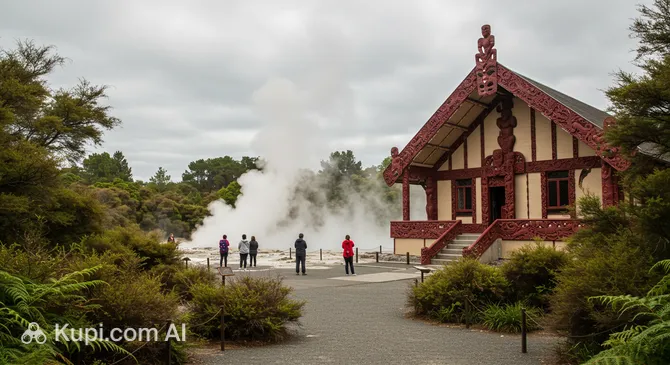
Whakarewarewa – The Living Maori Village. Illustration.
Source: Kupi.com AI

Traveller photos:

The main feature of Whakarewarewa is its authenticity. It is not just an open-air ethnographic museum, but a real settlement where daily life hums. The villagers continue to follow a lifestyle passed down through generations, allowing visitors to see genuine Māori culture from the inside.

Visiting Whakarewarewa is a unique opportunity to immerse yourself in the distinctive Māori world, learn about their customs, art, and daily life. Another striking feature of the village is its location in an active geothermal zone. Bubbling mud pools and steaming vents can be seen right on the streets, which the Māori have used since ancient times for cooking and heating. This is not just a tourist attraction, but a functioning settlement with its own local government, living in harmony with nature and tradition.

Contacts

To find current contact details, opening hours, and available ways to get in touch with Whakarewarewa - The Living Māori Village, it is recommended to visit the official website of the attraction or contact tourist information centers in Rotorua. There you can get the most up-to-date and accurate information.

How to contactContact
Address17 Tryon Street, Whakarewarewa, Rotorua 3010, New Zealand
Phone+64 7 349 3463
Websitewww.whakarewarewa.com

What to Do

Visiting Whakarewarewa - The Living Māori Village provides a unique opportunity to deeply immerse yourself in the culture of New Zealand's indigenous people. Guests are offered fascinating tours where they can learn about the traditional Māori way of life, see their authentic dwellings, and discover daily routines, customs, and centuries-old cultural traditions. This is not just a viewing of exhibits, but a living interaction with a culture that is carefully preserved and passed down through generations.

Walking through the village, you will notice buildings and sculptures characteristic of Māori culture, adorned with traditional decorative elements. You will often see intricate carvings, including expressive faces with eyes inlaid with mother-of-pearl. One of the most striking features of Whakarewarewa is its location in a geothermal zone: right on the streets, you can observe steaming vents and bubbling mud pools that villagers have used for daily needs for centuries.

In addition to residential houses and communal buildings, the village has its own church, whose interior also reflects unique Māori cultural traditions. By observing the daily life of the inhabitants and listening to their stories and songs, visitors get a rare chance to touch a living heritage and better understand the worldview of this amazing people. Every moment spent here is filled with a sense of authenticity and respect for tradition.

Getting There

Whakarewarewa - The Living Māori Village is conveniently located on the outskirts of the city of Rotorua, on the North Island of New Zealand. Although the village is effectively integrated into the Rotorua urban environment, it maintains its autonomy and unique way of life. For many tourists staying in Rotorua, the village will be within walking distance, especially if your hotel is nearby—some accommodations are situated right next to this attraction.

The city of Rotorua itself is one of New Zealand's key tourist destinations, making it quite easy to reach. Travelers can choose to drive, enjoying the picturesque New Zealand landscapes, use scheduled buses connecting Rotorua with other cities, or join an organized tour, many of which include this region.

Once in Rotorua, getting directly to Whakarewarewa - The Living Māori Village is straightforward. If you are staying nearby, a pleasant walk is a great option. For those in more distant parts of the city, local public transport services are available—it is recommended to check current routes and schedules on-site. Additionally, you can always take a taxi, which will quickly and comfortably take you right to the entrance of this amazing village.

Nearest city: Rotorua

History & Facts

Traditionally, Māori villages, known as "pā," were well-fortified settlements. They were often surrounded by a ditch or a sturdy wooden fence for protection. Inside were residential houses called "whare." These structures were built from planks and logs, with thatched roofs. An interesting feature of the whare was the floor, which was recessed into the ground. This design helped retain heat better, which was particularly important in New Zealand's cooler climate compared to the other Polynesian islands where the ancestors of the Māori originated. Visitors to Whakarewarewa - The Living Māori Village can see examples of these traditional buildings and learn more about the ingenuity of this people.

In addition to residential houses, Māori villages featured other important structures. These included "whare rūnanga" (communal meeting houses), "whare kura" (houses of learning where sacred knowledge and history were passed down), and "whare tapere" (houses for entertainment and cultural events). New Zealand's climate influenced not only architecture but also traditional Māori clothing. It included warm capes and cloaks, and women wore long skirts. For additional warmth, animal skins, such as dog skins, and bird feathers were skillfully woven into linen fabrics to create practical and beautiful garments.

One of the notable features you can find in Whakarewarewa - The Living Māori Village, as in many other settlements in New Zealand, is the deep respect for the memory of ancestors and heroes. In the village, as across the country, it is common to see monuments listing the names of soldiers who participated in world wars. This demonstrates how carefully New Zealanders, including the Māori, preserve the memory of their defenders and their contribution to history. Such memorials serve as silent reminders of the past and the connection between generations.

Time Needed

To fully experience Whakarewarewa - The Living Māori Village, feel its atmosphere, and learn more about Māori culture, you should set aside approximately 2-3 hours. This time is usually sufficient for a leisurely walk through the village, visiting key locations, and learning about the daily life of its residents.

This timeframe typically includes participating in a guided tour, where a guide will share the history of the village, Māori traditions, and customs. You will also have the opportunity to see traditional cultural performances, such as the famous Haka dance, and observe the use of geothermal energy in daily life—for instance, how food is cooked in hot springs. If you wish to dive deeper into specific aspects, such as studying crafts in detail or spending more time talking with the residents, your visit may take a bit longer.

In general, plan for at least two hours to get a general overview and capture the most vivid impressions. If you want to more thoughtfully explore every corner and fully enjoy the uniqueness of this place, you could allocate up to half a day, especially if you plan to attend all available demonstrations and events.

Working Hours

Whakarewarewa - The Living Māori Village is generally open to visitors year-round, but operating hours may vary depending on the season or day of the week. To get the most up-to-date information on opening and closing times, as well as tour and cultural event schedules, it is strongly recommended to visit the official website of the attraction or contact the tourist information center in Rotorua immediately before your visit.

Often, for popular sites like Whakarewarewa - The Living Māori Village, especially during the peak tourist season, advance booking of tickets or tours may be required. Checking this in advance will help you plan your trip without extra hassle and guarantee your spot, especially if you want to attend specific performances or guided tours. This will allow you to fully enjoy the unique experience of immersing yourself in Māori culture.

8:30 – 16:00

Nearby

A visit to Whakarewarewa - The Living Māori Village will undoubtedly be a highlight of your trip to Rotorua. However, to make your experience even more complete and multifaceted, it is worth taking the time to explore the surroundings. The city of Rotorua and its outskirts are rich in other unique locations that allow for a deeper dive into Māori culture, as well as enjoyment of the natural wonders of geothermal activity and the beauty of New Zealand.

Exploring nearby attractions will complement the experience you gain at Whakarewarewa and provide a more holistic picture of this amazing region. Many of them are in close proximity and easily accessible.

NameDistance
Pohutu Geyser0.3 km
Te Puia0.5 km
Regal Palms Resort0.6 km
Redwoods – Whakarewarewa Forest1.5 km
Redwoods Treewalk1.5 km
Secret Spot Hot Tubs1.7 km
Rotorua Central2.3 km

Reached the bottom of the page?

Looks like you know this route inside out