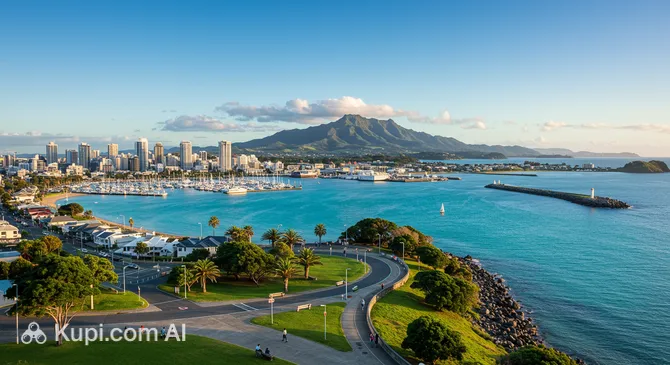
Tauranga is the bustling heart of the Bay of Plenty region and a favorite destination for those seeking sun, sea, and city comforts. As one of the fastest-growing urban areas in New Zealand, it perfectly balances a relaxed coastal atmosphere with a lively city center. With a population of approximately 151,300, it serves as a major hub for commerce and tourism on the North Island.
Tauranga. Illustration.
Source: Kupi.com AI
Geographically, the city is defined by its stunning harbour and the iconic Mount Maunganui, an extinct volcanic cone that guards the entrance to the port. The region enjoys a warm, subtropical climate, making it an ideal year-round destination for outdoor enthusiasts. Visitors interested in the past can explore the fascinating history of Tauranga, which spans centuries of Māori settlement and European maritime tradition.
Key attractions include the sandy shores of Mount Maunganui, often voted the best beach in the country, and the vibrant waterfront area known as The Strand, which is lined with cafes and restaurants. Whether you are hiking up "The Mount" for panoramic views or enjoying water sports in the harbour, Tauranga offers an unforgettable travel experience.
Weather Overview
The region enjoys a mild coastal climate that makes it an inviting destination for travelers year-round. To help you pack appropriately for your trip, it is useful to review the weather in Tauranga, which generally features warm summers and cool, moderate winters. The proximity to the ocean helps regulate temperatures, preventing extreme heat or cold.
Summer, spanning from December to February, is the warmest time of year. During January, the average temperature sits around 19.4°C, with daytime highs often reaching 22.0°C. This season is ideal for outdoor activities, though visitors should anticipate some rainfall, with approximately 12 to 14 wet days per month. Conversely, the winter months of June through August are cooler, with average temperatures dipping to about 11.0°C and minimums around 8.6°C.
Transitional seasons like spring and autumn offer pleasant conditions, with averages ranging between 13.7°C and 17.7°C. Rainfall is fairly consistent throughout the year, with wet days ranging from 11 to 15 days per month depending on the season. Expect warm summers with occasional rain and cooler, fresher days during the winter.
Average monthly temperature
Average monthly precipitation
Interesting Facts
Beyond the main attractions and sun-soaked beaches, Tauranga holds many fascinating secrets and unique distinctions. From literary tributes to rare military collections, the city offers several surprises for the curious traveler.
Hairy Maclary and Friends Sculpture. Illustration.
Source: Kupi.com AI
Traveler photos:
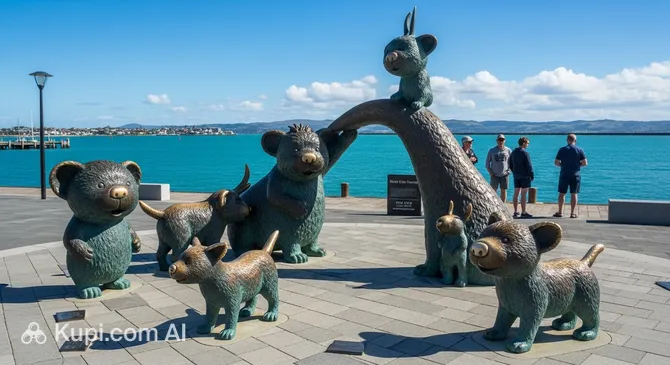
The city brings beloved children's literature to life with a whimsical public art installation. The Hairy Maclary and Friends Sculpture features life-sized bronze statues of the famous dog and his gang, celebrating the work of celebrated local author Dame Lynley Dodd.
Tauranga houses a surprisingly specific slice of international military heritage. The Lion & Tusk Museum is dedicated to preserving the history and memorabilia of the Rhodesian forces, serving as a unique repository for this chapter of history.
While it often feels like a relaxed holiday resort, the city is actually an economic powerhouse hosting New Zealand's largest port by export volume. This busy maritime hub is the primary gateway for shipping the region's massive kiwifruit harvest to the rest of the world.
Aviation history is kept vibrant and active here rather than just gathering dust. At the Classic Flyers Aviation Museum, the focus is on keeping vintage aircraft operational, meaning visitors can often see these engineering marvels taxiing or taking to the skies.
How to Get There
Reaching this coastal gem is straightforward, with several convenient options available depending on your starting point. Whether you prefer to fly directly into the region or enjoy a scenic drive from a major international hub, you can easily find your way here. For a complete overview of transport options, routes, and travel tips, you can read more about how to get to Tauranga.
The most convenient option for domestic travelers is Tauranga City Airport (TRG). Located within Tauranga itself, it is just 3.2 km from the city center, making the transfer very quick—typically around 10 to 15 minutes by taxi or shuttle. This regional hub connects the city with other major New Zealand destinations.
For many international visitors, the primary point of entry is Auckland Airport (AKL), located in the city of Auckland. It is situated approximately 143 km from Tauranga. The journey from Auckland by car or bus takes you through the scenic Waikato and Bay of Plenty regions, usually lasting between 2.5 to 3 hours depending on traffic. As the country's largest airport, it offers the widest range of international connections.
Another viable alternative is flying into Hamilton International Airport (HLZ) in the city of Hamilton. Located about 76 km away, it serves as a central hub for the North Island. The drive from Hamilton to Tauranga typically takes just over an hour, offering a practical option for those exploring the wider region.
For clarity, here is a summary of the main airports serving the region:
Tauranga is a city that effortlessly blends outdoor adventure with cultural richness, offering visitors a wide array of experiences. While the famous Mount Maunganui beaches are a major draw, the city itself is home to numerous fascinating spots that cater to history buffs, art lovers, and families alike.
One of the most immersive cultural experiences can be found at The Historic Village on 17th Avenue. This unique collection of original and replica buildings from early Tauranga is set within cobbled streets and lush gardens. It is more than just a museum; it is a thriving community hub featuring artisan shops, boutique retailers, and regular markets, making it a perfect place to explore local heritage and pick up unique souvenirs.
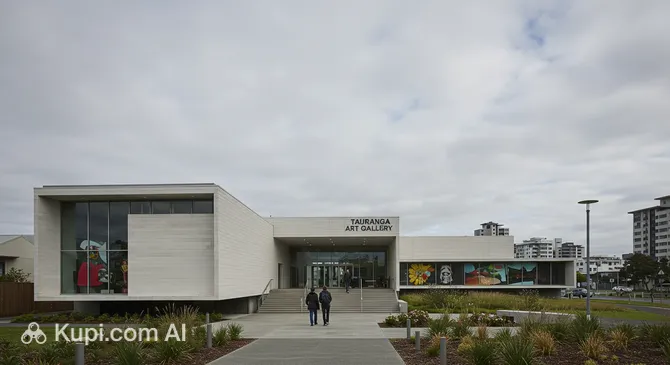
For those who appreciate contemporary creativity, the Tauranga Art Gallery is an essential stop in the city center. Housed in a modern building, the gallery delivers high-quality exhibitions ranging from historical artworks to cutting-edge contemporary pieces. Its dynamic programs often feature local New Zealand artists, offering tourists a deep dive into the region's artistic identity.
Tauranga Art Gallery. Illustration.
Source: Kupi.com AI
Traveler photos:
To truly appreciate the coastal beauty of the Bay of Plenty, you should head out onto the water with Dolphin and Wildlife Cruises. These tours offer a chance to encounter the diverse marine life that inhabits the harbour and open ocean, including dolphins, whales, and penguins. It is an exhilarating way to see the region from a different perspective while learning about the local ecosystem.
Families and those seeking a relaxing afternoon will find Memorial Park to be a delightful urban oasis. Located right on the water's edge, this premier park features playgrounds, a miniature railway, and ample green space for picnics. Its proximity to the harbour provides stunning views, making it a peaceful retreat near the heart of the city.
Local Cuisine
Based on the region's nickname, the "Bay of Plenty," it is no surprise that Tauranga offers a rich and diverse culinary landscape. The city is surrounded by fertile orchards and the open ocean, resulting in a food scene heavily influenced by fresh, locally sourced ingredients. Visitors can expect an abundance of seasonal produce, particularly avocados and the world-famous kiwifruit, which are often incorporated into local dishes and desserts in creative ways.
Seafood is the undisputed star of the local menu. With the harbour right on the doorstep, restaurants serve exceptionally fresh catches, ranging from snapper and tarakihi to succulent scallops and green-lipped mussels. For a truly authentic Kiwi experience, nothing beats grabbing a parcel of fish and chips and eating it right on the beach at Mount Maunganui or Pilot Bay, watching the sun go down over the water.
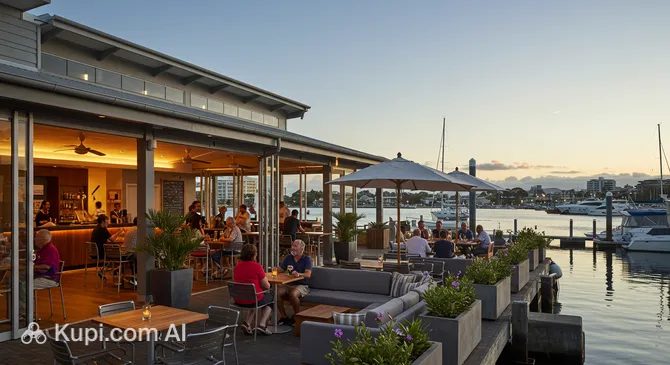
The heart of the city's dining and social scene is undoubtedly The Strand, a vibrant waterfront strip lined with eateries that cater to every taste. Here, you can enjoy fine dining with panoramic views of the harbour. A prime example of this waterfront elegance is Harbourside, where you can savor premium seafood dishes on a balcony overlooking the water. This area comes alive in the evenings, buzzing with locals and tourists enjoying the cool coastal breeze.
Harbourside. Illustration.
Source: Kupi.com AI
Traveler photos:
When it comes to beverages, the region has a burgeoning reputation for craft beer and cider. Local breweries are experimenting with unique flavors, often using local hops and fruits. Beer enthusiasts should make a stop at The Hop House, a dedicated craft beer bar located in the historic Wharf Street precinct, offering a rotating selection of the best independent brews from around New Zealand.
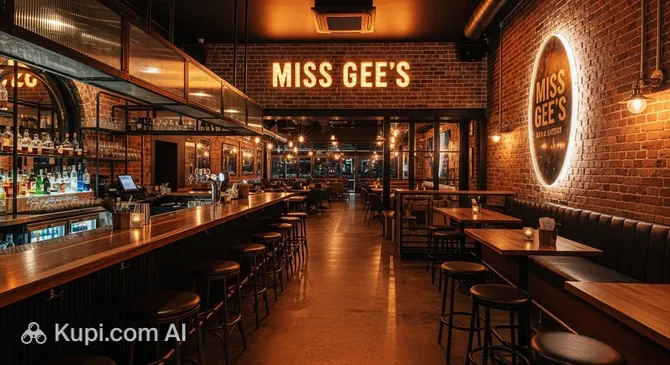
For those who prefer cocktails and a lively atmosphere, the city center offers plenty of chic options like Miss Gee's Bar & Eatery, known for its eclectic decor and specialty drinks. Coffee culture is also deeply ingrained here, with countless cafes serving high-quality espresso, reflecting New Zealand's high standards for a morning brew. Weekend farmers markets are another must-visit, offering a chance to taste artisanal cheeses, honey, and homemade preserves directly from the producers.
Travel Tips
Welcome to the sunny Bay of Plenty! To help you make the most of your time in this relaxed coastal city, we have compiled a list of essential practical tips that will ensure your journey is as smooth and enjoyable as possible.
Clothing and Sun Protection: Given the subtropical climate, pack breathable layers that can be added or removed easily. Crucially, the sun in New Zealand is much stronger than in many other parts of the world due to the thinner ozone layer; bring high SPF sunscreen (SPF 50+), a wide-brimmed hat, and sunglasses. Comfortable walking shoes are a must if you plan to hike up Mount Maunganui.
Getting Around: The local public transport network is served by Baybus (often called Bayhopper). To use it efficiently, purchase a Bee Card from a local retailer or bus driver for cheaper fares. While buses cover the main routes, renting a car is highly recommended if you wish to explore the wider region or hidden gems at your own pace. Ride-sharing apps like Uber are also available.
Finances and Tipping: The local currency is the New Zealand Dollar (NZD). Credit and debit cards (Visa and Mastercard) are accepted almost everywhere, and contactless payment is standard. You won't need much cash, but keeping a small amount for weekend markets is wise. Tipping is not mandatory or expected in New Zealand, though rounding up the bill for exceptional service is appreciated.
Health and Safety: Tauranga is generally a very safe city for tourists. The most significant health risk for visitors is sunburn, so apply protection regularly even on cloudy days. Pharmacies (often called "Chemists") are widely available for minor ailments. In an emergency, dial 111 for police, ambulance, or fire services. Always swim between the yellow and red flags at the beach, as these areas are patrolled by lifeguards.
Communication: English is the primary language spoken, though you will frequently hear Māori words and phrases; "Kia Ora" (hello/be well) is a common greeting. Pre-paid SIM cards are easily purchased at supermarkets or convenience stores from providers like Spark, One NZ, or 2degrees. Free Wi-Fi is often available in the city center and at the library.
Local Etiquette: The vibe here is friendly and casual. It is polite to greet shop assistants and bus drivers with a smile or a "hello." When visiting beaches or parks, always adhere to the "Leave No Trace" philosophy—New Zealanders take great pride in their clean, green environment, and littering is strongly frowned upon.
What to Avoid: Do not underestimate the ocean currents. Rip tides can be dangerous at Mount Maunganui and Papamoa beaches; avoid swimming alone or in unpatrolled areas. Also, avoid comparing New Zealand too heavily to Australia; while friendly rivals, locals appreciate being recognized for their own unique identity.
Shopping Hours: Be aware that retail trading hours might be shorter than you are used to. Most shops in the CBD close by 5:00 PM on weekdays and weekends, although major shopping malls like Bayfair may stay open later, particularly on Thursday and Friday nights.
With these practical tips in hand, you are fully prepared to embrace the laid-back lifestyle and stunning scenery of the region. We hope you have a safe, comfortable, and unforgettable adventure in Tauranga!
Entertainment & Nightlife
As the sun sets over the harbour, Tauranga transforms from a relaxed coastal town into a vibrant hub of evening entertainment. While it may not have the frenetic pace of a major metropolis, the city offers a lively and sophisticated nightlife scene, particularly concentrated along The Strand. This waterfront promenade is the beating heart of the city after dark, lined with an array of bars, pubs, and restaurants where locals and tourists alike gather to enjoy live music, cool drinks, and the fresh sea breeze.
For those who appreciate a good brew, the precinct around Wharf Street has become a destination for craft beer enthusiasts. A standout venue here is The Hop House, which specializes in showcasing independent New Zealand breweries. It is the perfect spot to start your evening with a tasting paddle in a relaxed, friendly environment before exploring the rest of the city's offerings.
If you are looking for something with a bit more energy and style, the city center hides some gem-like cocktail bars. Miss Gee's Bar & Eatery is a favorite for its eclectic, colorful decor and vibrant atmosphere. As the night progresses, the lights dim and the music turns up, making it a popular spot for dancing and socializing over creative specialty cocktails.
Miss Gee's Bar & Eatery. Illustration.
Source: Kupi.com AI
Traveler photos:
The atmosphere in Tauranga is generally casual and welcoming. Most venues do not have a strict formal dress code, though "smart casual" is the norm for evening establishments. The nightlife is busiest on Friday and Saturday nights. In terms of safety, the main entertainment districts like The Strand are well-lit and populated, making them safe for walking. However, for getting back to your accommodation, especially if you are staying in Mount Maunganui or the suburbs, it is best to book a taxi or use a ride-sharing app like Uber, as public transport options decrease late at night.
Beyond the nightlife, the city offers plenty of engaging entertainment during the day. Shoppers can spend hours browsing the stores at Fraser Cove Shopping Centre, which offers a mix of major retailers and specialty shops. For a dose of culture and history, the Classic Flyers Aviation Museum provides an interactive experience that appeals to all ages, often hosting events and open days that bring aviation history to life.
Parks & Museums
Tauranga offers a refreshing blend of natural beauty and cultural depth, with green spaces that celebrate the coastal landscape and institutions that preserve the region's unique heritage. From tranquil waterfront reserves to interactive displays of aviation history, the city provides ample opportunities to explore both the outdoors and the stories of the past.
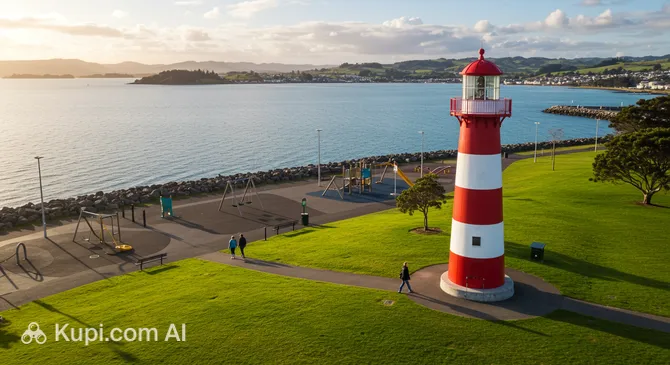
For a peaceful escape by the water, Kulim Park in the suburb of Otūmoetai is a local favorite. This scenic reserve features expansive grassy areas, large pohutukawa trees that provide welcome shade, and a safe, shallow beach perfect for wading. It is particularly renowned for its stunning, uninterrupted views across the harbour to Mount Maunganui, making it an ideal spot for a sunset picnic or a leisurely walk along the foreshore.
Kulim Park. Illustration.
Source: Kupi.com AI
Traveler photos:
Another significant natural area, located just a short drive from the city center, is McLaren Falls Park. This expansive pastoral park is home to one of the best botanical collections of trees in the North Island, set alongside a picturesque lake. Visitors can enjoy bush walks to see waterfalls and, after dusk, explore the famous glow worm canyon, offering a magical experience in nature.
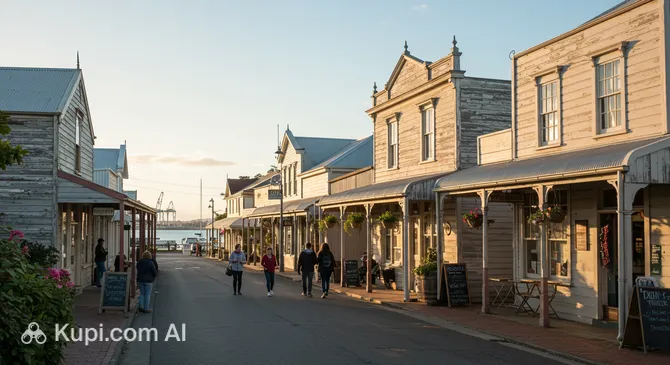
When it comes to history and culture, The Historic Village on 17th Avenue stands out as a living museum. Unlike traditional exhibits behind glass, this attraction features a collection of original and replica historic buildings arranged to recreate a vintage town. Visitors can wander through cobbled streets, visit artisan workshops, and get a sense of what life was like in early Tauranga, all while enjoying a vibrant community atmosphere.
The Historic Village. Illustration.
Source: Kupi.com AI
Traveler photos:
Aviation enthusiasts should not miss the Classic Flyers Aviation Museum near the airport. This facility is dedicated to preserving New Zealand's flying heritage and is distinct because many of its exhibits are still operational. The museum houses an impressive array of classic aircraft, memorabilia, and interactive displays, allowing tourists to get up close to the machines that shaped aviation history.
For a more specialized historical experience, The Lion & Tusk Museum offers a rare glimpse into military history with its extensive collection of Rhodesian Army memorabilia. It serves as a comprehensive resource for those interested in this specific chapter of global conflict, featuring medals, uniforms, and equipment preserved with great care.
Insider Tip: For a unique garden experience, venture out to Te Puna Quarry Park. Transformed from a disused quarry into a lush garden, it is filled with native plants, exotic flowers, and quirky sculptures. The walking tracks offer panoramic views of the Bay of Plenty, and the "butterfly garden" area is a hidden delight during the warmer months.
Getting Around
Public transport in Tauranga is primarily road-based, relying on an extensive bus network to connect the city center with suburbs like Mount Maunganui, Papamoa, and Greerton. Unlike larger metropolises, the city does not have a metro, tram, or commuter train system. Instead, the Baybus service acts as the backbone of local transit, offering reliable and frequent connections across the region. The buses are easily recognizable, typically painted in bright yellow and blue livery, and provide a comfortable way to navigate the area without a car.
For payment, the most convenient and cost-effective option is the Bee Card. This is a prepaid smart card used across several regions in the country. While you can pay with cash on the bus, fares are significantly cheaper when using a Bee Card. The system operates on a "tag on, tag off" basis: you simply hold your card against the reader when boarding and again when exiting the bus. The fare is automatically calculated and deducted from your balance. If you plan to use the bus more than once, getting this card is highly recommended to save money and hassle.
Tourists can purchase a Bee Card directly from the bus driver (cash only), at the Tauranga i-SITE Visitor Information Centre, or at various retailers throughout the city. Top-ups can be done online or at these service counters. A standard adult fare with the card is quite affordable, typically costing just a few dollars per trip, and the system often allows for free transfers between buses within a certain time window, making multi-leg journeys economical.
When planning your travel, it is important to note that public transport does not operate 24 hours a day. Most bus services run from early morning, around 6:00 AM, until early evening, with reduced frequency on weekends and public holidays. It is advisable to check the latest timetables via the official Baybus website or use navigation apps like Google Maps or the Transit app to track real-time arrivals. Be aware that late-night services are limited, so you should plan alternative transport if you are out enjoying the nightlife.
For those looking for alternatives to the bus, taxis and ride-sharing apps like Uber are widely available and offer a flexible way to get around, especially late at night or for direct travel to specific attractions. Cycling is also a popular option, particularly in coastal areas like Mount Maunganui where the terrain is flat and scenic. Bike rental shops are available near the waterfront, allowing visitors to explore the dedicated cycle paths at their own pace.
A unique and scenic addition to the transport mix is the ferry service that runs between the Tauranga waterfront and the Mount Maunganui wharf. While often viewed as a leisure activity, this ferry offers a practical and stress-free shortcut across the harbour, bypassing traffic on the bridge. It provides stunning views of the port and the dormant volcano, combining a necessary commute with a sightseeing experience that captures the essence of this coastal city.
Accommodation
Finding the perfect place to stay in Tauranga is relatively easy, as the city offers a diverse range of accommodation options to suit every budget and travel style. Visitors can choose from luxury waterfront apartments and upscale hotels to classic New Zealand motels, family-friendly holiday parks, and budget-conscious backpacker hostels. Whether you prefer the convenience of a full-service hotel or the independence of a self-contained holiday home, the region caters well to both short-term visitors and those planning an extended summer break.
When deciding where to base yourself, location is key. The most popular area for tourists is undoubtedly Mount Maunganui. Staying here puts you within walking distance of the famous surf beach, the Pilot Bay harbour, and the vibrant salt-water hot pools. This area is dominated by high-rise apartment complexes and resorts that offer stunning ocean views. Alternatively, the Tauranga City Centre (CBD) is an excellent choice for those who want easy access to the waterfront dining on The Strand, business facilities, and central transport links. For a more relaxed, residential feel, the suburb of Papamoa offers extensive holiday home rentals and camping grounds along its endless stretch of golden sand.
The price of accommodation varies significantly depending on the season and proximity to the water. In general, prices range from budget-friendly rates for hostel beds and campsites to mid-range prices for motels and private rooms. Luxury apartments and boutique lodges command premium prices, particularly those with sea views. Booking is typically done through major online travel platforms, though many local motels and holiday parks offer direct booking via their websites, sometimes with better rates or cancellation policies.
Booking Tip: Tauranga and Mount Maunganui are incredibly popular domestic holiday destinations, especially during the peak summer months of December through February and over public holiday weekends. It is highly recommended to book your accommodation several months in advance if you plan to visit during these times, as the best spots sell out quickly and prices can rise sharply closer to the date.
Nearby Cities
For those looking to explore the surroundings, Tauranga serves as an excellent base for day trips to several interesting nearby locations:
Just a short drive inland across the Kaimai Ranges lies Hamilton, a city renowned for its lush landscapes and vibrant river culture. Situated on the banks of the Waikato River, it is most famous for the spectacular Hamilton Gardens, which showcase garden designs from different civilizations and eras. Visitors can also enjoy the Hamilton Zoo or take a scenic riverside walk, making it a perfect destination for a relaxed family outing.
Further north is Auckland, New Zealand's largest and most cosmopolitan city. While it requires a longer drive, the "City of Sails" offers a distinct contrast to the relaxed vibe of the Bay of Plenty. Here, travelers can ascend the iconic Sky Tower for panoramic views, explore the bustling Viaduct Harbour, or shop in high-end boutiques. It provides a taste of big-city energy and a wealth of cultural attractions, museums, and galleries.
These nearby destinations offer a glimpse into the diverse culture and landscapes of the region.
Shopping & Souvenirs
Shopping:
Shopping in Tauranga offers a delightful mix of contemporary retail experiences and unique local charm, reflecting the city's coastal lifestyle. From large modern malls housing international brands to boutique laneways filled with artisan treasures, the diverse retail scene caters to every type of traveler. Whether you are looking for high-end fashion, surf gear, or locally made crafts, the city provides a relaxed and friendly environment to indulge in some retail therapy.
For a quintessential street shopping experience, head to Downtown Tauranga. The area around Devonport Road and Grey Street is the city's traditional retail heart, featuring a range of fashion boutiques, bookstores, and homeware stores. Across the harbour, the main street of Mount Maunganui (Maunganui Road) offers a different vibe. Here, the shopping is heavily influenced by the beach culture, with numerous surf shops, designer boutiques, and gift stores lining the street, perfect for browsing after a morning at the beach.
If you prefer the convenience of everything under one roof, the region boasts several excellent shopping centers. Bayfair Shopping Centre in Mount Maunganui is the largest in the Bay of Plenty, hosting over 100 stores including major department stores and a cinema complex. On the city side, Fraser Cove Shopping Centre offers a convenient open-air retail environment with a variety of large-format stores, covering everything from camping gear to daily essentials.
Fraser Cove Shopping Centre. Illustration.
Source: Kupi.com AI
Traveler photos:
Markets are a vibrant part of the local community and a must-visit for those seeking authentic local products. The Tauranga Farmers Market, held every Saturday morning at Tauranga Primary School, is the place to buy fresh seasonal produce, artisan breads, and preserves directly from the growers. For a more eclectic mix of arts and crafts, The Historic Village on 17th Avenue is home to a community of independent artisans. Here, you can find unique handmade jewelry, pottery, and artworks in a charming heritage setting.
When it comes to souvenirs, visitors are spoilt for choice with items that reflect New Zealand's culture and landscape. Popular gifts to bring home include Manuka honey, known for its unique properties, and skincare products made from thermal mud or native plants. Greenstone (Pounamu) jewelry is a meaningful keepsake, often carved into traditional Māori designs. Additionally, high-quality Merino wool clothing and possum-merino blends are excellent for staying warm and are widely available in local knitwear shops.
Standard shopping hours in Tauranga are generally from 9:00 AM to 5:00 PM on weekdays and weekends, though smaller boutiques may have shorter hours on Sundays. Major shopping malls often have "late nights" on Thursdays or Fridays, staying open until 9:00 PM. Electronic payments are the norm, with credit cards (Visa and Mastercard) and contactless payments (PayWave) accepted almost everywhere, even at market stalls.
Regarding taxes, New Zealand has a Goods and Services Tax (GST) of 15% included in the displayed price of goods. Unlike some other countries, there is no tourist refund scheme for GST on high-street purchases when you leave the country. Tax-free shopping is generally limited to Duty-Free stores at international airports, where you can purchase goods before your departure flight.