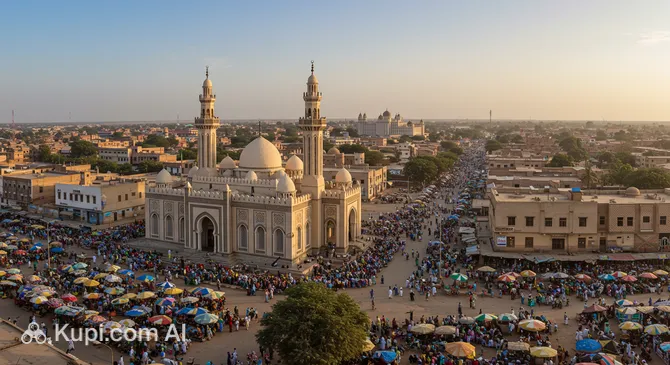
Shopping in Sokoto offers a distinct experience that contrasts sharply with the glitzy, modern retail culture of Nigeria's coastal cities. Here, commerce is deeply traditional, centered around bustling open-air markets and specialized craft centers rather than sprawling air-conditioned malls. The city is historically renowned as a center of trade for the trans-Saharan routes, and today, it remains the ultimate destination for high-quality leather goods and authentic Hausa craftsmanship.
The commercial heartbeat of the city runs along major thoroughfares such as Ahmadu Bello Way and Kano Road. These streets are lined with a mix of modern banks, small plazas, and independent boutiques selling everything from electronics to traditional attire. Walking down these busy roads provides a glimpse into the everyday economic life of the residents, where formal shops stand side-by-side with street vendors selling fresh fruit and mobile phone accessories.
While you will not find massive, Western-style mega-malls in Sokoto, there are several shopping plazas and well-stocked supermarkets that cater to modern needs. These establishments are perfect for picking up toiletries, packaged snacks, and bottled water. They offer a more controlled and cooler environment compared to the outdoor markets and are the best places to find imported goods if you are missing comforts from home.
The true highlight of the shopping scene is the Sokoto Central Market (often referred to locally as the New Market). It is one of the largest and most organized markets in the region. Here, the atmosphere is vibrant and sensory, filled with the aroma of local spices and the sounds of bargaining. Sections are often dedicated to specific goods, making it easier to navigate. You can find mounds of grains, vibrant textiles, and locally made pottery. It is an essential stop for anyone wanting to see the diversity of the local economy.
When it comes to souvenirs, Sokoto is world-famous for its leather. The region is the source of the "Sokoto Red" goat, whose skin is used to produce the high-quality leather historically known as "Morocco leather." Tourists should look for handcrafted leather bags, wallets, sandals, and puff-puffs (traditional leather cushions). These items are not only durable but also feature intricate designs unique to the local artisans. Other excellent keepsakes include traditional Fulani hats, woven mats, and dyed fabrics.
Most shops and markets typically operate from around 8:00 AM to 6:00 PM. However, it is important to remember that Sokoto is a deeply religious city. On Fridays, business activity pauses significantly between 1:00 PM and 2:00 PM for Juma'at prayers, and many shops may remain closed for the rest of the afternoon. In terms of payment, cash is the primary method of transaction, especially in markets and smaller shops. While some larger supermarkets and hotels accept debit cards, the network can be intermittent, so carrying sufficient Naira notes is highly recommended.
Tax-free shopping or VAT refund schemes for tourists are not currently available or operational in Sokoto. The price you see or negotiate is the final price. Bargaining is a standard and expected part of the culture in markets and roadside stalls, so do not hesitate to negotiate politely to get a fair deal.