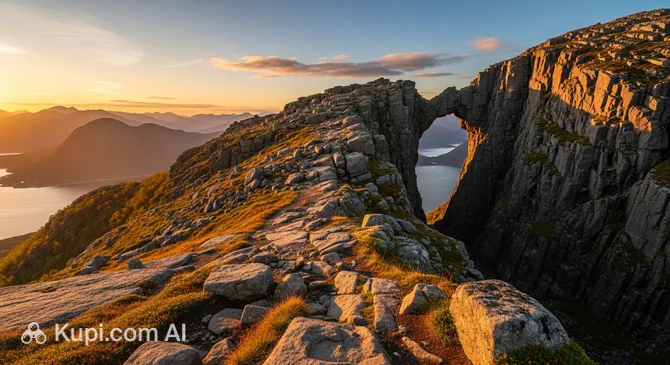
Imagine a massive boulder wedged into a narrow crevice between two sheer cliffs at a dizzying height. This is the Devil’s Gate (or Djevelporten) — one of the most spectacular natural attractions hidden within Norway. Located on the slopes of Mount Fløya, this natural wonder forms a unique arch that offers a view over the endless expanses of the Arctic.
Devil's Gate. Illustration.
Source: Kupi.com AI
Traveler photos:
Located near the town of Svolvær, this location annually attracts hiking enthusiasts and professional photographers. The geological shape of the "gate" seems almost mystical, and its high rating among travelers confirms that this place is a true must-see for those seeking thrills and unique shots.
This is not just a rock formation, but a symbol of northern adventure. Climbing up here, you will feel the scale and rugged beauty of the Lofoten Islands, where granite mountains meet the cold waters of the ocean. The site is considered a publicly accessible natural park and is a landmark of the Nordland region.
Contacts
For those planning a visit to this natural landmark, it is helpful to know its exact location. While the cliffs do not have an office or a phone number, you can find your way by using the official address of the trail's starting point.
It is recommended to check the weather forecast in advance, as the ascent may be unsafe in conditions of fog or heavy rain.
The main challenge and simultaneously the main pleasure here is trekking. Climbing the winding trail through the scenic slopes of Mount Fløya will reward you with the opportunity to walk literally under the stone arch of the Devil’s Gate. The bravest tourists climb onto the wedged boulder itself to capture dizzying photographs that create the illusion of hovering over an abyss.
From the platform near the gate, there is a panoramic view of Svolvær and its busy harbor. It is the perfect place for a small picnic overlooking the archipelago or for birdwatching as birds soar in the rising air currents. The silence of the Arctic nature invites meditation and quiet contemplation of the landscapes.
If you plan your visit on a clear day, be sure to wait for the sunset — the play of colors on the rocks looks magical. And during the winter, if you're lucky enough to have clear skies, this spot can be a unique vantage point for observing the Northern Lights, far from the city lights.
Getting There
The journey to this breathtaking location begins in the heart of the city. The Devil’s Gate is located on Mount Fløya, and the trailhead is a 20–30 minute walk from the center. Head toward Svolværveien street — this is where the marked signs leading up the slope begin.
If you are arriving from other regions via Svolvær Airport (SVJ) or the seaport, it is most convenient to take a taxi or a rental car. The drive along the E10 highway to the city center takes no more than 5–10 minutes. For those who prefer public transport, buses regularly connect key points of the Lofoten Islands with Svolvær.
In summer, hiking does not require special equipment other than comfortable shoes. However, during the winter or early spring when there is snow and ice on the slopes, it is essential to bring crampons and trekking poles. The coordinates POINT(14.597728 68.250814) will help you find the exact trail via GPS.
Nearest city: Svolvaer
History & Facts
The stunning natural formation of Djevelporten is the result of centuries of work by the elements. The geological history of this site is inextricably linked to the formation of the Lofoten archipelago. Thousands of years ago, glacial erosion and tectonic shifts carved these rugged granite peaks, creating a unique shape where a massive boulder became "wedged" between two sheer cliffs.
The town itself, nestled at the foot of the mountain, has a rich history dating back to the Viking Age. The name Svolvær comes from the Old Norse words "svalr" (cool) and "ver" (fishing village). Since the 16th century, the Vågan region became a key center for Arctic cod fishing, making these lands an important trading hub linking northern Norway with Europe.
While the Devil’s Gate is not associated with specific battles or royal decrees, it has long been part of local folklore as a symbol of nature's untamed power. Today, this site is recognized as one of the country's most iconic natural attractions, embodying the drama and grandeur of Arctic landscapes.
Time Needed
To fully experience this natural site, the average tourist should allow 2 to 4 hours. The ascent to the gate along the mountain trail requires some physical effort and takes about 1–1.5 hours depending on your fitness level. The return trip will take about the same amount of time.
Don't forget to leave some extra time at the summit. A photo session on the famous rock, resting after the climb, and contemplating the panorama of the Lofoten Islands are well worth spending an extra half hour. If you plan to continue to the very peak of Mount Fløya, add about another 40 minutes to your route.
Working Hours
Like most natural sites in the Lofoten Islands, the Devil’s Gate is accessible 24 hours a day. There are no entrance gates or ticket offices, so you can plan your hike for early morning or during the "midnight sun" in the summer period.
Despite 24-hour access, experienced guides recommend starting the ascent during daylight hours. Before heading out, be sure to check the latest information on local tourist portals, as the trail can become difficult to traverse in extreme weather conditions.
Open 24 hours
Nearby
After descending from Mount Fløya, travelers should take some time to explore Svolvær itself and its surroundings. The proximity of the sea and traditional architecture create a unique atmosphere of northern coziness that shouldn't be missed.
A walk around the area will introduce you to the life of local fishermen and the region's modern art. Below are some interesting locations nearby: