Support

Kristiansten Fortress

About

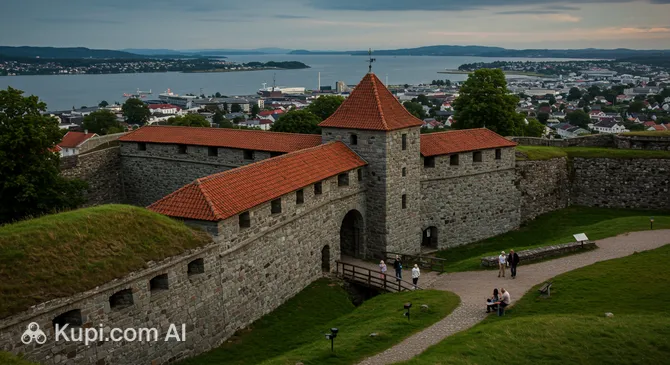
Towering on a hill above ancient streets, Kristiansten Fortress is one of the most significant historical monuments that Norway has to offer. Built in the late 17th century by order of King Christian V, this citadel served for decades as a reliable shield for the city's eastern borders, protecting it from invasions and fires.
Kristiansten Fortress
Kristiansten Fortress. Иллюстрация. Источник: Kupi.com AI

The main architectural centerpiece of the complex is the massive three-story donjon (keep), which once stored gunpowder and provisions. Today, the site has been transformed into a cozy public space where rugged military history blends harmoniously with picturesque landscapes. From here, in the city of Trondheim, you can find perhaps the best panoramic views of the Nidelva River and the spires of the legendary Nidaros Cathedral.

Thanks to its unique star-shaped design with nine bastions and beautifully preserved barracks, the site attracts not only fortification enthusiasts but also those seeking tranquility away from the city bustle. It is a living testament to the past that has become an integral part of modern Trondheim's cultural landscape.

Contacts

For more details regarding your visit or to book a tour, you can use the following contact information. It is recommended to check for up-to-date information on the official resource before your trip.

How to contactContact
AddressKristianstensbakken 60, 7014 Trondheim, Norway
Phone+47 46 87 04 00
Websitewww.forsvarsbygg.no

What to Do

The main reason to climb the hill is the breathtaking panoramic views. From the height of the fortress walls, Trondheim is laid out before you: you can see the curves of the Nidelva River, the colorful houses on the wharf, and the majestic silhouette of the cathedral in great detail. It is an ideal spot for photo sessions, especially during the "golden hour" at sunset.

History buffs will find it interesting to explore the preserved casemates, powder magazines, and the donjon. On the open-air grounds, both antique cast-iron guns and modern artillery are displayed—the latter of which is still used for ceremonial royal salutes. A walk along the earthen ramparts and bastions allows you to feel the scale of the 17th-century engineering.

During the warmer months, the fortress turns into a popular leisure spot: locals and tourists often have picnics on the grass. In summer, the grounds frequently host music festivals, theatrical performances, and temporary exhibitions that bring a historical atmosphere to the austere stone walls.

Getting There

Reaching this historical site is quite easy as it is within walking distance of the central districts. A walk from Nidaros Cathedral or the main city square takes about 15–20 minutes. The route passes through the picturesque Old Bridge (Gamle Bybro) and leads uphill, offering pleasant city views along the way.

If you prefer public transport, you can take bus lines 1, 5, or 11, which run from the central station and stop at the foot of the hill. A taxi ride from the center takes only a few minutes, which is especially convenient in inclement weather.

For travelers arriving from Værnes Airport, you must first reach the city center by train or airport express bus (travel time is approximately 30 minutes) and then transfer to local transport or walk to the fortress. For those traveling by car, there are designated parking areas at the foot of the hill.

Ближайший город: Trondheim

History & Facts

The decision to build the defensive structure was made following the catastrophic fire of 1681, which nearly destroyed Trondheim. King Christian V ordered the construction of fortifications on the eastern hill to protect the city from potential land-based attacks. The main work was completed by 1684 under the guidance of General Caspar de Cicignon.

The fortification saw its first major military action in 1718 during the Great Northern War. The Swedish army, commanded by General Armfeldt, besieged the city but did not dare to storm the powerful citadel. The harsh Norwegian winter and the resilience of the defenders forced the invaders to retreat, making the fortress a true symbol of invincibility in the eyes of the locals.

In the 19th century, the military significance of the site began to decline, and in 1816, the garrison was officially disbanded. For a long time, the central tower was used as a fire lookout and a warehouse until a museum was established here in the 20th century. Despite all these changes, the architectural ensemble has preserved its historical appearance almost in its original state.

Time Needed

To leisurely explore all the hidden corners of the fortifications and enjoy the views, it is recommended to set aside 1 to 2 hours for your visit. This is enough time to stroll along the bastions, examine the old cannons, and visit the donjon.

If you plan to have a picnic on the slopes of the hill or wish to take a series of panoramic photographs in different lighting, you should budget a bit more time. During the summer months, when cultural events are held, a walk here can easily stretch into half a day.

Working Hours

The area surrounding the fortifications functions as a public park and is generally open for free access 24/7. This allows tourists to admire the city lights from the height of the bastions at any time.

However, specific opening hours apply for visiting the museum's interior rooms and the donjon, which may change depending on the season. Before your visit, it is strongly recommended to check the fortress's official website to confirm the current schedule for access to the internal exhibitions.

Nearby

Exploring the area around the fortress will allow you to dive deeper into the atmosphere of this Norwegian city. Within walking distance, you will find cozy parks as well as significant cultural sites that will perfectly complement your travel itinerary.

NameDistance
Den Gode Nabo0.4 km
Old Town Bridge0.5 km
Nidaros Cathedral0.7 km
Britannia Hotel0.8 km
The Armoury0.8 km
Lokal Bar Scene Klubb0.8 km
TAG Restaurant and Club0.9 km

Reached the end of the page?

That means the route is fully explored