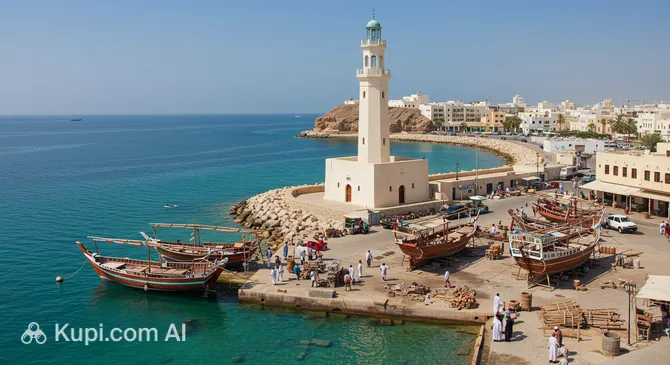
Sur is a picturesque gem on the eastern coast, nestled at the mouth of a river on the shores of the Arabian Sea. Surrounded by hills and golden beaches, the city offers travelers a unique opportunity to experience untouched nature and the special atmosphere of a port settlement. Located in Oman, about 150 kilometers southeast of the capital, Sur is an important administrative center with a population of about 65,000, while maintaining the charm of a small and cozy town.
This region is famous for its great maritime past. For centuries, merchant ships set sail from here, connecting the Arabian Peninsula with India, China, and East Africa. The fascinating history of Sur is inextricably linked to traditional shipbuilding, and even today, you can see craftsmen manually creating the famous wooden dhow boats using ancient techniques.
Sur. Illustration.
Source: Kupi.com AI
The city's atmosphere is perfect for leisurely walks and discoveries. Tourists come here to wander through the old streets, admiring architecture with carved doors and stained-glass windows, or to visit the colorful fresh fish market. Sur is a place where the past and present intertwine harmoniously, and its proximity to picturesque valleys and azure waters makes it an ideal destination for nature lovers.
Sur is worth visiting to experience authentic local flavor, get acquainted with a unique craft heritage, and take a break from the hustle and bustle of large metropolises. The hospitality of the residents and the steady rhythm of coastal life will turn your trip into an unforgettable adventure.
Weather Overview
The climate of Sur is typical for the eastern coast of the Arabian Peninsula: hot and dry weather prevails, softened only by the sea breeze. The sun shines almost year-round, making this region attractive for heat lovers. If you are planning a trip and want to know what the expected weather in Sur will be, you should focus on the pronounced seasonal differences in temperatures.
The winter months, from December to February, are considered the most comfortable for visiting. In January, the average temperature is about 20.5°C, with nights being fresh (down to 18.1°C) and days pleasantly warm (up to 22.8°C). Spring brings rapid warming: by April, the air warms up to an average of 27.9°C. Summer here is truly sweltering: June is the hottest month with an average temperature of 32.0°C and maximums above 35°C. September and October mark a gradual decrease in heat, returning values to milder levels.
Rain in Sur is an exceptional phenomenon. Throughout the year, precipitation remains minimal, often at 0 mm, and the number of days with precipitation rarely exceeds 2–3 even in the "wettest" months, such as March or April. Expect a very hot, dry summer and a mild, sunny winter, which is ideal for long walks and excursions.
Average monthly temperature
Average monthly precipitation
Interesting Facts
Beyond its main attractions, Sur holds many fascinating secrets that reveal themselves only to the most curious travelers. Here are a few facts that will help you look at this ancient port from a new perspective:
Ships without blueprints. Sur is one of the last places in the world where traditional wooden "dhow" vessels are still built using technologies that are hundreds of years old. Remarkably, local master craftsmen often create these majestic ships without a single engineering blueprint, relying solely on their eye, experience, and knowledge passed down through generations.
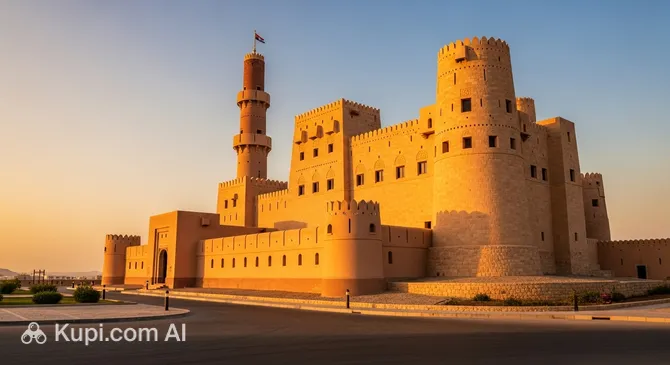
A city-fortress. Historically, Sur needed serious protection not only from the sea but also from the land, as it was a wealthy trading center. An entire network of fortifications was created around the city, with Bilad Sur Castle being a key element. It was built specifically to guard extensive date plantations and water sources from raids by nomadic tribes.
A lighthouse with a military past. The picturesque Al Ayjah Lighthouse, which today graces all tourist postcards of Sur, originally had a completely different purpose. This structure was built as a defensive watchtower to control the entrance to the lagoon, and only much later was it converted into a navigational landmark for ships.
A turtle nursery. Very close to the city is the Ras al Jinz Reserve—a unique spot on the world map. It is the only place in the Indian Ocean where green sea turtle nesting can be observed year-round, not just during a specific season, making the surroundings of Sur a vital natural site for the region.
Bilad Sur Castle. Illustration.
Source: Kupi.com AI
Traveler photos:
How to Get There
When planning a trip to Oman's eastern coast, keep in mind that the city does not have its own air hub serving regular passenger flights. Nevertheless, getting here is easy thanks to a well-developed road network. You can find out more about how to get to Sur by studying all available route and transfer options.
There is no airport in the city of Sur itself, but you can fly into Muscat International Airport (IATA: MCT) in Muscat, located about 170 km from Sur. This is the country's main gateway, receiving flights from most major world airlines. The airport is modern and comfortable, offering a wide range of services for travelers. The route from the terminal to Sur follows a high-quality highway, and a trip by taxi or rental car usually takes about 2–2.5 hours.
For clarity, here is a summary of the main airports:
Since there is no rail service in this region, tourists need to use road transport after arriving at Muscat airport. The most popular option is to rent a car right at the airport, which allows you to enjoy the scenic views along the way. Comfortable intercity buses from the national transport company also run between the capital and Sur, providing a budget alternative to taxis.
Main Attractions
With its rich maritime heritage and strategic location, the city of Sur offers travelers a chance to immerse themselves in the atmosphere of ancient Oman. The main attractions here are related to the city's defensive history and its inseparable connection to the sea. A walk through these sites will allow you not only to see ancient walls but also to feel the spirit of time frozen in stone and sand.
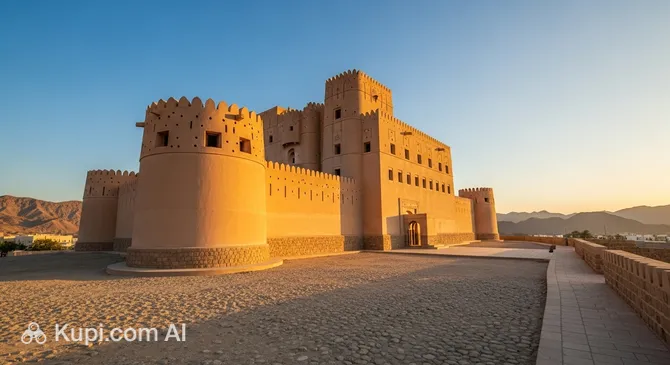
One of the most prominent architectural landmarks of the city is the majestic Sunaysila Fort. This citadel, perched on a hill in the city center, was built over 300 years ago to protect trade routes and monitor the harbor entrance. Tourists should visit not only to inspect the powerful defensive walls and traditional architecture but also to explore the small museum inside, which features ancient pottery, carpets, and household items. Additionally, the top of the fort offers perhaps the best panoramic view of the city and the blue-domed mosque.
Sunaysilah Fort. Illustration.
Source: Kupi.com AI
Traveler photos:
If you venture a bit further from the coast, you will find Bilad Sur Castle. This structure differs from the coastal forts: it was created to protect the city from the landward side, guarding precious date groves and water sources from nomadic raids. The castle impresses with its size and complex system of towers, each with its own shape. Walking through its grounds is a true journey into the past, allowing you to appreciate the scale of Omani masters' fortification art.
The heart of the city's social life remains the Traditional Sur Souq. Although this place functions as a commercial hub, for a tourist, it represents a living attraction. Here you can see the architecture of the old city, watch locals trade, and experience the aromas of frankincense and oriental spices. It is an ideal place for those who want to take colorful photos and touch the region's everyday culture.
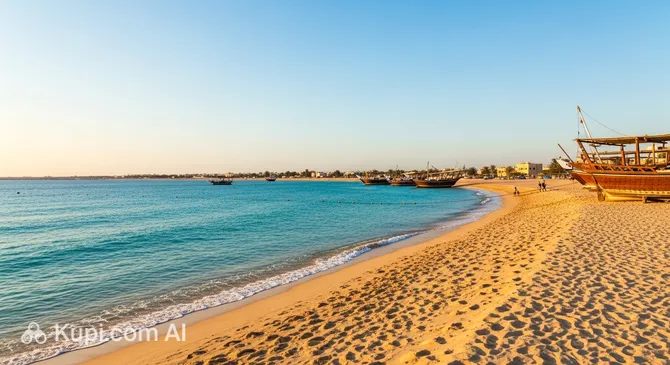
For a more relaxed holiday and to enjoy natural beauty, it is worth visiting Sur Beach. This is not just a place for swimming, but a picturesque promenade offering views of wooden dhow boats swaying on the waves and old white houses along the shoreline. It is especially beautiful here at sunset, when the sky is painted in vibrant colors, providing the perfect backdrop to end a busy day of sightseeing.
Local Cuisine
The gastronomy of Sur is a true reflection of its maritime soul and rich history as a trading port. Since the city is located on the coast, the basis of the local menu consists of the freshest seafood. Tourists simply must try the fish, shrimp, crab, and squid that reach the restaurant kitchens straight from fishing boats. The signature dish of local cuisine is considered to be "Mashuai"—a whole fish, most often king mackerel, roasted over charcoal and served with rice liberally drizzled with lemon juice.
Equally popular are hearty meat dishes, prepared here with special flair. For holidays or large family celebrations, "Harees" is often served—a thick, viscous porridge made from boiled wheat and meat, whipped to a smooth consistency. Sweet lovers won't be able to pass by the famous Omani halwa. This jelly-like dessert made from sugar, starch, rose water, saffron, and nuts has little in common with the sunflower halva we are used to, but it possesses a unique spicy taste and aroma.
Spices like cardamom, cinnamon, and cloves add special piquancy to local dishes, and their scents waft through the city streets. To experience the real taste of authentic food, head to the Traditional Sur Souq. Here you can buy not only fresh dates but also hot flatbreads, spicy snacks, and yogurt-based sauces that locals love for snacking.
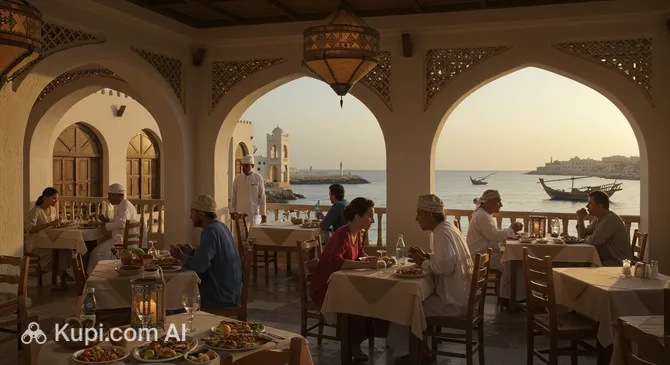
Forum Istanbul Turkish Restaurant. Illustration.
Source: Kupi.com AI
Traveler photos:
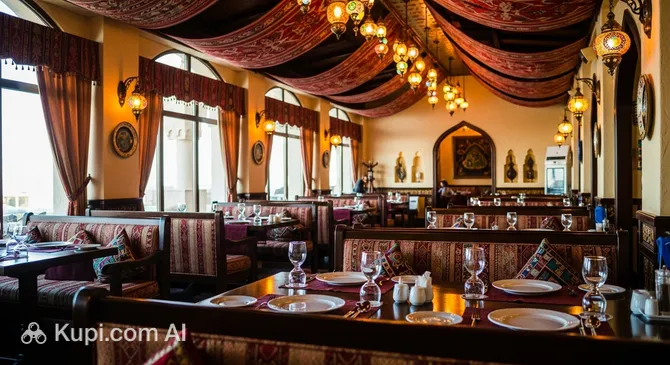
If you are looking for a place for a full lunch or dinner, the city offers various options, from simple cafes to cozy restaurants. For tasting grilled seafood, Vaidyan's Fish & Grill is an excellent choice. Those who miss juicy meat and kebabs will appreciate the Forum Istanbul Turkish Restaurant, where Eastern cooking traditions are observed with great care.
It is customary to end a meal in Sur with traditional drinks. The main one is "Kahwa," strong Omani coffee with added cardamom, served in small cups along with dates or halwa. Alcohol is difficult to find in the city due to strict cultural traditions; it is only available in the bars of some high-end hotels. However, fresh juices can be enjoyed everywhere, with refreshing lime juice with mint being particularly popular.
Travel Tips
A trip to Sur, the ancient city of shipbuilders, promises to be unforgettable if you prepare for the peculiarities of the local lifestyle in advance. We have compiled a list of practical recommendations to help you feel confident and comfortable while enjoying the hospitality of the residents of this region.
Clothing and Dress Code. Sur is a city with conservative traditions. Tourists should choose clothing made of light, natural fabrics (cotton, linen) that covers the shoulders and knees. This rule applies to both women and men. Comfortable shoes, as well as sunglasses and a hat, are essential for walking around forts and the promenade. If you plan a night tour to see the turtles, bring a light windbreaker—it can be cool by the sea.
Transport Nuances. Public transport in the city is virtually non-existent. The most convenient way to get around is by renting a car, which will give you the freedom to explore the surroundings. For trips within the city, you can use orange and white taxis. Important: they often don't use meters, so you must agree on the price with the driver strictly before boarding.
Finance and Cash. The official currency is the Omani rial. While cards are accepted in hotels and large supermarkets, you will definitely need cash to visit the traditional market (souq), small cafes, and pay for taxis. ATMs are easy to find in the city. Tipping is not mandatory, but 10% of the bill in a restaurant will be received with gratitude.
Health and Sun. Sur is safe for tourists, but the main enemy here is the heat. Drink only bottled water and constantly use sunscreen. Pharmacies in the city are well-stocked and marked with a green cross; many pharmacists speak English. It is better to arrange medical insurance in advance.
Communication and Language. The main language is Arabic, but staff in tourist areas and hotels speak English well. For stable internet, we recommend buying a local SIM card (Omantel or Ooredoo) immediately upon arrival at the airport or at communication stores in the city. Learn a couple of phrases, such as "As-salamu alaykum" (greeting) and "Shukran" (thank you)—this will greatly endear you to the locals.
Local Etiquette. Omanis are very polite and value respect. It is customary to greet people when meeting. If you are invited into a house or offered coffee, you should accept the cup and food only with your right hand. Public displays of affection (hugging, kissing) between a man and a woman on the street are not welcomed and may cause disapproval.
What to Avoid. It is categorically not recommended to photograph local residents, especially women, without their explicit permission—this is considered a serious violation of privacy. Also remember that consuming alcohol in public places (parks, beaches, streets) is strictly prohibited by law; alcohol is only available in the bars of licensed hotels.
Planning Tip. If your goal is to visit the famous turtle sanctuary in Ras al Jinz (located near Sur), book the tour in advance online. The number of visitors is limited to avoid scaring the animals, and tickets sell out very quickly during the high season.
Following these simple rules will allow you to avoid awkward situations and show respect for the culture of Oman. Sur is an incredibly friendly city, and by showing a little attention to local customs, you are guaranteed to receive sincere cordiality and a warm welcome in return.
Entertainment & Nightlife
Nightlife in Sur differs significantly from the typical European format with noisy discos and neon signs of night clubs. Sur is a city with deep traditions and a conservative lifestyle, so evening entertainment here is quiet, steady, and primarily gastronomic in nature. Instead of dance floors, the centers of attraction are the promenades, coffee shops, and restaurants where locals and tourists gather after sunset to enjoy the cool air and conversation.
The main artery of evening life is the Corniche and the area around the lagoon. As dusk falls, these places come alive: families go for walks, young people play football on the sand, and tourists admire the views of the illuminated Al Ayjah Lighthouse. A safe and friendly atmosphere prevails here. The dress code for evening outings remains modest: covered shoulders and knees are a sign of respect for the local culture, even if you are just walking along the sea.
Since there are virtually no classic bars or pubs in the city (alcohol is only available in rare bars at high-end hotels), restaurants that stay open until late evening fulfill the role of "night clubs." This is an excellent opportunity to get to know local cuisine in an authentic setting. For example, Vaidyan's Fish & Grill is popular for its fresh seafood and cozy atmosphere, perfect for long dinners.
Vaidyan's Fish & Grill. Illustration.
Source: Kupi.com AI
Traveler photos:
If you are looking for heartier cuisine and oriental flavor, it is worth visiting the Forum Istanbul Turkish Restaurant. Many visitors gather here in the evening to try kebabs and traditional sweets. The average bill in such establishments is quite affordable, and dinner for two will cost significantly less than in the capital. Most establishments close around 11:00 PM or midnight, so it is better to plan your evening meal in advance.
Another center of evening activity is the Traditional Sur Souq. It is after sunset, when the daytime heat subsides, that the market stalls fill with life. This is the best time to leisurely choose souvenirs, inhale the scent of frankincense, and watch local men in snow-white dishdashas discuss the news over a cup of coffee. A walk through the market can smoothly transition into a promenade, as Sur Beach is nearby, where the sound of the surf creates the perfect background for ending the day.
In terms of safety, Sur is an ideal city for night walks. The streets are well-lit, and the crime rate is extremely low. You can get to your hotel at night by taxi, which is easy to catch near major restaurants or shopping centers. If you are interested in daytime entertainment, it is better to devote daylight hours to a cultural program: visiting museums, inspecting ancient shipyards, or traveling to natural attractions, leaving the evening for gastronomic discoveries and relaxation by the sea.
Parks & Museums
The city of Sur offers its guests a unique combination of natural beauty and deep historical heritage, which is carefully preserved within its museums and forts. While you won't find vast botanical gardens here, the city compensates with magnificent seascapes and architectural monuments turned into fascinating open-air exhibits.
In an arid climate, coastal areas serve as the main recreational zones rather than traditional parks. A favorite walking spot for locals and tourists is Sur Beach. It is a long sandy strip with a well-maintained promenade that effectively replaces a city park. Here you can enjoy the sea breeze, have a picnic with a view of the bay, or simply watch the tides. For lovers of more secluded natural corners, the lagoon area in the Al Ayjah part of the city is of interest, where rocky shores create a picturesque natural ensemble.
The cultural life of the city is inextricably linked to its maritime past. The main "museum" site is rightfully considered the Sur Maritime Museum (often part of the dhow shipyard complex). It exhibits ship models, old navigational instruments, and photographs telling the story of the golden age of Omani seafaring. Another important exhibition space is Sunaysila Fort. Inside this citadel is a small ethnographic museum featuring traditional carpets, pottery, and weapons, allowing for a better understanding of the region's life and crafts.
Among the historical sites worthy of attention, Bilad Sur Castle stands out. This architectural complex is interesting not only for its defensive walls but also because it provides an idea of the structure of ancient Omani settlements. No less exciting will be a visit to the Traditional Sur Souq, which can be called a living museum of trade: the architecture of the shops and the range of goods (from frankincense to silver) have practically not changed over the last centuries.
For those seeking truly authentic experiences, we recommend visiting the shipyard where dhow ships are built. This is not an official museum, but watching the work of craftsmen using centuries-old technologies without blueprints or nails will be one of the most vivid cultural discoveries of your trip.
Getting Around
The transport system in Sur differs significantly from typical European infrastructure. You won't find a metro, trams, or trolleybuses here. The city is quite compact, and public transport in the classic sense is poorly developed. The main way to get around for both locals and tourists remains road transport.
The most popular and accessible means of transport around the city is taxis. They are easy to recognize by their characteristic orange and white colors. In Sur, taxis primarily operate without meters, so the price of the trip must be agreed upon with the driver in advance, before you get into the car. Bargaining is appropriate here and is part of the culture. For short trips around the city, the cost is usually low, but for longer distances (for example, to the turtle reserve), the price will be significantly higher.
In recent years, mobile apps for calling taxis (such as OTaxi) have begun to develop in the region, allowing you to see a fixed cost for the trip. However, in smaller towns like Sur, the waiting time for a car via the app can be longer than in the capital, and network coverage may be less dense. Therefore, the old method of "hailing a car on the street" or ordering a transfer through your hotel remains the most reliable.
Bus services are mainly focused on intercity travel. Comfortable buses from the national company Mwasalat connect Sur with Muscat and other major towns. Stops are usually located on main streets or at the bus station. Using these buses for moving within the city itself is impractical due to infrequent schedules and routes that do not cover tourist locations.
The most convenient alternative to public transport is renting a car. This gives you complete freedom of movement, allowing you to visit not only city attractions but also remote beaches or wadis. Rental points are located both in the city center and near industrial zones. Roads in Sur are of excellent quality, traffic is calm, and parking problems virtually never arise—most hotels and markets have free parking lots.
As for paying for travel, cash payment prevails in Sur. No transport cards or complex travel passes exist here. Always carry small bills of the local currency (Omani rials), as taxi drivers often don't have change for large banknotes. If you use a Mwasalat intercity bus, the ticket can be bought at the station's ticket office or on the carrier's official website.
Walking is only comfortable in the evening when the heat subsides, especially along the Corniche and in the market area. During the day, distances can seem tiring due to high temperatures, so even for short distances, tourists often prefer to take a taxi. Bicycle rental is not widespread in the city, but some hotels may provide bicycles to their guests for rides along the promenade.
Accommodation
The hotel sector in Sur is characterized by modesty and homey comfort, reflecting the quiet nature of this ancient port. Here you won't find massive skyscrapers of international chain giants or glittering ultra-luxury complexes. The majority of offerings consist of comfortable mid-range hotels (2–3 stars), a few 4-star hotels, and apart-hotels, which are popular in Oman and ideal for family stays.
Accommodation options can be roughly divided by geographical area, helping you choose the best spot based on your goals:
Coast and Corniche. Hotels located along the promenade offer sea views and easy access to walking areas. This is an excellent choice for those who want to enjoy the sea breeze and be in the center of the city's evening life.
Al Ayjah District. This historical part of the city, located across the bridge, is considered one of the most picturesque. Staying here, you will be surrounded by traditional architecture, near the lighthouse and shipyards, in a quieter and more authentic atmosphere.
City Center. Hotels in the business part of the city are convenient for those traveling in transit or who want to be closer to shops and restaurants.
Sur Beach. Illustration.
Source: Kupi.com AI
Traveler photos:
The price range in Sur can be described as affordable. The cost of living here is generally lower than in the capital, Muscat. Budget travelers can find inexpensive guesthouses or simple apartments, while tourists seeking more comfort can count on hotel rooms with a pool and their own restaurant at quite reasonable prices.
Booking Tip: Although Sur is not a mass-market resort, finding accommodation can be a challenge during the high season (winter) and during public holidays. Particular attention should be paid to booking if your goal is to visit the turtle reserve in Ras al Jinz. Since there are very few places to stay in the reserve itself, most tourists stay in Sur, and the best options are booked weeks or even months in advance. To guarantee your stay, it is recommended to use popular online booking platforms.
Nearby Cities
For those who want to explore the surroundings, Sur serves as an excellent starting point for day trips to several interesting nearby locations. Thanks to Oman's developed road network, travelers can comfortably reach major cultural and historical centers located to the northwest of the city.
One of the most popular destinations is Muscat, the country's capital. Here, modernity intertwines with tradition: you can visit the majestic Sultan Qaboos Grand Mosque or the Royal Opera House. Nearby is the historical district of Muttrah, famous for its picturesque Corniche and ancient souq, where the atmosphere of old Arabia reigns. Also worth noting is Bawshar, a district where sand dunes come right up to the city limits, creating a unique landscape, and where interesting archaeological sites are preserved.
These nearby destinations provide an insight into the region's diverse culture and landscapes, perfectly complementing a steady coastal holiday in Sur.
Shopping & Souvenirs
Shopping in Sur is not a hunt for global high-fashion brands but rather an immersion into the authentic atmosphere of an Eastern port city. Here, trade maintains its traditional character, focusing primarily on the needs of local residents and the sale of handicrafts. For a tourist, this is a great opportunity to purchase unique goods that are difficult to find in large metropolises and to observe the steady life of Omanis.
The main commercial life is concentrated in the old part of the city and along the main streets leading to the coast. Here, among low-rise buildings, are numerous shops selling everything necessary: from fabrics and tailor workshops to electronics and perfume stores. A walk through these areas will allow you to find interesting trifles and feel the real flavor of an Arabian province.
Although Sur is a city with a rich history, modernity has not bypassed it. The main place for comfortable shopping in air-conditioned cool is City Centre Sur. This is a modern shopping complex featuring popular mass-market clothing, footwear, and accessory brands, as well as a large hypermarket. It is worth a visit if you need to buy familiar goods, cosmetics, or just take a break from the heat at the food court.
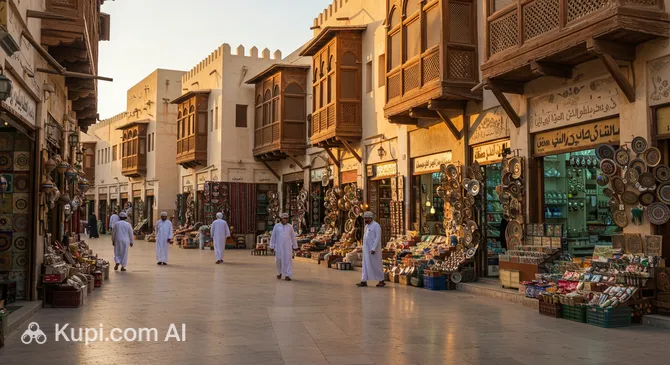
However, the true heart of trade remains the Traditional Sur Souq (Souq Sur). This place is a must-visit, even if you don't plan on making major purchases. The market is a labyrinth of narrow streets filled with the aromas of spices and incense. Here you can find shops with gold and silver jewelry sold by weight, as well as stores with traditional Omani clothing and fabrics. The market's proximity to the shipyards adds a unique touch to the souvenir selection.
Sur Traditional Souq. Illustration.
Source: Kupi.com AI
Traveler photos:
Speaking of souvenirs, you should bring something special back from Sur. The city's main symbol is its ships, so the best gift would be a dhow boat model. Local craftsmen make them by hand with incredible precision, and you can buy such a model directly in the workshops or souvenir shops. Also look out for Omani halwa—a sweet and spicy dessert, which in Sur is considered one of the most delicious in the country. Traditional "khanjar" daggers (keep export rules in mind), silver jewelry, and high-quality frankincense are also popular.
When planning a shopping trip, take into account the local working hours. Large shopping centers are usually open from 10:00 AM to 10:00 PM without breaks. However, traditional markets and small private shops live by a different schedule: they operate in the morning (roughly from 09:00 AM to 1:00 PM) and in the evening (from 4:30 PM to 10:00 PM), closing for a afternoon siesta during the hottest hours. Friday is a day off, when most shops open only after evening prayer (after 4:00 PM).
Regarding payment, international bank cards are accepted without issues in shopping centers and large supermarkets. However, in the traditional souq and small souvenir shops, preference is given to cash—Omani rials. ATMs are easy to find in the city. A Tax-Free system exists in Oman (5% VAT refund), but it is primarily relevant for large purchases in chain stores participating in the program. Look for special stickers on windows and keep your receipts to process the refund at the departure airport.