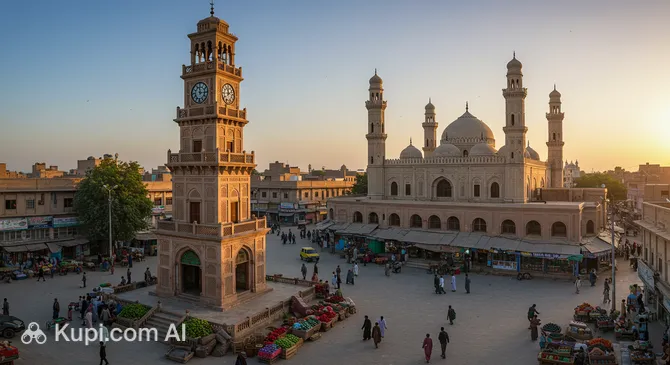
Nawabshah is a dynamically developing administrative center of the Shaheed Benazirabad District in the Sindh province of Pakistan. Located in the heart of the fertile Indus River valley, the city is not a typical tourist magnet, but it possesses its own unique atmosphere as a vital agricultural and transport hub.
Nawabshah. Illustration.
Source: Kupi.com AI
Founded in 1904, the city preserves its rich colonial-era heritage. Nawabshah plays a key role in the regional economy, specializing in the production of sugarcane, cotton, and wheat. With a population of over 260,000, the city is buzzing with life, offering guests an authentic look at the lifestyle of a provincial Pakistani town with its busy markets and university campuses.
Although Nawabshah is often perceived as a transit point, it attracts explorers with its industrial energy and proximity to the historical monuments of Sindh province. We invite you to get to know this hospitable hub and experience the true rhythm of life in the Indus Valley.
Weather Overview
Nawabshah is characterized by a hot semi-arid climate, typical of the Indus Valley. Summers here can be truly extreme: from May to June, temperatures often rise to 45–50°C. Winter, by contrast, brings long-awaited relief—from December to February, mild weather sets in with daytime highs from 22°C to 27°C and cool nights.
Precipitation in the region is rare, occurring mainly during the monsoon season in July and August, when nature comes alive and dusty streets are washed by tropical downpours. Detailed weather in Nawabshah by month will help you choose the best time for your trip, avoiding the peak summer heat.
For visiting the city, it is best to plan your visit for the period from November to March, when the sky remains clear and the dry, fresh air allows for comfortable exploration of local markets and the surrounding areas.
Average monthly temperature
Average monthly precipitation
Interesting Facts
The city was officially founded by the British in 1904 and was named after a local influential figure—Nawab Shah Muhammad.
Nawabshah is considered one of the hottest places not only in Pakistan but in the world; summer temperatures here have been recorded reaching near-record levels of 50°C.
The city is an important educational center for the Sindh province: it is home to the Shaheed Benazir Bhutto University, which attracts students from all over the region.
The city's symbol is the historic Clock Tower, which has been preserved since colonial times and still serves as a vital landmark for locals.
How to Get There
Nawabshah occupies a strategic position on the transport map of Sindh, serving as a major crossroads for roads and railways. You can find more details on how to get to Nawabshah from the country's major cities via regular flights and trains connecting this hub with Karachi and Hyderabad.
The city's aerial gateway is Nawabshah Airport (IATA: WNS). It primarily handles domestic flights; for example, a flight from Karachi takes very little time. The airport is conveniently located, allowing for a quick trip to the city center by taxi or rickshaw.
Rail travel is perhaps the most popular way to reach the city. Nawabshah's main railway junction connects the north and south of the country. A train journey from Karachi takes between 4 and 6 hours, while Hyderabad is only 2–3 hours away, offering views of the agricultural heartlands along the way.
Station
Passenger traffic
Distance
Hyderabad Junction railway station
5
96 km
Mirpur Khas railway station
5
101 km
Larkana railway station
3
146 km
Sukkur Junction railway station
5
168 km
Sukkur Junction railway station
5
168 km
Main Attractions
Nawabshah is primarily a city of everyday life, yet there are interesting locations to be found here. The main architectural landmark is the Nawabshah Clock Tower. This colonial-style structure is situated in the heart of the city and is surrounded by bustling market stalls, making it the perfect place to start exploring the urban atmosphere.
For sports fans and lovers of mass spectacles, Bilawal Stadium is a must-visit. This is a key venue for cricket matches—Pakistan's national sport. On match days, the stands fill with passionate fans, creating an incredible energy.
While walking through the city, it is worth paying attention to the traditional markets (bazaars). Although they are not classic museums, this is where you can witness the authentic culture of Sindh: from mounds of bright spices to workshops where cotton fabrics are crafted by hand. It is a living attraction that showcases the rhythm and color of provincial Pakistan.
Local Cuisine
Nawabshah's gastronomy is a celebration of traditional Sindhi flavors. The star dish here is rightfully Sindhi Biryani—fragrant rice with meat, prepared with a variety of spices, plums, and potatoes, giving it a unique spicy profile. It is also worth trying the local meat dishes served with hot flatbreads.
Street food thrives in the local markets. Be sure to stop by one of the many tea houses (dhabas) for a glass of strong tea with milk and cardamom. On a hot day, the best refreshment is fresh sugarcane juice, prepared right in front of you using raw materials from the local fields.
The food culture here is simple and accessible: the best flavors are hidden in small family establishments and bazaars. For locals, food is not just about satisfying hunger but also a reason to socialize, so street eateries are always full of people discussing the news over a plate of hot kebabs.
Travel Tips
Planning a trip to Nawabshah requires taking the region's specifics into account. These practical tips will help make your journey comfortable and safe.
Clothing and Dress Code: Choose light clothing made from natural fabrics. It is recommended to stick to a modest style: covering shoulders and knees will help show respect for local traditions and protect you from the sun.
City Transport: The most popular way to get around is by auto-rickshaw. For trips in intense heat, it is better to book an air-conditioned taxi.
Finances: The main currency is the Pakistani Rupee. Cards are rarely accepted, so always carry a supply of cash in small denominations for payments in markets and transport.
Health: Drink only bottled water and avoid ice in drinks. During the summer months, be sure to use sunscreen and wear a hat.
Connectivity: A SIM card can be purchased at specialized mobile shops by presenting your passport. Wi-Fi in guest houses can be unstable.
Language and Etiquette: The main languages are Sindhi and Urdu. English is understood in official institutions. The greeting "Assalamu Alaikum" always helps to win over the locals.
What to Avoid: Do not photograph strategic sites or government buildings. It is also better to refrain from walking alone in unlit areas after dark.
Personal Hygiene: Bring hand sanitizer and wet wipes with you, as dust is a constant companion in this region.
We hope these recommendations help you enjoy the hospitality of Nawabshah and discover the real life of Sindh province.
Entertainment & Nightlife
Nawabshah is a city with a conservative lifestyle; therefore, there is no classic nightlife in the Western sense with bars and clubs. The main evening entertainment for locals involves walking along the central streets and dining at roadside restaurants that stay open until late.
The local bazaars are the center of social activity after sunset. In the evening, when the heat subsides, the markets fill with people, and the atmosphere becomes particularly lively. This is the best time to try street food and observe the city's daily life.
Daytime leisure can be diversified by attending sports matches at the city stadium or taking informal trips to the surrounding agricultural lands. If you are looking for more active entertainment, theaters, or cinemas, residents typically head to Hyderabad or Karachi.
Parks & Museums
Nawabshah is primarily a business and agricultural center, so the number of classic parks is limited. Nevertheless, the city has small green squares and gardens within educational institutions that serve as resting places for citizens. The lush vegetation on the outskirts of the city, created by the irrigation system from the Indus, is a natural oasis in itself.
There are currently no specialized historical museums in Nawabshah. However, the role of cultural guardians is fulfilled by local university libraries and old colonial buildings scattered throughout the center. The city's architecture itself can be an object of interest for those studying the history of the Indus Valley's development.
For those looking for larger park areas, a short trip beyond the dense urban development is recommended. The fertile agricultural lands surrounding Nawabshah offer unique views that reflect the essence of life and labor in rural Sindh.
Getting Around
The transport system in Nawabshah is focused on practicality and affordability. The main means of getting around the city streets are motorized rickshaws (auto-rickshaws) and their larger counterparts, Chingchi rickshaws. This is the fastest and cheapest way to get from one point to another, although the ride can be quite noisy.
City buses run along the main arteries, connecting the center with the outskirts and neighboring settlements. Payment in buses and rickshaws is made in cash directly to the driver or conductor. Prices are extremely low, but foreign tourists are advised to confirm the fare with the rickshaw driver before boarding.
The railway station is an important transport hub, serving not only for intercity travel but also as a primary landmark for all city logistics. If you prefer more comfort during hot days, consider calling a taxi through local services, which will allow you to move between markets and the station in a more relaxed environment.
Accommodation
The hotel sector in Nawabshah primarily caters to business travelers and those making short stops while traveling from Karachi to the north of the country. Guest houses and mid-range hotels predominate here, offering basic amenities such as air conditioning, a bed, and internet access.
The city center and the area near the railway station are considered the most convenient neighborhoods to stay in. The main infrastructure is concentrated here, including cafes, shops, and transport hubs. You can also find accommodation options on the outskirts, which are often chosen for their peace and more modern service.
Since the choice of high-quality accommodation is limited, it is recommended to book rooms in advance, especially if your trip coincides with holidays or important regional events. Accommodation prices in Nawabshah remain some of the most affordable in the region, making the city a convenient base for budget travelers.
Nearby Cities
Nawabshah serves as an excellent starting point for exploring the heart of Sindh province, offering travelers access to unique cultural centers. Just an hour's drive away is the city of Sehwan Sharif, famous for its magnificent mausoleum of the Sufi saint Lal Shahbaz Qalandar, which attracts thousands of pilgrims.
Another interesting destination is a trip to Dadu, which serves as a gateway to the region's natural beauty and historical monuments. For those interested in the academic environment and modern development, Jamshoro is worth a visit—an educational hub with picturesque university campuses.
Each of these destinations allows for a deeper dive into the history and traditions of the Pakistani south, turning your trip to Nawabshah into a full-fledged adventure through the Indus Valley.
Shopping & Souvenirs
Shopping in Nawabshah primarily involves visiting traditional bazaars, where trade continues much as it did decades ago. The main shopping areas are concentrated in the city center around the Clock Tower. Here, you can find literally everything: from everyday household items to authentic local goods.
The city is particularly famous for its textile products. Since the region is a center for cotton cultivation, local markets offer a huge selection of fabrics and ready-made clothing featuring unique Sindhi embroidery. These items make excellent and memorable souvenirs from your trip.
For souvenirs, it is also worth checking out local sweets and artisanal crafts. Most shops are open from morning until late evening, though you should account for a break during the hottest part of the day. It is customary to bargain at the markets—it is an integral part of the local culture that will help you not only save money but also connect with the hospitable vendors.