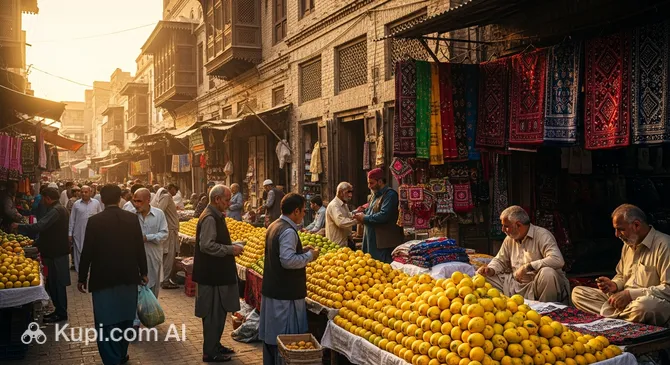
Mirpur Khas is a vibrant city in Pakistan, located in the Sindh province. Known as the country's unofficial "mango capital," it welcomes visitors with the fragrance of fruit orchards and the atmosphere of a traditional regional hub. The city is nestled in the fertile Indus River valley and serves as an important agricultural center where the modern pace of life is closely intertwined with centuries-old traditions.
The city's geographical position in the heart of Sindh defines its significance as a trade crossroads. With a population of about 237,000, Mirpur Khas is a bustling hive of activity, where trade in cotton, grain, and, of course, the famous mango varieties—considered some of the best in the world—thrives.
Mirpur Khas. Illustration.
Source: Kupi.com AI
While the city is primarily a business center, delving into its rich past reveals fascinating chapters of regional history, from ancient Buddhist settlements to the reign of the Talpur dynasty. A visit to Mirpur Khas is an opportunity to see the real, non-touristy Pakistan, experience the hospitality of the locals, and enjoy the authentic flavor of Eastern bazaars.
Weather Overview
The climate in Mirpur Khas is typical for the Indus Valley: it is hot and predominantly dry. Summer arrives early here and is characterized by scorching temperatures, which in May and June can exceed 40°C. If you are planning a trip, it is worth checking the city's climate details in advance to choose the right clothing and time for walks.
The winter months (from December to February) bring long-awaited coolness. During this period, the average temperature is a comfortable 16–20°C, and nights can be quite fresh, with the thermometer dropping to 9–11°C. Rainfall in the region is scarce, with most of it occurring during the monsoon season in July and August.
In general, expect a very hot summer with clear skies and a mild, dry winter. Spring and autumn are short here, but they are considered the most favorable times to visit the city, when the exhausting heat has not yet arrived or has already receded, allowing for an enjoyable exploration of local sights.
Average monthly temperature
Average monthly precipitation
Interesting Facts
Modern Mirpur Khas was founded in 1806 by Mir Ali Murad Talpur and served for a long time as the capital of the Talpur dynasty emirate.
The city's name literally translates to "City of the special Mir," emphasizing its status as the residence of the ruler (Mir).
The annual Mango Festival in Mirpur Khas is considered one of the largest in Asia, bringing together hundreds of producers and thousands of connoisseurs of this fruit.
The city became an important point on the map after the Partition of India in 1947, becoming one of the first major centers to receive Muslim refugees arriving by train from India.
Mirpur Khas District borders five other districts, including the famous desert region of Tharparkar.
How to Get There
Mirpur Khas is an important transport hub in the Sindh province, though its infrastructure is primarily geared toward domestic travel. The main way to reach the city remains road transport. From the country's largest metropolis, Karachi, the journey by bus or private car takes about 4–5 hours. To plan your route in advance, it is worth looking into how to get to this region in the most comfortable way.
The city has its own airport, Mirpur Khas Airport (IATA: MPD). However, it is important to note that regular commercial flights here are extremely rare and are usually seasonal or chartered. Most travelers prefer to fly into Karachi or Hyderabad international airports and then continue their journey by land.
Railway connections link the city with other parts of the country, making it accessible for those who prefer train travel. The Mirpur Khas Railway Station receives trains from Karachi and other cities in Sindh, offering a colorful, if not always fast, way to travel.
Station
Passenger traffic
Distance
Mirpur Khas railway station
5
2 km
Hyderabad Junction railway station
5
66 km
Gilani Railway Station, Gulshan-e-Iqbal
5
206 km
Karachi Cantonment Railway Station
10
212 km
Karachi City Station
10
215 km
Larkana railway station
3
240 km
Main Attractions
The main attractions of Mirpur Khas reflect its deep historical roots and multicultural heritage. One of the most significant sites is the ruins of Kahu-Jo-Darro. These are the remains of an ancient Buddhist stupa dating back to the 5th century AD, which testify that the region was an important spiritual center long before the modern city emerged.
Architecture and history enthusiasts should visit the Chitori Graveyard — an ancient cemetery where representatives of noble families are buried. The carved stone tombstones and mausoleums are striking for their fine craftsmanship and intricate ornamentation. Other important spiritual landmarks in the city include the majestic Jamia Masjid (Grand Mosque) and the ancient Hindu Temple, highlighting the diversity of Sindh's religious traditions.
For outdoor relaxation, locals and occasional tourists favor the shores of Mirpur Khas Lake. It is a wonderful spot for sunset strolls when the heat subsides and the city transforms. If you are traveling with family, you can visit the Dolphin Water Park — a popular water entertainment center that offers a respite from the scorching Pakistani sun.
Local Cuisine
The culinary traditions of Mirpur Khas are a true anthem to the flavors of the Sindh province. The local diet is based on dishes made from rice, wheat, and fresh dairy products. You should definitely try traditional Sindhi bread (jowari/jowar), which is served with aromatic lamb or chicken curries. The local population masterfully uses spices to create rich yet balanced flavors.
The city's main gastronomic symbol is, without a doubt, the mango. During the season, this fruit is everywhere: it is eaten fresh, made into a thick puree, added to desserts, and used to make the famous mango achar (spicy pickled snacks). Among drinks, cold lassi is incredibly popular — a yogurt-based drink that is perfectly refreshing on a hot day — as well as traditional strong tea with milk and cardamom.
The food culture in the city is centered around street markets and small family eateries. It is customary to eat slowly here, enjoying the company. Despite the lack of fancy restaurants, the food in local establishments is exceptionally fresh and authentic. Tourists are advised to choose busy places where the locals themselves dine to ensure they get the tastiest and highest quality meals.
Travel Tips
Planning a visit to Mirpur Khas? This city will give you plenty of impressions if you prepare for its unique features in advance. Here are some tips to help make your trip comfortable and safe.
Clothing and Dress Code: Choose light clothing made from natural fabrics (cotton, linen), as the region can get very hot. Observe local etiquette: clothing should be modest, covering shoulders and knees, especially when visiting mosques or temples.
Best Time to Visit: The ideal period is from November to March, when the weather is mild and pleasant. If you want to catch the mango season, come in May or June, but be prepared for extreme heat.
Transport: Use auto-rickshaws for getting around the city, but negotiate the price beforehand. For intercity travel, it is better to hire a car with a driver.
Finances: Always carry a sufficient supply of Pakistani Rupee cash. Cards are only accepted in very large hotels, and ATMs may not be found everywhere.
Health: Drink only bottled or filtered water. Always carry sunscreen and a hat.
Connectivity: Buy a local SIM card (such as Zong or Jazz) in Karachi upon arrival, as the registration process in Mirpur Khas itself may take more time.
Etiquette: Greet people with the phrase "Assalamu Alaikum." Do not take photos of local residents (especially women) or military sites without explicit permission.
What to Avoid: It is not recommended to walk alone in unfamiliar areas at night. Try to plan all important movements during daylight hours.
Mirpur Khas is a city with an open heart, and your respect for local traditions will surely be returned with sincere hospitality and warmth.
Entertainment & Nightlife
The entertainment scene in Mirpur Khas is calm and provincial, reflecting the traditional way of life in Pakistan. Nightlife in the conventional Western sense, with clubs and bars, is absent here. The main centers of evening activity are local teahouses (chai khanas), where men gather for leisurely conversations over cups of strong spiced tea, discussing the latest news or watching sports broadcasts.
Daytime entertainment focuses on family leisure. Dolphin Water Park is the main attraction on hot days, offering pools and water slides. For those who prefer cultural leisure, the Tharparkar Art Gallery showcases works by local artists and craftsmen, reflecting the unique aesthetics of the Thar region.
The city becomes particularly lively during festivals, the most famous of which is the annual Mango Festival. During this period, the streets fill with vendors, and exhibitions and folk festivities are held, turning the city into a bright and noisy celebration. For more active evening leisure and a wider choice of restaurants, travelers often head to nearby Hyderabad, located just a couple of hours away.
Parks & Museums
The cultural and natural components of Mirpur Khas are closely tied to its history and agriculture. One of the main spots for residents to walk is Mirpur Khas Lake. It is a natural recreation area where you can enjoy the silence, have a picnic on the shore, or simply observe the local flora and fauna. In the hot climate, proximity to water makes this area the most popular spot for outdoor relaxation.
For those interested in the art and lifestyle of the region, the Tharparkar Art Gallery is open to visitors. This small but informative gallery presents collections of folk art, traditional embroidered clothing, and works by contemporary Sindhi artists. It is an excellent place to get acquainted with the aesthetics of the Tharparkar desert region, whose borders begin very close to the city.
While there are few museums in the city center itself, the historical ruins of the Kahu-Jo-Darro stupa serve as an open-air museum. A visit here allows you to see ancient brickwork firsthand and imagine what this region was like fifteen hundred years ago. Although the park infrastructure in the city is still developing, Mirpur Khas retains its charm thanks to the green mango orchards that surround the city in a dense ring.
Getting Around
The transport system of Mirpur Khas is typical of a medium-sized Pakistani city and relies mainly on private carriers. The most popular and affordable way to move around within the city is by auto-rickshaws (tuk-tuks). They are maneuverable, inexpensive, and can take you almost anywhere in the city. You should always agree on the fare in advance, as they usually lack meters.
Public buses also run along the main streets; however, they are often overcrowded and do not have a fixed schedule, which can be inconvenient for tourists. For traveling longer distances within the district or to neighboring towns, locals use shared taxis. Motorcycles are also widespread throughout the city and are the primary personal transport for most residents.
Travelers who value comfort are advised to use ride-hailing services via mobile apps (if available) or rent a car with a driver through their hotel. This eliminates the need to navigate chaotic traffic and ensures the presence of air conditioning, which is extremely important during the summer months. Bicycle rental is not developed in the city due to the high intensity of traffic and the hot climate.
Accommodation
The hotel sector in Mirpur Khas is primarily geared toward business travelers and specialists visiting the region for agricultural and trade matters. You won't find luxury five-star resorts or international hotel chains here, but the city offers a decent selection of mid-range hotels with basic amenities.
Most hotels are concentrated in the central part of the city and near the main commercial streets. This is convenient for those who want quick access to markets and transport hubs. Rooms are usually equipped with air conditioning (which is critical in the local climate) and private bathrooms, and hotels often have restaurants serving Sindhi cuisine.
For budget travelers, guesthouses with simpler conditions are available. When planning a trip, especially during the Mango Festival or major agricultural fairs, it is recommended to book accommodation in advance, as the demand for quality rooms increases significantly during these times. Payment in most local hotels is made in cash using local currency.
Nearby Cities
Mirpur Khas serves as a convenient base for exploring the southeastern part of the Sindh province. Thanks to a developed road network, you can easily take interesting day trips to neighboring cities, each with its own unique character.
Just 30 kilometers away is Tando Allahyar, known for its agricultural traditions and vibrant local markets. For those seeking a larger urban experience, the ideal destination is Hyderabad — one of the country's largest cultural and educational centers with its historical forts and bazaars. Also worth noting is the ancient Umarkot, famous for its majestic fort and legends about the birth of Emperor Akbar.
Exploring the surroundings of Mirpur Khas will allow you to deeper understand the diversity of the Pakistani province, see the transition from fertile plains to desert landscapes, and touch the living history of this amazing region.
Shopping & Souvenirs
Shopping in Mirpur Khas is primarily an immersion into the atmosphere of traditional Eastern bazaars. The city does not have modern shopping malls with glass windows, but its markets offer something that cannot be found in megacities: authenticity and character. The main product here, of course, is fruit. During the season (May to September), the central market turns into a "sea of mangoes," where you can buy dozens of varieties of this fruit straight from the orchards.
To find souvenirs and household goods, head to the central city bazaars. Here you will find famous Sindhi textiles: hand-embroidered fabrics, traditional ajrak shawls with geometric patterns, and bright cotton cloths. These products are famous for their quality and unique designs passed down through generations.
In addition to fabrics, the markets offer a wide selection of spices, local sweets, and leather goods. Shops are usually open from morning until late evening, with a break during the midday heat. It is worth remembering that a culture of bargaining is accepted in Mirpur Khas: fixed prices are rare, so the ability to politely negotiate the price will not only help you save money but also allow you to enjoy interacting with local merchants. Payment is primarily made in cash.