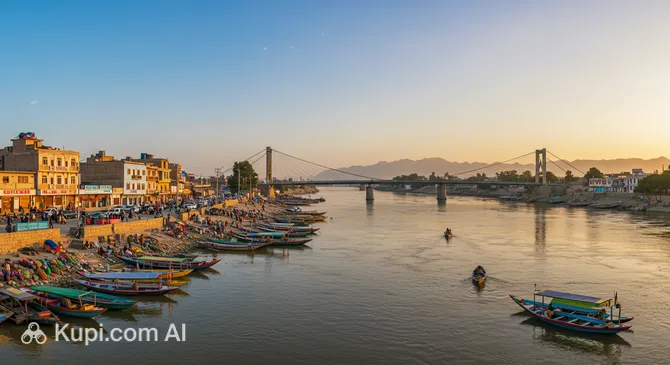
Located on the western bank of the majestic Indus River, Kotri is a major industrial and transport hub in the Sindh province of Pakistan. This city does not strive for tourist polish, winning visitors over with its energetic atmosphere as a working hub and its strategic importance for the entire region. With a population of about 260,000, it is the heart of the Jamshoro industrial district, where the hum of factories blends with the rumble of passing trains.
The city's geographical position determined its fate: it grew at the intersection of water and land routes. One of the main features of this place is the famous Ghulam Muhammad Barrage (Kotri Barrage), built in 1955. This grand engineering feat not only protects the surrounding area from floods but also provides irrigation for vast agricultural lands. Kotri. Illustration.
Source: Kupi.com AI
The city's unique historical heritage is inextricably linked with the development of railways, which began here as far back as the mid-19th century.
Despite its predominantly industrial character, Kotri is interesting to travelers as a living example of the dynamic development of the Pakistani hinterland. Here, you can witness the daily life of trading markets and feel the power of the Indus River. We invite you to visit this city to see for yourself how modern technology and traditional ways of life intertwine in one of southern Pakistan's most significant economic centers.
Weather Overview
The climate in Kotri is characterized as typical for the hot desert regions of Sindh. Summer here arrives early and brings extreme heat: between April and June, temperatures often fluctuate in the 38–42°C range and sometimes even reach 50°C. Expect very dry and dusty air, which requires constant hydration.
Winter months, especially December and January, offer much more comfortable conditions for a visit, with average daytime temperatures around 17–24°C. Nights during this period can be cool (down to 10°C), so a light jacket will not be out of place. If you want to find more precise data for specific dates, check the detailed climate of the city before your trip.
Precipitation in Kotri is a rare and seasonal occurrence. The bulk of the rain falls in July and August during the monsoon, which brings temporary relief from the heat but can lead to increased humidity and water levels in the Indus. For the rest of the year, the sky remains predominantly clear, and the weather is consistently arid.
Average monthly temperature
Average monthly precipitation
Interesting Facts
The name of the city Kotri has historical roots and comes from the word "kot," which translates as "little fort," indicating the existence of an ancient fortification in this territory.
The Kotri Municipality, founded in 1854, is considered one of the oldest municipal entities in the Sindh province, highlighting the city's long-standing administrative importance.
The local railway junction and the bridge over the Indus have been functioning since 1861, making it one of the first and most significant transport infrastructure sites from the time of British rule.
The Kotri Barrage controls the irrigation of an incredible area—about 1.1 million hectares of land, making the city critically important for the region's food security.
The city is home to a unique thermal power plant that has been operating since 1978, which is an important link in the energy chain of the southern part of the country.
How to Get There
Kotri occupies a strategic position in the Sindh transport system, making it easily accessible for travelers. As a key railway hub, the city is connected by regular services to Pakistan's largest metropolises. You can find more detailed information about routes in the section on how to get to the city.
The city does not have its own airport, so air travelers usually arrive at Jinnah International Airport in Karachi (IATA: KHI). This is the country's largest air gateway, located approximately 150 kilometers away. From there, Kotri can be reached by taxi, intercity bus, or train; the journey will take from 2 to 4 hours depending on the chosen mode of transport and the traffic situation.
The railway is the most popular and authentic way to get to Kotri. The local station receives trains from Karachi, Lahore, and other major cities. A trip from Hyderabad takes only a few minutes, as the cities are separated only by a bridge over the Indus River. The railway connection here has been operating stably since 1861, turning the station into the heart of city life.
Station
Passenger traffic
Distance
Hyderabad Junction railway station
5
11 km
Mirpur Khas railway station
5
77 km
Gilani Railway Station, Gulshan-e-Iqbal
5
130 km
Karachi Cantonment Railway Station
10
136 km
Karachi City Station
10
139 km
For those who prefer road transport, the N-5 National Highway passes through the city. Intercity buses and shuttle taxis run regularly, connecting Kotri with nearby settlements. It is worth noting that during peak hours, traffic jams can occur on the Indus bridge and at the city entrances, so plan your time with a margin.
Main Attractions
The city of Kotri is primarily a triumph of engineering and a vital transport hub, so most of its attractions are industrial or infrastructural in nature. The main site worth seeing is the Ghulam Muhammad Barrage (also known as the Kotri Barrage). This massive structure on the Indus River is impressive in its scale and plays a key role in the region's economy, supporting a power plant and field irrigation. The view of the powerful water flows, especially during the monsoon season, leaves a lasting impression.
Another important spot on the city map is the Kotri Railway Station. As one of the oldest hubs in the country, it retains an atmosphere of the colonial era, when railways first began to connect the remote corners of Sindh. From here, you can see the historic railway bridge connecting Kotri with neighboring Hyderabad. For fans of industrial aesthetics, a walk near this bridge is a great opportunity to take unique photos against the backdrop of steel structures and river landscapes.
While there are no classic palaces or ancient temples of global significance within the city itself, its local markets and bustling trading zones near the station represent the quintessence of Pakistani life. Here, you can feel the true rhythm of the city, observing the hustle and bustle of traders and transit passengers. For those seeking cultural variety, Kotri serves as a convenient bridge to the attractions of neighboring Hyderabad, which can be reached in just a few minutes.
Local Cuisine
The gastronomic face of Kotri is steeped in Sindhi traditions, where the main stars of the table are rice, meat, and an abundance of spices. Being a city on the Indus River, Kotri is famous for dishes made from fresh river catches. Be sure to try the local fish, grilled or prepared as a spicy curry—it is a true delicacy best enjoyed in small establishments along the shoreline.
Among meat dishes, Sindhi Biryani is particularly popular—aromatic rice with meat and a set of spices, which every local cafe prepares according to its own secret recipe. For breakfast, locals often prefer halwa-puri (a sweet dish with flatbreads) or saag made from fresh greens with corn bread. These hearty dishes will provide a boost of energy for a full day of exploring the city.
The food culture in Kotri is focused around street markets and bustling tea houses. The main drink here is undoubtedly dudh-patti chai (strong milk tea), which is drunk at any time of day. In the markets, it is also worth trying fresh juices, lassi, and popular snacks like samosas and pakoras. The atmosphere here is simple and welcoming: most establishments are inexpensive but very authentic places where the locals themselves eat.
Travel Tips
A trip to Kotri is an opportunity to see the real, non-tourist Pakistan. To make your trip comfortable and safe, we have prepared some practical tips.
Clothing and Dress Code: Choose modest clothing made of natural fabrics that covers the shoulders and knees. This will help you tolerate the heat better and show respect for local traditions. Comfortable closed shoes are a must for walking along dusty streets and markets.
Transport: For getting around the city, it is best to use rickshaws, but always discuss the cost of the trip in advance. For intercity travel, the railway is ideal—it is reliable and cheap.
Finances: In Kotri, cash is king. Cards are accepted very rarely, so always have Pakistani Rupees with you in small denominations. ATMs can be found in the center and near the station.
Health: Drink only bottled water and avoid ice in drinks. During the summer period (from April to October), be sure to use sunscreen and a hat to avoid heatstroke.
Communication: The main languages are Sindhi and Urdu, with English spoken at a basic level. Learn a few greeting phrases—this always earns the sympathy of the locals.
Safety: Try to complete all travel before dark. Avoid walking alone in remote industrial areas.
Etiquette: Always ask for permission before photographing people. Remember that during religious holidays and Friday prayers, many establishments may be closed.
Connectivity: Buying a local SIM card is easiest in Karachi or Hyderabad; in Kotri, sales points are concentrated near the markets. Wi-Fi is only available in a few cafes and guesthouses.
Be open to new experiences, show friendliness, and Kotri will reveal its most hospitable side to you. Have a pleasant trip!
Entertainment & Nightlife
Kotri is primarily a city of labor and transit, so classic nightlife in the form of clubs or bars is practically non-existent here. The social life of local residents after sunset is centered in small street cafes and tea houses located near the railway station and central markets. It is customary here to spend evenings in leisurely conversation, sipping hot tea and watching the endless flow of passing trains and vehicles.
For those looking for more active entertainment, cinemas, or modern shopping areas, the best solution is a short trip to neighboring Hyderabad. There, the choice of venues is much wider, including recreation parks and cultural centers. In Kotri itself, evening time is best spent walking along the Indus embankment, where the air becomes slightly cooler and the lights of the barrage create an industrial-romantic landscape.
Safety in the city after dark is at a moderate level typical of industrial zones. Tourists are advised to stick to central, well-lit streets and use official taxis or rickshaws for moving between districts. Despite the lack of noisy discos, the atmosphere of evening Kotri is unique in its honesty and the absence of tourist bustle.
Parks & Museums
In industrial Kotri, you won't find major art galleries or historical museums—the city lives for the present and the future rather than the past. However, the role of an "open-air museum" is played here by the industrial architecture and hydraulic structures themselves. For those interested in the history of technology, the local railway hub and ancient bridges are excellent objects for studying the region's engineering heritage.
There are not many green zones in the very center of the city, as dense development and factories take up most of the territory. The main place for outdoor recreation is the Indus River embankment near the barrage. Although there are no landscaped parks with rides here, the riverbank attracts residents with its coolness and the opportunity to take a walk while watching the flow of the water. This is an informal meeting place and a spot to rest from the city noise.
To visit proper parks and museums, travelers usually head to neighboring Hyderabad or Jamshoro, where university campuses with well-kept grounds are located. Nevertheless, Kotri offers a unique experience of contemplating an industrial landscape, which is fascinating in its own way for those who can find beauty in the power of metal and concrete.
Getting Around
The transport system of Kotri is focused on functionality and coverage of the city's key working zones. The main types of public transport are buses and minibuses, which connect the city center with industrial outskirts and neighboring Hyderabad. Routes usually start from the railway station—the main transport artery, where life never quietens down.
For quick trips within the city, tourists most often choose auto-rickshaws (tuk-tuks). This is the most maneuverable type of transport, capable of weaving through chaotic traffic and narrow streets. It is worth agreeing on the price of the trip in advance, as meters are rarely used. Motorcycle taxis are also popular in Kotri, which are convenient for solo travelers without luggage.
Fares on public transport are paid in cash to the conductor or driver. There are no unified transit cards here, and prices remain extremely low. It is important to remember that during peak hours—morning and evening—transport can be very crowded, and congestion can occur on the roads near the station and the Indus bridge. For more comfortable travel, you can use mobile taxi-hailing apps, which are gradually gaining popularity in the region.
Accommodation
The choice of accommodation in Kotri directly reflects its status as an industrial and transit center. Budget hotels and guesthouses predominate here, catering primarily to visiting specialists, industrial workers, and transit passengers. Most of these accommodation options are concentrated near the railway station and along the main transport arteries.
For tourists looking for a higher level of comfort, modern chain hotels, or luxury apartments, the best option would be to stay in neighboring Hyderabad. Due to the proximity of the cities (only about 10 km), you can easily visit Kotri during the day and return for the night to a place with more developed hotel infrastructure. In Kotri itself, you can also find long-term rental options, which are popular among expats.
When planning your trip, keep in mind that during major holidays or business events, availability in local hotels may be limited, so it is recommended to book accommodation in advance through online services or by phone. The price range here is very affordable, making the city accessible for budget travelers.
Nearby Cities
Thanks to its location at the intersection of key transport arteries, Kotri is an excellent starting point for exploring the southern part of Sindh province. The city's surroundings offer both modern educational centers and historical locations, which can be reached in a very short time.
Just 10 kilometers away is Hyderabad—one of Pakistan's largest cities, offering a rich cultural program, ancient markets, and historic forts. It is also worth visiting Jamshoro, which is known for its universities and picturesque views of the river. If you have more time, you can head to Tando Allahyar to feel the spirit of agricultural Sindh.
Exploring nearby cities will allow you to see Pakistan from different sides: from the industrial power of Kotri to the educational potential of Jamshoro and the commercial hustle of Hyderabad. Each of these destinations is easily accessible by both train and car, making day trips comfortable and rewarding.
Shopping & Souvenirs
Shopping in Kotri is a vibrant immersion into the atmosphere of traditional Eastern bazaars. You won't find huge shopping malls with glass storefronts here; trade is conducted on the busy streets near the station and central squares. Primary attention should be paid to the markets selling the famous Sindhi fabrics—ajrak (traditional shawls with geometric patterns) and exquisite embroidery, which make excellent souvenirs.
Local markets are also famous for their selection of spices, fresh fruits, and vegetables grown on irrigated lands in the Indus Valley. A walk through the spice aisles will not only allow you to make useful purchases but also to experience the indescribable flavor of a Pakistani city. Additionally, Kotri is a great place to buy small handicrafts and household goods, which cost significantly less here than in major tourist centers.
Shops usually open around 10 AM and stay open until late evening, with breaks for prayers and lunch. Payment is most often made in cash in the local currency (Pakistani Rupees), although larger shops may accept cards. Don't forget that moderate bargaining is common and even welcomed in the markets of Kotri—it's part of the local culture of communication, which will help you not only save money but also make an interesting acquaintance with a merchant.