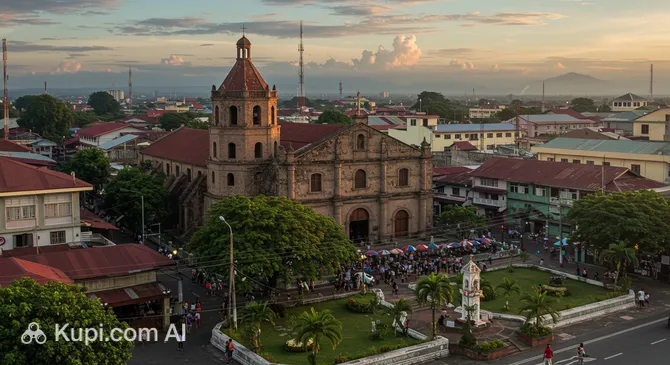
Malolos is more than just the administrative center of Bulacan province in the Philippines; it is a city of profound historical significance. Located just 45 kilometers north of Manila, it serves as a vital link between the capital and the northern regions of Luzon. Malolos. Illustration.
Source: Kupi.com AI
Stretching along the shores of Manila Bay, the city combines the atmosphere of a bustling suburb with a rich colonial heritage.
With a population of over 260,000, Malolos lives at the rhythm of a modern provincial center while maintaining the cozy feel of a Filipino suburb. Tagalog is the predominant language, while English is widely used in business and education. Geographically, the city is a flat lowland, which defines its close connection to the region's water resources.
For tourists, the city is primarily attractive for its historical sites associated with the era of the First Philippine Republic. Majestic cathedrals and old buildings create a unique architectural character. We invite you to discover Malolos—a place where history comes alive and the true hospitality of Bulacan is felt.
Weather Overview
The climate in Malolos is typical for Central Luzon—a tropical monsoon regime with clearly defined seasons. High humidity persists throughout the year, and average temperatures fluctuate between 25–32°C. May is usually the hottest month, with the air warming up to 34°C, while the most comfortable time for a visit is considered the period from December to February.
Expect a very warm and sunny start to the year, followed by a wet season. To better plan your trip and avoid heavy downpours, it is worth checking detailed information about the weather in the city in advance. The rainy season lasts from June to November, bringing abundant rainfall and the risk of flooding, which is characteristic of this low-lying coastal zone.
In the dry season, especially from March to May, rain occurs very rarely, which is ideal for viewing architectural monuments. However, during this period, you should be prepared for intense heat, so it is best to plan walks for the morning or evening hours.
Average monthly temperature
Average monthly precipitation
Interesting Facts
The First Philippine Republic was proclaimed in Malolos in 1899, making it one of the country's "historical capitals."
The Malolos Constitution, the first democratic constitution in Asia, was adopted here and originally written in Spanish.
The city is the seat of the Diocese of Malolos, whose jurisdiction covers the entire province of Bulacan.
Despite urbanization, the city is divided into 51 barangays, each preserving its local traditions and community spirit.
Malolos is located just 9 meters above sea level, making it sensitive to tides and monsoon climate shifts.
How to Get There
Malolos boasts excellent transport accessibility thanks to its proximity to the capital. The main flow of tourists arrives from Manila via buses that regularly depart from terminals in Quezon City and Cubao. The journey along the N3 highway usually takes one to two hours, though it's wise to allow extra time for potential traffic during peak hours. To ensure your trip goes as smoothly as possible, we recommend checking the details on how to get to the city.
The nearest major international air hub is Ninoy Aquino International Airport (MNL) in Manila. From there, you can reach Malolos by taxi or by booking a transfer through popular mobile apps, ensuring comfort and a fixed price for the trip.
Currently, a direct rail line to the city is under development, and the nearest metro stations are located in the northern part of the Manila metropolitan area. For travelers preferring land transport, the main landmark is MacArthur Highway, which passes through the entire city and connects it with other provinces in Central Luzon.
Station
Passenger traffic
Distance
Balagtas station
4
8 km
San Fernando station
5
24 km
Monumento station
7
28 km
5th Avenue LRT Station
7
29 km
Balintawak station
7
30 km
Main Attractions
The city's primary spiritual and architectural symbol is the Minor Basilica and Cathedral of the Immaculate Conception of Malolos. This majestic temple serves not only as the center of religious life for the diocese but also as an important historical monument reflecting the colonial grandeur of the past. The cathedral impresses with its facade and rich interior decoration, attracting pilgrims and art lovers alike.
Equally significant is the Barasoain Church, known as the "Cradle of Democracy" in the Philippines. It was here in the late 19th century that Congress sessions were held to determine the country's fate. Tourists appreciate this site for its austere beauty and the chance to connect with the origins of national independence.
For a deeper dive into the region's culture, it is worth visiting the Bulacan Museum and the Casa Real shrine. These walls house artifacts telling stories of daily life, traditions, and the heroic pages of the city's history. While Malolos is not a typical resort, its historical sites offer a rich itinerary for the thoughtful traveler.
Local Cuisine
The local cuisine of Malolos is a vibrant reflection of Central Luzon traditions. The diet is based on classic Tagalog dishes such as adobo (meat braised in soy sauce and vinegar) and sinigang—a flavorful sour soup. Proximity to the bay ensures an abundance of fresh seafood: be sure to try the fried fish and various shellfish here.
For a taste of local gastronomy, Casie's Restaurant is an excellent choice, serving both traditional Filipino and popular international dishes in a cozy setting. If you are looking for a quick and familiar snack, check out Malolos Crossing, where many popular chain outlets are concentrated.
Don't forget to try local desserts, such as bibingka or puto rice cakes. The food culture here is diverse: from "carinderia" home-style eateries to modern food courts in shopping malls. For a drink, locals often choose fresh mango juices or the famous Filipino San Miguel beer.
Travel Tips
Malolos warmly welcomes guests, and to make your trip to this historical center as comfortable as possible, we have prepared some practical tips.
Clothing and Items: Choose light clothing made from natural fabrics, as humidity in the region is always high. When visiting cathedrals, such as the cathedral, observe the dress code: shoulders and knees should be covered. Don't forget comfortable shoes and sunglasses.
Transport: Use tricycles or jeepneys to move around the city—it's inexpensive and convenient. For trips to Manila or neighboring cities, it's better to choose air-conditioned buses.
Finances: The primary currency is the Philippine peso (PHP). Malls accept cards, but markets and transport require cash. ATMs are easy to find in the city center.
Health and Safety: Drink only bottled water. During the rainy season (June–November), monitor the weather forecast due to the risk of flooding. After dark, stick to well-lit central streets.
Communication: The local population speaks Tagalog, but English is widely spoken. A few simple phrases in the local dialect, like "Salamat" (thank you), will always be appreciated.
Local Etiquette: Filipinos are very polite and value a smile. When greeting elders, it is customary to show respect.
What to Avoid: Do not engage in arguments about political topics and avoid criticizing local traditions. It is also wise not to walk alone in remote outskirts of the city late at night.
Additional Tip: Try to visit Malolos on weekdays to explore historical monuments without the large crowds of local tourists.
May your encounter with the historical heritage of Bulacan leave you with only the warmest memories and most vivid impressions!
Entertainment & Nightlife
Entertainment and nightlife in Malolos are quiet and predominantly family-oriented, which is typical for a residential suburb. Most activity after sunset is concentrated around major shopping malls and local karaoke bars (KTV). Locals and visitors often spend their evenings in cozy cafes or restaurants where they can enjoy live music.
One popular spot for evening relaxation is Gerry's, Robinsons Malolos. This venue is famous for its grilled dishes and casual atmosphere, suitable for both friendly gatherings and family dinners. Most establishments close around 10:00 PM, so fans of loud nightclubs are better off planning trips to neighboring Manila.
Daytime leisure includes modern cinemas in the malls and strolls through the city's historical squares. Safety in central areas is good during the day, and for traveling after dark, it is recommended to use ride-hailing apps to get comfortably to your hotel.
Parks & Museums
Malolos is rich primarily in museum spaces that carefully preserve the memory of the country's revolutionary past. A key site is the Bulacan Museum, which features exhibits dedicated to the ethnography and history of the province. It is also worth visiting the historical Casa Real de Malolos building, which is an architectural monument in its own right and tells the story of the Spanish colonial era.
The urban layout of Malolos is quite dense, so large park zones are rare. Nevertheless, the area around significant sites such as the Minor Basilica and Cathedral of the Immaculate Conception of Malolos offers open spaces for walking and relaxing in the shade of majestic walls. These squares serve as important meeting points for both residents and tourists.
For nature lovers seeking peace, locals recommend traveling to neighboring municipalities of Bulacan where the landscapes become more open. However, for those who value cultural and educational leisure, the concentration of historical monuments and museums within Malolos itself will provide a full program for the entire day.
Getting Around
The public transport system in Malolos is typical for Filipino suburbs and is characterized by its affordability. The main means of travel within the city and between its 51 barangays are jeepneys—brightly decorated minibuses that have become a national symbol. For short trips along narrow streets, tricycles (motorized rickshaws) are ideal, as they can take you directly to the door of your destination.
Buses regularly ply the city's main transport artery, MacArthur Highway, connecting Malolos with Manila and neighboring provinces. Fares for public transport are very affordable and are usually paid in cash to the driver or conductor. For those who value extra comfort, the Grab ride-hailing service is available in the city.
Tourists should keep in mind that traffic jams often occur on main roads during morning and evening peak hours, which can significantly increase travel time. Pedestrian infrastructure in residential zones is limited, so it is better to use tricycles for moving between attractions. There are no special transit cards in the city yet, so always keep small cash on hand.
Accommodation
The hotel sector in Malolos is primarily geared toward business travelers and those visiting for historical tourism. The area is dominated by cozy guesthouses, apartments, and mid-range hotels. Budget accommodation options can be found ranging from 1,500 to 3,000 Philippine pesos per night, making the city affordable for budget-conscious travelers.
The most convenient area to stay is the city center, located in close proximity to sites like the cathedral and the provincial administration building. This keeps you within walking distance of the main attractions and transport hubs. Long-term rental options are also widely available in the quieter residential barangays.
It is recommended to book accommodation in advance, especially if your visit coincides with major religious holidays or historical festivals, when the influx of visitors to the city increases. To find and reserve rooms, it is best to use international booking services where up-to-date reviews and photos of the properties are available.
Nearby Cities
Malolos serves as an excellent starting point for exploring the surroundings of Bulacan province and other interesting spots in Central Luzon. Its convenient location allows for planning short day trips, discovering the diversity of Filipino landscapes and culture. Just a few kilometers from the city lie cozy municipalities, each with its own charm.
One of the nearest destinations is Paombong, known for its picturesque views and traditional crafts. Also worth noting is Plaridel, where you can feel the rhythm of life in a modern Filipino town. A trip to these places by jeepney or tricycle won't take much time and will provide plenty of impressions.
City
Population
Distance
Paombong
55 696
6 km
Plaridel
114 432
7 km
Pulilan
108 836
7 km
Calumpit
118 471
8 km
Guiguinto
113 415
8 km
For those ready for longer journeys, the roads are open to major regional centers such as San Fernando. Exploring nearby cities allows you to see the contrasts between the historical heritage of Malolos and the dynamic development of neighboring Bulacan districts.
Shopping & Souvenirs
Shopping in Malolos offers a blend of modern shopping centers and colorful local markets. For those who prefer comfort and a wide selection of brands, the main points of attraction are Mall of Malolos and Vista Mall Malolos. In these malls, you can find everything from clothing and electronics to various cafes and entertainment zones.
If you are looking for a more authentic experience, head to the Public Markets located in various barangays. Here, life is in full swing, and stalls are bursting with fresh tropical fruits, seafood, and everyday goods. This is the best place to feel the true rhythm of the city and purchase the freshest products at low prices.
Popular souvenirs from Malolos include items with historical symbols commemorating the city's revolutionary past, as well as products from local Bulacan artisans. Shops typically operate from 10:00 AM to 9:00 PM, and major centers accept international bank cards, although you will certainly need cash in Philippine pesos for the markets.