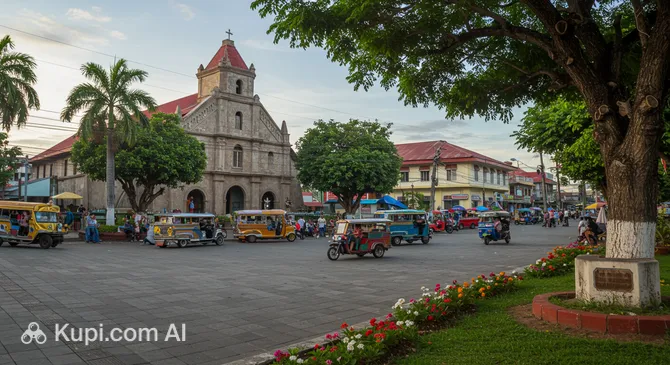
Meycauayan is an energetic and dynamically developing industrial hub in the province of Bulacan, located just 19 kilometers north of Manila. The city plays a vital role in the economy of the Philippines, serving as the archipelago's recognized "Jewelry Capital." Meycauayan. Illustration.
Source: Kupi.com AI
Here, modern industrial parks sit alongside traditional workshops, creating the unique atmosphere of a hardworking and densely populated city.
The city was founded by Franciscans in 1578, making it one of the oldest settlements in the region. You can immerse yourself in the city's rich historical heritage by exploring its colonial architecture and long-standing traditions of leathercraft and jewelry making. Despite its high level of urbanization and a population exceeding 225,000, Meycauayan retains the spirit of an old province.
While the city is not a typical tourist resort, it draws travelers with the opportunity to see the authentic life of a Filipino industrial center and purchase unique handmade jewelry. A visit to this city is an excellent addition to a Central Luzon itinerary for those seeking an authentic experience.
Weather Overview
The climate in Meycauayan is typical of Central Luzon and is characterized by a distinct tropical monsoon nature. High humidity and consistently high temperatures prevail year-round, usually ranging from 25°C to 32°C. When planning a trip, keep in mind that the weather in the city is heavily dependent on the change of seasons: dry and rainy.
The period from March to May is considered the hottest, when temperatures can reach their peak and rainfall is minimal. The rainy season typically begins in June and lasts until October, bringing frequent downpours that are especially intense in July and August. The most comfortable time to visit is from December to February, when the weather is cooler and drier—ideal for strolling through local markets.
Average monthly temperature
Average monthly precipitation
Interesting Facts
The city's name comes from the Tagalog expression "may kawayan," which translates to "a place where much bamboo grows." According to another version, the toponym is associated with crocodiles that once inhabited the local rivers.
Meycauayan is officially called the "Jewelry Capital of the Philippines" due to the vast number of workshops producing gold and silver items that are valued throughout the country.
The city has preserved a unique concrete bridge built in 1791 during the era of Spanish colonial rule, which remains an important historical monument today.
Meycauayan is considered one of the most densely populated cities in Bulacan: over 225,000 people live in an area of less than 34 square kilometers, creating an incredibly fast pace of life.
How to Get There
The accessibility of Meycauayan is largely defined by its proximity to the capital region. The city is located right next to the North Luzon Expressway (NLEX), making it easily reachable from Manila. More detailed information on routes can be found in the section on how to get to the city.
For international travelers, the primary arrival hub is Ninoy Aquino International Airport (NAIA) in Manila. The journey from the airport to Meycauayan by taxi or via the Grab app takes between 1 and 1.5 hours, depending on traffic density, which can be very heavy in this region.
At the moment, there is no direct rail service to the city; however, as part of the transport network's development, plans are in place to expand LRT and MRT lines, which will link the city to the capital even more conveniently in the future. For now, the main means of transport remain intercity buses and jeepneys departing from the Cubao and Pasay districts.
Station
Passenger traffic
Distance
Monumento station
7
11 km
Balintawak station
7
11 km
Fernando Poe Jr. station
7
11 km
5th Avenue LRT Station
7
12 km
North Avenue Grand Central Station
5
12 km
Main Attractions
One of the main architectural landmarks of Meycauayan is the St. Francis of Assisi Parish Church. Founded during the colonial era, this church serves not only as a spiritual center but also as an important historical testament to the city's founding by Franciscans in the late 16th century. The church's interior and facade reflect the traditional Filipino "Earthquake Baroque" style.
For those who want to feel the city's economic pulse, a visit to the Meycauayan Public Market is a must. This is the hub for trading the city's famous jewelry and leather goods. Here, you can not only witness the excitement of local trade but also find unique handmade jewelry created in numerous workshops in the barangays of Iba and Pantoc.
Also worth noting is the historical stone bridge of 1791, which has been preserved as a monument to Spanish-period engineering. A walk in this part of the city reveals a calmer, more patriarchal side of life in Bulacan, contrasting with the bustle of modern industrial zones.
Local Cuisine
The culinary scene in Meycauayan is a vibrant reflection of Tagalog cuisine, with an emphasis on street food and fresh local ingredients. Travelers should definitely try Lechon Kawali—crispy fried pork belly prepared here according to special recipes—and traditional Pancit noodles, a staple at any celebration.
Since the city is historically linked to bamboo, some establishments offer dishes using young bamboo shoots. For a snack on the go, local markets are ideal, where vendors offer Arroz Caldo (a hearty chicken rice porridge) and a variety of seafood supplied from neighboring coastal areas.
Among drinks, fresh tropical fruit juices and the famous Filipino San Miguel beer remain favorites. Most authentic eateries are concentrated around the central market and shopping malls, where locals gather for lunch in a relaxed atmosphere.
Travel Tips
Visiting Meycauayan requires some preparation, as it is an industrial center with its own rhythm. These tips will help make your trip more comfortable and safe.
Clothing and Essentials: Wear light clothing made of natural fabrics, as it is always hot and humid in the city. Don't forget comfortable closed shoes for walking through markets. When visiting the St. Francis of Assisi Parish Church, adhere to a modest dress code.
Transport: Inside the city, it is most convenient to get around by tricycle or Grab. Avoid jeepneys during rush hours if you are not prepared for crowded conditions.
Finance: The primary currency is the Philippine Peso (PHP). Cards are only accepted in large shopping malls, so always carry cash for markets and transport. ATMs are concentrated in the center.
Health: Drink only bottled water. Due to the city's industrial nature, the air can be dusty during the dry season, so allergy sufferers should carry protective masks.
Communication: The main language is Tagalog, but English is widely spoken, especially in commercial establishments. A few phrases in the local dialect ("Salamat" — thank you) will bring a smile to residents' faces.
Etiquette: Filipinos are very friendly. Greet people with a slight nod or a smile. Respect religious traditions during church holidays.
What to Avoid: It is not recommended to walk alone on the outskirts of industrial zones after dark. Also, refrain from criticizing local customs in public places.
Connectivity: Buy a SIM card from local operators (Globe or Smart) immediately upon arrival at Manila airport, as stable Wi-Fi is not available everywhere in the city.
By following these simple rules, you can fully enjoy the hospitality of Bulacan and discover the real Philippines!
Entertainment & Nightlife
Meycauayan is primarily a city of labor and industry, so classic nightlife is relatively limited. Most establishments close early, and evening activity shifts toward residential neighborhoods or cozy local cafes. The main forms of entertainment for residents revolve around shopping malls and cinemas located along the main highways.
For those seeking vibrant nightclubs, bars, or concert venues, the best option is to head to neighboring Manila, which is just a half-hour drive away. This is where the bulk of the capital region's entertainment venues are concentrated. In Meycauayan itself, the evening can be spent in karaoke bars—a favorite pastime for Filipinos, offering a relaxed and fun atmosphere.
Safety in the city is at an average level, so it is highly recommended to use official ride-hailing apps like Grab for nighttime travel. It is best to limit nighttime walks to the central well-lit streets and areas around major markets, where life continues until late evening.
Parks & Museums
Due to dense construction and an industrial orientation, Meycauayan does not boast an abundance of large parks. The main focal points for outdoor recreation are the squares in front of ancient churches, which serve as informal meeting and walking spots for local residents.
While there are few specialized museums in the classic sense, the old quarters and the St. Francis of Assisi Parish Church itself act as keepers of history. The church is a living monument to Bulacan's colonial past. Jewelry workshops also hold interest for culture lovers, where craft traditions are passed down through generations and can be considered a "living museum" under the open sky.
For larger-scale walks in green zones or visits to historical galleries, city residents often travel to neighboring municipalities or to Manila. Nevertheless, Meycauayan offers a unique opportunity to see how history is integrated into a modern urban environment without the fanfare of tourist attractions.
Getting Around
The public transport system in Meycauayan is typical of Filipino cities, relying on jeepneys, tricycles, and buses. Jeepneys are the most colorful and affordable way to get around, linking the city with neighboring settlements and the capital. Payment is made in cash to the driver, and fixed routes cover all major streets.
For short trips within the city's 26 barangays (districts), tricycles are indispensable. These are motorcycles with sidecars that can navigate the narrowest alleys. The cost of a ride is low, but it is best to agree on the price beforehand. If you prefer more comfort and safety, the Grab service works well in the city, allowing you to call a car via a mobile app.
It is important to keep in mind that traffic jams in Meycauayan are common, especially during morning and evening rush hours. Plan your movements with extra time. The railway station in the city is currently not operational, but future transport projects are expected to link this region with the MRT network, significantly simplifying communication with Manila.
Accommodation
Accommodation options in Meycauayan are primarily geared toward business travelers and those in transit. The city is dominated by budget hotels, guesthouses, and apartments for long-term rent. The main concentration of housing is found near commercial areas and along the NLEX highway, which is convenient for a quick departure from the city.
For those looking for a more homelike atmosphere, offers are available on platforms like Airbnb in central residential areas. Housing prices in Meycauayan are significantly lower than in the capital, making it an attractive option for budget-conscious travelers. There are no elite five-star hotels in the city itself; for luxury, one should look to the hotel complexes in Manila.
When planning a trip during religious festivals or major holidays, it is recommended to book accommodation in advance. Most local hotels offer a basic set of amenities: air conditioning, Wi-Fi, and access to local cafes. This is an ideal option for those who want to stay in the heart of authentic Filipino life.
Nearby Cities
Thanks to its location, Meycauayan serves as an excellent starting point for exploring the surrounding Bulacan province and the capital region. In just half an hour, you can reach Manila to dive into a world of museums, skyscrapers, and historical parks, and then return to the calmer provincial setting.
Very close by are interesting places such as Bignay and Marilao. The latter is known for its lively markets and religious shrines. Also worth noting is Lawang Bato, which can be visited as part of a short introductory trip. For a longer journey, the city of Malolos, the provincial capital rich in Philippine revolutionary history, is a great destination.
Exploring neighboring cities will allow you to see the diversity of Filipino culture—from bustling metropolises to quiet industrial and agricultural communities. Each of these destinations is easily reachable by public transport or a rental car.
Shopping & Souvenirs
Shopping in Meycauayan is a unique experience that even residents of the capital come for. The city is rightfully considered the "Jewelry Capital," so the main goods here are gold and silver jewelry. The best deals can be found in small workshops and specialized markets, where craftsmen offer handmade items at manufacturer prices.
In addition to jewelry, the city is famous for its leather products. At the Meycauayan Public Market and in surrounding shops, you can purchase high-quality bags, belts, and shoes made locally. These are excellent souvenirs that will long remind you of your trip to the Philippines. Markets operate from early morning, and it is customary to politely haggle, especially when buying multiple items.
For more traditional shopping, the city has modern shopping centers featuring international brands and food courts. Most stores operate from 10:00 AM to 9:00 PM. Cash remains the priority in markets, while shopping malls readily accept bank cards. There is no Tax-Free system in the city, but the affordable prices more than make up for it.