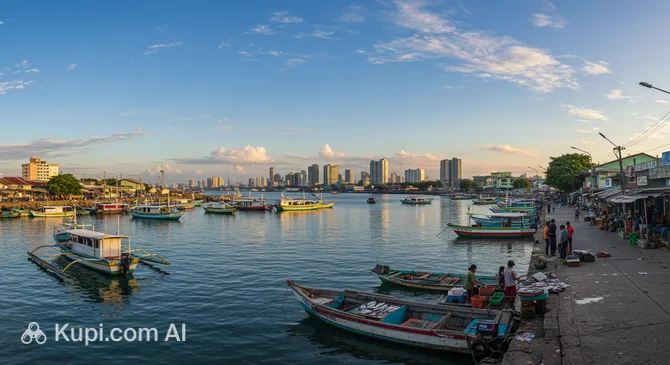
Located on a narrow coastal strip along Manila Bay, Navotas rightfully holds the title of the "Fishing Capital" of the Philippines. It is a dynamic, industrial, and one of the most densely populated cities in the National Capital Region, where life is inextricably linked to the sea. Despite lacking the polish of elite suburbs, the city wins you over with its authentic working-class atmosphere and the energy of commercial fishing.
The city's geographic location is unique: it stretches along the coast, occupying an area of only about 9 square kilometers. With a population of over 247,000, Navotas is one of the most densely populated places in Metro Manila. The flat terrain, interlaced with canals and remnants of mangroves, forms the characteristic landscape of this industrial hub.
Navotas. Illustration.
Source: Kupi.com AI
The city's main pride is its fish port—the third largest in Asia and the largest in Southeast Asia. This is where you can see the scale of the country's fishing fleet and learn about the history of the development of an industry that feeds millions. The city is also famous for the production of the renowned shrimp paste known as bagoong.
Visiting Navotas is an opportunity to see the Philippines unfiltered, get acquainted with the daily lives of true sea laborers, and feel the rhythm of a major industrial port. We invite you to discover this original corner of the capital region, where every day begins with the arrival of vessels full of fresh catch.
Weather Overview
The climate in Navotas is typically tropical, characterized by high temperatures and humidity throughout the year. Two seasons are clearly distinguished here: the dry season, which lasts from December to May, and the wet season—from June to November. The flat terrain and proximity to Manila Bay make the city particularly sensitive to monsoons, so it's worth checking the current city climate before your trip.
Expect average air temperatures around 27–28°C. The hottest months are April and May, when the thermometer can rise to 35°C. During this time, the humidity becomes especially palpable. Winter months, such as January and February, bring relative coolness with comfortable temperatures of 24–26°C and minimal precipitation.
During the wet season, especially in July and August, Navotas faces heavy downpours. Due to dense urbanization and its coastal location, short-term flooding is possible in the city. Tourists are advised to follow weather forecasts during this time and keep in mind that industrial activity combined with high humidity can affect air quality in port areas.
Average monthly temperature
Average monthly precipitation
Interesting Facts
Navotas is a city that knows how to surprise with its scale and history hidden behind industrial facades. Here are a few facts to help you get to know this area better:
The Fishing Heart of Asia: The city's fish port holds a prestigious third place in size across all of Asia, while being the largest in Southeast Asia. This is where the bulk of the Philippines' commercial catch passes through.
Mangrove Etymology: The name "Navotas" dates back to the Tagalog word "ugat", which means "root." This is a reminder of the times when the entire coastal zone was densely covered with mangrove forests and their peculiar roots.
Extreme Density: With an area of only 8.94 km², the population density here reaches an incredible 27,689 people per square kilometer, making Navotas one of the most densely populated areas in the country.
Bagoong Capital: The city is famous throughout the Philippines for its production of fermented shrimp paste (bagoong), which is a vital ingredient in national cuisine.
Young Status: Despite its ancient history as a fishing settlement, Navotas received official status as a highly urbanized city only recently—on June 24, 2007.
How to Get There
Navotas is located on the northwestern edge of Metro Manila, providing it with close links to the capital's main transportation hubs. Although the city doesn't have its own airport, getting here from the country's main gateways is quite easy. The optimal way to plan your route is to study the sections on how to get to the city to choose the most suitable mode of transport.
The nearest international hub is Ninoy Aquino International Airport (MNL) in Manila. A trip from the airport to Navotas by taxi or via the Grab service will take between 1 to 1.5 hours, depending on traffic. For budget travelers, bus routes along the EDSA highway are available; however, you should allow up to 2 hours for the journey during peak hours due to heavy traffic.
There is no rail service within Navotas itself; however, the nearest light rail transit (LRT) and commuter train stations are located in neighboring Caloocan. From there, you can quickly reach the city's port areas by jeepney or tricycle. When planning a trip from central Manila by car, expect a travel time of about 30–60 minutes, avoiding the periods from 7 to 9 AM and 5 to 8 PM.
Station
Passenger traffic
Distance
Monumento station
7
6 km
5th Avenue LRT Station
7
6 km
R. Papa LRT Station
7
7 km
Abad Santos LRT Station
7
7 km
Blumentritt station
7
8 km
It is important to consider that Navotas is primarily an industrial hub, so main arteries such as C-3 and MacArthur Highway are often congested with freight transport. For the most accurate travel time, it is recommended to use navigation apps and opt for taxis, especially if you are traveling with luggage.
Main Attractions
Unlike classic tourist destinations, Navotas attracts guests with its industrial aesthetics and bustling port life. The main point of interest remains the Navotas Fish Port Complex. It is a colossal complex where you can watch the unloading of ships, witness trading auctions, and feel the true scale of the region's fishing industry. This is the best place for those who want to see the "backstage" of food supply for the entire capital.
For lovers of culinary discoveries, a visit to local establishments that have become legendary far beyond the city limits is a must. One such place is Nanay's Pancit Malabon, which serves traditional seafood noodles prepared according to old recipes. This establishment is considered the gold standard of taste for locals and connoisseurs of Philippine cuisine.
Another important spot on the city's gastronomic map is Judy Ann Crispy Pata. This place is famous for its perfectly cooked crispy pork knuckle, which attracts foodies from all surrounding areas. Such establishments allow you to experience the local flavor through taste, which is especially valuable in an industrial city.
Beyond the port areas, walks along the Dagat-Dagatan lagoon, where fragments of mangroves have been preserved, are of interest. Although the tourist infrastructure here is underdeveloped, eco-walk enthusiasts can appreciate the city's efforts to preserve its natural heritage amidst high urbanization. Navotas is a place for those looking for an honest and unvarnished experience of life in the metropolis.
Local Cuisine
The gastronomic scene in Navotas is a true paradise for lovers of the freshest seafood. The city's cuisine is inextricably linked to its main trade, so fish and shrimp are present in almost every dish. Be sure to try ginataang hipon—tender shrimp stewed in coconut milk—and sinigang na isda—a refreshing sour fish soup that is perfect for the tropical climate.
A special place in local culinary culture is occupied by bagoong. This fermented shrimp paste is produced here on an industrial scale and serves as the base for many sauces and seasonings. You will find it in local markets and small eateries, where locals happily add it to rice or vegetables.
To try the legendary noodles with thick seafood sauce, head to Nanay's Pancit Malabon. This establishment is famous for its authentic recipes passed down through generations. Another favorite among local foodies is Judy Ann Crispy Pata, where, in addition to their signature pork knuckle, you can always order the fresh catch of the day, grilled to perfection.
The food culture in Navotas is simple and accessible: the best taste experiences await you in small "carinderias" near the port or at food markets. Street food is represented by various fish balls and fried squid. For drinks, it's best to opt for freshly squeezed tropical juices or local fermented coconut juice—tuba, which perfectly complements spicy and salty dishes.
Travel Tips
A trip to Navotas will give you an unforgettable experience of getting to know the "behind the scenes" of the Philippine capital. To ensure your trip goes smoothly and leaves only pleasant impressions, check out our practical recommendations.
Clothing and Essentials: Choose light cotton clothing, as it is very humid and hot in the city. For walks around the port and markets, closed comfortable shoes that you don't mind getting dirty are mandatory. Don't forget an umbrella or raincoat if your trip coincides with the monsoon season.
Transport: To move between cities in the agglomeration, use Grab—it's reliable and eliminates the need to haggle. Inside Navotas, try riding a tricycle, but confirm the price with the driver in advance.
Finances: Cash is king in the city. Cards are only accepted in a few chain stores, so always carry a sufficient supply of Philippine Pesos in small bills for food and transport.
Health and Safety: Drink exclusively bottled water. In the evening, avoid walking in poorly lit port areas. At markets, keep a close eye on your bags and wallets—pickpockets can be found in crowded places.
Communication: Most locals understand English, but a couple of phrases in Tagalog (for example, "Salamat"—thank you) will elicit a sincere smile. It's better to buy a SIM card in advance at the Manila airport.
Local Etiquette: Filipinos are very friendly. Be polite and patient, especially in queues or traffic jams. When visiting local churches, observe the dress code (shoulders and knees should be covered).
What to Avoid: Don't plan important meetings or trips back-to-back during peak hours—traffic in Navotas can be unpredictable. Also, it's best not to openly display expensive jewelry and gadgets in working-class neighborhoods.
Additional Tip: If you want to see the fish port in full swing, come here late at night or at dawn. This is the time of the most active trading, when life in the port is at its peak.
Navotas is a city for those who are not afraid of the hustle and bustle and are looking for real life. Respect local traditions, be open to new things, and this port land will reveal its hospitable heart to you!
Entertainment & Nightlife
Nightlife in Navotas reflects its character as a working and industrial district. You won't find major nightclubs or fashionable bars typical of Makati here. Instead, the city offers cozy local karaoke bars (KTVs), which are especially popular in residential areas like San Jose and Tanza. This is where locals gather to relax after a hard day's work at the port.
The main center of evening activity is the night markets and street food courts. The atmosphere in such places is very casual and noisy. For more sophisticated entertainment, cinemas, or large concert venues, residents and guests usually head to neighboring Manila or Malabon, which are a 15–30 minute drive away.
If you decide to spend the evening in the city, it's worth checking out Judy Ann Crispy Pata, where you can enjoy a hearty dinner with friends. In Navotas, simplicity and sincerity of communication are valued above all else. When moving around after dark, it is recommended to use official taxis or the Grab app to ensure safety and comfort.
Parks & Museums
In conditions of extremely high building density, Navotas cannot boast extensive park zones, but it does have its own cozy corners for relaxation. Locals often spend time in Bangkulasi Green Park—a small green space that serves as an important spot for walks in this industrial district. Also popular are the landscaped embankments along Manila Bay, where you can enjoy the sea breeze at sunset.
The surviving mangrove areas near the Dagat-Dagatan lagoon are of particular importance to the city's ecology. These are unique natural zones that the city is striving to preserve. For tourists, such places may be interesting as an example of wildlife survival in the heart of a metropolis, although dedicated tourist infrastructure is still limited here.
As for classic museums, they are virtually absent in Navotas itself—the role of the main exhibit here is played by the massive fish port and market. To get acquainted with the country's art and grand history, guests usually visit the National Museums in neighboring Manila. Nevertheless, the authentic spirit of the city is perfectly conveyed by its old gastronomic establishments, such as Nanay's Pancit Malabon, which are themselves guardians of the region's culinary traditions.
Getting Around
Public transport in Navotas is represented by traditional Philippine modes of travel, which are ideal for navigating the city's narrow and often congested streets. The core of the system is jeepneys—brightly decorated minibuses that ply fixed routes and connect Navotas with Manila and Caloocan. This is the most affordable way to get around, and the fare is usually passed to the driver through other passengers.
For trips within neighborhoods and short distances (for example, from a jeepney stop to the port), tricycles are indispensable. A ride on this covered motorcycle costs an average of 5–10 pesos. Keep in mind that during peak hours—from 7 to 9 AM and 5 to 8 PM—serious traffic jams occur, and public transport can be overcrowded.
There are no metro or LRT lines in Navotas; the nearest railway station is in neighboring Caloocan. For tourists, the most comfortable and safe option for moving around is calling a taxi via the Grab app. This is especially relevant during the rainy season (from June to November), when the city's low-lying terrain can lead to flooding that complicates the movement of regular transport.
Walking is convenient in the port area and central markets, but be mindful of the chaotic traffic. If you plan to move around the city actively, we recommend exchanging large bills for small coins and banknotes in advance, as jeepney and tricycle drivers often don't have change.
Accommodation
The hotel infrastructure in Navotas is primarily geared toward those visiting for business related to the fishing industry or those looking for the most budget-friendly accommodation. There are virtually no luxury hotels in the city, but there is a selection of guesthouses, small pensions, and apartments for long-term rent. A typical accommodation option is the Navotas Grand Hotel, offering basic amenities at affordable prices (starting from 1,000–2,000 Philippine Pesos per night).
When searching for housing, look into the San Jose and Tanza areas, which are considered the most convenient in terms of transport accessibility. Recently, Airbnb has become popular in Navotas, where you can find cozy rooms or apartments offered by locals. This is a great way to get a closer look at the daily lives of the residents.
Since there aren't many lodging options in the city itself, experienced travelers often prefer to book accommodation in the neighboring districts of Manila or Caloocan, where the choice of mid-range hotels is significantly wider. If you decide to stay specifically in Navotas, we recommend booking in advance, especially during local festivals or major trade fairs at the port.
Nearby Cities
Thanks to its location in the heart of the capital region, Navotas is a convenient base for exploring neighboring cities of Metro Manila. An extensive network of jeepney and bus routes makes it easy to go on a short trip and return the same day.
Just a few kilometers away is Malabon—a city that shares Navotas' love for seafood. It's worth visiting for heritage tricycle tours and ancient churches. If you crave cultural events and large-scale shopping, head south to Manila. The journey to Rizal Park or the historic Intramuros district will take about 30–40 minutes, provided you avoid peak hours.
Also of interest for a day trip are Karuhatan and the neighboring city of Caloocan, which hosts numerous markets and shopping centers. For those who prefer quiet residential areas, Tugatog or Balangas are suitable, where you can see the daily life of Philippine suburbs.
Exploring the surroundings of Navotas will help you better understand the multifaceted nature of the Philippine capital. Each neighboring city contributes its own flavor to the overall palette of impressions, turning your trip into a rich adventure through the National Capital Region.
Shopping & Souvenirs
Shopping in Navotas is primarily about visiting its famous markets. If you want to bring home something truly unique, head to the central fish market. Here you can buy not only the freshest catch but also various types of dried and smoked fish, which travel well. The main local specialty is definitely bagoong (shrimp paste)—it is sold here both in simple stalls and in gift packaging.
The city's shopping centers are represented by small local malls, such as the complexes in the San Jose area. Here you can find basic necessities, local clothing brands, and electronics. The atmosphere in them is more homey and less hectic than in the giant malls of central Manila.
For authentic souvenirs, look into the small shops located near the port area. They sell handmade items related to the sea and specific fishing gear that can make for an unusual gift. For a full dinner after shopping, you can stop by Judy Ann Crispy Pata, located near the main shopping routes.
Most shops and markets in Navotas operate from early morning (fish auctions begin before dawn) until 7–8 PM. Cash in Philippine Pesos is most commonly accepted, so you should always have a supply of small bills. Cards are accepted in shopping centers, but in street stalls and markets, cash remains the only payment method.