Support

Auschwitz II-Birkenau Memorial and Museum

Nearby interesting places

About

The Auschwitz II-Birkenau Memorial and Museum is a world-renowned memorial complex located near the town of Oświęcim in Poland. It is situated on the site of the former Nazi concentration camp and death camp, Auschwitz-Birkenau. This site serves as a solemn reminder of the tragic events in history and is one of the most significant monuments dedicated to the victims of World War II.
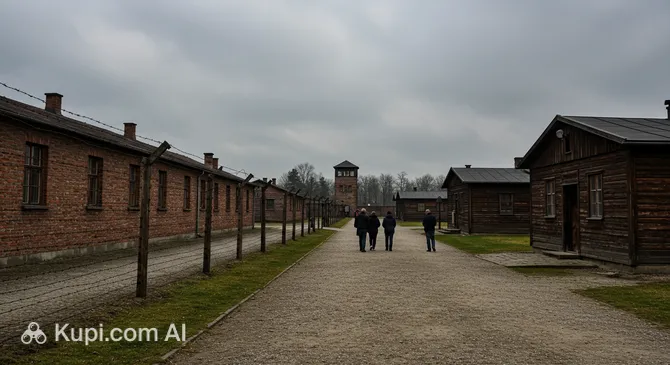
Auschwitz II-Birkenau Memorial and Museum. Illustration.
Source: Kupi.com AI

Traveler photos:

The complex occupies a vast territory where authentic camp buildings have been preserved for posterity. Visitors can see surviving barracks, watchtowers, barbed-wire fences, and the ruins of gas chambers and crematoria. This authentic setting allows for a deeper realization of the scale of the tragedy that occurred here.

Today, the Auschwitz II-Birkenau Memorial and Museum serves an important educational and memorial function. Every year, millions of people from all over the world visit it to honor the memory of those who died, pay their respects, and learn more about the dark chapters of human history. Visiting this site is a deep and moving experience that leaves an indelible impression and serves as a powerful reminder of the devastating consequences of hatred.

Contacts

To plan your visit, confirm current opening hours, or book a guided tour, it is recommended to use the official contact details of the memorial complex. All necessary information for visitors is available on the website and by phone.

How to contactContact
AddressOfiar Faszyzmu 12, 32-600 Brzezinka, Poland
Phone number+48 33 844 80 99
Websitewww.auschwitz.org

What to Do

A visit to the memorial provides the opportunity to walk through its extensive grounds and personally see the preserved historical objects. Visitors can enter the former brick and wooden barracks where prisoners were held, see the watchtowers, and the infamous gate with the inscription “Arbeit macht frei” at the Auschwitz I camp. The route passes by the ruins of the gas chambers and crematoria, as well as memorial plaques installed in memory of the victims in various languages. The visit can be made either independently or as part of an organized group with a guide, which allows for a deeper understanding of the historical context.

Inside the buildings of the former camp are museum exhibitions that leave an indelible impression. Thousands of personal items confiscated from prisoners upon arrival are on display here: suitcases with names, shoes, glasses, and other items that create a powerful emotional response. Individual halls are dedicated to archival photographs and documents that silently tell the story of the lives and tragic fates of the camp's prisoners. These exhibitions serve as a powerful testament to the scale of the tragedy.

Special attention at the memorial is given to the educational mission aimed at preserving memory for future generations. Specialized workshops, lectures, and temporary exhibitions are regularly organized to help foster a culture of tolerance and rejection of hatred. A visit to “Auschwitz-Birkenau” is not just a sightseeing trip, but a profound educational and emotional experience that forces reflection on the lessons of history.

Getting There

The most convenient way to reach the Auschwitz II-Birkenau Memorial and Museum is from Krakow—the region's largest city, located about 70 kilometers from Oświęcim. Trains and buses depart regularly from Krakow to the town of Oświęcim, making the trip accessible for independent travelers. This is the most popular and convenient route for tourists planning to visit the memorial.

Upon arriving in Oświęcim by train, the museum can be reached in several ways. You can walk from the railway station to the memorial complex—the distance is about 2 kilometers. This walk allows you to get your bearings. Alternatively, you can take a local taxi or a city bus, which will quickly take you to the museum's main entrance.

For those who prefer a more organized approach, there are numerous guided tours available from Krakow and other major cities in Poland. This option is especially convenient as it usually includes not only the round-trip transfer to the memorial but also entrance tickets and the services of a professional guide. This eliminates the need to plan logistics and purchase tickets independently.

If you are planning an independent visit, it is highly recommended to book entrance tickets in advance on the museum's official website. This is particularly important during the peak tourist season, as visitor numbers increase significantly and tickets for preferred times can sell out. Pre-booking guarantees your entry on the planned day.

Nearest city: Oswiecim

History & Facts

The history of the Auschwitz II-Birkenau Memorial and Museum is inextricably linked to the darkest pages of World War II. Construction of this camp began in October 1941 near the town of Oświęcim. It became the largest of the three main camps in the complex and was designed with terrifying methodical precision. The territory was divided into many sectors, enclosed by electrified barbed-wire fences. At various times, there were separate zones for men, women, and entire families deported from across Europe.

Auschwitz-Birkenau quickly evolved into the largest Nazi death camp, becoming a site of systematic mass murder. More than a million people perished here, including approximately 1,100,000 Jews, as well as Poles, Roma, and people of other nationalities. The camp was equipped with gas chambers disguised as showers and crematoria to hide the scale of the crimes. Living conditions were inhumane, and the lives of prisoners became a daily struggle for survival.

After the liberation of the camp in January 1945, the decision was made to preserve its territory as a testament to the tragedy that occurred. In 1947, at the initiative of former prisoners, a state museum was founded on this site, which is today part of the UNESCO World Heritage list. The memorial serves not only as a place of mourning but also as a powerful warning to future generations about the consequences of hatred and intolerance. Its preservation allows millions of visitors from all over the world to see historical artifacts firsthand and honor the memory of the victims.

Time Needed

For a complete and meaningful visit to the Auschwitz II-Birkenau Memorial and Museum, it is recommended to allocate at least 3–4 hours. This time will allow you to explore the main exhibitions without rushing, absorb the atmosphere of this historically significant site, and honor the memory of the victims. Most standard guided tours last about 3.5 hours, which aligns with this recommendation. This time buffer is necessary to cover both parts of the memorial complex.

It is important to note that the memorial consists of two main parts located several kilometers apart: Auschwitz I (the former main camp) and Auschwitz II-Birkenau (the death camp). You should plan for at least 90 minutes to explore each of these areas. Travel time between the sites is added to this. If you are planning an independent visit and want to see the exhibitions in more detail or simply spend more time in reflection, your visit may take longer than a standard tour.

Working Hours

The Auschwitz II-Birkenau Memorial and Museum is open to visitors year-round, although opening hours depend on the season. The complex is open daily, except for January 1, December 25, and Easter Sunday. Entry to the territory always begins at 7:30 AM, while the closing time varies: in December until 2:00 PM, in January and November until 3:00 PM, in February until 4:00 PM, in March and October until 5:00 PM, in April, May, and September until 6:00 PM, and during the longest summer days (June, July, August) until 7:00 PM.

Entry to the memorial site is free, but to visit, it is mandatory to reserve a personalized entry ticket in advance on the official website. The number of spots is limited, so it is highly recommended to make a reservation several weeks before your planned visit date, especially during the peak tourist season. For the most accurate and up-to-date information on opening hours, possible temporary closures, and visiting rules, always check the museum's official website before your trip.

7:30 – 18:00

Nearby

Visiting the Auschwitz II-Birkenau Memorial and Museum is a deep and emotionally intense experience. To complement your impressions and better understand the context of this place, it is worth spending some time exploring the town of Oświęcim itself and its surroundings. A walk through the town after visiting the memorial can provide an opportunity for quiet reflection on what you have seen and for getting to know the modern life of this historic region of Poland.

Near the memorial complex, there are other sites that may be of interest to visitors. These range from other historical sites related to the events of World War II to modern urban spaces where you can have a snack or rest. Below is a list of some attractions located in the immediate vicinity.

NameDistance
Auschwitz II-Birkenau Main Gate0.6 km
Auschwitz-Birkenau – Judenrampe1.2 km
Kebab Burger Allis2.3 km
Auschwitz-Birkenau Memorial and Museum2.4 km
Niwa Shopping Gallery2.4 km
Oświęcim Pet and Fishing Store Aquarium2.6 km
Bulwary 1 Restaurant3.2 km

Have you reached the end of the page?

So the route has been studied inside and out