Support

Piłsudski Mound

About

The Piłsudski Mound is the largest artificial hill in Krakow, rising majestically atop Sowiniec Hill in the scenic Wolski Forest on the city's western outskirts. This impressive monument of national importance is dedicated to Józef Piłsudski, a prominent Polish statesman and a symbol of Poland's struggle for independence. The creation of the mound was a significant event, reflecting the nation's desire to immortalize the memory of its heroes.
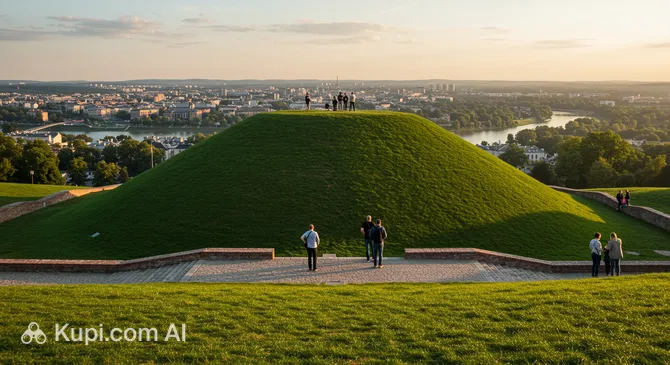
Piłsudski Mound. Illustration.
Source: Kupi.com AI

Traveler photos:

This monumental mound is also known as the Independence Mound or the Freedom Mound. It carries a deep symbolic meaning, embodying the resilience and will of the Polish people. The earth for its construction was brought from all major battlefields where Poles fought for their freedom, making it a true national memorial.

Due to its significant height and strategic location, the Piłsudski Mound is one of the most prominent points in Krakow. It also serves as a magnificent observation deck, offering breathtaking panoramic views of the city, its historical quarters, and the picturesque surroundings. Climbing to the top of the mound is an opportunity not only to touch an important page of history but also to enjoy the beauty of the surrounding landscapes.

Contacts

Since the Piłsudski Mound is an open-air historical monument, specific contact details are usually not provided. To visit this landmark, located in the Wolski Forest (Las Wolski) on the western outskirts of Krakow, you can follow signs for Wolski Forest or use public transport heading in that direction. For the most up-to-date information on access hours or potential events, we recommend contacting Krakow tourist information centers.

How to contactContact
AddressKraków, Poland

What to Do

Visitors to the Piłsudski Mound can enjoy a pleasant walk along the scenic trails of the Wolski Forest, which lead directly to the top of this historical hill. Once at the top, you will be rewarded with a truly impressive panoramic view of Krakow and the entire Lesser Poland Voivodeship. Especially breathtaking views open up at sunset or in clear weather, allowing for unforgettable photos and simply enjoying the moment.

The Piłsudski Mound consistently attracts nature lovers, photographers seeking to capture the beauty of the surroundings, and anyone interested in the rich history of Poland. This place is more than just a viewpoint; it often hosts commemorative events and fascinating tours. Additionally, the mound serves as a venue for educational programs, introducing schoolchildren and students to important pages of the country's past.

Besides the mound itself, the surroundings offer other interesting leisure opportunities. The nearby Krakow Zoo is an excellent addition to your walk, especially if you are traveling with children. For those who prefer active recreation, numerous forest routes are laid out in the Wolski Forest, perfect for hiking or cycling.

Getting There

Getting to the Piłsudski Mound, located in the western part of Krakow in the scenic Wolski Forest (Las Wolski), is quite easy. The most convenient way is to use the city's public transport. Several bus routes go to the stop located right near the entrance to the forest. From there, the walking portion of your journey to this historical monument begins.

From the bus stop, you'll have a pleasant walk along forest trails. The ascent to the Piłsudski Mound usually takes about 20–30 minutes and is an adventure in itself, allowing you to enjoy the fresh air and the beauty of the Wolski Forest. It is an easy route suitable for people with various fitness levels.

If you prefer to drive, parking spaces are available near the entrance to the Wolski Forest or at the Krakow Zoo. For those who enjoy active recreation and cycling, there are specially equipped bike paths leading to the mound through beautiful woodlands. This allows you to choose the most comfortable way to visit this iconic Krakow landmark.

Nearest city: Krakow

History & Facts

The idea for the Piłsudski Mound was born in 1934 by the Association of Polish Legionnaires. Their main goal was to erect a grand monument symbolizing the restoration of Poland's independence. This monument is especially significant because it was built using soil specifically brought from the battlefields where Polish soldiers fought for their homeland's freedom. This act is deeply symbolic, reflecting the nation's unity and the sacrifices made for independence.

Construction was completed, and the mound was officially opened on July 9, 1937. From that moment on, it became more than just a hill—it became an essential symbol of Polish national identity and pride. Its historical and cultural value was recognized in 1981 when the Piłsudski Mound was added to the register of cultural monuments of the Lesser Poland Voivodeship under number A-607, officially securing its heritage status.

The Piłsudski Mound holds a special place among Krakow's attractions as one of the city's four famous artificial mounds. Along with the older Krakus and Wanda mounds, and the later Kościuszko Mound, it forms a unique ensemble of man-made hills. Notably, the Piłsudski Mound is the largest of them, further emphasizing its monumentality and the significance it holds in Polish history and culture.

Time Needed

To fully enjoy a visit to the Piłsudski Mound and a walk through the surrounding Wolski Forest, it is recommended to set aside approximately 1.5 to 3 hours. This time will allow you to leisurely climb to the top of the mound, take in the views from the summit, and stroll along the scenic forest paths.

The duration of your visit will depend on several factors. If you only plan a quick ascent to the mound itself and a view of the Krakow panorama, an hour to an hour and a half may be enough. However, if you want to explore the various routes of the Wolski Forest leading to the mound, or stay for photography and a more detailed study of the surroundings, it's worth allocating more time, up to three hours.

Also, consider the travel time to and from the Wolski Forest. The climb up the mound itself is not very difficult, but walking through the forest can take additional time, especially if you decide to combine your visit with a trip to the nearby Krakow Zoo. Overall, plan your visit to enjoy this place without rushing.

Working Hours

Great news for everyone planning to visit the Piłsudski Mound in Krakow! According to available information, this iconic landmark, along with the adjacent territory of the Wolski Forest, is open to visitors 24 hours a day, year-round. You can enjoy a walk and the views at any time convenient for you, without any restrictions on operating hours.

Furthermore, entry to the Piłsudski Mound is free of charge. This means you won't need to book tickets or sign up for a visit in advance. Simply come and enjoy this historical site and its surrounding nature whenever you wish.

Open 24 hours

Nearby

Visiting the Piłsudski Mound is undoubtedly a memorable event, but Krakow and its surroundings hide many more interesting places that can enrich your journey. Exploring nearby attractions will allow you to dive deeper into the region's atmosphere, see it from different angles, and form a more complete impression.

Many iconic sites are located very close by, and visiting them won't take much time but will add vibrant colors to your trip. From picturesque natural spots to cultural and historical monuments, the surroundings of the Piłsudski Mound offer various options for curious travelers.

NameDistance
Kościuszko Mound3.3 km
Cholerzyn Nudist Beach4.1 km
National Museum in Krakow5.5 km
Benedictine Abbey in Tyniec5.6 km
Cosmic Games Pub5.9 km
Wawel Royal Castle6.3 km
Sukiennice (Cloth Hall) – National Museum Branch6.4 km

Have you reached the end of the page?

So the route has been studied inside and out