Support

Wawel Royal Castle

About

Wawel Royal Castle is one of the most significant historical and cultural symbols of Poland, majestically rising on the hill of the same name in the heart of Krakow. Located on the left bank of the Vistula River, this massive architectural complex served as the residence of Polish kings for centuries and was the center of the country's political and spiritual life. Today, Wawel is more than just a museum; it is the true heart of Polish culture, listed as a UNESCO World Heritage site.
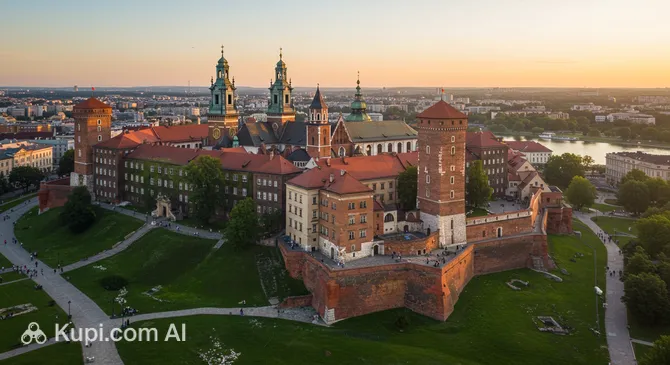
Wawel Royal Castle. Illustration.
Source: Kupi.com AI

Traveler photos:

The castle complex is a unique blend of architectural styles, from Gothic and Renaissance to Baroque, reflecting its rich history of reconstruction and restoration. Within its grounds, you will find not only the Royal Castle itself but also the Wawel Cathedral (Cathedral of St. Stanislaus and St. Wenceslaus)—the site of coronations and the burial place of many Polish monarchs and prominent national figures. Visitors can explore luxurious royal apartments, the treasury, the armoury, and numerous courtyards, every corner of which holds its own secrets and legends.

Wawel is more than just a historical monument; it is a place of immense importance to the national identity of Poles. The hill offers picturesque views of the city and the river, and at its foot, you can find the famous cave where, according to legend, the Wawel Dragon lived. Visiting this castle allows you to not only touch centuries of history but also feel the spirit of the royal era that still lives within its walls.

Contacts

To plan your visit to Wawel Royal Castle in the best possible way, it is highly recommended to consult official sources for the latest information. Current opening hours, ticket prices, and details about temporary exhibitions are most often published on the castle's official website.

In addition, useful data can be found on Krakow's tourism portals, which provide detailed information for visitors. This approach ensures you have the most accurate and reliable information for organizing your trip.

How to contactContact
AddressWawel 5, 31-001 Kraków, Poland
Phone number+48 12 422 51 55
Websitewawel.krakow.pl

What to Do

Visiting Wawel Royal Castle is a true immersion into the history and culture of Poland. The main activity on its grounds is exploring the numerous museum exhibitions. For tourists, the luxurious Royal Apartments are open, where you can see historical interiors, antique furniture, and unique works of art. The collections of weapons and armor in the Armoury are of particular interest, as are the famous tapestries depicting historical events. Exhibitions dedicated to art and archaeological finds provide a deeper understanding of the centuries-old heritage of the Polish monarchy.

An essential part of the complex is the Wawel Cathedral (Cathedral of St. Stanislaus and St. Wenceslaus), which served as the coronation site and burial place for Polish monarchs and national heroes. Inside the cathedral, you can see the tombs of kings and prominent figures such as Adam Mickiewicz. Do not miss the chance to climb one of the towers to admire the legendary "Sigismund" bell and enjoy panoramic views of Krakow and the Vistula River.

In addition to exploring the interior halls, visitors can freely stroll through the castle's picturesque courtyards. Temporary exhibitions and cultural events are also regularly held on the complex grounds, making every visit unique. For a deeper dive into history, guided tours are available, as well as audio guides in various languages to help ensure you don't miss any important details of this majestic site.

Getting There

Wawel Royal Castle is very conveniently located in the historical center of Krakow, making it easily accessible for tourists. It is within walking distance of the Main Market Square (Rynek Główny) and most other attractions in the Old Town. Many travelers choose to walk, as the stroll to the castle from the center or along the Vistula riverbank is an enjoyable part of the tour, offering picturesque views.

For those who prefer public transport, getting to Wawel is straightforward. There are tram and bus stops near the castle complex connecting it to various parts of the city. The nearest stops are "Wawel" and "Stradom," from which the castle is just a few minutes' walk away. This is one of the most convenient and fastest ways to reach the site, especially if you are not staying within walking distance.

The castle can also be easily reached by taxi or by using the city sightseeing buses, which often include Wawel in their routes. If you are traveling by car, keep in mind that finding a free spot on nearby streets can be difficult, and parking in the center is paid. There are several underground parking garages nearby, but during the peak tourist season, it is recommended to use public transport to avoid parking difficulties.

Nearest city: Krakow

History & Facts

The history of Wawel Royal Castle dates back to ancient times. Archaeological excavations show that the first fortified settlements of the Vistulans tribe existed on this hill as early as the 9th–10th centuries. The first stone fortifications were built at the end of the 13th century by order of King Wenceslaus II, and in the 14th century, during the reign of Casimir III the Great, the castle was significantly expanded and rebuilt in the Gothic style. Around 1340, its walls were connected to the city fortifications, turning Wawel into a powerful citadel protecting Krakow.

The period from the mid-11th to the beginning of the 17th century was the "Golden Age" for Wawel, when it served as the main residence of Polish monarchs and the center of Poland's political and cultural life. This was the site of coronations, receptions for ambassadors, state council meetings, and grand balls. After a fire in 1499, the castle was restored and rebuilt by Italian architects, who gave it a luxurious Renaissance appearance. This period left behind a magnificent inner courtyard with arcaded galleries, which still delights visitors today.

Throughout its centuries-long history, the castle suffered from fires and damage several times but was reborn each time. A major fire in 1595 was one of the reasons why King Sigismund III Vasa moved the capital to Warsaw in the early 17th century, after which Wawel's importance as a political center began to fade. Later, the castle was used by the Austrian military as barracks. However, in 1905, thanks to a national fundraising campaign, the Polish people bought back the castle, and large-scale restoration work began. Today, Wawel is not just a museum but a vital symbol of national heritage and the history of the Polish people.

Time Needed

When planning a visit to Wawel Royal Castle, it's worth allocating enough time to fully enjoy this grand complex. For a complete tour, it is recommended to set aside 3 to 5 hours. This should be enough time to visit several main exhibitions, such as the Royal Apartments and the Cathedral, as well as take a leisurely stroll through the castle courtyards to soak in its historical atmosphere.

If you want to delve deeper into the history of Poland and not miss a single detail, you should plan for half a day or even more. Visiting all the museum exhibitions, including the Crown Treasury, the Armoury, and the "Lost Wawel" exhibition, as well as climbing the Sigismund Bell Tower and descending into the legendary Dragon's Den, will require significant time. Each of the main exhibitions takes about an hour, so to fully explore every corner of the castle in Krakow, it's best not to rush.

Working Hours

The Wawel Royal Castle complex is open to visitors year-round; however, its operating hours can vary significantly. Typically, visiting hours depend on the season—hours are extended in the summer and reduced in the winter. It is important to note that each exhibition, whether it be the Royal Apartments, the Treasury, or the Cathedral, may have its own schedule and closing days. The opening hours of the castle and museums depend on the time of year and the day of the week, so it is highly recommended to check the current information on the castle's official website before your visit to avoid any unpleasant surprises.

Due to Wawel's high popularity and the limited number of visitors allowed in some exhibitions per day, it is recommended to purchase tickets in advance, especially if your trip coincides with the peak tourist season (summer, holidays). Advance booking, which can be done online through the official website, will not only save you time by avoiding long queues at the ticket offices but also guarantee you access to the most popular exhibitions of this majestic historical monument.

DayOpening hours
Monday10:00 – 16:00
Tuesday9:00 – 17:00
Wednesday9:00 – 17:00
Thursday9:00 – 17:00
Friday9:00 – 17:00
Saturday9:00 – 17:00
Sunday9:00 – 17:00

Nearby

A visit to Wawel Royal Castle is just the beginning of your journey into Krakow's rich history and culture. Thanks to its central location, you can easily continue your walk and discover other iconic sites just steps away from the castle walls. Exploring the surrounding area will allow you to immerse yourself deeper in the city's atmosphere and see the contrast between Wawel's royal grandeur and the lively daily life of the Old Town.

Near the castle, you'll find not only important historical monuments but also cozy cafes, restaurants, and picturesque spots that will make your trip even more fulfilling. Below is a list of interesting places located in the immediate vicinity of Wawel.

NameDistance
House of Attractions0.7 km
Sukiennice (Cloth Hall) – National Museum Branch0.8 km
Forum Przestrzenie1 km
Old Town of Kraków1.1 km
Wilczy Dół Tavern1.1 km
National Museum in Krakow1.1 km
Czartoryski Museum1.2 km

Have you reached the end of the page?

So the route has been studied inside and out