Support

House of Terror Museum

About

The House of Terror Museum (Terror Háza) is one of Budapest’s most significant and emotionally powerful museums, located on the famous Andrássy Avenue. It is dedicated to the tragic periods of 20th-century history in Hungary and serves as a memorial to the victims of Nazi and Communist totalitarian regimes. The museum opened in 2002 and has since become an essential site for understanding the country's complex past.
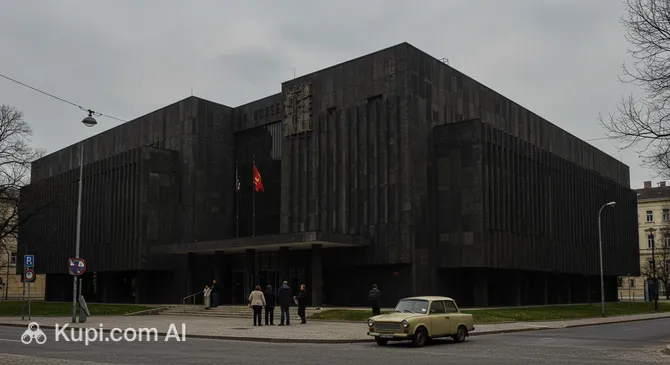
House of Terror Museum. Illustration.
Source: Kupi.com AI

Traveler photos:

What makes this museum particularly poignant is its location. It is housed in a building that once served as the headquarters for the Hungarian Nazi party, the Arrow Cross, and later for the State Security Authority (ÁVH) of the Communist era. Within these walls, thousands of opponents of the regime were held, interrogated, and tortured, giving the exhibition a particular sense of authenticity and power.

The museum's exhibition uses multimedia installations, archival footage, and personal items to tell the stories of people who suffered under totalitarian rule. Visitors can see reconstructed prison cells, torture devices, and the basements where interrogations took place. A visit to the House of Terror is not just a history lesson, but a profound experience that prompts reflection on the value of freedom and human rights, serving as a warning for future generations.

Contacts

Finding exact and verified contact details for the House of Terror Museum, such as a direct phone number or email for general inquiries, can be challenging. Information on various travel portals sometimes differs. However, the museum's official website provides the most up-to-date information for visitors.

To plan your visit, confirm opening hours, ticket prices, and rules, it is recommended to consult official sources or trusted travel services. The most reliable way to get information is to visit the official museum website at terrorhaza.hu. You can also visit tourist information centers directly in Budapest, where they will provide current details and help you plan your visit.

How to contactContact
AddressBudapest, Andrássy út 60, 1062 Hungary
Phone number+36 1 374 2600
Websitewww.terrorhaza.hu

What to Do

Visiting the House of Terror is an immersion into the complex and tragic history of Hungary in the 20th century. The exhibition leads you through rooms dedicated to two totalitarian regimes—fascist and communist. Inside, you will see many artifacts, personal belongings, documents, and photographs that tell the stories of those who suffered during those times. Special attention is given to the propaganda of that period, allowing for a deeper understanding of how the totalitarian machine operated. The centerpiece of the atrium is a Soviet tank, which immediately sets a somber but meaningful atmosphere.

The museum actively uses multimedia technology to create an immersive effect. Visitors can watch documentaries and archival footage broadcast on numerous screens, creating a heavy atmosphere of fear. The tour is accompanied by specially composed tragic music that enhances the emotional impact. One of the most powerful impressions for many is the slow elevator ride that descends to the basement while a recording describes the executions. For a full understanding of the context, it is highly recommended to use an audio guide, as many materials are presented in Hungarian.

A key part of the museum is the basement labyrinth, where prison cells, solitary confinement, and interrogation rooms have been reconstructed or partially preserved. This site holds significant historical importance, as it was a real prison where thousands were tortured and killed. Visitors can see torture instruments and the harsh conditions of the prisoners firsthand, leaving an indelible and heavy impression and serving as a reminder of the value of human life and freedom.

Getting There

The House of Terror Museum is conveniently located on the famous Andrássy Avenue—one of the main and most elegant streets in Budapest, the capital of Hungary. Its central location makes it easily accessible for tourists. You can combine a visit to the museum with a stroll along this grand avenue, which is a UNESCO World Heritage site.

The easiest and fastest way to reach the museum is by public transport. The oldest metro line in continental Europe, the M1 (yellow line), runs beneath Andrássy Avenue. The closest station to the museum is Kodály körönd. Many visitors also use the Oktogon station, located at a major intersection and transport hub. From both stations, the House of Terror is just a few minutes' walk.

In addition to the metro, numerous buses and trams run along Andrássy Avenue and its intersecting streets, making the museum easy to reach from any part of the city. If you prefer maximum comfort or are traveling in a small group, a taxi ride from the city center will be quick and reasonably priced.

Nearest city: Budapest

History & Facts

The building that houses the House of Terror Museum today has a long and complex history. It was built in 1880 according to the design of architect Adolf Feszty and originally served as an ordinary residential building. However, its peaceful history ended in the 20th century when the building became a site for tragic events that left a deep mark on the history of Hungary. From the spring of 1945 until the autumn of 1956, it served as a special prison for the State Security Authority, where opponents of the established regime were held and subjected to brutal torture.

One of the most remarkable and dramatic episodes in the building's history occurred during the Hungarian Revolution of 1956. During the uprising, rebels seized the prison, liberated the surviving prisoners, and did something extraordinary—they organized tours for everyone through the torture and execution basements. This was done to show the residents of Budapest and the whole world the truth about what was happening within these walls. After the uprising was suppressed, the building briefly came under KGB control before being handed over to the Hungarian Communist Youth League, after which it housed various state institutions.

In December 2000, it was decided to transform this somber site into a memorial. After a large-scale renovation that preserved the atmosphere of the site while creating a modern exhibition, the House of Terror Museum opened its doors to visitors in February 2002. Today, it serves not just as a museum, but as a powerful symbol of remembrance for the victims of totalitarian dictatorships and a warning to future generations about the dangers of authoritarianism and the value of freedom and human rights.

Time Needed

When planning a visit to the House of Terror Museum in Budapest, it is worth setting aside 1.5 to 3 hours for the tour. Most visitors agree that this is enough time to explore the main exhibition without rushing. For full immersion, 2–3 hours is recommended, allowing you not only to see all the rooms but also to view multimedia materials and use the audio guide, which is highly recommended for understanding the context of Hungary’s history.

The duration of your visit largely depends on your interest in the details. A quick tour can be done in about 90 minutes, but this won't allow you to fully feel the atmosphere and depth of the exhibition. If you are passionate about 20th-century history, studying all the documents, watching video interviews, and visiting the basement prison cells may take more time. Given the emotional intensity of the museum, rushing is inappropriate—it’s important to leave time to reflect on what you’ve seen.

There are also various guided tour options, which usually last between 1.5 and 3 hours. These tours offer a deeper dive into the tragic events associated with this building and help to better understand the complex periods of the country's history. In any case, a visit to the House of Terror is not just an excursion, but a serious and memorable experience that deserves sufficient time.

Working Hours

When planning a visit to the House of Terror Museum, it is important to take its operating schedule into account. The museum is open to visitors from Tuesday to Sunday, from 10:00 AM to 6:00 PM. Monday is the official day off. The ticket office closes at 5:30 PM, so it is recommended to arrive with some time to spare to ensure entry.

The museum is open year-round; however, it is worth checking the schedule on public holidays when hours may change. Advance online ticket purchases are not available; they can only be bought at the museum's ticket office. Although advance booking is not required for individual tourists, queues are possible during the peak tourist season. For groups, advance registration is generally necessary. To get the most up-to-date information, it is always best to check the museum's official website before visiting.

DayOpening hours
MondayClosed
Tuesday10:00 – 18:00
Wednesday10:00 – 18:00
Thursday10:00 – 18:00
Friday10:00 – 18:00
Saturday10:00 – 18:00
Sunday10:00 – 18:00

Nearby

A visit to the House of Terror Museum leaves a deep and powerful impression, so a stroll through the neighborhood afterward can be an excellent way to process what you’ve seen and transition back to the brighter atmosphere of Budapest. The area around the museum, located on the elegant Andrássy Avenue, offers a wealth of cultural, entertainment, and dining options to complement your day and help you get to know the capital of Hungary better.

Exploring nearby attractions allows you to see the city's contrasts—from grand architecture to lively bars. Within walking distance, you’ll find iconic historical sites as well as cozy spots to relax, making this part of the city ideal for further discovery.

NameDistance
Budapest Operetta Theatre0.5 km
Capital Shooting Range0.6 km
Fat Mama1 km
Cookie Beacon Brunch1 km
Szimpla Kert1.1 km
Kossuth Lajos Square1.3 km
Budapest Eye1.4 km

Have you reached the end of the page?

So the route has been studied inside and out