Support

Belvedere Palace

About

Belvedere Palace is a magnificent palace complex and one of the brightest pearls in the architectural crown of Vienna. Located in the heart of Austria, this Baroque masterpiece is not just a historical building, but an entire world of art and beauty. The complex consists of two majestic palaces—Upper and Lower Belvedere—connected by one of the most significant Baroque gardens in Europe.
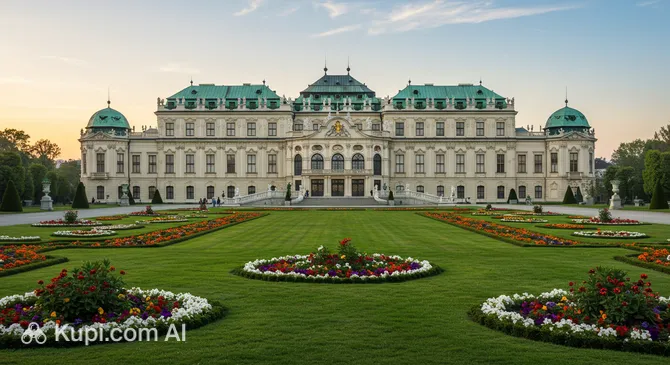
Belvedere Palace. Illustration.
Source: Kupi.com AI

Traveler photos:

Originally, Belvedere was built in the early 18th century as a summer residence for the distinguished military leader Prince Eugene of Savoy. Architect Johann Lukas von Hildebrandt created an ensemble that still amazes today with its grandeur and harmony. The Upper Palace, with its luxurious halls, was intended for ceremonial receptions, while the Lower Palace served as the Prince's residential quarters.

Today, Belvedere is not only an architectural monument but also one of the most visited museums in Austria. It houses the Austrian Gallery, which holds the world's largest collection of works by Gustav Klimt, including his famous masterpiece "The Kiss." In addition to Klimt, works by Egon Schiele, Oskar Kokoschka, and many other masters are represented here, making Belvedere a must-see on the itinerary of every art lover traveling to Vienna.

Contacts

To plan your visit to the Belvedere palace complex, we recommend checking the latest information on the official website in advance. Below are the main contact details to help you organize your trip.

How to contactContact
AddressPrinz-Eugen-Straße 27, 1030 Wien, Austria
Phone number+43 1 795570
Websitewww.belvedere.at

What to Do

A visit to Belvedere Palace is an immersion into the world of imperial luxury and art. First and foremost, guests can enjoy the magnificent architecture of the palace complex, exploring both Upper and Lower Belvedere, each possessing unique features. Inside, you will find sumptuously decorated halls with stunning frescoes and richly adorned ceilings that speak eloquently of former glory.

As the palaces now house the Austrian Gallery, visitors have a unique opportunity to explore a rich collection of artworks. Here, you can spend hours studying masterpieces by Austrian artists from the Middle Ages to the present day, including world-famous works by Gustav Klimt, Egon Schiele, and Oskar Kokoschka. This is not just a tour of paintings, but a real journey through the history of art within walls that are themselves a historical treasure.

An integral part of the Belvedere experience is a walk through its famous Baroque garden. This magnificent garden, connecting both palaces, is an attraction in its own right. Stroll along its paths with perfect geometric shapes, admire the elegant fountains and classical sculptures. It is a wonderful place to relax, enjoy the views of the palaces, and take some unforgettable photos against the backdrop of one of Vienna's most beautiful architectural ensembles.

Getting There

Getting to the Belvedere palace complex is quite easy, thanks to Vienna's excellent public transport system. The palaces are located in the city's third district (Landstraße) and can be reached by tram, metro, bus, or suburban train (S-Bahn). No matter which method you choose, the journey won't take long, especially if you are starting from the city center.

The tram is considered the most convenient way. To get to Upper Belvedere, which houses the famous collection of Gustav Klimt paintings, take tram line D to the Schloss Belvedere stop or lines 18 and O to the Quartier Belvedere stop. To reach Lower Belvedere and the Orangery, it is most convenient to take tram line 71 to the Unteres Belvedere stop. Additionally, the Quartier Belvedere railway station, served by suburban trains, is located right next to the complex.

If you prefer the metro (U-Bahn), the nearest station is Südtiroler Platz-Hauptbahnhof on the U1 line. From there, you can walk to Upper Belvedere in about 15 minutes. You can also reach the palace by bus 69A to the Quartier Belvedere stop. For those who value comfort, taxis are always available—the ride from the city center takes about 15 minutes. And if you are staying nearby and the weather is nice, a walk to Belvedere from the famous Ringstraße boulevard takes about 30 minutes and allows you to enjoy the city's architecture.

Nearest city: Vienna

History & Facts

The history of Belvedere Palace is inextricably linked with the name of the outstanding military commander, Prince Eugene of Savoy. In the early 18th century, he envisioned a luxurious summer residence for himself and invited one of the best architects of the time, Johann Lukas von Hildebrandt, for this purpose. Interestingly, the project was originally more modest: it was planned to build only one building, known today as Lower Belvedere. However, the Prince's ambitions grew, and soon the decision was made to build the Upper Palace, which transformed the residence into a grand ensemble.

After the death of Prince Eugene, the palace complex passed into the possession of the imperial family, purchased by Empress Maria Theresa. Despite this, Belvedere remained somewhat neglected for a long time, as the Empress preferred to use Schönbrunn Palace as her main summer residence. Nevertheless, Belvedere was destined to play a key role in the modern history of Austria. It was in the Marble Hall of Upper Belvedere on May 15, 1955, that the signing of the State Treaty (Independence Declaration) took place, restoring the country's sovereignty.

The architectural appearance of Belvedere reflects the spirit of its time—the heyday of imperial Vienna, when active construction was underway in the city. Its style harmoniously combines Baroque splendor with Rococo grace, making the complex a true work of art. Over its centuries-old history, the palace has evolved from a private residence into one of the country's most important cultural and historical centers, becoming not just a landmark but a symbol of Austrian statehood and a treasury of priceless artistic wonders.

Time Needed

When planning a visit to Belvedere Palace, it is worth setting aside 3 to 4 hours to enjoy all its treasures without rushing. This time is usually enough for full immersion in the complex's atmosphere, including a tour of both palaces and a walk through the magnificent garden. However, the total duration of the visit largely depends on your interests and how much time you are willing to devote to art and architecture.

For more detailed planning, you can use the following timeframes. Exploring Upper Belvedere, home to the world-famous collection of Austrian art, including Gustav Klimt’s "The Kiss," usually takes about 1.5–2 hours. Familiarizing yourself with Lower Belvedere, which often hosts temporary exhibitions and houses Prince Eugene's former living quarters, will take about 1 hour. Another 30-60 minutes should be allocated for a leisurely stroll through the Baroque gardens connecting the palaces to fully appreciate the landscape architecture and the views.

Thus, if you are short on time, you can focus only on the Upper Palace and the gardens, finishing in 2-2.5 hours. However, to get a complete impression of this magnificent ensemble, it is recommended to set aside at least half a day. This will allow you not only to see the key exhibits but also to feel the unique atmosphere of one of Vienna's main gems.

Working Hours

The Belvedere palace complex is open to visitors year-round, though opening hours may vary slightly for its different parts. Generally, Upper Belvedere is open daily from 9:00 to 18:00, and Lower Belvedere from 10:00 to 18:00. The Belvedere gardens are accessible for walks during daylight hours. Nevertheless, it is strongly recommended to check the current schedule on the official website before your visit, as hours may change due to events or holidays.

To avoid long queues, especially during the peak tourist season, and to guarantee entry at your preferred time, it is highly recommended to buy tickets online in advance. This is particularly important for visiting Upper Belvedere, where timed entry tickets (time slots) may be introduced to control the flow of visitors near Gustav Klimt's famous works. Purchasing tickets online will allow you to plan your day and spend more time exploring the magnificent art and architecture collections rather than waiting in line.

Nearby

A visit to Belvedere Palace is just one part of what its surroundings have to offer. A walk through the adjacent Landstraße district, one of the central and most populous in Vienna, will allow you to dive deeper into the city's atmosphere and discover other iconic spots. This area is rich not only in historical buildings but also in green spaces, making it ideal for leisurely walks after exploring the palace collections.

By expanding your route, you can get a more complete picture of the cultural and historical heritage of Austria's capital. Within walking distance of Belvedere, you'll find world-famous concert halls, picturesque parks, and other major attractions, each of which deserves attention.

NameDistance
Belvedere Museum0 km
St. Charles Church1 km
Favoriten Aquarium1.6 km
Hotel Beethoven Vienna1.6 km
Albertina1.7 km
Porgy & Bess1.7 km
phil1.8 km

Have you reached the end of the page?

So the route has been studied inside and out