Support

Natural History Museum Vienna

About

The Natural History Museum Vienna (Naturhistorisches Museum Wien) is one of the most significant and largest museums not only in Vienna but in all of Austria. Located on the picturesque Maria-Theresien-Platz, it is the architectural twin of the Kunsthistorisches Museum, which sits directly opposite. The building itself is a work of art, inviting visitors into a world of amazing discoveries. The Vienna museum is rightfully considered one of the top ten natural history museums in the world.
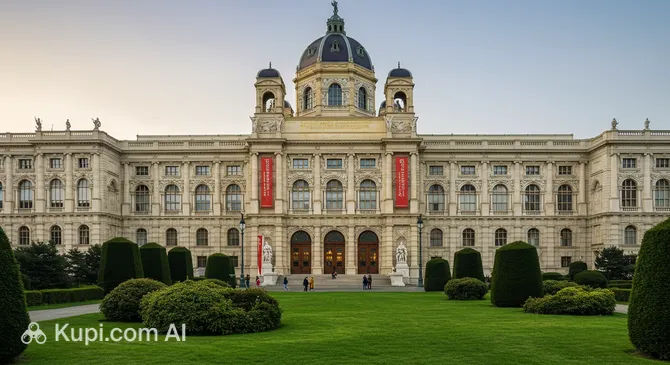
Natural History Museum Vienna. Illustration.
Source: Kupi.com AI

Traveler photos:

The museum's collection is staggering in scale: 39 halls house over 20 million items that cover practically the entire history of our planet. The exhibition takes you through millions of years of evolution, from simple organisms to complex life forms and the development of human civilization. The total area of the exhibition halls is nearly 8,700 square meters, making a walk through the museum a true journey through time.

Among the museum's treasures are several world-renowned exhibits. The crown jewel is the Venus of Willendorf figurine, which is nearly 30,000 years old. Visitors are equally thrilled by the enormous Diplodocus skeleton and unique specimens of animals that went extinct about 200 years ago, such as Steller's sea cow. These exhibits are not just antiquities but real testimonies to the rich and diverse history of life on Earth.

Contacts

To get the most up-to-date information on exhibitions, opening hours, and ticket prices, it is best to consult official sources. Below are the main contact details for the Natural History Museum Vienna.

How to contactContact
AddressBurgring 7, 1010 Wien, Austria
Phone number+43 1 521770
Websitewww.nhm.at

What to Do

A visit to the Natural History Museum Vienna is a true immersion into the history of our planet, presented across 39 exhibition halls. Here, you can explore rich collections gathered over several centuries. The exhibition includes unique minerals, gemstones, and the world's largest collection of meteorites. The paleontology halls are particularly captivating, where you can see the remains of ancient animals, including giant dinosaur skeletons and even a moving, roaring model of an Allosaurus. The museum also houses relics of human history, from prehistoric artifacts to the famous Venus of Willendorf figurine.

Beyond exploring the scientific collections, visitors can enjoy other experiences. The museum building itself is a magnificent 19th-century architectural monument reflecting the grandeur of imperial Vienna. Its luxurious interiors, painted ceilings, and grand staircase are works of art in their own right. For those interested in space, the museum features a modern digital planetarium where you can take a virtual journey to the stars. And to relax and admire the city, you can head up to the museum's roof, which offers a picturesque panoramic view of the historic center of Austria's capital.

Getting There

The Natural History Museum Vienna is located in the very heart of Vienna, making it easily accessible for tourists. It is situated at Burgring 7, on the famous Maria-Theresien-Platz, directly opposite the Kunsthistorisches Museum. This prime location allows you to combine your museum visit with a walk through the city's historic center and a tour of other key attractions, such as the Hofburg Palace complex, which is just a few minutes' walk away.

The most convenient way to reach the museum is by using Vienna's excellent public transport system. The Volkstheater U-Bahn station (lines U2 and U3), as well as several tram and bus stops, are located in the immediate vicinity of Maria-Theresien-Platz. From any of these stops, it is only a few minutes' walk to the museum entrance. This allows for a quick and direct journey from most parts of the city.

Additionally, if you are in the central area, the museum is reachable on foot while enjoying the architecture of imperial Vienna. A walk from the Vienna State Opera or St. Stephen's Cathedral, for instance, takes no more than 15-20 minutes. For those who prefer maximum comfort, taxis are always available, which is particularly convenient if you are traveling from further afield or with luggage.

Nearest city: Vienna

History & Facts

The history of the Natural History Museum Vienna dates back to the mid-18th century. The foundation of its future grand collection was laid in 1750 when Emperor Franz I Stephen, husband of the famous Maria Theresa, purchased the largest natural history collection of that time from a Florentine scientist. This initial collection comprised about 30,000 items, including rare minerals, corals, shells, and fossils, and was originally housed in the Hofburg Imperial Palace.

Over time, the Habsburg collection grew rapidly, and the palace halls became too small. In the mid-19th century, during the massive reconstruction of Vienna and the creation of the famous Ringstrasse, the decision was made to build two monumental buildings for the imperial collections. The design was entrusted to the prominent architects of the time — Gottfried Semper and Karl von Hasenauer. Construction of the building for the Natural History Museum lasted from 1871 to 1881, although it officially opened its doors to the public a bit later.

The museum's grand opening took place on August 10, 1889, in the presence of Emperor Franz Joseph I. Notably, the museum building was part of a grand architectural ensemble on Maria-Theresien-Platz. Its twin building — the Kunsthistorisches Museum — was erected opposite it, and a new theater and riding school were built nearby. Thus, the establishment of the Natural History Museum was not just the creation of a new scientific institution in Austria, but also an important stage in shaping the majestic appearance of the imperial capital.

Time Needed

When planning a visit to the Natural History Museum Vienna, it's worth setting aside enough time to enjoy its treasures without rushing. For a general overview of the main exhibition, it is recommended to allow at least 2-3 hours. This should be enough time to walk through the most iconic halls and see the world-famous exhibits. Considering that the museum's collection is spread across 39 halls covering nearly 8,700 square meters, even a brief tour will take a significant amount of time.

If your interests go deeper—for example, if you are passionate about paleontology, mineralogy, or prehistory—your visit could easily take half a day or even a full day. To make your visit as productive as possible, it's worth checking the museum map in advance and planning a route through the halls that interest you most. In any case, even if you only have a couple of hours, you will gain unforgettable impressions from the grandeur and diversity of the collections at one of the world's best natural history museums.

Working Hours

The Natural History Museum Vienna is generally open to visitors year-round, though it follows a specific schedule. Standard opening hours are Thursday through Monday from 9:00 AM to 6:00 PM. On Wednesdays, the museum offers extended hours and is open until 8:00 PM. The official closing day is Tuesday, when the museum is closed to visitors. Please keep in mind that the museum may be closed on certain public holidays, such as December 25th or January 1st.

To avoid long lines, especially during the popular hours of 10:00 AM to 1:00 PM or during the peak tourist season, it is highly recommended to book your tickets in advance. This can be done online via the museum's official website. Last admission is usually 30 minutes before closing. As opening hours are subject to change, it is always a good idea to check the latest information on the official website before planning your visit to avoid any inconvenience.

DayOpening hours
Monday9:00 – 18:00
TuesdayClosed
Wednesday9:00 – 20:00
Thursday9:00 – 18:00
Friday9:00 – 18:00
Saturday9:00 – 18:00
Sunday9:00 – 18:00

Nearby

Visiting the Natural History Museum Vienna is just one part of an exciting journey through the cultural heart of Vienna. The museum's location on Maria-Theresien-Platz makes it an ideal starting point for further exploration of the surrounding area, which is rich in historical and cultural treasures. A walk through this district will allow you to dive deeper into the atmosphere of Austria's imperial capital.

Just a few steps from the museum, you'll find other world-famous attractions, as well as cozy cafes and restaurants. Exploring these places won't take much time but will significantly enrich your travel experience. Below is a list of nearby points of interest along with the distance to each.

NameDistance
Kunsthistorisches Museum Vienna0.2 km
Heldenplatz0.3 km
Hofburg Palace0.4 km
Ulrich0.5 km
phil0.6 km
Albertina0.6 km
Hotel Beethoven Vienna0.7 km

Have you reached the end of the page?

So the route has been studied inside and out