Support

St. Charles Church

About

St. Charles's Church, or Karlskirche, is not just a Catholic church but one of the most recognizable architectural symbols of Vienna and all of Austria. Located on Karlsplatz, on the edge of the historic center, this church is considered one of the finest examples of Austrian Baroque. Its majestic appearance and rich history attract travelers from all over the world.
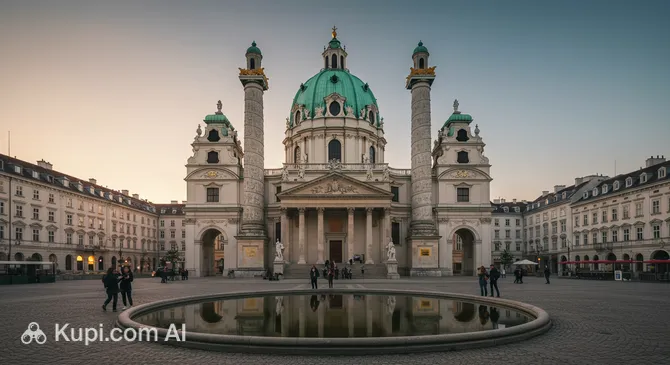
St. Charles Church. Illustration.
Source: Kupi.com AI

Traveler photos:

The exterior of Karlskirche is truly striking. The main features that immediately catch the eye are the massive 72-meter-high dome and the two enormous columns flanking the entrance. These columns were modeled after Ancient Roman triumphal columns, giving the building a particular sense of monumentality and grandeur. The church's architecture harmoniously combines features from various styles, referencing the greatness of Rome and Byzantium.

The interior of the church is just as magnificent as its exterior. The space has an oval shape and is richly decorated with luxurious frescoes, sculptures, and decorative elements. The ceiling paintings, depicting the life of St. Charles Borromeo, are stunning in their detail and craftsmanship. A visit to Karlskirche is an opportunity not only to experience Vienna's spiritual life but also to enjoy one of the greatest architectural masterpieces of the Baroque era.

Contacts

To check the latest information regarding opening hours, ticket prices, or event schedules, you can contact the church representatives using the details provided or visit the official website. Below are the primary contact details.

How to contactContact
AddressKarlskirche, Karlsplatz 10, 1040 Wien, Austria
Phone number+43 1 5046187
Websitekarlskirche.at

What to Do

Visitors to St. Charles's Church can enjoy more than just its unique architecture; they can also explore its magnificent artistic interior in detail. Inside the church, the sculptural composition of the high altar, depicting the "Ascension of St. Charles" surrounded by angels and cherubim, is particularly noteworthy. It is also worth admiring the famous dome fresco, "Intercession of St. Charles Borromeo supported by the Virgin Mary," painted by Johann Michael Rottmayr.

Karlskirche is not only an outstanding architectural monument but also a popular concert venue. Classical music concerts are regularly held within the church's majestic atmosphere, attracting both tourists and art lovers. Attending such an event, especially a performance of Antonio Vivaldi's famous "The Four Seasons" (the composer was buried nearby), can be one of the most memorable experiences of a trip to Vienna.

Previously, one of the main highlights of a visit was the opportunity to take a panoramic elevator to the dome to see the frescoes up close and admire the city skyline. However, it is important to know that this elevator was dismantled in 2020. Despite this, the magnificent dome paintings remain clearly visible from below and are an integral part of the church's grand interior.

Getting There

St. Charles's Church is conveniently located in the heart of Vienna, on the famous Karlsplatz. Thanks to its central location, reaching this prominent landmark is easy, regardless of which part of the city you are staying in. This makes Karlskirche one of the most accessible churches in the Austrian capital.

The easiest and fastest way to get to the church is by using the Vienna U-Bahn. The nearest station is Karlsplatz, a major transport hub where three metro lines intersect: U1, U2, and U4. Upon exiting the station, you will find yourself just a few minutes' walk from the church. Additionally, numerous tram and bus routes serve the square, providing even more flexibility when planning your route.

If you prefer walking to soak up the city's atmosphere, Karlskirche is within easy walking distance of many key points in the historic center. For instance, a stroll from the Vienna State Opera or the MuseumsQuartier takes very little time. For those traveling by car, there are underground parking garages nearby; however, it's worth noting that traffic in central Vienna can be heavy, so public transport is often the more convenient and faster option.

Nearest city: Vienna

History & Facts

The history of St. Charles's Church is inextricably linked to one of the most dramatic periods in Vienna's past. In 1713, the city was struck by a terrible plague epidemic that claimed many lives. At the height of the disaster, Holy Roman Emperor Charles VI made a vow to build a magnificent temple in honor of his patron saint, St. Charles Borromeo, if the epidemic subsided. St. Charles was considered the patron and savior from the plague, which is why prayers for healing were addressed to him.

Construction began in 1716 and continued for over twenty years, until 1737. The project was entrusted to the prominent court architect Johann Bernhard Fischer von Erlach, who was known as a master of palace architecture and the creator of masterpieces such as Schönbrunn Palace. However, the architect did not live to see the completion of his creation; after his death in 1723, the work was continued by his son, Joseph Emanuel, who introduced some changes to the original design.

The architect's vision was grand: Karlskirche was intended to be more than just a house of worship, but a symbol of the power of the Habsburg dynasty and the grandeur of Vienna itself. The church's architecture harmoniously blends elements of various styles: you can see references to Ancient Roman Baroque, French Classicism, and even Byzantine architecture. Every detail, from the famous columns reminiscent of Trajan's Column in Rome to the majestic dome, carries deep symbolic meaning, reflecting imperial power and the spiritual protection of the city.

Time Needed

When planning a visit to St. Charles's Church, it is recommended to set aside 1 to 2 hours. This is sufficient time to explore the majestic interior without rushing, examine the famous dome frescoes in detail, and feel the special atmosphere of this outstanding monument of Baroque architecture. This timeframe allows you to do more than just a quick walk-through, but to truly immerse yourself in its history and splendor.

Of course, the duration of your visit depends on your interests. For a general impression and a few photographs, 40–60 minutes might be enough. However, if you are an art and history enthusiast, it’s worth allocating at least an hour and a half to fully appreciate all the details of the opulent decor, from the high altar to the intricate paintings, and perhaps visit the treasury.

Please note that classical music concerts are regularly held at Karlskirche, with performances of Antonio Vivaldi's "The Four Seasons" being particularly popular. If you plan to attend such an event, your total time at the church will increase significantly. The concert itself usually lasts about 75 minutes, turning your visit into a full cultural experience lasting 2.5 to 3 hours.

Working Hours

St. Charles's Church is generally open to visitors year-round. Standard opening hours for tourist visits are typically Monday to Saturday from 9:00 AM to 6:00 PM. On Sundays and public holidays, the schedule may vary, and the church usually opens to tourists slightly later, around 11:00 AM or 12:00 PM, and remains open until 7:00 PM. Since opening hours can change due to services or special events, it is highly recommended to check the official Karlskirche website for the most up-to-date information before your visit.

Advance ticket booking for regular daytime visits is generally not required. However, Karlskirche is also a well-known concert venue that regularly hosts classical music evenings, such as performances of Vivaldi's "The Four Seasons." If you plan to attend one of these concerts, tickets must be booked in advance, as they are very popular.

DayOpening hours
Monday7:30 – 19:00
Tuesday7:30 – 19:00
Wednesday7:30 – 19:00
Thursday7:30 – 19:00
Friday7:30 – 19:00
Saturday8:30 – 18:00
Sunday9:00 – 19:00

Nearby

Visiting St. Charles's Church is just the beginning of your encounter with Vienna's rich cultural heritage. Thanks to its prime location on Karlsplatz, you can easily continue your exploration, as many of the Austrian capital's iconic landmarks are within walking distance. This is a great opportunity to look beyond a single site and create a full and rewarding itinerary through the city.

Exploring the surroundings will allow you to dive deeper into the atmosphere of the imperial city, discovering both world-famous masterpieces and cozy corners hidden from most tourists' eyes. A walk through the nearby streets will enrich your experience and help you form a more complete picture of Vienna's many facets.

NameDistance
Hotel Beethoven Vienna0.6 km
Albertina0.7 km
phil0.8 km
Hofburg Palace0.9 km
Kunsthistorisches Museum Vienna0.9 km
Belvedere Museum1 km
Belvedere Palace1 km

Have you reached the end of the page?

So the route has been studied inside and out