Support

Hofburg Palace

About

The Hofburg is a majestic palace complex in the heart of Vienna, which served as the winter residence of the powerful Habsburg dynasty for centuries. Today, it is one of Austria's most significant landmarks, consisting of a grand ensemble of luxurious buildings, charming courtyards, and splendid squares. A visit to the Hofburg offers a unique opportunity to touch the imperial past and feel the greatness of one of Europe's most influential dynasties.

The architectural appearance of the Hofburg is striking in its diversity. The complex, built and expanded over more than 600 years, is a literal encyclopedia of styles: Gothic sits alongside Renaissance, while Baroque flows seamlessly into Classicism. Every era has left its mark, turning the palace into a unique tapestry of buildings connected by passages and galleries. This architectural mosaic makes a walk through the Hofburg particularly fascinating.
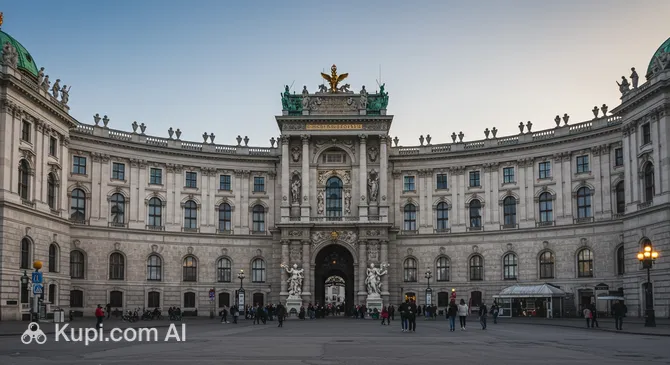
Hofburg Palace. Illustration.
Source: Kupi.com AI

Traveler photos:

Today, the Hofburg remains an important political and cultural hub for the country. Its vast grounds house not only world-famous museums like the Imperial Treasury and the Sisi Museum but also the Spanish Riding School, the Austrian National Library, and numerous exhibition halls. Furthermore, part of the complex serves as the official residence of the President of Austria, highlighting its enduring importance to the country's modern life.

Contacts

To plan your visit and check current opening hours, ticket prices, and event schedules, we recommend consulting official sources. All necessary information is available on the palace website, or you can contact the complex representatives by phone.

How to contactContact
Address1010 Vienna, Austria
Websitewww.wien.info

What to Do

A visit to the Hofburg is a unique opportunity to immerse yourself in the history and daily life of the Austrian monarchy. Several key museums are open to guests, including the Imperial Apartments, where you can see the private chambers of the rulers, and the famous Sisi Museum, dedicated to the life of Empress Elisabeth. Equally interesting is the Imperial Treasury, which houses priceless works of art, jewels, and relics of the Habsburg dynasty. It is also worth visiting the Silver Collection to appreciate the luxury of the imperial court through its collection of silverware and everyday items.

Beyond the museum exhibits, the palace complex features other unique sites. It is home to the magnificent Austrian National Library and the world-renowned Spanish Riding School, where you can witness impressive performances. The halls of the Hofburg regularly host concerts, exhibitions, and other cultural events, making it a vibrant center for the arts. Even a simple stroll through its courtyards and gardens allows you to fully experience the atmosphere of the imperial past and enjoy the grandeur of the architectural ensemble.

Getting There

The Hofburg Palace is located in the very heart of Vienna, in the Innere Stadt (Inner City) district, making it easily accessible for tourists from anywhere in the city. Thanks to its central location, this grand complex can be reached by public transport or on foot, allowing you to combine your visit with sightseeing other nearby attractions.

The most convenient way to reach the Hofburg is via the Vienna U-Bahn (metro). The nearest stations are Herrengasse (line U3), Stephansplatz (lines U1, U3), and Museumsquartier (line U2). From any of these stations, the palace is just a 5-10 minute walk away. Additionally, trams No. 1, 2, D, and 71 stop nearby (Burgring stop), and city buses 1A and 2A serve the Hofburg stop, providing plenty of route planning options.

The Hofburg fits perfectly into a walking tour of Vienna's historical center. It is within walking distance of the MuseumsQuartier, Maria-Theresien-Platz, and the lively Graben street. A stroll to the palace allows you to enjoy the magnificent architecture and the atmosphere of the imperial city. Navigating the site is easy: the entrances are well-marked, and numerous signs and information stands will help you find the museum or attraction you need within the complex.

Nearest city: Vienna

History & Facts

The history of the Hofburg dates back to the 13th century, when the first medieval castle was built on this site as part of the city's fortifications. For nearly 600 years, this complex served as the primary residence of the powerful Habsburg dynasty. Almost every ruler felt it their duty to expand and remodel the residence, purchasing neighboring plots and building new wings, which transformed the palace into a grand symbol of the Austrian Empire's power and grandeur.

One of the most ambitious expansion projects was conceived in the 19th century. Renowned architects Gottfried Semper and Karl von Hasenauer developed a plan for a massive reconstruction intended to create a grand "Imperial Forum." Their design blended Neo-Renaissance and Neo-Baroque elements, aimed at emphasizing the continuity of the Austrian emperors' power and their symbolic connection to Ancient Roman traditions. Although the project was never fully completed, the finished sections, including the Neue Burg (New Castle), still impress with their scale today.

The walls of the Hofburg have witnessed some of the most important events in European history — from lavish balls and weddings to key political decisions that shaped the fate of the continent. After the fall of the monarchy in 1918, the palace did not lose its significance. It was transformed into a vital cultural and political center for Austria, now housing world-class museums, a congress center, and the official residence of the country's president, continuing to play a central role in the life of Vienna.

Time Needed

When planning a visit to the Hofburg, keep in mind that it is a vast complex that can take quite a while to explore. For a thorough introduction to its main treasures, including a visit to the Imperial Apartments and several key museums, it is recommended to allow at least 3–4 hours. This will be enough time to immerse yourself in history and appreciate the grandeur of the former Habsburg residence without rushing.

If you are a major fan of history and art and want to leisurely explore all available exhibitions, walk through the halls, and wander the courtyards, you might want to set aside a full day during your trip to Vienna for the Hofburg. At the same time, if your schedule is limited, you can choose to see just one part — for example, the Imperial Treasury, which takes about an hour and a half to two hours. To ensure your visit is as comfortable as possible, it's best to decide in advance which parts of the palace interest you the most.

Working Hours

The Hofburg palace complex is open to visitors year-round; however, it's important to remember that it consists of many separate museums and exhibitions, and their opening hours may vary. In general, most of the main attractions within the palace grounds, including the Imperial Apartments and the Sisi Museum, are open daily. Typically, they are open from 9:00 AM to 5:30 PM. During the summer months, in July and August, hours may be extended until 6:00 PM.

As schedules can change depending on the season or special events, it is highly recommended to check the latest information on the official Hofburg website before your visit. This is especially important if you plan to visit a specific exhibition or museum. The website also provides information on the need for advance ticket booking, which is often useful for the most popular parts of the complex to avoid long queues.

8:00 – 18:00

Nearby

A visit to the Hofburg is an immersion into the imperial past of Vienna, but your introduction to this area wouldn't be complete without exploring its surroundings. The palace complex is located in the heart of the historic center, where iconic landmarks, world-class museums, and charming squares can be found at every turn. A walk through the nearby streets will allow you to better feel the city's atmosphere and see how history intertwines harmoniously with modernity.

The area around the Hofburg is a true paradise for the curious traveler. Nearby, you'll find famous museums, majestic buildings, and picturesque parks that perfectly complement your experience at the former imperial residence. By taking a little time to explore the neighboring sites, you can gain a fuller understanding of the cultural and historical richness of the capital of Austria.

NameDistance
Heldenplatz0.1 km
Kunsthistorisches Museum Vienna0.3 km
Albertina0.3 km
Natural History Museum Vienna0.4 km
Reinthaler's Beisl0.5 km
Hotel Beethoven Vienna0.6 km
phil0.7 km

Have you reached the end of the page?

So the route has been studied inside and out