Support

Belvedere Museum

About

The Belvedere Museum is a magnificent palace and garden complex in Vienna, widely considered one of Austria's most significant cultural gems. This Baroque architectural masterpiece consists of two luxurious palaces—Upper and Lower Belvedere—connected by an exquisite garden filled with fountains and sculptures. Originally built as a summer residence for Prince Eugene of Savoy, the Belvedere is now one of Europe’s leading and most visited art museums.
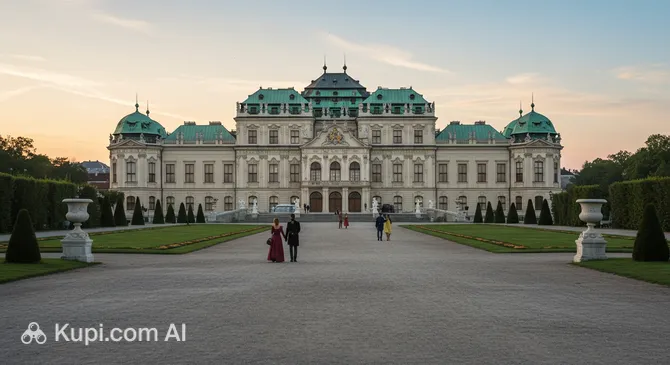
Belvedere Museum. Illustration.
Source: Kupi.com AI

Traveler photos:

The museum’s primary value lies in its outstanding collection of Austrian and European art, spanning from the Middle Ages to the present day. Upper Belvedere houses a world-renowned collection of Modernist works, where the masterpieces of Gustav Klimt take center stage. This is where you can see his most famous work, "The Kiss." Alongside Klimt, the collection features iconic works by Egon Schiele and Oskar Kokoschka.

Visiting the Belvedere is not only about discovering great works of art but also about enjoying the harmony of architecture and nature. A walk through the manicured gardens, which offer a "beautiful view" (the literal translation of the Italian word "belvedere") of the city, provides an unforgettable experience and a sense of Imperial Vienna’s grandeur. This complex, blending historical luxury with artistic treasures, is a must-visit for anyone wishing to experience the cultural heritage of the Austrian capital.

Contacts

If you need to check current opening hours, ticket prices, or have other questions, you can contact the Belvedere Museum administration. All essential contact information is provided in the table below.

How to contactContact
AddressPrinz-Eugen-Straße 27, 1030 Wien, Austria
Phone number+43 1 795570
Websitewww.belvedere.at

What to Do

A visit to the Belvedere introduces guests to the diversity of Austrian art. At Upper Belvedere, you will find the permanent collection featuring true masterpieces. The centerpiece is undoubtedly Gustav Klimt’s world-famous painting "The Kiss," which attracts thousands of visitors. Additionally, the collection includes exceptional works by Biedermeier masters like Ferdinand Georg Waldmüller and the unique "character heads" by sculptor Franz Xaver Messerschmidt.

Continue your exploration at Lower Belvedere, which often hosts temporary exhibitions focusing on various eras and artists. Here, you can also step into the lavish historical rooms, such as the Marble Hall and the Gold Cabinet, to appreciate the splendor of imperial interiors. Be sure to set aside time for a walk through the manicured Baroque gardens that connect the two palaces; they are a work of art in their own right and an ideal spot for a relaxing break and photos.

Beyond the exhibitions, the Belvedere offers other experiences. The terrace of the Upper Palace provides one of the best panoramic views of Vienna, fully justifying the name of the complex ("beautiful view"). For a deeper dive into history and art, the museum organizes guided tours, educational programs, and various cultural events, which you can check on the official website in advance.

Getting There

The Belvedere palace complex is conveniently located in Vienna's third district, Landstraße, making it easily accessible from any part of the city. The simplest way to get here is by using the extensive public transport network. Upper Belvedere can be reached by tram D (Schloss Belvedere stop), as well as trams 18 and O (Quartier Belvedere stop). If your destination is Lower Belvedere, tram 71 stops right at the entrance (Unteres Belvedere stop).

Another convenient option is the Vienna U-Bahn (metro). You can take line U1 to the Südtiroler Platz-Hauptbahnhof station. From there, it's a pleasant 15-minute walk to the main entrance of the Belvedere. This station also serves as the city's main railway station, making it easy to reach the museum on foot if you are arriving in Vienna by train.

Walking enthusiasts can reach the Belvedere from the city center in about 30 minutes. For those who prefer to travel by car, there are paid parking lots near the complex, though finding a free spot in the center of Vienna can be challenging. Of course, you can always take a taxi; the ride from most central hotels takes no more than 15 minutes.

Nearest city: Vienna

History & Facts

The history of the Belvedere Museum is inextricably linked to Prince Eugene of Savoy, a prominent figure in Austria’s history. In the early 18th century, the famous commander commissioned architect Johann Lucas von Hildebrandt to create a magnificent summer residence for him on the outskirts of Vienna. The complex, comprising the Upper and Lower Palaces, was designed as a "miniature Versailles" to reflect the status and grandeur of its owner. Lower Belvedere was completed in 1716 and served as living quarters, while the monumental Upper Belvedere, finished in 1722, was intended for formal receptions and state events.

After the death of Prince Eugene, the palace complex was purchased by Empress Maria Theresa in 1752. However, the monarch preferred Schönbrunn, and the Belvedere remained largely overlooked for a long time. A new chapter in its history began in the late 18th century when part of the imperial painting collection was moved here. In 1903, the "Modern Gallery" was opened in the Lower Belvedere Orangery, marking the starting point for the palace’s transformation into the country's leading art museum, known today as the Austrian Gallery Belvedere. In the early 20th century, Upper Belvedere served as the residence of the heir to the throne, Archduke Franz Ferdinand.

Beyond its cultural significance, the Belvedere has witnessed key moments in the nation's history. It was in the Marble Hall of the Upper Palace on May 15, 1955, that the signing of the Austrian State Treaty took place. This document established Austria as a sovereign and democratic state. The iconic images of Foreign Minister Leopold Figl showing the treaty to the cheering crowds from the palace balcony became a true symbol of national rebirth.

Time Needed

When planning a visit to the Belvedere Museum, it is recommended to set aside 2 to 4 hours for a comprehensive tour. This is generally enough time to explore the exhibitions in both the Upper and Lower Palaces and enjoy a stroll through the magnificent Baroque gardens that connect them. This timeframe allows you to appreciate both the artistic treasures and the architectural grandeur of the complex without rushing.

If your time is limited and your main goal is to see the icons of Austrian Art Nouveau, including Gustav Klimt’s world-famous "The Kiss," you can focus on visiting only the Upper Belvedere. A brief viewing of its primary collection takes about 1.5–2 hours. This option is ideal for those who want to experience the main highlights without diving into the entire complex.

For a more thoughtful and immersive experience, including not just the permanent collection of the Upper Palace but also the temporary exhibitions in the Lower Belvedere and a leisurely walk through the garden with its sculptures and fountains, it is worth allocating 3–5 hours. This will allow you to fully enjoy every aspect of the Belvedere, from its painted masterpieces to one of the best panoramic views of Vienna from the terrace.

Working Hours

The Belvedere Museum is open to visitors year-round, though opening hours may vary for different parts of the complex. Generally, Upper Belvedere, home to Klimt’s "The Kiss," is open daily from 10:00 to 18:00. Lower Belvedere and the Orangery follow a similar schedule—from 10:00 to 18:00—though hours may be extended during special exhibitions.

As schedules can change based on the season, public holidays, or ongoing events, it is highly recommended to check the official museum website for current information before your visit. To avoid long queues, especially during the peak tourist season, consider purchasing tickets online in advance. This allows you to save time and book a specific time slot for visiting Upper Belvedere, which is often a requirement.

9:00 – 18:00

Nearby

A visit to the Belvedere Museum is just one part of a grander journey through the cultural heart of Vienna. The area surrounding the palace complex is rich with other iconic sites that help deepen your understanding of the history and atmosphere of the Austrian capital.

Exploring the neighborhood will allow you to create a more complete itinerary and enrich your experience by visiting nearby churches, parks, and concert halls. Below is a list of interesting sites located within walking distance of the museum.

NameDistance
Belvedere Palace0 km
St. Charles Church1 km
Favoriten Aquarium1.6 km
Hotel Beethoven Vienna1.6 km
Albertina1.7 km
Porgy & Bess1.7 km
phil1.8 km

Have you reached the end of the page?

So the route has been studied inside and out