Support

Kunsthistorisches Museum Vienna

About

The Kunsthistorisches Museum in Vienna (Kunsthistorisches Museum Wien) is not just a museum, but a true temple of art, standing as one of the most significant and largest art collections in the world. Located in the heart of Austria, it attracts beauty enthusiasts from every corner of the globe. The museum building, designed in the Neo-Renaissance style, is an architectural masterpiece in itself and harmoniously fits into the ensemble of Maria-Theresien-Platz, situated across from its "twin" — the Natural History Museum.

The museum was opened in 1891 specifically to house and present to the public the rich collections gathered over centuries by the powerful Habsburg dynasty. It was their passion for collecting that laid the foundation for this unique assembly, which today amazes with its diversity and scale. Visitors can take a journey through millennia, from Ancient Egyptian artifacts and antiquity to masterpieces of European painting.
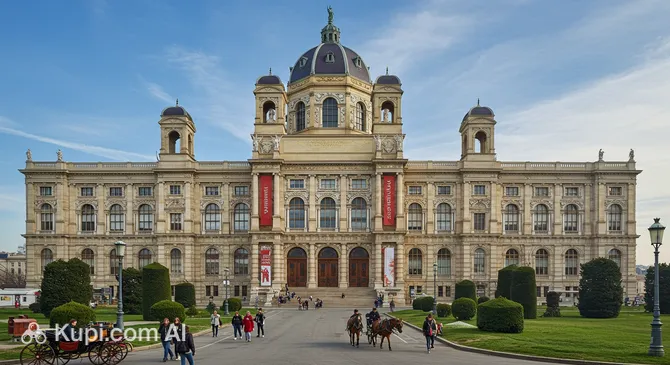
Kunsthistorisches Museum Vienna. Illustration.
Source: Kupi.com AI

Traveler photos:

Inside, halls filled with works by the greatest masters await you. The Picture Gallery boasts one of the world's largest collections of works by Pieter Bruegel the Elder, as well as canvases by Titian, Rubens, Rembrandt, Raphael, and many others. In addition to paintings, the museum features unique exhibits in the Kunstkammer, the Egyptian and Near Eastern Collection, and the Coin Cabinet, which is one of the five largest in the world.

Contacts

To plan your visit, check the current schedule, or ask any questions, you can contact the museum administration. For the most up-to-date information, it is recommended to visit the official website or use the provided contact details.

How to contactContact
AddressMaria-Theresien-Platz, 1010 Wien, Austria
Phone number+43 1 525240
Websitewww.khm.at

What to Do

A visit to the Kunsthistorisches Museum is an immersion into a world of masterpieces. The crown jewel is undoubtedly the Picture Gallery of Old Masters. Here, you can see famous canvases by Pieter Bruegel the Elder in person, as well as works by such titans as Albrecht Dürer, Titian, Rubens, Velázquez, and Rembrandt. In addition to paintings, the display includes unique collections of sculpture and decorative arts, allowing you to trace the development of artistic styles throughout the centuries.

The museum offers more than just a view of the permanent collections. It is a living cultural space where temporary exhibitions dedicated to various artists, eras, and themes are regularly held. For those who want to deepen their knowledge, lectures, themed tours, and educational programs are organized for visitors of all ages, including children. This is an excellent opportunity to learn more about art history in an engaging and accessible way.

Don't miss the chance to appreciate the museum building itself, which is a work of art. Be sure to go up to the balcony or the grand staircase of the main hall. From here, you get a breathtaking view of the luxurious interior and the magnificent dome decorated with frescoes, allowing you to take unforgettable photos and feel the grandeur of the place. This experience will add vivid impressions to your visit and allow you to look at the museum from a new perspective.

Getting There

The Kunsthistorisches Museum boasts a prime location in the heart of Vienna, on the picturesque Maria-Theresien-Platz. It is situated right next to the famous Ringstrasse, making it easily accessible from anywhere in the city. Thanks to its central position, you can enjoy a pleasant walk to the museum or take a quick ride on public transport.

The most convenient way to reach the museum is via Vienna's public transport system. The nearest metro stations are Museumsquartier (line U2) and Volkstheater (interchange for lines U2 and U3). Additionally, numerous tram and bus routes run along the Ringstrasse; you should get off at the Burgring stop, located just steps away from the majestic museum building.

If you are arriving in the city by train, you can easily reach the museum from the main railway station (Wien Hauptbahnhof) by tram or by metro with one transfer. For those who prefer walking and want to enjoy the architecture of the Austrian capital, the walk from the city's central point, St. Stephen's Cathedral, takes approximately 15–20 minutes at a leisurely pace.

Nearest city: Vienna

History & Facts

The history of the Kunsthistorisches Museum Vienna is inextricably linked with the powerful Habsburg dynasty, whose representatives began laying the foundation of the future collection as early as the 15th century. Archduke Ferdinand II is considered one of the key founders; in the 16th century, he created the first comprehensive museum collection of art and various treasures at Ambras Castle. Over time, the best of these exhibits were moved to Vienna to become part of the imperial treasures.

Emperor Rudolf II made a significant contribution to expanding the collection. Although he moved the capital to Prague, his passion for collecting helped replenish the treasury with masterpieces from the leading European masters of the time, including priceless works by Albrecht Dürer and Pieter Bruegel the Elder. His famous Kunstkammer, filled with curiosities and works of art, became one of the most important sources for the future museum.

By the 19th century, the imperial collections were scattered and kept in various palaces and castles. By decree of Emperor Franz Joseph I, a strategic decision was made to unite them under one roof to make this heritage accessible to the general public. Thus, in 1891, after many years of construction, the Kunsthistorisches Museum officially opened its doors on Maria-Theresien-Platz, becoming one of the world's greatest museums and a true symbol of the cultural grandeur of the Austrian capital.

Time Needed

When planning a visit to the Kunsthistorisches Museum, you should allow several hours to enjoy its main treasures. To fully explore the main exhibitions, including the Picture Gallery and the Egyptian and Near Eastern Collection, it is recommended to set aside at least 3–4 hours. This time will be enough to walk through the most famous halls without rushing, see masterpieces by Bruegel, Rubens, and other great masters, and get a general impression of the scale and splendor of the collections.

However, if you are a true art lover or want to delve deeper into history, you should plan for a full day visit. This approach will allow you not only to carefully study the permanent collections but also to spend time at temporary exhibitions, which often offer a unique perspective on the work of individual artists or entire eras. Additionally, you will be able to explore treasures like the Kunstkammer with its unique art objects and curiosities, or the impressive Coin Cabinet, without haste.

Working Hours

The Kunsthistorisches Museum is open to visitors year-round. Generally, it is open daily from 10:00 AM to 6:00 PM, except for Mondays, when it is closed. On Thursdays, opening hours are extended until 9:00 PM, providing a wonderful opportunity to enjoy art in the evening. However, the schedule may change on public holidays or during special events, so it is highly recommended to check the current information on the museum's official website before your visit.

To avoid queues, especially during the peak tourist season, it is recommended to purchase tickets online in advance. This will not only save you time but also guarantee entry to the museum on your chosen day. You can simply show your electronic ticket at the entrance for scanning. Pre-booking is particularly relevant if you plan to visit popular temporary exhibitions.

DayOpening hours
Monday10:00 – 18:00
Tuesday10:00 – 18:00
Wednesday10:00 – 18:00
Thursday10:00 – 21:00
Friday10:00 – 18:00
Saturday10:00 – 18:00
Sunday10:00 – 18:00

Nearby

A visit to the Kunsthistorisches Museum is just the beginning of discovering the cultural treasures of Vienna. The museum is located in an area that is a landmark in its own right, where every building and square is steeped in history. A stroll through the surroundings will allow you to immerse yourself deeper in the atmosphere of the imperial capital of Austria and see other iconic sites located just a stone's throw away.

Exploring nearby attractions will enrich your experience and make your day even more fulfilling. Near the Kunsthistorisches Museum, you will find other world-famous museums, majestic palaces, and cozy spots perfect for relaxing. Below is a list of interesting places located within walking distance.

NameDistance
Natural History Museum Vienna0.2 km
Hofburg Palace0.3 km
Heldenplatz0.3 km
phil0.4 km
Albertina0.5 km
Hotel Beethoven Vienna0.5 km
Ulrich0.7 km

Have you reached the end of the page?

So the route has been studied inside and out