Support

Gül Baba's Tomb and Rose Garden

About

The Gül Baba Tomb and Rose Garden is a unique historical site located in the heart of Budapest, the capital of Hungary. This tomb (türbe) preserves the memory of the Ottoman poet, philosopher, and dervish Gül Baba, who lived in the 16th century and passed away shortly after the conquest of Buda. His name, "Gül Baba," translates to "Father of Roses," reflecting his love for these beautiful flowers and giving the place a special, peaceful atmosphere.
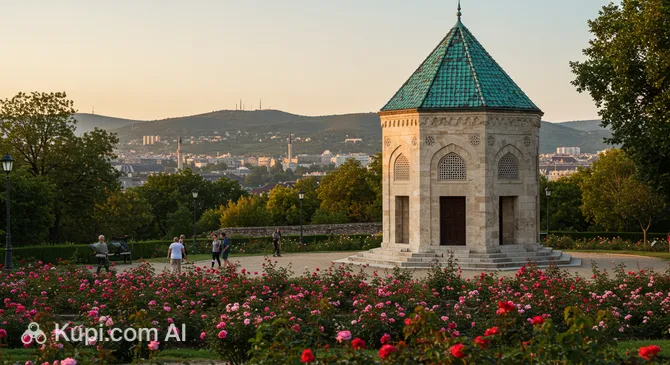
Gül Baba's Tomb and Rose Garden. Illustration.
Source: Kupi.com AI

Traveler photos:

The tomb rises majestically on Rose Hill (Rózsadomb) in the Buda district, surrounded by a fragrant rose garden that gave the landmark its name. It is not just a historical monument of the Ottoman era, but also a functioning museum and an important pilgrimage site. Additionally, the tomb's grounds offer breathtaking panoramic views of the Danube and the picturesque neighborhoods of Budapest, making it a popular viewpoint for both tourists and locals.

Not long ago, the Gül Baba Tomb and Rose Garden, along with the adjacent garden and the streets leading to it from Margaret Bridge, underwent an extensive restoration. Thanks to these works, it was possible not only to preserve but also to highlight the beauty of this significant monument, allowing visitors to touch centuries-old history and enjoy the tranquility of this amazing corner of the Hungarian capital.

Contacts

For the most up-to-date information regarding opening hours, ticket prices, and potential tours of the Gül Baba Tomb and Rose Garden, it is recommended to visit the official website. There, you can also find answers to frequently asked questions and possible contact details.

How to contactContact
AddressBudapest, Mecset u. 14, 1023 Hungary
Phone number+36 1 618 3842
Websitewww.gulbabaalapitvany.hu

What to Do

A visit to the Gül Baba Tomb and Rose Garden offers several engaging activities. First and foremost, you can explore the historical structure itself—the Ottoman-era tomb, which functions as a museum today. Inside, you will have the chance to learn about the history of Gül Baba, known as the "Father of Roses," and discover more about the Ottoman period in Budapest's history. The exhibition provides a deeper understanding of the cultural heritage of this unique site.

One of the main highlights of the visit is the magnificent panoramic view of the city and the Danube River from the area surrounding the tomb. It is an excellent vantage point for taking beautiful photos of Budapest from an unusual angle. Additionally, be sure to take a stroll through the picturesque rose garden surrounding the tomb. This well-maintained garden is a great place for quiet contemplation and enjoying the silence.

The journey to the attraction is equally memorable. We highly recommend walking up the historic Gül Baba Street, which leads to the tomb. This cobblestone street, lined with colorful medieval houses, climbs steeply up the hill in Buda and starts near Margaret Bridge. Such a walk allows you to take a sort of trip back in time and feel the atmosphere of the ancient city.

Getting There

The Gül Baba Tomb and Rose Garden is located in the Buda side of Budapest, on the so-called Rose Hill. To get there, head towards Margaret Bridge—this is where the most picturesque route begins. From the bridge, the ancient Gül Baba Street (Gül Baba utca), also known as the Father of Roses Street, leads up to the tomb; the street itself is part of the experience.

The exact address of the landmark is: Mecset utca 14, 1023 Budapest. The tomb is situated relatively close to the city center. There are several ways to reach it. If you are near Margaret Bridge and enjoy walking, the climb to the tomb will be a pleasant adventure. You can also reach Rose Hill by Budapest public transport; we recommend checking the current routes and stops before your trip, as they may change.

It's important to note that Gül Baba Street, leading to the tomb, is quite steep and paved with cobblestones. Therefore, comfortable shoes are strongly recommended for an easy ascent. If the walk seems too difficult, you can always consider a taxi to take you closer to your destination on Rose Hill.

Nearest city: Budapest

History & Facts

The history of the Gül Baba Tomb dates back to the mid-16th century, a time when Buda was under the rule of the Ottoman Empire. Gül Baba himself, whose name means "Father of Roses," was a revered dervish—a wandering mystic and poet. He was known for his love of a simple life, nature, and flowers, and he expressed his travel impressions through poetry. Shortly after the Ottoman conquest of Buda, Gül Baba passed away and was canonized as a saint, leading to the construction of this tomb in his honor.

There is a legend that highlights the special respect shown to Gül Baba: it is said that Sultan Suleiman the Magnificent himself participated in the funeral procession and carried his coffin. This fact attests to the high status of the dervish. Budapest was under Ottoman rule from 1541 to 1686, and the Gül Baba Tomb is one of the few and most significant monuments remaining in Hungary from that period, serving as a silent witness to that era.

After the liberation of Buda from Turkish rule, about a century later, the fate of the tomb changed—it was converted into the Catholic Chapel of St. Joseph. Over the following centuries, the structure underwent various changes, but its historical and cultural value remained undeniable. Recently, thanks to a meticulous restoration, the tomb and the surrounding ancient streets have been restored and reopened to visitors, appearing in all their glory as a unique heritage of the Ottoman period in the history of the Hungarian capital.

Time Needed

It is usually recommended to set aside 1 to 2 hours to visit the Gül Baba Tomb and Rose Garden in Budapest. This time is generally enough to leisurely explore the main exhibition inside the tomb, stroll through the picturesque rose garden, and enjoy the views without rushing. However, if you have a deep interest in Ottoman history or simply want to linger longer in the peaceful atmosphere of the garden, your visit may take a bit more time.

When planning your visit, consider the following time distribution: exploring the tomb itself and the museum exhibition will take about 30–60 minutes. A walk through the Rose Garden, depending on the season and your desire to enjoy its beauty, may require another 30–45 minutes. And, of course, leave some time to admire the panoramic views of Budapest and take photos—this might take 15–30 minutes. It's also worth remembering that the walk up to the tomb via the historic Gül Baba Street is part of the experience itself and will take some time to climb.

Working Hours

The Gül Baba Tomb and Rose Garden in Budapest is usually open to visitors, but exact opening hours may vary depending on the season and day of the week. Generally, such attractions are open during daylight hours, but for the most current schedule information, including possible changes or special events, it is highly recommended to check the official website of the Tomb or inquire at Budapest tourist information centers before planning your visit.

As for the need for advance ticket booking, it can be a good idea for popular sites, especially during the peak tourist season, to avoid queues. Check for this option on the official resource as well. Typically, the Gül Baba Tomb and Rose Garden is accessible year-round, but schedule changes may occur due to public holidays or weather conditions, especially regarding the rose garden.

DayOpening hours
MondayClosed
Tuesday10:00 – 18:00
Wednesday10:00 – 18:00
Thursday10:00 – 18:00
Friday10:00 – 18:00
Saturday10:00 – 18:00
Sunday10:00 – 18:00

Nearby

Visiting the Gül Baba Tomb and Rose Garden is undoubtedly a memorable experience, but Budapest is full of other treasures, many of which are located very close by. Exploring the surroundings will allow you to dive deeper into the city's atmosphere, see it from different perspectives, and gain a more complete understanding of its rich history and culture.

Taking a short walk from Rose Hill, you can discover other iconic landmarks of the Hungarian capital. This is a wonderful opportunity to supplement your itinerary and make your trip even more fulfilling and memorable. Below is a list of some interesting attractions located near the Gül Baba Tomb and Rose Garden, with approximate distances provided.

NameDistance
Hungarian Parliament Building1.3 km
Kossuth Lajos Square1.3 km
Fisherman's Bastion1.5 km
Shoes on the Danube Bank1.5 km
Szemlőhegy Cave1.5 km
Buda Castle District1.6 km
Cookie Beacon Brunch2 km

Have you reached the end of the page?

So the route has been studied inside and out