Support

Kraków Barbican

About

The Krakow Barbican is an impressive monument of medieval defensive architecture located in the heart of historic Krakow, one of the oldest and most beautiful cities in Poland. This massive round red-brick structure built in the Gothic style stands as a striking testament to the city's rich history and its strategic importance in the past.
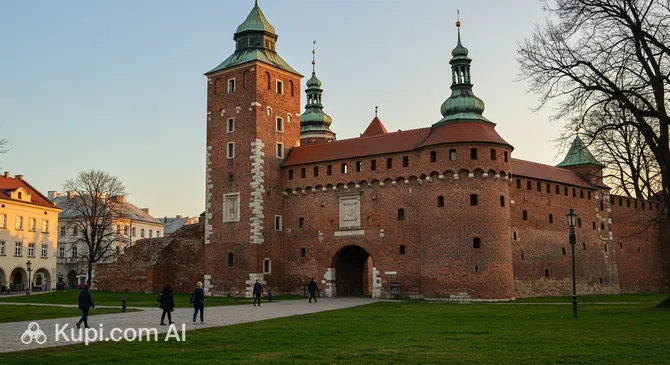
Kraków Barbican. Illustration.
Source: Kupi.com AI

Traveler photos:

Originally, the Barbican served as an advanced fortification protecting the main city entrance—the famous Florian Gate—and the northern section of the city walls. Its unique construction with thick walls, arrow slits, and an inner courtyard was designed to withstand long sieges and provide reliable defense. Today, it is one of the best-preserved fortifications of its kind in Europe.

What makes the Krakow Barbican particularly remarkable is its status as one of the few surviving Gothic barbicans in Europe that remain in their original form. Of the three such structures (the other two are in Carcassonne, France, and Görlitz, Germany), the Krakow version is considered the largest and most impressive. A visit to the Barbican allows you to literally touch history and imagine what life and defense were like in a medieval city.

Currently, the Krakow Barbican is a popular tourist attraction and a branch of the Historical Museum of the City of Krakow. It often hosts exhibitions, knightly tournament reenactments, and other cultural events that immerse visitors in the atmosphere of the Middle Ages. This is a must-visit site for anyone interested in history, architecture, and military engineering.

Contacts

To get the most up-to-date information regarding opening hours, ticket prices, and events at the Krakow Barbican, it is recommended to visit the official tourism portal of Krakow. There you will find all the necessary details for planning your visit.

How to contactContact
AddressBasztowa, 30-547 Kraków, Poland
Phone number+48 12 421 02 01
Websitewww.muzeumkrakowa.pl

What to Do

A visit to the Krakow Barbican offers a unique immersion into medieval military history. You can walk through the spacious inner courtyard, feeling like a defender of ancient Krakow. Closely examine the massive brick walls, reaching three meters in thickness, the numerous towers, and the narrow arrow slits through which the city's approaches were monitored for centuries. A highlight is the chance to climb up to the gallery with machicolations—special openings from which stones and boiling water were once dropped on attackers—providing a vivid illustration of the harsh realities of defending a medieval fortress.

The Krakow Barbican is not just a static monument but a living space where history comes alive. It regularly hosts fascinating historical exhibitions, spectacular knight duel reenactments, and other cultural events that immerse visitors in the atmosphere of medieval Krakow. Thematic guided tours help to gain a deeper understanding of fortification art and the daily life of the city's defenders. For lovers of history and architecture, this place will be a true discovery, allowing a detailed study of the medieval city defense system and admiration for the authentic romantic Gothic brickwork that has survived to this day.

Getting There

Reaching the Krakow Barbican is easy, as it is conveniently located in the very heart of Krakow. If you are arriving in the city by train, the Barbican is just a 10-15 minute walk from the Main Railway Station (Kraków Główny). The route takes you through the picturesque streets of the Old Town, making the walk itself a part of your Krakow experience. Use the Florian Gate and the bustling Florianska Street, which leads directly to this historic landmark, as your landmarks.

For those preferring public transport, the Krakow Barbican is equally accessible. Numerous tram and bus stops serving the city center are located in the immediate vicinity. This is a convenient and budget-friendly way to reach the site from various parts of Krakow. It is recommended to check the specific route numbers passing near the Barbican in advance or use online maps to plan your trip.

If traveling by car, keep in mind that the Krakow Barbican is in the historical center where traffic may be restricted and parking spaces are paid and not always available. While there are paid parking lots nearby, many tourists prefer to leave their cars further out and reach the center on foot or by public transport. A taxi is a reliable alternative that can drop you off right at the entrance to the Barbican, especially if you value comfort and time-saving.

Nearest city: Krakow

History & Facts

The Krakow Barbican, an outstanding fortification, has a rich history dating back to the end of the 15th century. Its construction, completed in 1498–1499, was driven by an urgent need: to protect the northern borders of Krakow's city fortifications from the looming threat of Turkish forces. To make the Barbican impregnable, it was surrounded by a deep moat, which in some places reached an impressive width of 24 meters. Access to this formidable bastion was possible only via drawbridges, making it a serious obstacle for any enemy.

Over time, the role of the Krakow Barbican evolved. By the 16th century, when the immediate military threat had somewhat subsided, the city stables were housed within its walls. However, the main factor influencing its future was the advancement of military science and siege technology. The Barbican's thick walls and ingenious fortifications gradually lost their original defensive significance, as new methods of warfare required different approaches to urban protection.

In the early 19th century, the Krakow Barbican faced a real threat of demolition. At that time, many of Krakow's medieval fortifications were being dismantled as they were considered outdated and a hindrance to city development. Fortunately, the Barbican escaped this fate and was saved, becoming one of the few surviving elements of the city's former defensive power. Notably, a section of the city wall with towers once belonging to craft guilds was also preserved alongside it. These surviving fragments contribute significantly to the unique historical atmosphere of this area of Krakow, allowing visitors to better imagine the grandeur of the medieval city.

Time Needed

When planning your visit to the Krakow Barbican, expect to spend about 30-60 minutes exploring it. This time is usually enough to walk around this impressive structure, get acquainted with its architecture and main elements, and take several memorable photos. You can stroll through the inner courtyard, examine the massive walls and towers, and feel the atmosphere of a medieval fortress.

However, if you have a deep interest in the history of fortifications or plan to visit the temporary exhibitions and events sometimes held on the Barbican grounds, your stay might be longer. In this case, it's worth setting aside more time to immerse yourself in the details without rushing and enjoy all aspects of this unique historical monument in Krakow.

Working Hours

When planning a visit to the Krakow Barbican, it is important to note that its opening hours may vary depending on the season and potential special events. Typically, this historic site is open to visitors from spring to autumn, usually from morning until evening. To get the most current information regarding the exact schedule for your specific dates, it is highly recommended to check the official website of the Krakow Barbican or contact the tourist information centers in Krakow.

Regarding the need for advance ticket booking, it is also best to check this beforehand, especially if your trip coincides with the peak tourist season. This will help you plan your visit as comfortably as possible. Keep in mind that the Krakow Barbican mostly operates seasonally, so verifying the latest information before your trip is the key to a successful visit.

DayOpening hours
MondayClosed
Tuesday10:00 – 18:00
Wednesday10:00 – 18:00
Thursday10:00 – 18:00
Friday10:00 – 18:00
Saturday10:00 – 18:00
Sunday10:00 – 18:00

Nearby

Visiting the Krakow Barbican is undoubtedly a highlight, but Krakow hides many more treasures just nearby. Exploring the surroundings will allow you to dive deeper into the atmosphere of this amazing city in Poland, see more, and gain a fuller understanding of its rich history and culture. Don't limit yourself to a single landmark, as often the most interesting discoveries await literally around the corner.

A stroll through the nearby streets and squares after visiting the Krakow Barbican can provide new impressions and introduce you to other iconic spots in Krakow. Each has its own unique story and charm, completing the overall picture of this historic center.

NameDistance
Czartoryski Museum0.1 km
Old Town of Kraków0.3 km
Wilczy Dół Tavern0.3 km
Sukiennice (Cloth Hall) – National Museum Branch0.5 km
House of Attractions0.7 km
Cosmic Games Pub0.8 km
Wawel Royal Castle1.3 km

Have you reached the end of the page?

So the route has been studied inside and out