Support

Krakus Mound

About

The Krakus Mound is an iconic historical monument located in the picturesque city of Krakow, Poland. This impressive man-made hill was erected in honor of Tadeusz Kościuszko, a revered national hero of the country. It serves not only as a reminder of a rich history but also as a popular destination for travelers.
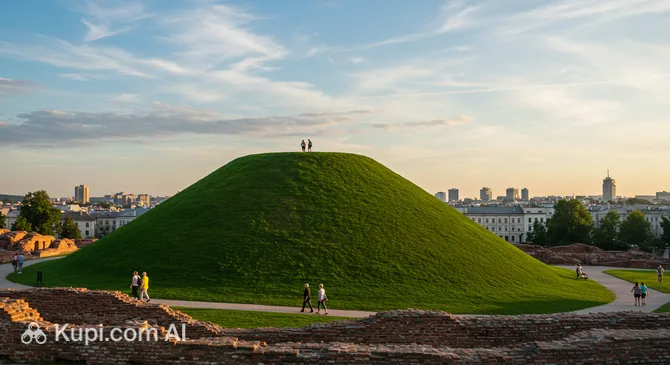
Krakus Mound. Illustration.
Source: Kupi.com AI

Traveler photos:

The mound itself is an artificial structure 34 meters high. It is strategically placed on a natural elevation, Sikornik Hill, bringing its total height above sea level to an impressive 326 meters. This placement makes it a prominent feature in the landscape.

This monumental landmark is more than just a tourist attraction; it is a true symbol of the country's rich cultural and historical heritage. Visiting the Krakus Mound allows you to touch important pages of the past and feel the spirit of national pride.

One of the main reasons for the Krakus Mound's appeal is the breathtaking panoramic views from its summit. From here, you can admire the city and its picturesque surroundings, making it a favorite spot for both tourists and locals wishing to enjoy the beauty of the city from above.

Contacts

Since the Krakus Mound is a historical monument and generally a public site, there may not be specific contact details for visiting. For the most up-to-date information on opening hours, possible tours, or events held at the mound, it is recommended to consult the official tourist resources of the city of Krakow or visit local tourist information centers upon arrival in the city.

How to contactContact
Address30-543 Kraków, Poland

What to Do

Visiting the Krakus Mound is a unique opportunity to encounter the ancient history and legends of Krakow. According to legends, this majestic earthen mound is the final resting place of the city's legendary founder, Prince Krak. This makes the mound one of the oldest and most mysterious monuments not only in Krakow but in all of Poland, shrouded in an atmosphere of mystery and the passage of centuries.

The main activity for visitors to the Krakus Mound is, of course, climbing to its summit. The ascent does not require special training and is fully rewarded: it offers breathtaking panoramic views of the city. You can admire the historic center of Krakow, the bends of the Vistula River, and the picturesque surroundings. Krakus Mound also serves as a popular spot for relaxation and walks for both tourists and locals; its green slopes invite leisurely pastimes and contemplation.

Krakow is famous for its historical mounds, and besides the Krakus Mound, the Kościuszko Mound may also be of interest to travelers. Visitors to the latter can explore the Kościuszko Museum, which houses artifacts and exhibits related to the life and achievements of Tadeusz Kościuszko, who played a significant role in Poland's history. In addition to the museum, at the Kościuszko Mound, you can walk along scenic footpaths and gardens, and from its summit, where a commemorative granite stone inscribed "Kościuszce" is set, there are impressive views of the city and its surroundings. Visiting this site can complement the impressions of visiting Krakow's ancient mounds.

Getting There

Reaching the Krakus Mound, one of the oldest and most mysterious attractions in Krakow, is quite straightforward. The mound is located in the Podgórze district, on Lasota Hill, which offers picturesque views of the city. Depending on your starting point in Krakow and personal preferences, you can choose from several convenient ways to reach this historical site.

The most common and economical option is public transport. Krakow has a well-developed network of tram and bus routes. You will need to find transport heading toward the Podgórze district to stops within walking distance of the mound. From the nearest stop, a short walk leads to the foot and then to the top of the hill. We recommend checking current route numbers and schedules on the official Krakow city transport websites or using mobile trip-planning apps in advance.

For those who value comfort and speed or are traveling in a small group, a taxi or one of the popular ride-hailing services is an excellent alternative. A car ride from central Krakow to the Krakus Mound usually doesn't take much time, though this can depend on current traffic conditions. The driver will be able to drop you off as close as possible to the start of the trail leading up the mound. Also, if you enjoy walking and are relatively close by—for example, in the historic Kazimierz district or Old Podgórze—you might consider walking to the Krakus Mound, enjoying the views and the atmosphere of Krakow along the way.

Nearest city: Krakow

History & Facts

The idea of creating the Krakus Mound (also known as the Kościuszko Mound) arose shortly after Tadeusz Kościuszko's death in 1817 as a tribute to this outstanding national hero of Poland. The construction, which began in 1820, became a truly national project: funds were raised through voluntary donations from Poles across the country and from abroad. This eloquently testifies to the deep admiration for Kościuszko's contributions to Poland's struggle for independence and his role in the American Revolutionary War. The initiator and head of the construction committee was Kościuszko's close friend and first Polish biographer, Franciszek Paszkowski.

The formal commencement of the mound's construction took place on September 15, 1820, and for three years, thousands of volunteers—men, women, and children—worked on its creation. Construction was completed on October 25, 1823. A special feature of this memorial is that it contains soil brought from the battlefields where Tadeusz Kościuszko led his troops, both in Poland and in America. Thus, the Krakus Mound became not just a monument but a symbolic site preserving the memory of his heroic legacy.

The history of the Krakus Mound is not limited to its creation. In the mid-19th century, specifically in 1850, the Austrian authorities, who controlled Krakow at the time, began using the hill's strategic location for military purposes. Powerful fortifications known as "Fort 2 Kościuszko" were built around the mound, with construction finishing in 1854. These fortifications became part of the Krakow Fortress. Later, during World War I, the commemorative stone was temporarily removed from the top of the mound, and an observation post was established in its place.

Time Needed

To fully enjoy a visit to the Krakus Mound and explore it, most visitors typically need about 1-2 hours. This time includes a leisurely climb to the top of the mound, which offers beautiful views of Krakow, as well as time to take photos and simply enjoy the atmosphere of this historic site.

Of course, the duration of your visit may vary depending on personal preferences and pace. If you only plan a quick climb for the panoramic view and a few photos, less than one hour may be enough. However, to truly soak in the spirit of this ancient place, perhaps walk a bit around its base and calmly contemplate the views, it is recommended to set aside a little more time. This will allow you to experience the uniqueness of the Krakus Mound without rushing.

Working Hours

The Krakus Mound is generally a public site, and entry to the mound itself is usually free and not restricted by strict opening hours, as is often the case with museums. Visitors can climb it during daylight hours. As an open historical site, it is accessible year-round; however, the best time to visit is in dry weather so that the paths are comfortable for climbing.

Special ticket booking or advance registration for visiting the Krakus Mound itself is usually not required. Nevertheless, it is always helpful to check the current information on official Krakow tourist portals or at local information centers, especially if you plan a visit during major city events or holidays, as temporary restrictions or special programs may be introduced.

Open 24 hours

Nearby

Visiting the Krakus Mound is undoubtedly a highlight of any trip to Krakow. However, to make your experience of the city even more complete and multifaceted, it's worth paying attention to other interesting sites located nearby. Exploring the surroundings will allow you to dive deeper into the atmosphere of Krakow and discover its hidden gems.

Near the Krakus Mound, many other attractions await you, each unique in its own way and capable of telling its part of the history of this amazing city in Poland. From historical museums to modern entertainment centers, Krakow offers options for every taste, and getting to know them will enrich your trip. Below is a list of some of these attractions, including their distance from the Krakus Mound:

NameDistance
Oskar Schindler's Enamel Factory1.1 km
VRepublic - Virtual Reality Park1.2 km
Forum Przestrzenie1.8 km
Wawel Royal Castle2.4 km
House of Attractions2.8 km
Fabryczna 132.9 km
Wilczy Dół Tavern3 km

Have you reached the end of the page?

So the route has been studied inside and out