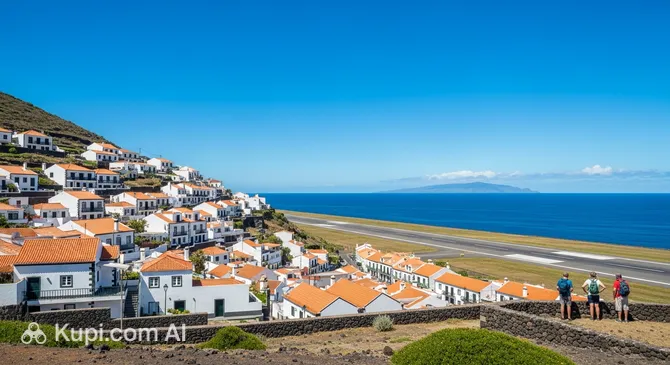
Shopping in Vila do Corvo is an experience defined by simplicity and authenticity, standing in stark contrast to the commercialized retail environments found in larger cities. As a remote village with a small population, the island does not offer high streets, luxury boutiques, or extensive retail chains. Instead, shopping here is focused on essential goods and unique, handcrafted items that reflect the island's heritage. Visitors should approach shopping with the mindset of supporting the local community and discovering rare artisanal treasures rather than seeking variety or fashion.
There are no designated shopping districts or bustling commercial avenues in the traditional sense. The "shopping area" is effectively the village itself, where a handful of establishments are scattered along the narrow cobblestone streets, particularly near the port and the church. A stroll through the center of Vila do Corvo will reveal the few small grocery stores (mercearias) and local craft spots that serve the daily needs of the residents and the curiosity of visitors.
It is important to note that there are absolutely no shopping malls or department stores on the island. The retail landscape consists entirely of small, family-run businesses. If you are looking for branded clothing, electronics, or extensive duty-free options, you will not find them here. The charm of shopping in Corvo lies in its intimacy, where the person selling you an item is often the one who made it or grew it.
While there are no large open-air markets, the local mini-markets act as the hub for fresh produce and daily supplies. Occasionally, you may find locals selling seasonal fruits or vegetables directly, but the commercial exchange is often informal. For visitors, the most interesting "market" experience is visiting the local artisan center or the Casa do Trabalho, where the island's handicraft traditions are kept alive and displayed for sale.
When it comes to souvenirs, Vila do Corvo offers items that are truly unique to the island. The most iconic purchase is the Barreta do Corvo, a traditional knitted wool cap usually made in blue with a white geometrical pattern. Historically worn by whalers and farmers, it has become a symbol of the island's identity. Another distinct souvenir is the fechadura de madeira (wooden lock). These intricate, functional locks were traditionally used on house doors and are now crafted by local artisans as decorative pieces. Additionally, bringing back a wheel of Queijo do Corvo, the local artisanal cheese, is a delicious way to share the flavors of the Azores.
Store opening hours in Vila do Corvo can be limited and somewhat flexible compared to mainland standards. Most shops open around 9:00 AM or 10:00 AM, close for a lunch break (typically between 1:00 PM and 2:00 PM or 3:00 PM), and reopen until roughly 6:00 PM or 7:00 PM. On weekends, hours may be reduced, and many places close on Sundays. Regarding payment, cash is king. While some establishments may accept Portuguese debit cards (Multibanco), international credit cards are not widely accepted in small shops. It is highly advisable to carry enough Euros to cover your purchases.
Tax-free shopping (VAT refund) is generally not a relevant concept for the type of small-scale, artisanal purchases made in Vila do Corvo. The administrative infrastructure for processing tax-free forms is typically found in larger tourist hubs in Portugal, and the local shops here are unlikely to participate in such schemes. Visitors should expect to pay the marked price, which includes the local VAT.