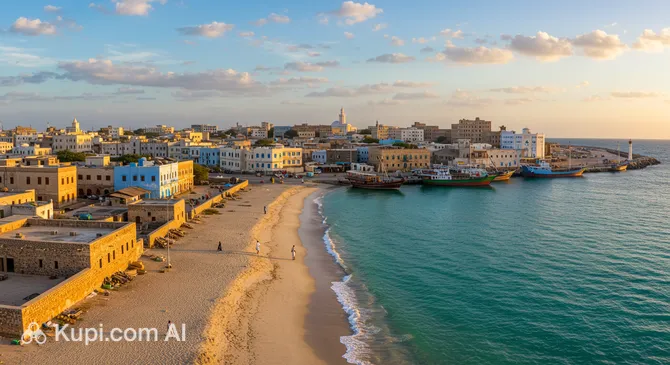
Berbera is a vital maritime hub and one of the largest cities in Somalia, with a history inextricably linked to trade in the Horn of Africa. Situated at a strategic crossroads of sea routes, the city has served for centuries as a bridge between Africa, the Middle East, and India. Its cosmopolitan atmosphere harmoniously blends with the industrial rhythm of a modern port, making Berbera a key economic center for the Sahil region.
The city's geographical position on the shores of the Gulf of Aden defines its importance as the country's primary gateway to the sea. With a population estimated by some sources to reach 478,000, it ranks among the nation's largest metropolises. Although modern Berbera is focused on industry and logistics, one can still catch glimpses of its illustrious past when it served as the capital of British Somaliland.
Berbera. Illustration.
Source: Kupi.com AI
Tourists are primarily drawn here by the unique historical heritage reflected in the architecture of the old town, where Arabic, Persian, and Ottoman influences intermingle. Strolling along the waterfront and experiencing the daily life of the fishing port allows visitors to feel the authentic spirit of the region. Visiting this city is an invitation to see Somalia through the lens of its maritime power and ancient trading traditions.
Weather Overview
Berbera is dominated by a hot coastal climate, typical for the arid zones of the Horn of Africa. High temperatures persist here almost year-round, so the city will certainly appeal to those who love the heat. Expect extremely hot summers, when the thermometer often crosses the 40°C mark, and mild, dry winters with average temperatures around 24–26°C.
Precipitation in the region is minimal and seasonal, most often falling in April, October, and November. Proximity to the Gulf of Aden ensures high humidity, which, combined with the heat, can create a sauna effect during the summer months. To better plan your visit, we recommend studying the detailed Berbera climate, keeping in mind that the most comfortable time to visit is considered the winter months from December to February.
Average monthly temperature
Average monthly precipitation
Interesting Facts
Berbera is mentioned in the ancient Greek manuscript "Periplus of the Erythraean Sea", dating back to the 1st century AD, as a vital trading post on the Indian Ocean coast.
Until 1941, the city held the status of administrative center and capital of the British Somaliland protectorate, which left a mark on its layout and architecture.
Berbera's architectural appearance is a rare fusion of Arabic, Persian, and Ottoman styles, shaped by centuries of active maritime trade.
The city is the sixth largest in the country by population, while serving as its main economic engine in the field of maritime shipping.
Thanks to its deep-water port, Berbera is capable of receiving the largest modern vessels, making it one of the most technologically advanced maritime hubs in the Horn of Africa region.
How to Get There
The transport accessibility of Berbera is due to its status as a key port and economic center. Getting to the city is easiest by air or sea, as well as by car from nearby regional hubs. The road network connects the port with the country's interior, ensuring a constant flow of goods and passengers.
The main air gateway is Berbera International Airport (IATA: BBO). It is located in close proximity to the city, allowing for a journey to the central district in just 10–15 minutes. The airport receives regular flights from regional hubs, and the lack of heavy traffic on the roads makes transfers quick and comfortable. For travel from the terminal to the port, it is most convenient to use the services of a licensed taxi.
The sea route is the most atmospheric way to arrive in Berbera. Regular vessels connect the city with Djibouti and other ports in the Gulf of Aden. Travel time depends on the type of vessel and the route, but arriving directly into the heart of the city's commercial activity leaves an unforgettable impression. Land transport, such as private cars or shared taxis, connects Berbera with Hargeisa, though it's worth noting that dusty road sections may slow down the journey.
Station
Passenger traffic
Distance
Nagad railway station
5
239 km
Main Attractions
While Berbera is primarily a major industrial center, it holds plenty of interest for the thoughtful traveler. The main "attraction" and the heart of the city is the Port of Berbera itself. Observing the large-scale loading of vessels and the bustle of the trading hub provides a clear picture of how the economy of this strategically important region functions.
The Old Town deserves special attention, as it still preserves buildings with elements of Ottoman, Arabic, and Persian architecture. Wandering through its narrow streets, you can see traces of former colonial grandeur and centuries-old trade links. Despite the passage of time, the facades of the old houses maintain a unique style that sets Berbera apart from other coastal cities.
For those who want to experience the local flavor, the Central Market and the waterfront are essential stops. Daily life thrives here, from the noisy trade of the fresh catch to leisurely gatherings in seaside cafes. It is the perfect place to see the city as it is and enjoy the view of the Gulf of Aden while watching fishing boats return in the glow of the setting sun.
Local Cuisine
The gastronomy of Berbera is a true feast for seafood lovers. Based on Somali traditions, the local cuisine places its main emphasis on freshly caught fish. It is prepared over an open fire, baked with spices, or served in hearty fish stews. A meal in Berbera rarely goes without traditional rice or anjero flatbreads, which perfectly complement the spicy dishes.
In addition to seafood, meat dishes are highly regarded by locals. It is worth trying the tender spiced lamb or goat soup, which is considered very filling and healthy. The food culture here is simple and democratic: the best taste experiences can be found in small family-run establishments near the port or at markets, where food is prepared from the freshest ingredients right before your eyes.
Among drinks in Berbera, Somali tea (shaah) leads the way—aromatic, sweet, and infused with cardamom, cloves, and sometimes ginger. Freshly squeezed juices, especially from succulent local mangoes, are also popular. Due to cultural characteristics, only halal food is served in the city, and alcohol is not common in public places, which should be taken into account when planning dinners.
Travel Tips
A trip to Berbera requires some preparation to ensure your acquaintance with this unique port city is as comfortable and safe as possible. We have prepared several practical tips to help you adapt more quickly to local conditions.
Clothing and Essentials: Choose clothing made of light natural fabrics (cotton, linen) to better endure the heat. Given the conservative nature of the region, a modest dress code is recommended: covered shoulders and knees. Be sure to bring sunscreen, a hat, and comfortable closed shoes for protection against dust.
Transport: The best way to get around is by taxis or motorized rickshaws. There are no ride-hailing apps, so flag them down on the street or ask at your hotel. Always agree on the price before starting the journey.
Finances: The main method of payment is cash. Cards are accepted very rarely, and there are very few ATMs, so it is worth having a supply of currency with you. Tipping is not mandatory but is welcomed.
Health and Safety: Drink only bottled water and avoid ice in drinks. During the day, try to stay in the shade. Avoid walking in outlying areas with informal housing.
Communication: The main language is Somali, but many people in the port and business environment speak English. Learn a few phrases for greeting—this is very well-received by locals.
Local Etiquette: Greetings are very important; a simple handshake (between men) is the norm. Always ask for permission before taking photos of local residents.
What to Avoid: Do not carry valuables openly and avoid political discussions. It is also recommended not to openly display affection in public (hugging, kissing).
Pro Tip: If you plan a trip to the port, it is best to do so in the first half of the day when activity is highest and the heat has not yet reached its peak.
May your journey to this historical port of the Horn of Africa be filled with bright discoveries and positive impressions!
Entertainment & Nightlife
Traditional nightlife is virtually non-existent in Berbera, as the city lives according to the rhythm of a working port. You won't find the usual nightclubs or bars here; instead, evening activity is centered in tea houses and the outdoor areas of street cafes. Locals prefer to spend their time in leisurely conversation, discussing the day's news over a cup of strong Somali tea.
The main areas for evening strolls are the waterfront and the central market squares. The crowd here is predominantly male, and the atmosphere is calm and conservative. For those seeking more varied entertainment, such as cinemas or concert venues, locals usually recommend heading to neighboring Hargeisa, which is a few hours' drive away.
Daytime leisure in the city is also laid-back. Tourists can spend time watching the port operations or head to the coast for sport fishing, which is a popular hobby in these parts. Overall, a holiday in Berbera is geared toward those who appreciate quiet evenings and the authentic atmosphere of a port city without excessive tourist bustle.
Parks & Museums
Due to the hot desert climate and the prevalence of industrial buildings, Berbera does not boast an abundance of classic parks or botanical gardens. The main recreational area for residents and visitors is the city waterfront and the beach areas near the port. It is here that the sea breeze helps make the daytime heat more bearable, and walks by the water become the primary form of relaxation.
As for museums, there are none in the traditional sense within the city. However, the architecture of the Old Town and the port area itself can be considered an "open-air museum." Walking through these historical quarters, you can see unique examples of colonial architecture and ancient trading shops that tell the city's history better than any exhibition could.
The lack of organized green spaces is compensated for by the authenticity of the local market squares, which are centers of social life. Tourists seeking cultural enrichment are encouraged to observe the daily traditions of local fishermen and traders, whose methods of work have not changed for decades, representing the living history of this unique port city.
Getting Around
Public transport in Berbera is quite modestly developed, which is typical for cities with such a functional layout. The main means of transport for tourists and locals are taxis and motorized rickshaws. They are easily available in central areas and near the port zone, providing quick connections between the city's main points. Traffic jams are rare here, though it is worth considering that dusty roads can make a trip in an open rickshaw less comfortable.
There are no bus routes or metro systems in Berbera, so travel planning should rely on private transport. Payment in taxis and rickshaws is usually negotiable, so it is recommended to agree on the fare in advance. In the central part of the city, especially in the port district and at the markets, many people prefer to move around on foot, as the distances between key sites are small.
For long-distance trips outside the city, such as to Hargeisa, private minibuses or shared transport are used. Bicycle rentals are not developed in the city due to the extremely high temperatures during the day. Travelers should remember that pedestrian infrastructure, such as sidewalks, is not present everywhere, so care should be taken when walking near the roadway.
Accommodation
Accommodation options in Berbera are primarily geared toward business travelers, employees of international organizations, and transit sailors. The city is dominated by functional hotels in the mid-range and budget segments, located near the port area or the airport. Tourist services in the classical sense are underdeveloped, so accommodation is chosen based on the practical considerations of proximity to transport hubs.
Most hotels offer a basic set of amenities necessary for a comfortable rest after a working day or a long journey. For those planning to stay in the city for an extended period, renting apartments is a popular option. Such properties are often chosen by expats working in the city's logistics and industrial sectors. It is worth noting that there are virtually no luxury resorts or international chain hotels in Berbera.
When planning a trip, it is recommended to book accommodation in advance, especially if your visit coincides with periods of active port operations or international meetings. Main booking methods include using local websites or contacting hotel management directly. Remember that due to the hot climate, a functioning air conditioner is a critical requirement when choosing a room.
Nearby Cities
Berbera can serve as an excellent starting point for exploring the northern regions of the country, offering access to historical and administrative centers. The region around the city is rich in contrasts—from coastal plains to hilly landscapes where locations of interest to the traveler are hidden.
The most popular destination for a day trip is Hargeisa. This city is located about 142 kilometers from Berbera, and the journey by car takes about 3–4 hours. As the administrative center, Hargeisa offers a wider choice of services, restaurants, and cultural sites. Also of interest are the cities of Burao and Odweyne, with the route passing through picturesque semi-desert territories.
For those ready for longer journeys, destinations toward Zeila or the educational center of Borama are available. Each of these directions allows for a deeper acquaintance with the daily life of the local population and the diversity of the region's nature. Exploring Berbera's surroundings will give you a complete picture of life in this part of the world beyond the port terminals.
Shopping & Souvenirs
Shopping in Berbera is primarily about visiting traditional port bazaars. There are no huge modern shopping malls here, but there is an abundance of colorful markets where you can find everything from the freshest catch to fabrics and spices brought from across Asia. The main commercial activity is concentrated in the port area and the old part of the city, where shops are closely packed together.
As souvenirs from Berbera, it is worth bringing back local spices, which are known for their particularly vibrant aromas, or folk handicrafts related to fishing. The city is also famous for its fabrics and traditional clothing. Markets open early in the morning, which is the best time to visit to find the widest selection of goods and avoid the peak of the daytime heat.
Payment in most places is made in cash, as the use of international bank cards is extremely limited. Typical shop opening hours may be interrupted for a midday break during the hottest time, so plan your shopping for the morning or evening hours. Bargaining in the markets is appropriate and is an important part of the local etiquette of communication between seller and buyer.
We use cookies and services to collect user information. This is essential for the functioning of the site and for marketing purposes. You can find out more in .