Support

Dar al-Horra Palace

About

Dar al-Horra Palace, also known as Dar al-Horra, is a historic treasure located in the colorful city of Granada, Spain. This elegant palace was built in the 15th century by order of the Emir of Granada, Abu-l-Hasan Ali, for his wife Aixa al-Horra. Notably, it was constructed on the foundations of an earlier Syrian palace dating back to the 11th century, which adds historical depth to the site.
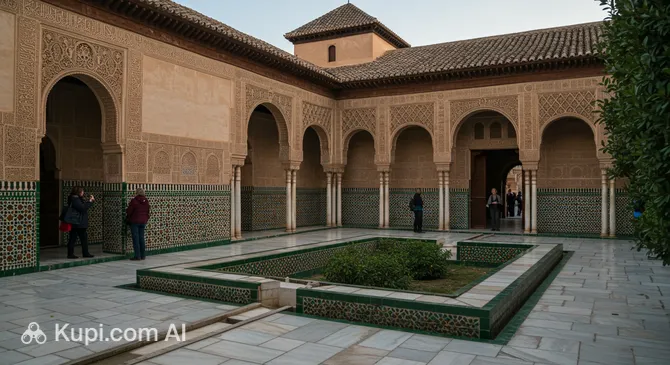
Dar al-Horra Palace. Illustration.
Source: Kupi.com AI

Traveler photos:

The palace served as the residence of Aixa, who was not only the emir's wife but also the mother of Boabdil—the last Muslim ruler of Granada. Thus, Dar al-Horra Palace is inextricably linked with key moments in the city's history and the end of the era of Moorish rule on the Iberian Peninsula. Today, it is an important architectural monument of the Nasrid period and a valuable testament to Spain's rich cultural heritage.

Visitors to Dar al-Horra Palace can enjoy the elegance of the Moorish style, reflected in characteristic courtyards, decorated arcades, fine carvings, and decorative elements that have been beautifully preserved. This site allows for a journey through time, immersing you in the atmosphere of a bygone era and providing a deeper understanding of Granada's history. Touring the palace is an excellent addition to visiting other famous landmarks of the city's Muslim period, such as the majestic Alhambra.

Contacts

To get the most up-to-date information on opening hours, ticket prices, and available tours at the Dar al-Horra Palace, we recommend visiting the official Granada tourism portal or checking with local tourist information centers upon arrival. The palace itself is located in the historic part of Granada and can typically be reached on foot by strolling through the city's charming streets or by using public transport.

How to contactContact
AddressCjón. de las Monjas Albayzin, s/n, Albaicín, 18008 Granada, Spain
Phone number+34 671 56 35 53
Websitewww.alhambra-patronato.es

What to Do

By visiting Dar al-Horra Palace, you can take a true journey through time, immersing yourself in the sophisticated atmosphere of Moorish Spain. Here, you will discover graceful architectural solutions and characteristic Nasrid style elements: take note of the courtyards, arches, and decorative finishes. This is a wonderful opportunity to learn about the daily life of Granada's Muslim rulers and gain a deeper understanding of the history of their final years of reign, including the fate of Aixa, the mother of the last emir.

One of the appealing features of Dar al-Horra Palace is its relative seclusion compared to the more famous Alhambra. This means you can enjoy exploring this historical monument in a calmer and more measured environment, away from the bustle and large tour groups. Take the time to study the preserved elements in detail and feel the spirit of a bygone era.

Additionally, a visit to the palace pairs perfectly with a stroll through the picturesque historic Albaicín district where it is located. You can not only see the palace itself but also explore the narrow streets of this quarter, which, along with the Alhambra and Generalife, is a UNESCO World Heritage site, while enjoying the views and authentic atmosphere of old Granada.

Getting There

Dar al-Horra Palace is conveniently located in the heart of the historic Albaicín district in Granada, making it relatively easy for visitors to reach. There are several ways to get to this hidden gem of Moorish architecture, depending on your preference and physical fitness.

One of the most popular and atmospheric ways is a walk from the center of Granada. The path leads through the picturesque, narrow, and winding streets of the Albaicín district, which is itself a UNESCO World Heritage site. While it involves an uphill climb, this walk rewards you with stunning views and the chance to immerse yourself in the authentic atmosphere of the old city. It is an ideal choice for those who want to feel the spirit of history even before arriving at the palace.

If you prefer a more comfortable way to travel or are short on time, you can use public transport. Several city bus routes pass near Albaicín, from which the Dar al-Horra Palace is just a short walk away. Taxis are also always available and can take you as close to the palace entrance as possible. It is recommended to check with the driver if they can drive directly to the site, as some streets in Albaicín may be closed to private vehicles.

Nearest city: Granada

History & Facts

Dar al-Horra Palace, whose name translates to "House of the Honest" or "House of the Free Woman," is shrouded in an intriguing history closely intertwined with the final days of Muslim rule in Granada. Its construction in the 15th century was commissioned by Emir Abu-l-Hasan Ali, the ruler of the Emirate of Granada, specifically for his first and favorite wife, Aixa al-Horra. Notably, the palace was not built on an empty plot but on the ruins of an earlier 11th-century Syrian building, testifying to the centuries-old history of this site in the heart of the Albaicín district.

The particular historical significance of Dar al-Horra Palace lies in the fact that it served as the residence of Aixa al-Horra, the mother of Muhammad XII, better known as Boabdil—the last Nasrid emir of Granada. From within these walls, Aixa, a strong and influential woman of her time, witnessed the dramatic events that led to the fall of the Emirate of Granada. The fate of Boabdil and his mother is inextricably linked to this palace, which witnessed the final breaths of the Moorish era on the Iberian Peninsula.

After the conquest of Granada by the Catholic Monarchs, Ferdinand of Aragon and Isabella of Castile, in 1492, marking the end of the Reconquista, Dar al-Horra Palace passed into their possession. Boabdil, having handed over the keys to the famous Alhambra, left Spain, and the Moorish period in the city's history came to a close. After some modifications, the palace was integrated into the Santa Isabel la Real convent, which allowed it to be preserved to this day, albeit with some changes. Today, it stands as one of the few well-preserved examples of Nasrid residential architecture outside the Alhambra, offering a glimpse into the refined culture and daily life of Granada's last Muslim rulers.

Time Needed

To explore Dar al-Horra Palace and soak in its atmosphere, most visitors will need approximately 1-2 hours. This time is usually sufficient to leisurely walk through all the accessible rooms, admire the architectural details and the inner courtyard, and imagine the lives of its 15th-century inhabitants. The palace is not very large compared to the Alhambra, which allows for a more detailed study in a relatively short period.

Of course, the duration of your visit may vary depending on your interest in Nasrid history and architecture. If you wish to delve deeper into the details, examine every decorative element, or simply enjoy the tranquility of the place, you might spend a bit more time here. It's also worth considering that if you plan to combine your visit to Dar al-Horra Palace with a walk through the charming Albaicín district where it's situated, the total time spent in this part of Granada will naturally increase.

Overall, Dar al-Horra Palace offers a wonderful opportunity for a relatively brief but rich immersion into Granada's history. It's the perfect complement to visiting larger attractions, providing a more complete picture of Spain's Moorish heritage.

Working Hours

The exact opening hours of Dar al-Horra Palace in Granada can vary depending on the season and the day of the week. Since specific schedule information is not provided, it is highly recommended to check current data before your visit. The most reliable way to find out exact opening hours, as well as information on whether advance ticket booking or tour registration is required, is to visit the official Granada tourism portal or check with local tourist information centers upon your arrival in the city.

Generally, many historical attractions in Spain are open to the public year-round; however, there may be schedule changes related to public holidays or special events. By checking this information in advance, you can plan your visit effectively and avoid potential inconveniences. It's also worth inquiring about combined tickets that include entry to other Granada attractions, which can be a cost-effective option.

9:00 – 14:30, 5:00 – 20:30

Nearby

A visit to Dar al-Horra Palace is undoubtedly a highlight, but exploring its surroundings can further enrich your experience of Granada. By discovering nearby attractions, you can dive deeper into the history and culture of this amazing Andalusian city, uncovering new facets of its centuries-old heritage.

The Albaicín district, where the palace is located, is a treasure trove in its own right, full of charming corners, viewpoints with breathtaking vistas of the Alhambra, and cozy spots that preserve the spirit of antiquity. Don't miss the chance to expand your itinerary and visit other iconic sites within walking distance of Dar al-Horra Palace.

NameDistance
Elvira Gate0.3 km
Casa Ana Flamenco Tablao0.4 km
San Nicolás Viewpoint0.4 km
El Bañuelo0.5 km
Royal Chapel of Granada0.6 km
D'Sano Café0.6 km
Granada Cathedral0.6 km

Have you reached the end of the page?

So the route has been studied inside and out