Support

Nerja

About

Nerja is a charming town and a true southern gem of Spain, nestled along the picturesque Costa del Sol. Located in the province of Málaga within the autonomous community of Andalusia, it stretches across the rocky shores of the Mediterranean Sea, where majestic cliffs meet golden beaches and turquoise waters.

With a population of approximately 21,450 people, Nerja has managed to preserve the unique atmosphere of a traditional Andalusian town. There is no hustle and bustle of a metropolis here; instead, the town delights with its leisurely pace of life, friendly residents, and the vibrant colors of Mediterranean architecture. Thanks to its favorable location, Nerja seems to attract sunny days and gentle sea breezes, creating ideal conditions for a holiday all year round.
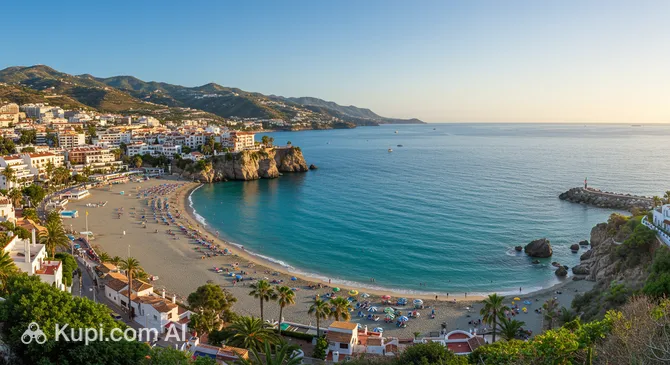
Nerja. Illustration.
Source: Kupi.com AI

The town is famous for its historic center, where narrow cobbled streets lead to picturesque squares, past whitewashed houses with flowering balconies and cozy taverns. One of Nerja's main jewels is the Balcony of Europe (Balcón de Europa) — an impressive observation deck offering breathtaking views of the sea and the surrounding mountains. Also worth a visit are the famous Caves of Nerja, known for their prehistoric cave paintings and spectacular karst formations.

Nerja is an ideal destination for those seeking harmony between nature, history, and culture. If you dream of relaxing on beautiful beaches, exploring ancient mysteries, and enjoying the authentic atmosphere of southern Spain, be sure to come to Nerja to recharge your inspiration for the whole year!

You can find more interesting facts on the history of Nerja page.
Weather Overview

The weather in Nerja is characterized by a mild Mediterranean climate, making it attractive to visit year-round. Summers here are very warm and predominantly dry: the average air temperature in July and August hovers around 24-25°C, while maximums often reach 29-30°C. Precipitation in the summer months, especially in July (0 mm) and August (0 mm), is virtually non-existent, guaranteeing plenty of sunny days.

Winters in Nerja are mild, with an average temperature of about 9-10°C in January and December, while minimum temperatures usually do not drop below 5-6°C. There is more rainfall during the winter period compared to summer, but the number of rainy days remains moderate (averaging 6-8 days per month with light precipitation). Overall, expect hot, sunny summers and mild winters with little rainfall. For a more detailed look at weather conditions by month, including information on water temperature and sunshine hours, visit the Climate and Weather in Nerja page.

Average monthly temperature

Average monthly precipitation

Interesting Facts

Beyond its famous beaches and charming streets, Nerja hides many amazing stories and curious details. This town is a true treasure box of surprises for the observant traveler.

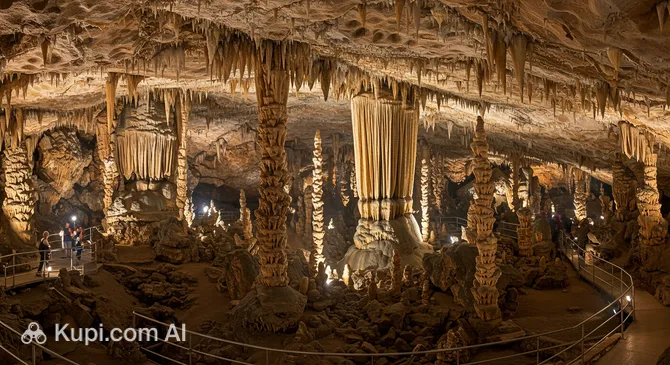
Nerja Cave. Illustration.
Source: Kupi.com AI

Traveler photos:

  • The Nerja Caves house one of the world's largest stalactites, reaching a height of about 32 meters! Additionally, these ancient caves, decorated with rock paintings over 20,000 years old, regularly serve as a concert venue thanks to their unique acoustics.

  • Much of Nerja's fame is due to the popular 1980s Spanish TV series "Blue Summer" (Verano Azul). Before this, the town was a quiet fishing village. In memory of the series, the Verano Azul Park was created in the town, and its famous boat "La Dorada" became one of the city's symbols.

  • According to legend, the famous Balcony of Europe was named by King Alfonso XII. Captivated by the view of the Mediterranean, he exclaimed that this was the "balcony of Europe." Today, it is not only a spectacular viewpoint but also the center of the town's cultural life, frequently hosting concerts and festivals.

  • Nerja celebrates traditional Andalusian holidays with great flair, such as the Feria, Carnival, and the Night of San Juan (St. John's Day). During these days, the streets are transformed, filling with music, dancing, colorful parades, and fairs, creating an unforgettable festive atmosphere.

How to Get There

When planning a trip to sunny Andalusia, it is important to think about your route in advance. Nerja is well-positioned relative to the region's main transport arteries, although it does not have its own airport or railway station. Most often, tourists arrive in major nearby cities and cover the rest of the journey by road. Detailed information on all ways to get to the city can be found on the corresponding page.

Since Nerja itself does not have an airport, the main arrival point for most travelers is Málaga Airport (IATA: AGP), located in the city of Málaga. This is the region's largest international hub, situated about 57 km from the resort. Travel time by taxi or bus is approximately 1 hour and 15 minutes. You can also consider flying into Granada Airport (IATA: GRX) in Granada. It is geographically closer (about 49 km), but the drive through mountainous terrain can take a bit longer — about 1.5 hours.

For your convenience, here is summary information on the main airports:

AirportPassenger trafficDistance
Granada Airport1.0 mln49 km
Malaga Airport24.9 mln57 km
Almeria Airport786 205134 km
North Front Airport474 000148 km
Charif Al Idrissi Airport140 000175 km

Train travel enthusiasts should also note that Nerja does not have a railway station. The closest and most convenient option is to arrive at María Zambrano Station in Málaga, which is 50 km from Nerja. High-speed trains from Madrid and other major Spanish cities arrive here. From the station, you can reach your destination by bus or taxi in about an hour. Another possible option is Granada Railway Station (about 53 km), from where you can also arrange a transfer to the coast.

Below is information about the nearest railway stations:

StationPassenger trafficDistance
María Zambrano Station8.9 mln50 km
Granada Railway Station2.0 mln53 km
Puente Genil Railway Station225 243108 km
Jaén Railway Station580 600114 km
Cordoba Central Railway Station5.7 mln150 km

Main Attractions

Nerja, a charming town on the Costa del Sol in Spain, is famous not only for its beaches but also for its unique attractions that draw tourists from all over the world. Here, everyone will find something to their liking — from ancient caves to picturesque viewpoints.

One of the city's main gems is undoubtedly the Nerja Cave. This is an impressive complex of karst caves discovered in 1959, which amazes with its scale, huge stalactites and stalagmites, as well as cave paintings estimated to be tens of thousands of years old. The caves are equipped for visitors and offer a fascinating journey into the underground world.

Nerja Cave. Illustration.
Source: Kupi.com AI

Traveler photos:

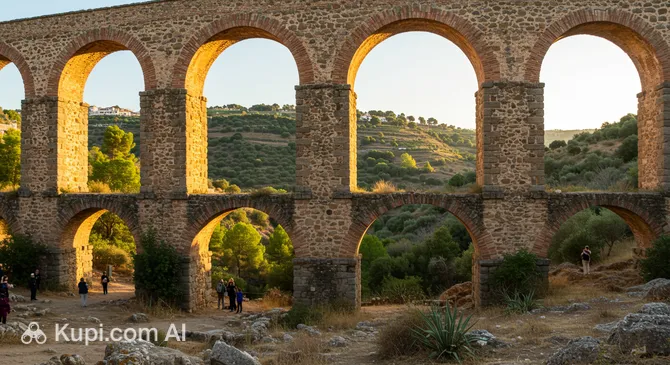
For lovers of history and architecture, the Eagle Aqueduct (Acueducto del Águila) is a must-see. This majestic 19th-century aqueduct, also known as the Bridge of the Eagle, was built to supply water to a sugar factory. Consisting of four tiers of arches, it still impresses with its engineering and looks picturesque against the surrounding landscape.

Eagle Aqueduct. Illustration.
Source: Kupi.com AI

Traveler photos:

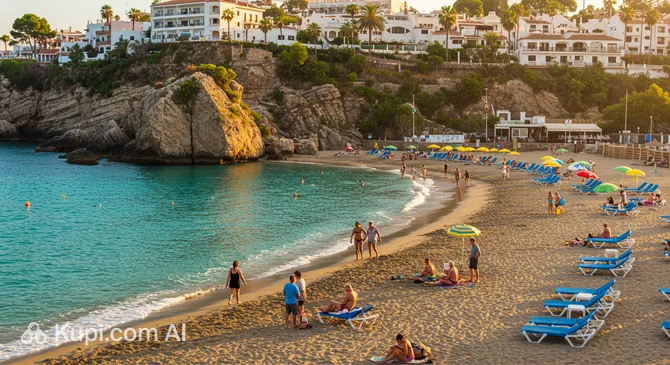
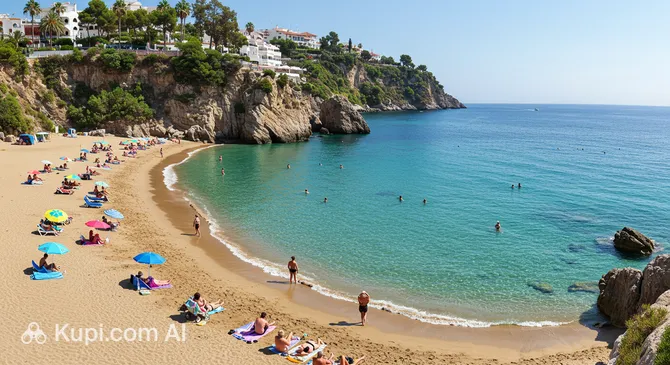
If you want to enjoy the sun and the sea, head to Burriana Beach. It is Nerja's largest and most popular beach, known for its golden sand, clean water, and well-developed infrastructure. Here you can not only sunbathe and swim but also engage in water sports and taste fresh seafood at one of the many chiringuitos (beach restaurants).

Burriana Beach. Illustration.
Source: Kupi.com AI

Traveler photos:

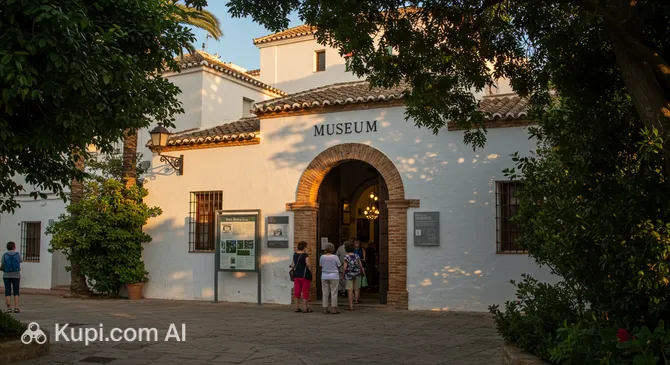
To better understand the region's history and culture, visit the Nerja Museum. Located in the very center of the town on Plaza de España, the museum offers exhibits chronicling Nerja's history from prehistoric times to the present day. You can see archaeological finds, everyday objects, and works of art related to the town and its surroundings.

Nerja Museum. Illustration.
Source: Kupi.com AI

Traveler photos:

Don't forget to also go up to the Mirador del Bendito. This viewpoint, located near the famous Balcony of Europe, offers breathtaking panoramic views of the Mediterranean Sea, the coastline, and the mountains. It is the perfect place to take beautiful photos and enjoy Nerja's beauty from a bird's-eye view.

Local Cuisine

The culinary scene in Nerja is a delightful blend of Mediterranean treasures and rich Andalusian traditions. The main gastronomic symbol of the town that you must try is espetos — sardines skewered on cane sticks and grilled over an open fire right on the beaches. This fragrant delicacy, typical of the entire Costa del Sol, takes on a special charm in Nerja.

Among other iconic dishes is ajo blanco — a refreshing cold soup made from almonds, garlic, and olive oil, perfect for a hot summer day. No less popular is the traditional Andalusian gazpacho, prepared here from ripe local vegetables. Seafood lovers will appreciate the freshest shrimp, squid, and mussels, cooked according to simple yet exquisite local recipes reflecting the town's proximity to the sea.

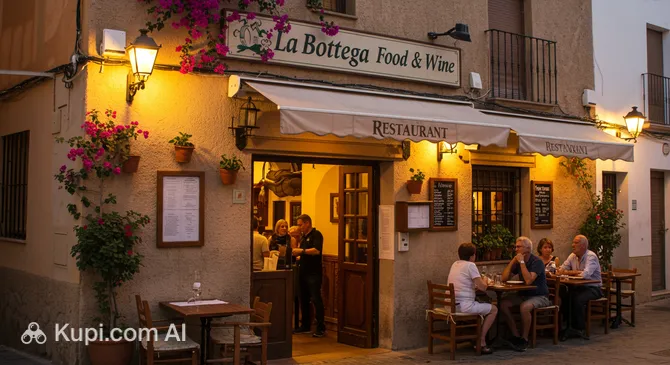
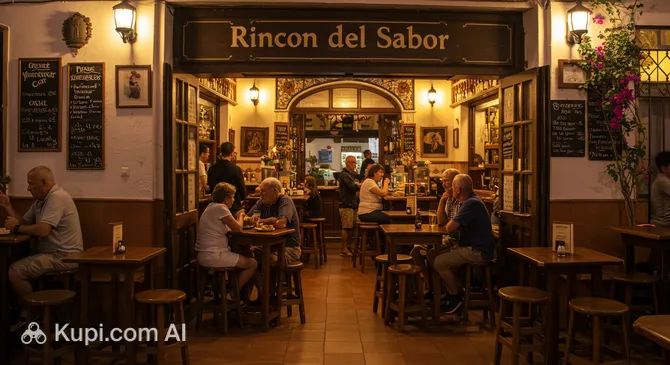
The dining culture in Nerja is diverse and accessible. Locals and tourists alike enjoy visiting numerous tapas bars, where a glass of Andalusian wine, homemade sangria, or refreshing non-alcoholic drinks like freshly squeezed juices from abundant local fruits (orange is especially popular) or cool granisados (fruit ice) are served with various small snacks — tapas. For example, you can stop by El Rincón del Sabor for an authentic tapas experience or visit La Bottega Food & Wine to enjoy local delicacies and wines. Don't overlook the local markets, where you can buy fresh fruit, olives, artisanal cheeses, and traditional almond sweets.

La Bottega Food & Wine. Illustration.
Source: Kupi.com AI

Traveler photos:

Nerja's gastronomic life is always buzzing: in summer, there are often food festivals where you can try seasonal dishes and delve deeper into the region's culinary traditions. Overall, Nerja's cuisine is a celebration of fresh flavors, sea aromas, and Andalusian hospitality that strives to provide an unforgettable experience for every gourmet.

Travel Tips

Planning a trip to charming Nerja? Wonderful! To make your journey through this gem of the Costa del Sol as comfortable and pleasant as possible, we have prepared some practical tips to help you find your way around.

  1. Clothing and Essentials by Season: A pleasant Mediterranean climate awaits you in Nerja. In summer (June-September), pack light and breathable clothing: T-shirts, shorts, sundresses, swimwear, as well as sunscreen, sunglasses, and a hat. In spring and autumn, the weather is mild, but evenings can be cool, so bring a sweater or a light jacket. In winter, temperatures rarely drop low, but jeans, a sweater, and a windbreaker will come in handy. Comfortable shoes are an absolute necessity for walking the cobbled streets of the old town and exploring the many beaches and coves. Don't forget a European adapter for your appliances (type F).
  2. Getting Around Town: Nerja is quite a compact town, and many of its beauties, including the famous Balcony of Europe, the old town, and the nearest beaches, are easy to explore on foot. There is a local bus service connecting different parts of the town and neighboring settlements, such as Frigiliana. Taxis are available and can be found at stands or called by phone. Renting a car can be useful if you plan to explore the surroundings and the Costa del Sol coast, but keep in mind that parking in the center of Nerja, especially in high season, can be difficult.
  3. Finances and Expenses: The official currency in Spain is the Euro (EUR). Credit and debit cards (Visa, Mastercard) are accepted in most hotels, restaurants, and shops. ATMs (cajeros automáticos) are easy to find throughout the town. You can exchange currency at banks or exchange offices, but the ATM rate for card withdrawals is often better. An approximate daily budget per person (excluding accommodation) can be 50-80 euros, depending on your food and entertainment preferences. Tipping in restaurants is not mandatory but appreciated (usually 5-10% of the bill for good service).
  4. Health and Safety: Nerja is considered a very safe town for tourists. Nevertheless, always observe basic precautions: watch your belongings in crowded places and on the beaches. Pharmacies (farmacias) are marked with a green cross; there is always a duty pharmacy open 24/7 (farmacia de guardia – the schedule is usually posted on the doors of other pharmacies). For emergency medical assistance, call 112. It is recommended to have travel medical insurance.
  5. Language and Communication: The official language is Spanish. In tourist areas, hotels, restaurants, and shops, many people speak English and sometimes other European languages. However, knowing a few basic phrases in Spanish will be very helpful and appreciated by locals: "Hola" (Hello), "Adiós" (Goodbye), "Por favor" (Please), "Gracias" (Thank you), "Sí/No" (Yes/No), "No entiendo" (I don't understand). Wi-Fi is available in most hotels and many cafes. A local SIM card can be purchased at mobile phone shops.
  6. Local Etiquette and Traditions: Spaniards are open and friendly people. The greeting "Hola" is appropriate almost always. In shops and cafes, it is customary to say hello when entering and goodbye when leaving. Take note of the siesta time (roughly from 2:00 PM to 5:00 PM): many small shops may be closed during this time, though this is less pronounced in tourist areas. Dinner in Spain is usually late; restaurants start to fill up after 8:30-9:00 PM.
  7. What to Avoid: Try not to discuss controversial political topics loudly, especially those concerning Spain's internal affairs. Also, while Nerja is a resort town, appearing in a swimsuit outside of the beach or pool area (e.g., in shops or restaurants) is considered poor form.
  8. Must-Visit: Don't miss the chance to visit the famous Nerja Caves (Cuevas de Nerja) — an impressive natural monument. Also, set aside time for a trip to the charming white village of Frigiliana, located just a few kilometers from Nerja. And, of course, explore the numerous beaches and hidden coves — each one is beautiful in its own way.

We hope these tips help you better prepare for your trip and fully enjoy the hospitality and beauty of sunny Nerja. We wish you an unforgettable holiday on the coast of Spain!

Entertainment & Nightlife

Nerja, a charming town on the Costa del Sol, offers its guests not only sunny beaches and picturesque views but also a fairly lively evening and nightlife, especially during the tourist season. While Nerja may not boast the scale of nightlife found in larger cities, there are plenty of cozy spots to enjoy your time after sunset.

The main hub for nightlife in Nerja is Plaza Tutti Frutti. Most of the bars, pubs, and a few discos are concentrated here and on the adjacent streets, such as Calle Antonio Millón. The atmosphere is quite relaxed and friendly. The crowd is mixed, ranging from young people to middle-aged tourists. Most establishments stay open late into the night, and some clubs go until dawn, especially in the summer months. There is usually no specific dress code, with casual style prevailing.

Rincon del Sabor. Illustration.
Source: Kupi.com AI

Traveler photos:

Popular evening spots include several establishments. For example, the bar El Rincón del Sabor offers a pleasant atmosphere to enjoy drinks. Another interesting place is the Tetería Zaidín tea house, where you can spend the evening in a more tranquil setting. Many restaurants, such as La Bottega Food & Wine, are also open late, offering not just dinner but the chance to enjoy a glass of wine in a cozy environment.

Practical Tips:

To catch the peak of the fun, it's best to arrive at bars and clubs after 10:00 PM or 11:00 PM. Average drink prices in Nerja are quite moderate. At night, taxis are the primary way to get around. It is recommended to find out the numbers of local taxi services in advance or use taxi stands. Nerja is generally considered a safe town, but at night, as anywhere else, you should stick to well-lit and busy streets, especially if you are walking alone.

During the day, Nerja also offers various forms of entertainment. You can visit the Nerja Museum to learn more about the region's history, take a stroll through the picturesque Verano Azul Park, or, of course, enjoy famous beaches like Burriana Beach. While the town lacks large amusement parks, its natural beauty and cultural sites more than make up for it.

Parks & Museums

Nerja, a charming town on the Costa del Sol, offers its guests not only magnificent beaches but also cozy green corners and interesting cultural sites that introduce the rich history and traditions of the region.

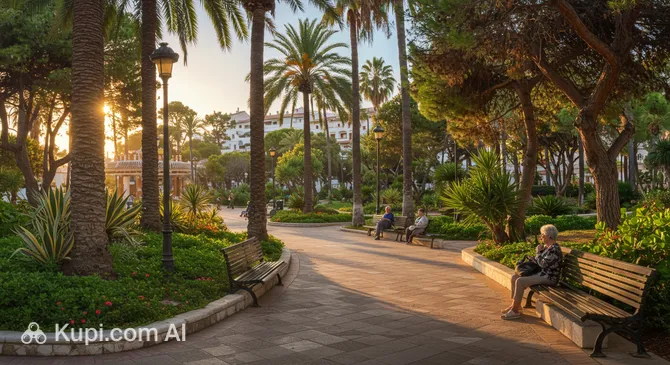
One of the city's most famous green oases is Verano Azul Park. This is a popular spot for walking and relaxation, named after the famous Spanish TV series. It is here that you can see a replica of the legendary fishing boat "La Dorada," which became a symbol of the series and a kind of monument — La Dorada — Chanquete's Boat. For nature lovers, a visit to the world-famous Nerja Cave is essential. This impressive natural monument with its huge halls, stalactites, stalagmites, and rock paintings captures the imagination and transports you back to prehistoric times. While not a park in the traditional sense, it is a key natural attraction of the region. Also worth mentioning are the picturesque beaches, such as the popular Burriana Beach, offering a wide range of services, or the more secluded Carabeo Beach, surrounded by cliffs and greenery.

Verano Azul Park. Illustration.
Source: Kupi.com AI

Traveler photos:

Nerja Cave. Illustration.
Source: Kupi.com AI

Traveler photos:

For those who want to dive deeper into the town's history, the Nerja Museum is open. The museum's exhibition covers the period from prehistoric times to the present day, showcasing archaeological finds, everyday objects, and documents that tell the story of Nerja's development. This museum is an excellent starting point for understanding the local heritage. Not far from the town stands another significant historical site — the Eagle Aqueduct (Acueducto del Águila). This impressive 19th-century aqueduct, also known as the Bridge of the Eagle, is a fine example of engineering from that era and a popular spot for photos.

Nerja Museum. Illustration.
Source: Kupi.com AI

Traveler photos:

Eagle Aqueduct. Illustration.
Source: Kupi.com AI

Traveler photos:

Besides the well-known attractions, take a stroll through the narrow streets of Nerja's old town to discover charming courtyards and small squares. Stop by the Mirador del Bendito viewpoint, which offers spectacular views of the Mediterranean Sea and the coast — it's the perfect place to watch the sunset.

Getting Around

Public transport in Nerja is mainly represented by buses, which are a convenient way to get around both the town itself and to neighboring settlements. Given Nerja's compact size, many attractions are within walking distance; however, buses are useful for trips to more distant beaches or the surrounding area.

The main bus operator serving Nerja and its vicinity is ALSA. Buses run on regular routes, connecting the town center with various districts, as well as with cities like Málaga, Granada, Seville, and others. Local routes (often called "urbano") help you reach popular points such as the Nerja Caves or Burriana Beach. Schedules can be found at bus stops or on the operator's website.

The fare payment system is quite simple. Tickets for local and intercity buses can be purchased directly from the driver when boarding or at the ticket offices at the Nerja Bus Station (Estación de Autobuses de Nerja), which is located near the center. For frequent travel or long distances, it is sometimes more economical to buy tickets online in advance, where discounts may be available. Fares depend on the distance; a trip around town is usually inexpensive, within a few euros. There are generally no specialized tourist travel cards in Nerja itself; payment is made for each trip.

Practical tips for tourists: always have small change ready to pay the driver, as large bills can cause problems with change. Buses usually run on schedule, but slight delays are possible during peak season. Pay close attention to the route number and direction of travel indicated on the bus sign.

Taxis serve as an alternative to public transport in Nerja. Taxi stands can be found at central points in town and near popular tourist sites. This is a more expensive but more comfortable way to get around, especially if you are traveling with luggage or a small group. Bicycle and scooter rentals are also popular in Nerja, which is a great option for exploring the coast and surroundings at your own pace. Car-sharing in the sense of large cities is not common here, but car rental services are widely available.

Accommodation

In Nerja, you will find a wide range of accommodation options to suit the needs of all kinds of travelers. The town offers everything from cozy guest houses and self-catering apartments to comfortable hotels and luxurious villas with pools. Regardless of your budget and preferences, it is easy to find a suitable option here.

Areas near famous beaches like Burriana Beach or Carabeo Beach are particularly popular with tourists, where you can enjoy the sea and sun just steps from your doorstep. Accommodation in the historic town center, near its main attraction — the Balcony of Europe — is also in high demand, offering breathtaking views of the coastline. Staying here allows you to be in the heart of the action with easy access to major tourist sites, restaurants, and shops.

Carabeillo Beach. Illustration.
Source: Kupi.com AI

Traveler photos:

Although specific famous hotels were not listed in the "hotel" or "resort" categories in the provided data, Nerja has many establishments of various levels. You can find small family-run hotels as well as larger hotel complexes with a diverse range of services. Apartments and villas for rent are also very popular choices, especially for family vacations or long-term stays.

Booking Tip: To guarantee the best choice and prices, especially if your trip falls during the peak tourist season (summer months, Easter, or Christmas holidays), it is recommended to book your accommodation well in advance. Demand increases significantly during these times.

Price ranges for accommodation in Nerja vary from budget options to luxury class. You can book accommodation through popular online platforms like Booking.com, Airbnb, and Expedia, or directly on the websites of hotels and apartments. Some small guest houses may accept bookings by phone or email.

Nearby Cities

For those looking to explore the surrounding area, Nerja serves as an excellent starting point for day trips to several interesting nearby locations:

CityPopulationDistance
Torrox19 9977 km
Almuñécar26 74817 km
Torre del Mar22 81920 km
Velez Malaga83 89921 km
Salobreña12 47726 km

Among them, Málaga and Granada stand out in particular. Málaga, a vibrant port city and the birthplace of Pablo Picasso, attracts tourists with its historic center, the impressive Alcazaba fortress, the Roman Theater, and numerous museums. It is a wonderful place for those interested in art, history, and Andalusian culture, as well as those wanting to enjoy urban beaches.

Granada, located at the foot of the Sierra Nevada mountains, is world-famous for the majestic Alhambra palace complex — a jewel of Moorish architecture. Beyond the Alhambra, Granada charms with the narrow streets of the ancient Albaicín quarter, which offers breathtaking views of palaces and gardens. A trip to Granada is a dive into a fairy-tale atmosphere of the past.

These nearby destinations provide a glimpse into the diverse culture and landscapes of the region. A trip to any of these cities will enrich your journey with new impressions and discoveries.

Shopping & Souvenirs

Nerja, a charming resort town on Spain's Costa del Sol, offers an enjoyable shopping experience with a focus on local goods, souvenirs, and handicrafts. You won't find huge shopping centers here, but you can enjoy strolling through picturesque streets and browsing small shops and boutiques.

The main shopping arteries of Nerja are concentrated in its charming historic center, especially in the lively area around the famous Balcony of Europe (Balcón de Europa). Although the Balcony itself is primarily a viewpoint, the streets adjacent to it and leading from it are teeming with shops. Special attention should be paid to streets such as Calle Pintada, Calle Cristo, and Calle Almirante Ferrándiz. Here you will find many boutiques with clothing and footwear, jewelry shops, as well as stores offering local delicacies and original souvenirs.

There are no large shopping malls in Nerja itself. Shopping here is more intimate and focused on small private stores. For a wider selection of brands and large malls, it's worth heading to neighboring cities, such as Málaga.

Be sure to visit the local market, which usually takes place on Tuesdays. Here you can find fresh fruits and vegetables, local cheeses, olives, as well as clothing, shoes, ceramics, leather goods, and various souvenirs at attractive prices. It's a great place to experience the local flavor and pick up something to remember your trip by.

As souvenirs from Nerja, tourists often choose traditional Andalusian ceramics, leather goods, high-quality olive oil, local wines (such as sweet Málaga wine), and souvenirs related to the main natural attraction — the Nerja Cave. Handmade items like jewelry or textiles are also popular.

Nerja Cave. Illustration.
Source: Kupi.com AI

Traveler photos:

Shops in Nerja typically operate from Monday to Saturday, roughly from 10:00 AM to 2:00 PM and from 5:00 PM to 8:00 PM or 9:00 PM, with the traditional siesta break. During the tourist season, some shops might stay open without a break and on Sundays, especially in central areas. Cash and bank cards are accepted in most stores. At markets, it's preferable to have cash with you.

Tourists from non-EU countries can take advantage of the Tax Free system when making purchases over a certain amount in participating stores. Check with the sellers for details and keep your receipts to process the tax refund at the airport when leaving Spain.

Reached the end of the page?

That means the route is fully explored